Aruba — hero
← All destinations Country

Aruba

Aruba is the Caribbean's sure thing — dry, sunny and safely outside the hurricane belt, with powder-white leeward beaches, a wild cactus-and-cliff interior, and an easy, dollar-friendly welcome.

  • Currency ƒ Aruban Florin (ƒ)
  • Language Dutch, Papiamento
  • Best time December – April
  • Visa Visa-free (30 days on entry, extendable to 180)
Why visit

Why Aruba

Aruba is the Caribbean's sure thing — dry, sunny and safely outside the hurricane belt, with powder-white leeward beaches, a wild cactus-and-cliff interior, and an easy, dollar-friendly welcome.

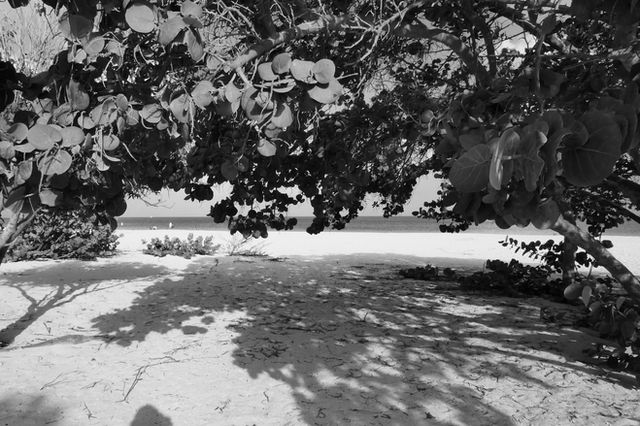
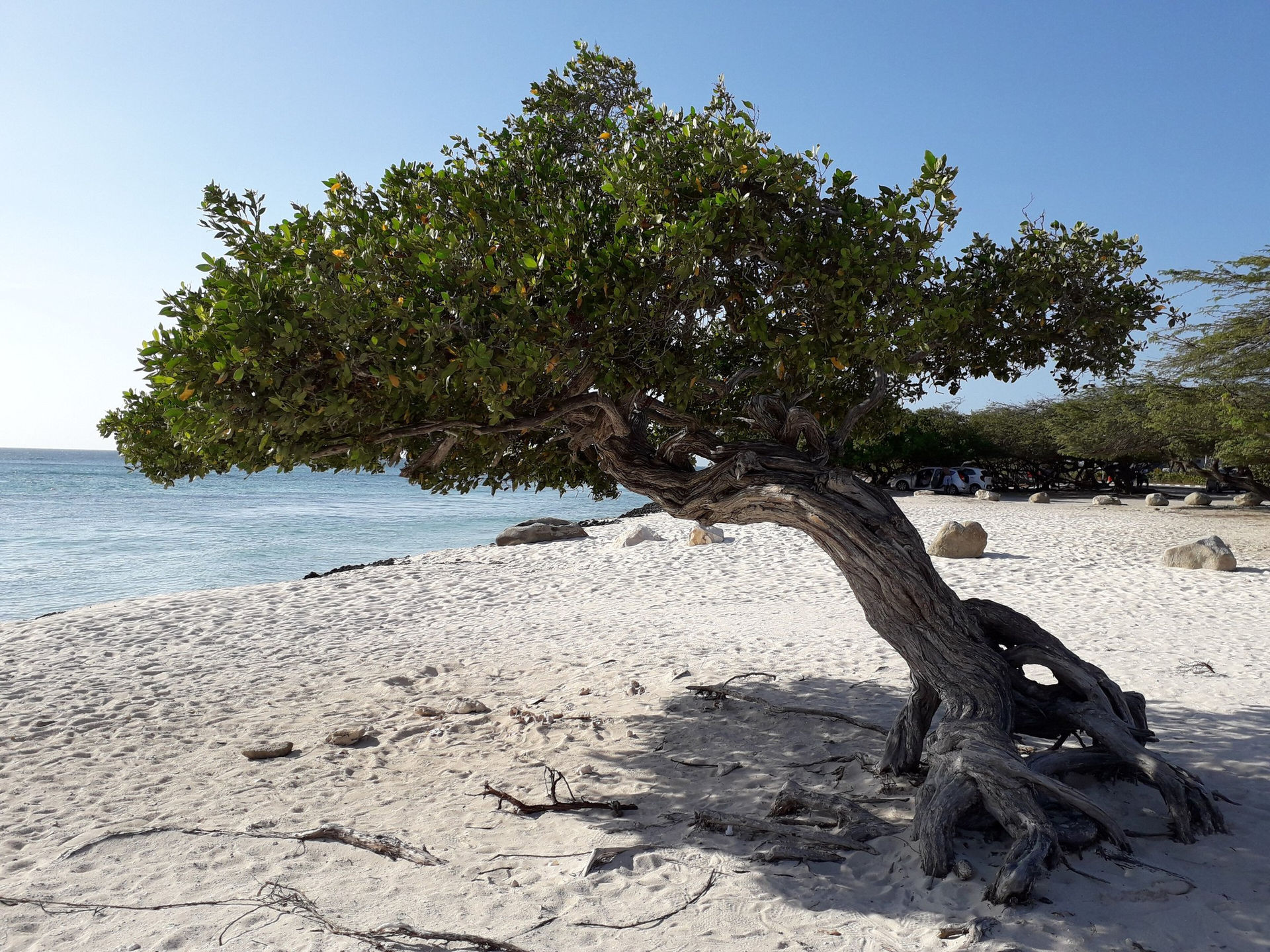
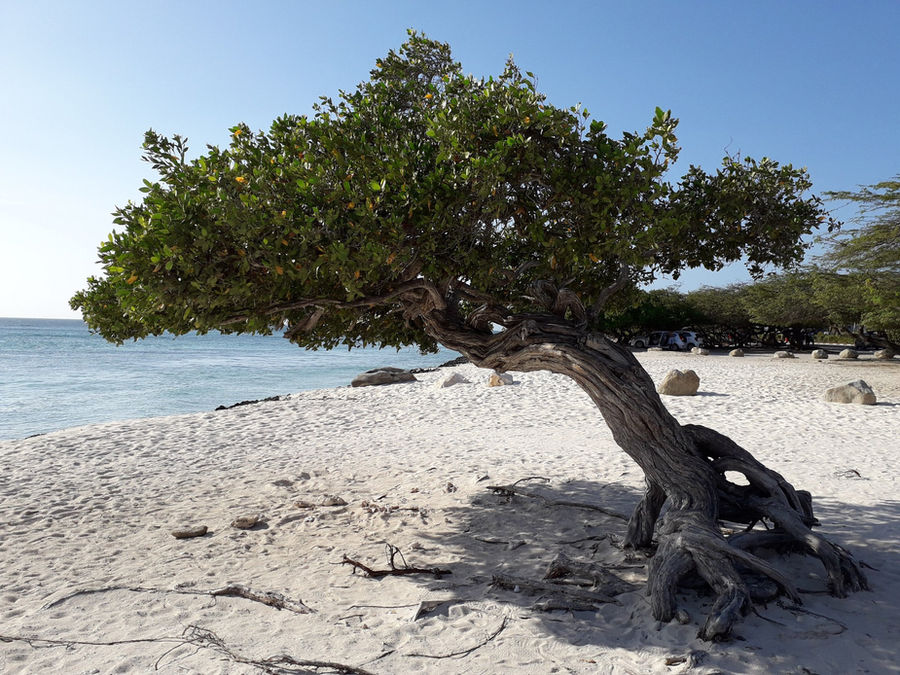
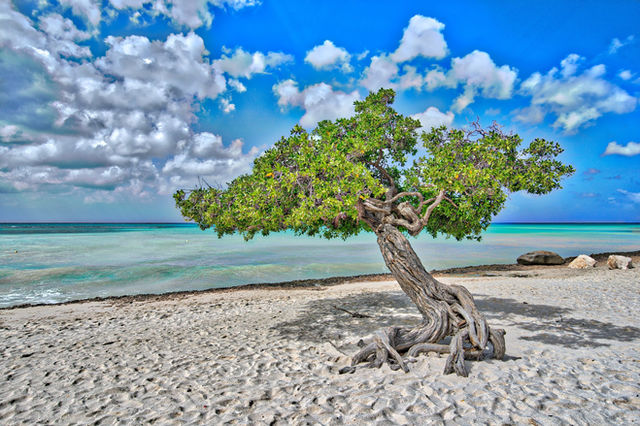
  • Eagle Beach and its famous divi-divi trees
  • Snorkelling the Antilla shipwreck off Malmok
  • 4x4 safari to Arikok's Natural Pool (Conchi)
  • San Nicolas street art and Carnival
Read more

Aruba is the Caribbean's most dependable sunshine bet. Lying south of the hurricane belt off the coast of Venezuela, it swaps rainforest for a dry, cactus-strewn landscape, constant cooling trade winds, and some of the region's calmest, clearest water — the wide white sands of Eagle Beach and Palm Beach among the finest in the hemisphere.

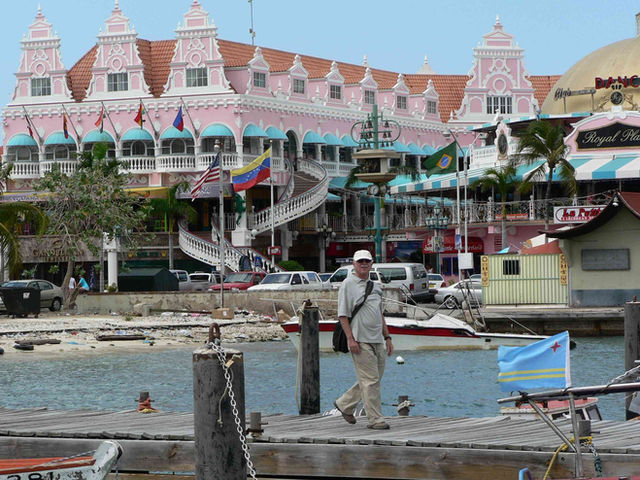
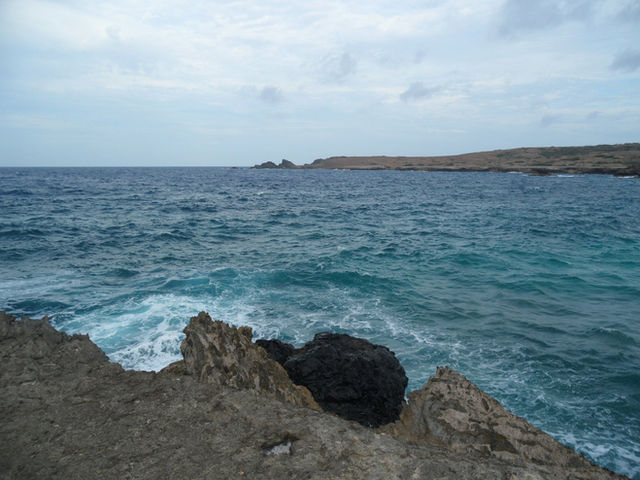
Beyond the resort strip, a rugged side reveals itself: Arikok National Park covers nearly a fifth of the island with desert trails, cacti and Caquetío cave art, while the windward coast throws up cliffs, blowholes and the 4x4-only Natural Pool. The old refinery town of San Nicolas has reinvented itself as a street-art and Carnival capital.

A self-governing country within the Kingdom of the Netherlands, Aruba is famously easy for visitors — low crime, US dollars accepted everywhere, and a population fluent in Papiamento, Dutch, English and Spanish. Add a genuine food culture built on keshi yena and fresh fish, and “One Happy Island” proves more than a slogan.

A pillar, not a footnote

Eat your way through Aruba

The single reason many travellers come back — the food culture worth reshaping a trip around, and the dishes to seek out region by region.

Aruba

Baked keshi yena, fresh Creole snapper and fried pastechi, chased with a cold island-brewed Balashi.

Aruba's national dish tells its whole history in one bite. Keshi yena — a hollowed shell of Gouda or Edam cheese packed with spiced chicken or beef, olives, capers and raisins, then baked golden — began in colonial kitchens, where enslaved and household cooks turned the cheese rinds their Dutch employers threw away into a feast. It still anchors the Sunday table. Around it sits a cuisine of corn and sea: soft funchi polenta and sweet griddle-bread pan bati, hearty stoba stews and sopi soups, and the ever-present breakfast snack, the deep-fried pastechi turnover.

Being an arid island ringed by rich water, Aruba leans hard on seafood — red snapper, wahoo, mahi-mahi and conch, usually in a bright Creole sauce — seasoned with the herby island staple, pika hot sauce. Wash it down with a cold Balashi, the local lager brewed on the island, or an Aruba Ariba at sunset. For the full picture, head to a Papiamento-speaking family kitchen or the food stalls of San Nicolas.

Dishes to seek out
  • Keshi yena (spiced meat baked in a cheese shell)
  • Pastechi (fried filled turnovers)
  • Funchi (cornmeal polenta)
  • Pan bati (cornmeal griddle-bread)
  • Stoba (goat or beef stew)
  • Sopi di piscá (fish soup)
  • Fresh Creole snapper
  • Keri keri (spiced shredded fish)
Things to do

Nature, culture & hidden gems

  • Eagle Beach

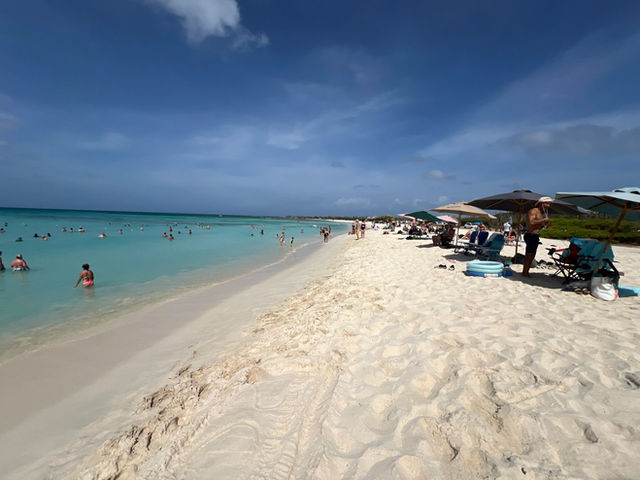
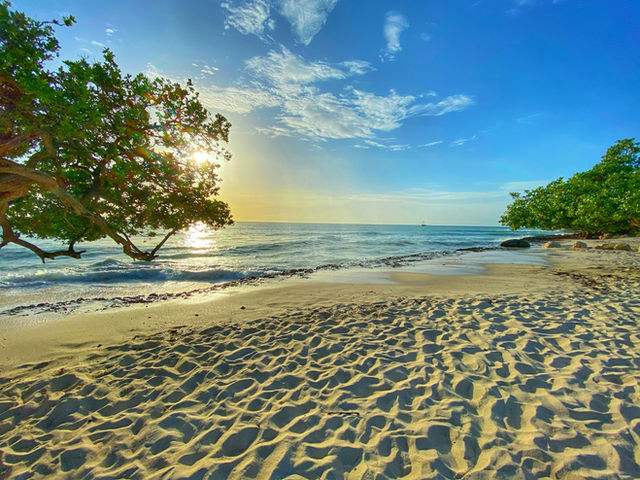
    A mile of powder-white sand backed by two gnarled divi-divi trees, regularly ranked among the world's finest beaches and Aruba's classic sunset spot.

  • Palm Beach

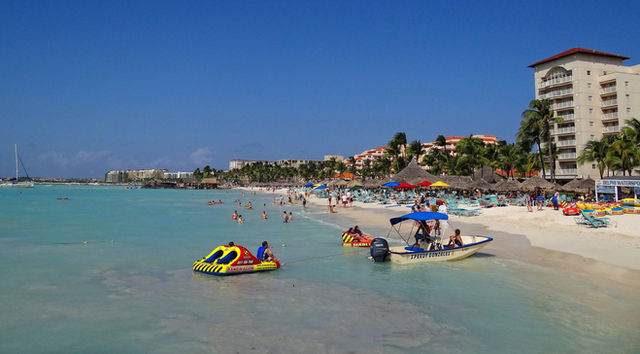
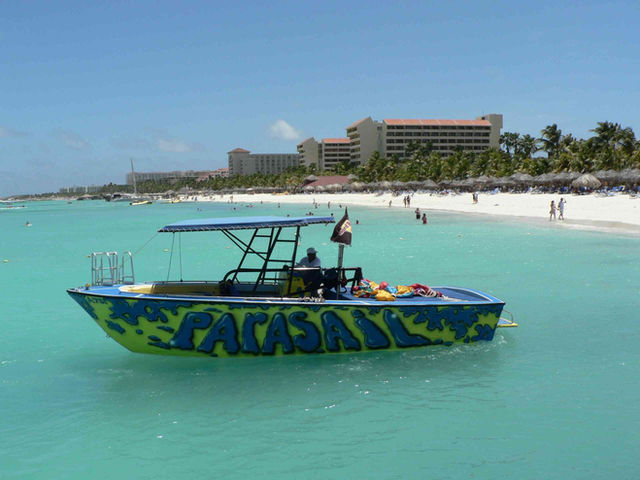
    The island's buzzing resort strip, where calm, clear shallows meet piers, watersports and palapa shade below the high-rise hotels.

  • Baby Beach

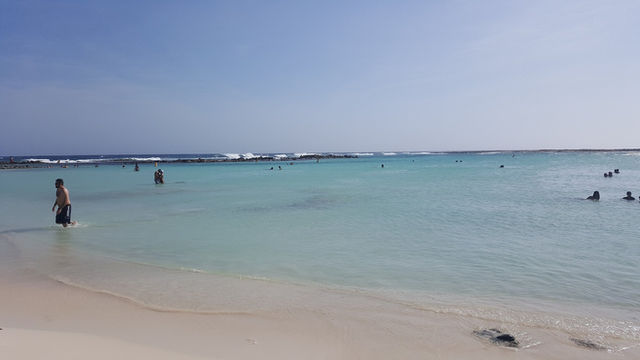
    A shallow, near-enclosed turquoise lagoon at the island's southern tip, warm and calm and made for young children and easy snorkelling.

  • Arashi Beach

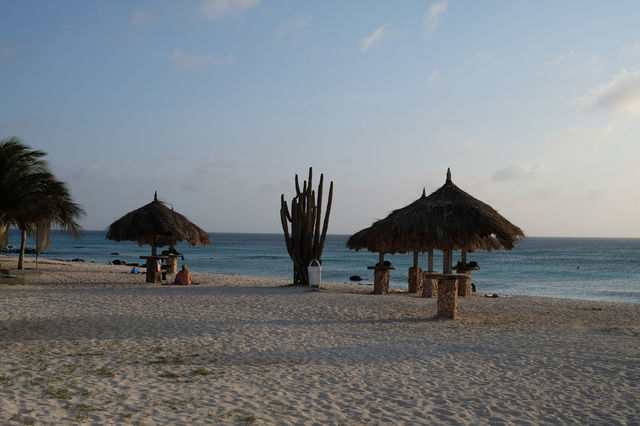
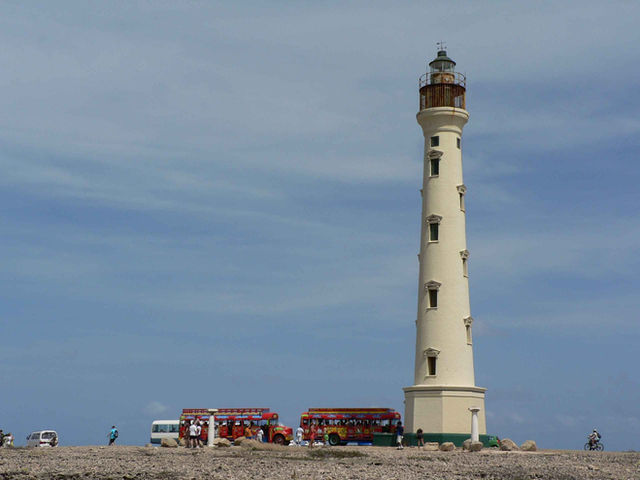
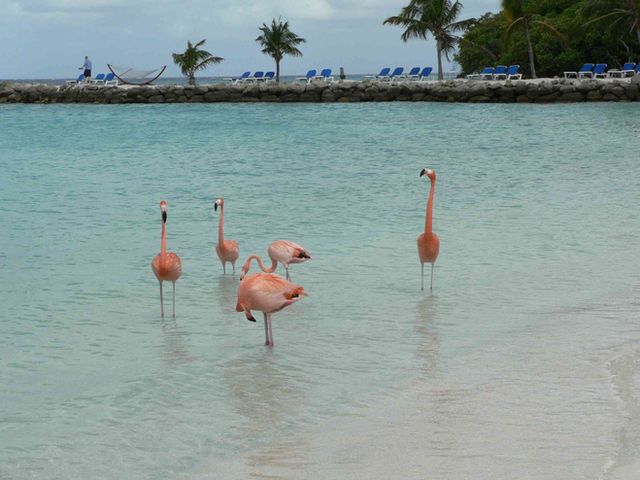
    A quieter, palm-shaded stretch of pale sand near the California Lighthouse, with calm water and reef snorkelling just off the northwest tip.

  • Boca Catalina

    A small, sheltered rocky cove at Malmok famed for gin-clear water thick with fish and the occasional turtle, one of Aruba's best shore snorkels.

  • Mangel Halto

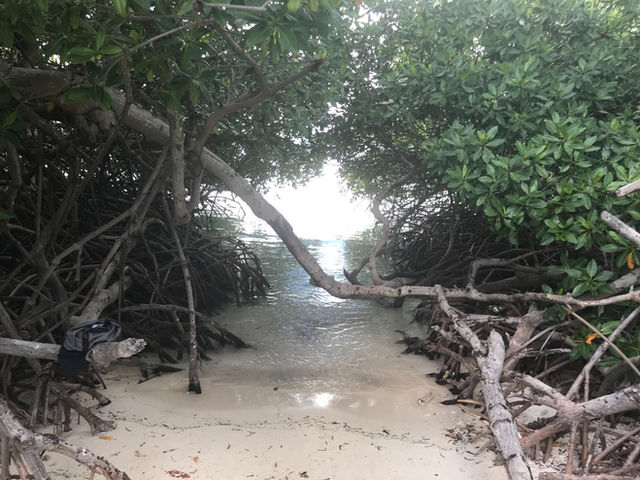
    A mangrove-fringed lagoon on the southeast coast where a gap in the reef makes for a magical drift snorkel over coral and sea grass.

Plan your trip

Curated Aruba itineraries

Browse all Aruba trips →
When to go

Weather & timing in Aruba RIGHT NOW 31° clear

Best Dec–Apr · Shoulder May–Aug

Real climate data pending — chart shows a placeholder curve.

  1. Jan / -4°
  2. Feb / -2°
  3. Mar 12° /
  4. Apr 18° /
  5. May 24° / 14°
  6. Jun 28° / 18°
  7. Jul 30° / 20°
  8. Aug 28° / 18°
  9. Sep 24° / 14°
  10. Oct 18° /
  11. Nov 12° /
  12. Dec / -2°

Best time to visit

December – April

Best for
  • Culture
  • Cuisine
  • Landscape
  • History
At a glance
Sunshine 7 hr/day (est.)
Rain days 8 days/mo (est.)
Wettest December · 60mm
Driest June · 10mm
See broader climate context →
By season
Spring (Mar–May)

What to expect — Daytime highs average about 18°C with overnight lows near 8°C, and it stays largely dry.

What's best — Mar, Apr and May are among the best time to visit — good weather with manageable crowds.

Summer (Jun–Aug)

What to expect — Daytime highs average about 29°C with overnight lows near 19°C, and it stays largely dry.

What's best — Jun, Jul and Aug are comfortable, with thinner crowds.

Autumn (Sep–Nov)

What to expect — Daytime highs average about 18°C with overnight lows near 8°C.

What's best — Sep, Oct and Nov are comfortable, with thinner crowds.

Winter (Dec–Feb)

What to expect — Daytime highs average about 7°C with overnight lows near -3°C.

What's best — Dec, Jan and Feb are among the best time to visit — good weather with manageable crowds.

A little context

A little history

To read what you're looking at — the empires and eras that shaped Aruba's food, art and streets.

Caquetío (Arawak) people settled from Venezuela around 900 AD, leaving cave art at Fontein and Ayo
Spain claimed the island in 1499 but dismissed it as an ‘isla inútil’ with no gold
the Dutch took Aruba in 1636 and ran it as a ranching outpost
an 1824 gold strike, then aloe and phosphate, built the first cash economy
the Lago oil refinery at San Nicolas (1924) drew workers from across the Caribbean and made the island cosmopolitan
Aruba won Status Aparte in 1986, becoming its own constituent country within the Kingdom of the Netherlands
Before you book

Know before you go

The practical back-matter — safety, drones and the essentials, in one place.

Safety

Low risk FCDO advice →

Official UK Foreign, Commonwealth & Development Office guidance is the definitive source — check it close to your travel dates.

Drone rules (sub-250g)

  • Aruba
    Recreational drone flights are allowed but every flight needs prior written permission from the Department of Civil Aviation (DCA), requested by email at least one working day ahead — flown below 200ft, in visual line of sight, and never within 4km of the airport. ⚠ There is no sub-250g exemption — all drones need DCA approval, and you must carry a local mobile number so the control tower can reach you. Recreational flying is banned inside Arikok National Park; only 2.4/5.8GHz drones are permitted. Registration and insurance aren't legally required, but liability insurance is recommended. Rules checked: Jul 2026

National parks, protected sites and religious/heritage venues often have their own rules and permits — always check the specific site before you fly.

The essentials

Plug & voltage Type A/B · 127V
Daily budget Expensive
Region Caribbean