Bangladesh
A rice-and-fish delta where mustard oil, river hilsa and Old Dhaka biryani rule the table.
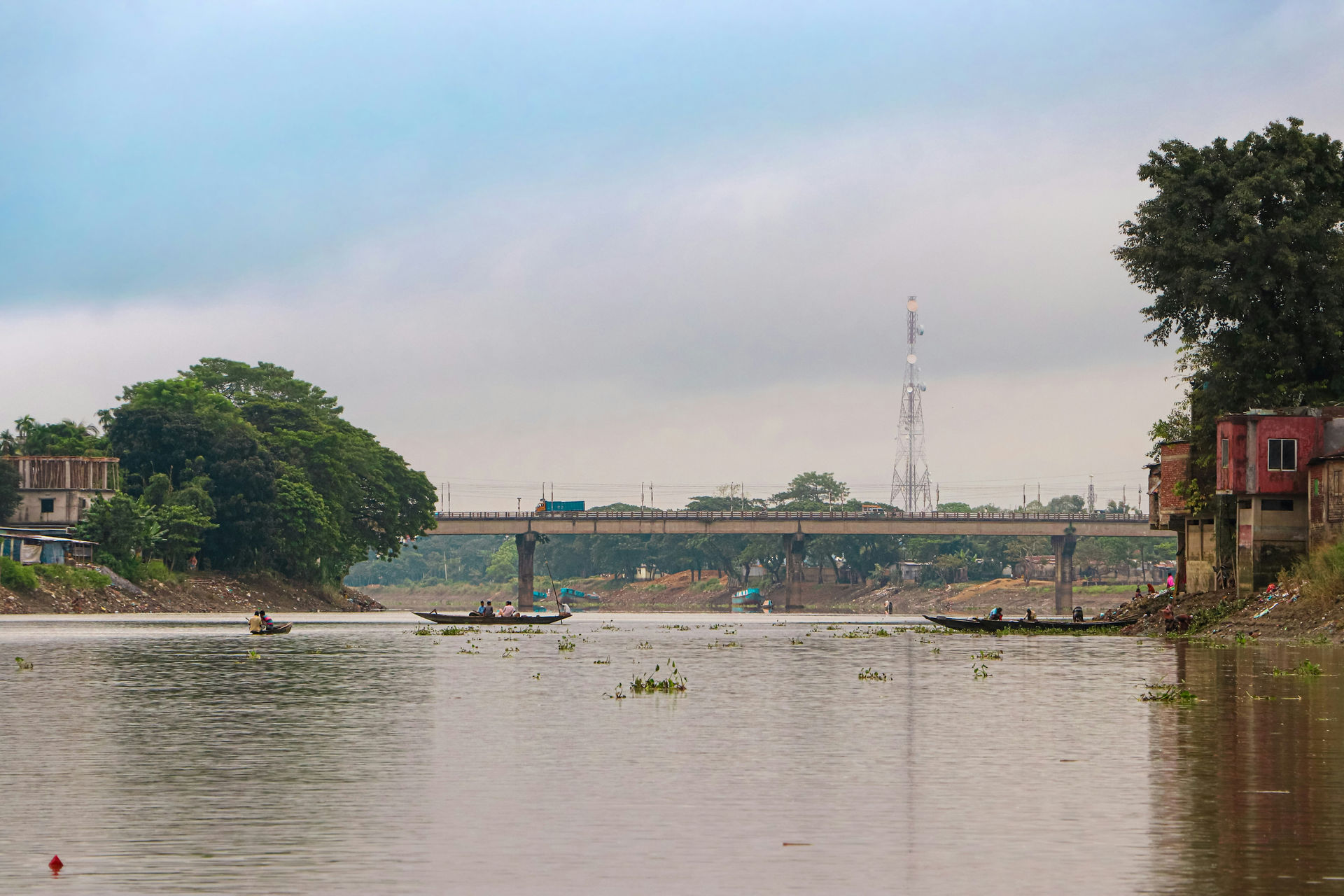
Bangladesh eats from its rivers. In a country built on the world's largest delta, lunch is often a piece of ilish — the bony, prized hilsa — simmered in a pungent mustard-seed paste until the whole table smells of it, alongside a mound of rice and a bowl of thin, soupy dal. The Bengali cook reaches for mustard the way others reach for salt, and for bhorta: vegetables, dried fish or potato mashed hot with mustard oil, green chilli and raw onion.
Come dawn on Pohela Boishakh, the Bengali New Year, people sit down to panta bhat — yesterday's rice soaked overnight in water — with fried hilsa and chilli, a ritual as much as a breakfast. Old Dhaka is the other pole: its lanes turn out Mughlai kacchi biryani layered with mutton, and through Ramadan the Chawkbazar iftar bazaar sizzles with kebabs and jilapi. Finish the way everyone does, on something sweet and milky — a syrup-heavy roshogolla, a bowl of mishti doi — chased with sweet cha from a roadside stall.
- Shorshe ilish (hilsa in mustard)
- Kacchi biryani (Old Dhaka mutton)
- Bhuna khichuri (rice & lentils)
- Bhorta (spiced mash)
- Shutki (dried fish)
- Pitha (rice cakes)
- Roshogolla (syrup sweets)