← China
CHINA · CITY

Pingyao

A complete Ming- and Qing-era walled city in China — cobbled lanes, courtyard houses and the country's first banks.

  • City
  • April to June and September to October — mild; cold winters, hot summers
  • ~approx 1–2 days
  • Intact Ming-Qing Walled City
  • Cradle of Chinese Banking
  • Courtyard Houses
  • Shanxi Noodles

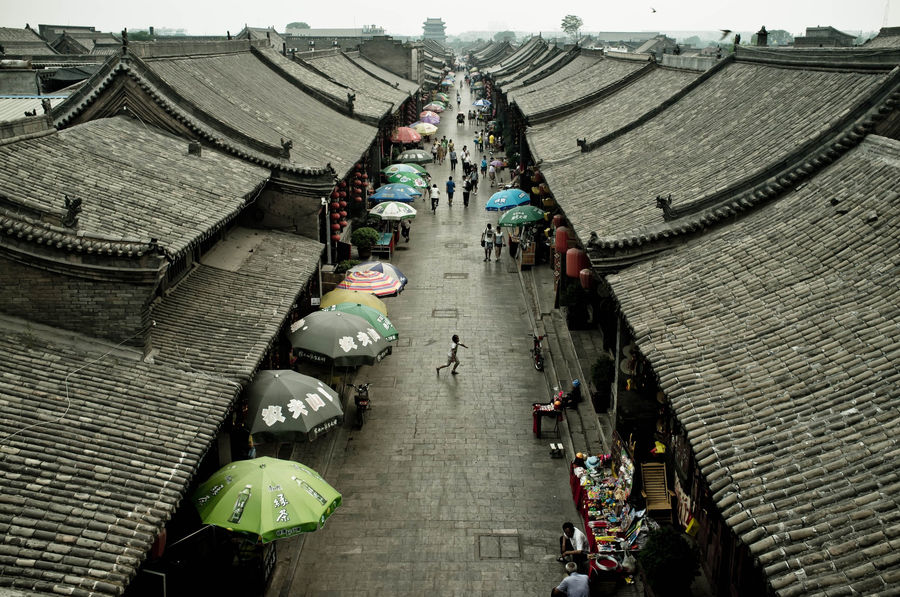
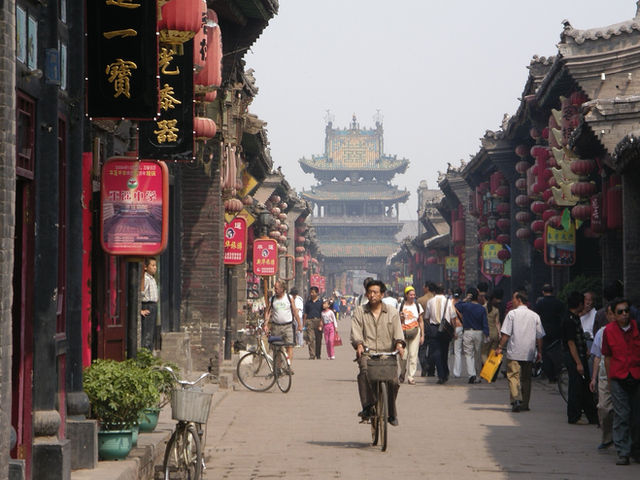
A complete grey-brick city wall marching around the town with its watchtowers, straight lanes of tile-roofed courtyard houses hung with red lanterns, and the counting-room of a 19th-century bank where China's first paper drafts were once issued.

Pingyao is old China preserved whole — a UNESCO walled town in Shanxi that kept its complete Ming-era ramparts and its Ming-Qing streets of grey-brick courtyard houses, temples and old banks, where Chinese finance was born and red lanterns still light the lanes.

Type
town
Ideal length
~approx 1–2 days
Getting around
on foot in the old city; electric carts and taxis beyond
Neighbourhoods
3 areas
Best season / months
April to June and September to October — mild; cold winters, hot summers
Language
Mandarin (little English)
Currency
Chinese yuan (¥)
Budget level
low — very affordable
Good for
  • History
  • Old China
  • Architecture
  • Photography
  • Shanxi trips
▸ Discover

About Pingyao

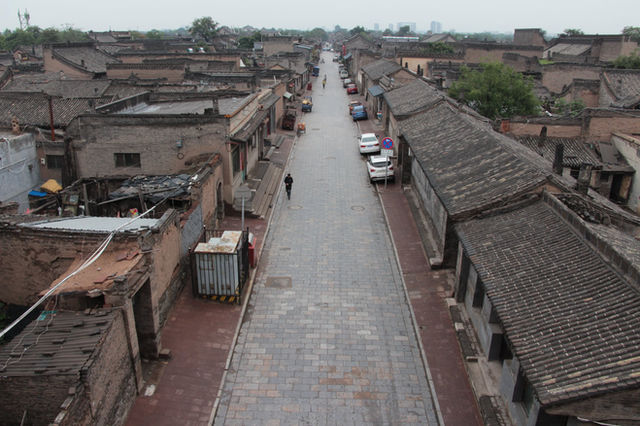
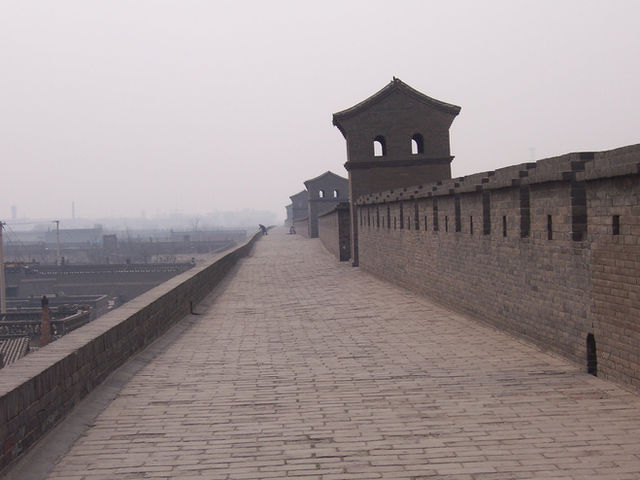
Pingyao sits on the loess plains of Shanxi province in north-central China. Uniquely among Han Chinese cities, it survived the 20th century almost intact — a UNESCO "ancient city" that keeps its complete Ming-dynasty city wall (some six kilometres around, with gate towers and battlements), and inside it a remarkably preserved grid of Ming-and-Qing streets: grey-brick courtyard houses, temples, guildhalls, a county government office, and the old exchange banks (piaohao) where modern Chinese finance began — Pingyao was the Wall Street of Qing China. Atmospheric and photogenic, if touristy, it's the best place to feel the texture of old imperial China, and a base for Shanxi's temples and merchant mansions.

Why go

Pingyao is the finest surviving walled town of old China — a UNESCO site whose complete Ming-era ramparts and intact Ming-Qing streetscape of courtyard houses, temples and old banks let you walk into imperial China as almost nowhere else. It's the cradle of Chinese banking (the exchange-bank museums tell the story), it has a county yamen and guildhalls, red-lantern lanes, and a distinctive Shanxi food-and-vinegar culture. Add the nearby Wang Family merchant compound and the painted sculptures of Shuanglin Temple, and it's a rewarding, atmospheric window into China's past.

Don't miss

  • The city walls — the complete Ming ramparts
  • The Ming-Qing streets — the courtyard houses and lanes
  • Rishengchang — the first Chinese exchange bank
  • The county yamen — the old government office
  • Shanxi noodles and vinegar — the local food

Signature experiences

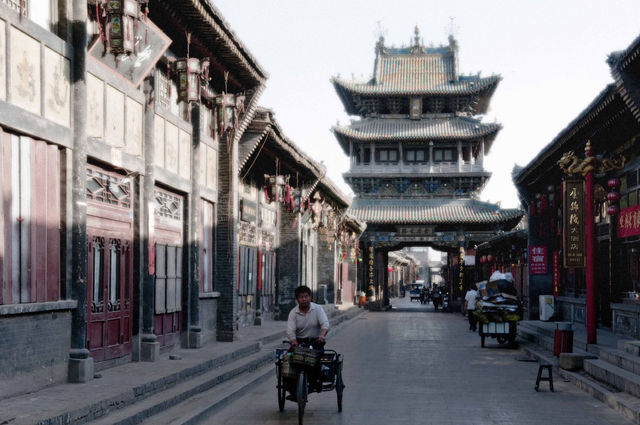
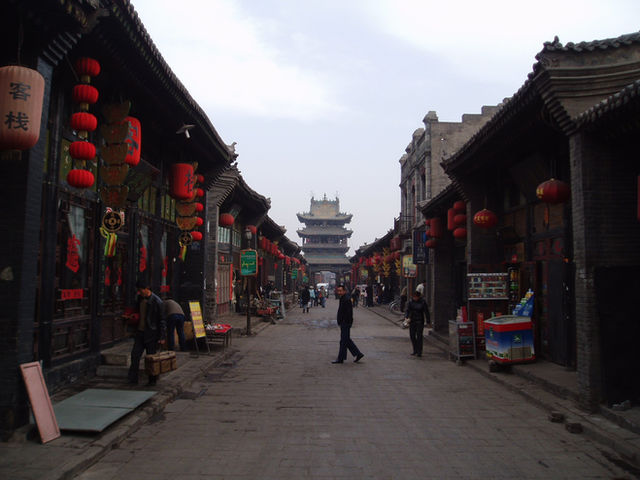
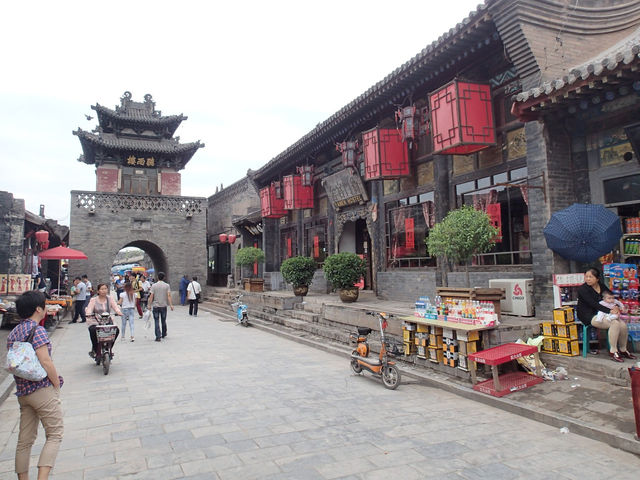
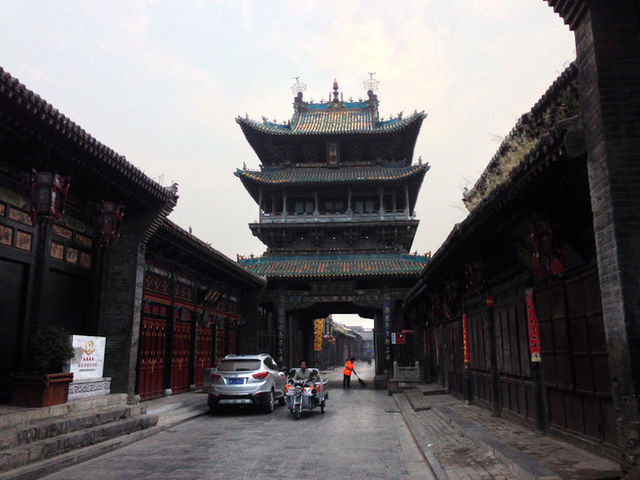
Walking the walls and the old city — Pingyao's greatest asset is its completeness — you can walk much of the six-kilometre Ming city wall around the town, past watchtowers and gate towers, looking down over a sea of grey-tiled roofs, then descend into a genuinely intact old city: straight grey-brick lanes of Ming-and-Qing courtyard houses, temples, guildhalls and shops, hung with red lanterns, centred on the tall City Tower. Few places in China give this unbroken sense of the imperial past. Wander the lanes, climb the wall, and let old China surround you (go early or late for the quiet). **The cradle of Chinese banking** — Pingyao was, improbably, the financial capital of Qing China — the birthplace of the piaohao, the exchange banks that pioneered paper drafts and a nationwide remittance network, making the town's merchants immensely rich. The Rishengchang, China's first such bank, is now a fascinating museum, its counting rooms, strongrooms and courtyards preserved, and other old banks line the streets. Touring them, you trace the surprising story of how modern Chinese finance began in this walled provincial town. It's the deeper history beneath the picturesque streets. **Courtyard houses, temples and the yamen** — Pingyao rewards going inside — the grey-brick courtyard houses (many now guesthouses) reveal the layered, inward-looking world of old Chinese domestic life; the county yamen shows the workings of imperial local government, with its halls and (grim) jail; and the temples and guildhalls hold carvings and shrines. Staying in a traditional courtyard guesthouse (kang beds and all) deepens the immersion. Between the banks, the yamen and the houses, the town is a rich, living museum of Ming-Qing life. **Shanxi food and the merchant country** — Pingyao eats Shanxi, which means noodles and vinegar — Shanxi is China's noodle heartland, famous for knife-cut noodles (dao xiao mian) and countless other shapes, and for its dark aged vinegar (used and drunk everywhere); the local Pingyao beef (spiced, sliced cold) is a specialty, along with wantuo (a chilled buckwheat dish). And the surrounding Shanxi country holds the wealth the banks built — the fortress-like Wang Family Compound and other merchant mansions, and temples like Shuanglin with their extraordinary painted clay sculptures. Eat the noodles and Pingyao beef, and get out to the merchant mansions.

Neighbourhoods

Pingyao neighbourhood by neighbourhood — the character of each and who it suits.

  • The Ming-Qing Old City

    The intact walled heart — a grid of grey-brick lanes of Ming-and-Qing courtyard houses, temples, guildhalls, old banks and shops, hung with red lanterns. The atmospheric core.

    Why go
    The old banks, the yamen, the courtyard houses and the lantern lanes.
    Best for
    Sightseeingthe old bankstempleswandering
    Known for
    The Ming-Qing Street (Ming Qing Jie), the Rishengchang exchange-bank museum and the other piaohao, the county yamen (government office), the guildhalls and temples, the City Tower, and the courtyard-house guesthouses.
  • The City Walls

    The complete Ming-dynasty rampart ringing the town — grey-brick walls with battlements, watchtowers and gate towers, walkable around much of the circuit, with views over the tiled roofs. The martial, encircling edge.

    Why go
    The wall walk and the views over the old city.
    Best for
    The rampart walkviewsphotography
    Known for
    The complete city wall and its watchtowers and gate towers, the corner towers, and the rampart-top views over the grey-tiled roofs and the plains.
  • The Surroundings

    The Shanxi country around the town — the great merchant mansions, the painted-sculpture temples, and the loess-plain villages and castles. The heritage hinterland.

    Why go
    The Wang Family Compound, Shuanglin Temple and the merchant heritage.
    Best for
    The merchant mansionstemple artday trips
    Known for
    The vast Wang Family Compound (a fortress-like merchant mansion), the Shuanglin and Zhenguo temples with their painted Song-and-Yuan sculptures, and the Zhangbi underground castle.

Views & hidden gems

Best views

  • The city wall and watchtowers over the grey-tiled roofs
  • The lantern-lit Ming-Qing streets at night
  • The City Tower rising over the old city
  • The courtyards of the old exchange banks

Hidden gems

  • The Rishengchang bank's strongrooms and counting halls
  • The county yamen's halls and jail
  • The painted clay sculptures of Shuanglin Temple nearby
  • The vast Wang Family Compound merchant mansion
  • Pingyao beef and knife-cut noodles at a local restaurant

Food & drink

Pingyao eats Shanxi — the noodle-and-vinegar heartland of China. Shanxi is famous for its endless noodle shapes, above all knife-cut noodles (dao xiao mian) shaved into boiling water, and for its dark, aged vinegar, used in everything (Shanxi vinegar is prized across China). The local specialty is Pingyao beef, a spiced, tender cold-sliced beef, and wantuo, a chilled buckwheat dish with sauces. There's oat-flour and millet dishes too (the loess-plain staples), and huangjiu (yellow wine). Eat in the old-city restaurants, and try the knife-cut noodles and Pingyao beef.

  • Knife-cut noodles (dao xiao mian) — shaved noodles, the Shanxi classic
  • Pingyao beef — spiced, tender cold-sliced beef, the local specialty
  • Wantuo — a chilled buckwheat dish with sauces
  • Oat and millet dishes — the loess-plain staples
  • Shanxi aged vinegar — used (and drunk) everywhere
  • Huangjiu (yellow wine) and tea — the local drinks
Dietary notes

Vegetarians can find noodle, tofu, oat and vegetable dishes, though meat and stock are common — ask (the Chinese "su" means vegetarian). Vegan is workable with care. Halal food is found (there's a Hui Muslim presence in Shanxi); kosher is unavailable. Gluten-free is hard around the wheat noodles, wantuo and soy/vinegar — rice and some dishes help, but confirm. Set up mobile payments before arriving.

Pingyao in photos

▸ Where you'll stay

Where you'll stay in Pingyao

Stay in the walled old city in a traditional courtyard guesthouse (kezhan) — a restored Ming-Qing house with courtyards and often kang (heated-platform) beds, an atmospheric, immersive experience, and very affordable. There are boutique and budget options. The old city is compact and walkable, and the natural base. Book ahead for Chinese holidays, when it's packed. Staying inside the walls is the whole point.

  • Budget
    The old city hostels and budget courtyard guesthouses.
  • Mid-range
    The old city restored courtyard guesthouses in Ming-Qing houses.
  • Luxury
    The best boutique courtyard hotels high-end restored mansions, the top of a modest range.
Stay

Hotels & rentals around Pingyao

Pan, zoom and compare live prices — every stay in one map.

▸ Getting around

Getting around Pingyao

The walled old city is compact and best on foot (and cars can't enter much of it); electric carts and taxis cover the wider town and the station. A car or tour helps for the Wang Compound and the temples. Set up mobile payments for transport.

The old city and the walls are one walkable area (~approx); the merchant mansions and temples are drives out — plan those as a day trip by car or tour.

▸ Plan your days

Suggested itineraries

Ready-made day plans for Pingyao — from a single day to a long weekend.

One day

Start by walking a stretch of the Ming city wall for the views over the old city, then descend to explore the Ming-Qing streets — the Rishengchang and other exchange banks, the county yamen, the City Tower, the temples and guildhalls — with a combined ticket. Have a knife-cut-noodles-and-Pingyao-beef lunch, wander the lantern lanes and courtyard houses in the afternoon, and enjoy the lit streets at night from your courtyard guesthouse.

Two days

With an overnight, add the Shanxi country. Give a day to the vast, fortress-like Wang Family Compound and the extraordinary painted clay sculptures of Shuanglin Temple (and the Zhenguo Temple), and, with time, the Zhangbi underground castle. Enjoy more of the old city at dawn and dusk, and the walls and the food. Pingyao pairs with Taiyuan and the Shanxi heritage route.

▸ What you'll do

Insider tips

  • Walk the complete city wall for the views over the grey-tiled roofs, and the old banks for the banking story.
  • Stay in a traditional courtyard guesthouse for the immersive old-China experience.
  • Try knife-cut noodles and Pingyao beef with Shanxi vinegar.
  • Set up mobile payments (WeChat/Alipay), and visit the Wang Compound and Shuanglin Temple nearby.
What's on

While you're there

05
JAN
Harbin International Ice and Snow Festival 2027
150028, Songbei Qu, Ha'erbin Shi, Heilongjiang, China · festival
Build a trip around it →
Explore

Explore the area

© OpenFreeMap · OSM · terrain Mapterhorn
Do

Local attractions & tours

Skip-the-line tickets and small-group tours in Pingyao — compare across our partners.

We're still curating hand-picked tickets and tours for Pingyao. In the meantime, the map above and the nearby cities are a great place to start.

▸ Budget

What it costs in Pingyao

Backpacker
roughly €18–35 a day.
Mid-range
roughly €40–80 a day.
Luxury
€140 a day and up.
Cash vs card
China runs on mobile payments (WeChat Pay and Alipay) — set these up (linked to a card) if you can, as cash and foreign cards are awkward; carry some yuan as backup.
Tipping
Tipping is not customary in China — it's not expected.
▸ When you'll go

When to visit Pingyao

April to June and September to October — mild; cold winters, hot summers

Spring

What to expect — Mild and increasingly pleasant, warming through the season with the odd dust or windy spell, and clear days. One of the best times.

What's best — Comfortable weather for the walls and the lanes, clear skies, and (outside Chinese holidays) manageable crowds — a lovely season.

Summer

What to expect — Hot and sometimes humid on the loess plain, with the biggest domestic-holiday crowds; warm evenings. Hot and busy.

What's best — Long light on the walls and the lantern lanes, and lively evenings — but the heat and the summer-holiday crowds are real, so sightsee early and avoid peak holiday weeks.

Autumn

What to expect — Mild, clear and dry — the other prime season — with crisp days and comfortable evenings. Settled and beautiful.

What's best — Clear skies, comfortable days for the walls and the old city, golden loess-plain light, and (outside the October holiday) good conditions — a rewarding window; avoid the early-October national week.

Winter

What to expect — Cold and dry, with freezing days and nights and the odd snow that dusts the grey roofs; the town quiet. Bright but cold.

What's best — The old city and walls under snow or frost, atmospheric and near-empty (outside Spring Festival), and the red lanterns against the grey — pack seriously warm layers for the north-China cold.

▸ Know before you go

Know before you go

Honest swaps

Skip the midday crowds on Ming-Qing Street → walk the walls and the quieter lanes early or late.

Skip a generic meal → try knife-cut noodles and Pingyao beef, with a splash of Shanxi vinegar.

Skip a modern hotel → stay in a traditional courtyard guesthouse for the immersion.

Skip the old city only → visit the Wang Family Compound and Shuanglin Temple's painted sculptures nearby.

Crowds & timing

Pingyao is touristy and packed during Chinese holidays (Spring Festival, the October week) — avoid those or book far ahead; go early and late in the lanes.

A combined ticket covers the wall, banks, yamen and museums — buy it for the main sights.

Local rules & etiquette

Set up mobile payments (WeChat Pay/Alipay) before arriving — China is largely cashless and foreign cards are awkward.

A translation app is invaluable, as English is scarce.

Respect the temples and the old sites, and follow photography rules inside museums.

Money

China runs on WeChat Pay and Alipay (link a card); cash and foreign cards are increasingly awkward — set these up, and carry some yuan as backup.

The combined-ticket for the sights is the main cost inside the walls.

After dark

The lantern-lit Ming-Qing streets, and the old-city restaurants, teahouses and a few bars, hold the evening life.

Pingyao is a small, quiet town rather than a nightlife hub — the evening is a noodle dinner, a lantern-lane stroll and a courtyard guesthouse.

The lit walls and lanes at night are atmospheric.

▸ Ready to book your trip?

Getting there

Pingyao is on the high-speed rail line (Pingyao Ancient City station), with fast trains from Taiyuan, Xi'an and Beijing; Taiyuan (TYN) is the nearest airport. The station is a short electric-cart or taxi ride from the old city.

Book

Ready to book your trip?

Flights, airport transfers and car hire — search and compare without leaving the page.

▸ Trip extras
Book

More trip extras

Parking, holiday extras, and more — coming soon.

Coming soon

We're lining up parking, holiday extras and activities you'll be able to add to any trip from here.