← Croatia
CROATIA

Dubrovnik

The 'Pearl of the Adriatic' — a perfectly preserved medieval walled city on the Dalmatian coast, now one of the most-photographed places in Europe.

  • The best time to visit is May–Sep, when the weather is mildest with fewer rainy days.
  • DBV
  • 3–4 days
  • Limestone Ramparts
  • Adriatic Blue
  • King's Landing
  • The Stradun

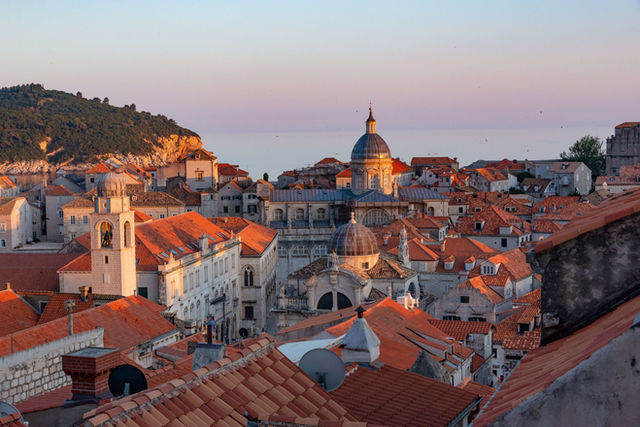
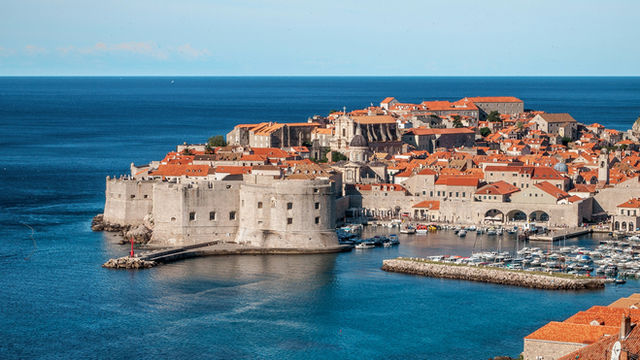
Sun on pale stone, red-tiled roofs dropping to a flat blue sea, and the whole town laid out under your feet from the top of the walls.

Dubrovnik is one walled town on a rocky shelf above the Adriatic — a near-complete ring of medieval ramparts, a single polished main street, and the sea on almost every side. Small enough to cross in twenty minutes, famous enough to fill those twenty minutes with a cruise ship's worth of people.

Type
town
Ideal length
~approx 2–3 days
Getting around
on foot in the Old Town, orange Libertas city buses everywhere else, plus the cable car
Neighbourhoods
4 areas
Best season / months
May, June, September and October — warm sea, lighter crowds, before and after the peak crush
Language
Croatian
Currency
euro (€)
Budget level
high — pricey for Croatia, and cruise-season peaks bite hardest
Good for
  • First-timers
  • Couples
  • History
  • Walkers
  • Game of Thrones fans
▸ Discover

About Dubrovnik

Dubrovnik is a small city of around 40,000 people on Croatia's southernmost Dalmatian coast, and one of the most remarkable urban survivals in Europe. Its Old Town — a UNESCO World Heritage Site since 1979 — is enclosed within limestone walls that have stood, in their current form, since the 13th century, rising directly from the sea. The stone streets of the Stradun (main promenade), the Baroque churches, the 14th-century Franciscan monastery with its Romanesque cloister, and the tight lanes branching off the main drag have changed little in centuries. Dubrovnik was the capital of the Ragusan Republic from 1358 to 1808, a proud merchant city-state that used diplomacy, trade and wit to maintain its independence between the Ottoman Empire and Venice. The city was severely shelled during the 1991–92 Croatian War of Independence; much of the roof tiling visible today is post-war reconstruction, though the overall fabric survived. Today it is Croatia's most-visited city, a major cruise port and a favourite filming location (Game of Thrones' King's Landing was shot extensively here), which means it gets very crowded in summer.

Why go

The City Walls walk — a 2km circuit of the entire Old Town perimeter, with sea views on one side and roof-scape on the other — is one of the most memorable single experiences in the Mediterranean and alone justifies the visit. Beyond the walls, the car-free Old Town is a pleasure to wander: the Franciscan Monastery's pharmacy (operating since 1317, one of the world's oldest), the Rector's Palace, the cable car up Mount Srđ for panoramic views, and the harbour for boats to the nearby Elafiti Islands. Lokrum Island, reached by a ten-minute ferry from the old port, is a peaceful wooded reserve with a botanical garden and no permanent residents. Despite the summer crowds, Dubrovnik is genuinely extraordinary; the trick is timing (go in May or October) and doing the walls at 08:00 before the cruise ships dock.

Don't miss

  • The City Walls — the full walk around the ramparts
  • The Stradun (Placa) — the polished limestone main street
  • The cable car up Mount Srđ — the view over the town
  • Fort Lovrijenac — the cliff fortress, King's Landing's Red Keep
  • Lokrum island — a short boat hop to a wooded reserve

Signature experiences

Walking the walls — The one thing you do not skip. The circuit runs the full ring of the ramparts, ~approx two kilometres, with the open Adriatic on one flank and a carpet of red roofs on the other, past Minčeta Tower at the high north corner and the Bokar and Lovrijenac forts guarding the sea. It's single-entry and largely one-way, so give it a clear hour or two and do it in one go — at opening or in the last light, never the midday furnace. **The Stradun and the stone town** — Come in through the Pile Gate, rinse your hands at Onofrio's Fountain, and walk the length of the Stradun's worn limestone to Luža square, where Sponza Palace, the Rector's Palace and the Cathedral cluster together. Duck into the Franciscan Monastery for its old pharmacy, one of the oldest still working in Europe. The lanes climbing off the main street are steeper, quieter and where the town still lives. **Up Mount Srđ for the view** — The cable car lifts you from just above the Old Town to the summit ridge in a few minutes, and the whole walled town lays itself out below with Lokrum and the islands beyond. At the top sit Fort Imperial and a small war museum. Walkers can take the switchback path up instead, or bus 17 partway to Bosanka — either earns the same view for less. **The sea — Lokrum, Banje and the cliff bars** — Dubrovnik is a swimming town once you step outside the walls. The Lokrum boat leaves the Old Town Port for the wooded island reserve, with its rocks, its peacocks and an Iron Throne replica. Banje beach sits right under the eastern walls. And the Buža bars, reached through a literal hole in the seaward wall, serve a drink on the cliff with the sunset dropping over Lokrum. **King's Landing, walked yourself** — Dubrovnik played King's Landing across much of Game of Thrones, and set-jetting is a genuine draw here: Fort Lovrijenac stood in for the Red Keep, Minčeta Tower for the House of the Undying, and the steps around the Pile Gate and Bokar for Blackwater Bay. The Jesuit Stairs off Gundulić square were Cersei's walk of shame. The fame warped the town — themed tours, plastic thrones, photo-spot bottlenecks — so skip the packaged tour and just walk the real locations, all free to reach and findable in an hour.

Neighbourhoods

Dubrovnik neighbourhood by neighbourhood — the character of each and who it suits.

  • Grad

    The walled town, and the reason everyone comes. One polished street, the Stradun, runs its length, with stepped lanes climbing off it and the whole thing wrapped in ramparts. People still live here, above the souvenir shops.

    Why go
    The densest run of sights in the country, car-free and walkable end to end.
    Best for
    Sightseeingthe walls walkhistoryphotography
    Known for
    The City Walls circuit and Minčeta Tower, the Stradun between the Pile and Ploče gates, Onofrio's Fountain, the Rector's Palace and Sponza Palace on Luža square, the Cathedral, and the Franciscan Monastery with its centuries-old working pharmacy.
  • Pile

    The threshold to the Old Town — the square just outside the western Pile Gate where the buses turn around and everyone funnels in. Above it, on a sea rock, stands Fort Lovrijenac.

    Why go
    The bus hub for the whole town, and the approach that frames Fort Lovrijenac and the walls from outside.
    Best for
    Arriving and connectingthe Lovrijenac viewcatching a bus out
    Known for
    The Pile Gate and its drawbridge, Fort Lovrijenac on its cliff, the Bokar fortress across the little cove, and the bus terminus that links to Gruž, Lapad and the airport shuttle.
  • Ploče

    The quieter, pricier side, straight out the eastern Ploče gate. Sea-view hotels line the coast road, and the town's main swimming beach sits just below.

    Why go
    A calm base with sea views and a beach, minutes on foot from the walls.
    Best for
    Stayingswimminga slower evening
    Known for
    Banje beach under the walls, the Lazareti — the old stone quarantine buildings, now an events and club space — the Old Town Port just inside the gate where the Lokrum boat leaves, and the cable-car base a short climb above.
  • Lapad

    The green peninsula north-west of the centre, where locals live and resort hotels line the bays. Slower, leafier, cheaper, with a car-free seafront promenade.

    Why go
    Beaches, better-value rooms, and a break from the Old Town crush.
    Best for
    Beach dayscalmbudget and mid-range stays
    Known for
    Lapad Bay and its pedestrian promenade, the sandy Copacabana beach out on the Babin Kuk headland next door, and easy Libertas bus links back to Pile Gate. The working harbour and morning market at Gruž sit between here and the centre.

Views & hidden gems

Best views

  • Mount Srđ summit, by cable car or the switchback path — the whole walled town and the islands from above
  • The City Walls circuit, especially Minčeta Tower — rooftops, sea and the town at your feet
  • Fort Lovrijenac ramparts — the walls and the Old Town framed across the cove
  • The Buža bars on the seaward cliff — sunset over Lokrum with a drink in hand

Hidden gems

  • The Buža bars themselves — you reach them through a hole knocked in the outer wall, easy to walk past
  • The old pharmacy inside the Franciscan Monastery — a working dispensary going back centuries
  • Fort Imperial and the Homeland War museum on top of Mount Srđ — the Napoleonic fort most cable-car riders skip
  • Lokrum's shaded paths, the old Benedictine monastery and the salt lake — walk five minutes and the day-trippers thin out
  • The morning market at Gruž — a local produce-and-fish market away from the Stradun's souvenir lanes

Food & drink

Dalmatian cuisine is defined by the sea and the hinterland: fresh fish and shellfish (grilled or baked, simply seasoned with olive oil, garlic and herbs), prstaci (date mussels — now protected and increasingly rare), black risotto (crni rižot) coloured with cuttlefish ink, and lamb or veal cooked peka-style under a bell-shaped lid covered in embers. In the Old Town, prices for seafood restaurants are high; better value is found a short taxi ride away in Lapad or the Gruž district. Oysters from the nearby Ston aquaculture farms are exceptional and available at the Ston salt pans restaurant or in Dubrovnik fishmongers. Local wines from the Pelješac peninsula (Plavac Mali red, Pošip white) are excellent and widely available. Dubrovnik's oldest restaurant, the Dubravka, overlooks the Pile Gate and has been operating since 1836. For cheaper eating, konoba (traditional Croatian taverns) in the streets behind the Stradun offer grilled fish and meat at more reasonable prices.

  • Crni rižot (black risotto) — cuttlefish or squid risotto, inked jet-black
  • Ston oysters — raw, briny, farmed up the coast in the Bay of Mali Ston
  • Peka — meat or octopus slow-cooked under a coal-topped bell (usually order a few hours ahead)
  • Pršut — air-dried Dalmatian prosciutto, sliced thin
  • Rozata — the local rose-scented custard, a cousin of crème caramel
  • Malvasia — a crisp Dubrovnik-region white wine
Dietary notes

Dalmatian cooking leans hard on fish and meat, so vegetarians make do with grilled vegetables, blitva (Swiss chard with potato), pasta, pizza and cheese — fine, if a little repetitive in the older konobas; the Old Town's modern spots do proper veg and vegan menus. Halal and kosher are genuinely hard to find, with few if any dedicated options — self-catering from the Gruž market or a supermarket is the reliable fallback. Gluten-free is understood patchily, better in newer restaurants than traditional ones.

Dubrovnik in photos

▸ Where you'll stay

Where you'll stay in Dubrovnik

Base yourself by the trade-off you want. Inside the walls (Grad) you get the full atmosphere and the sights on your doorstep, but you pay for it — higher prices, luggage hauled up steps, night noise, and the full weight of the crowds on cruise days. Ploče, straight out the eastern gate, is calmer and smarter, with sea views and Banje beach a short walk from the Stradun. Lapad and the Babin Kuk peninsula trade proximity for beaches, greenery and better value, ~approx 15–20 minutes back to Pile Gate by bus. Gruž, by the port and market, is the cheapest and the plainest.

  • Budget
    Gruž / Lapad the cheapest rooms, on the Libertas bus lines, a ride from the walls.
  • Mid-range
    Ploče sea views and Banje beach, a short walk east into the Old Town.
  • Luxury
    Ploče the cliffside sea-view hotels east of the walls, quiet but central.
Stay

Hotels & rentals around Dubrovnik

Pan, zoom and compare live prices — every stay in one map.

▸ Getting around

Getting around Dubrovnik

The Old Town itself is completely car-free and pedestrianised — once inside the Pile or Ploče gates, you walk everywhere, and distances are short. The main Stradun is roughly 300m long and most sites are within five minutes of it. City buses (operated by Libertaš) connect the Old Town to the wider Dubrovnik area: Bus 6 runs from Pile Gate to Lapad peninsula (the main beach and hotel district); Bus 8 goes to Mokošica and Bus 9 to Zaton. Bus tickets can be bought from the driver (cash) or from kiosks at reduced price. The cable car to Mount Srđ departs from just outside the Buža Gate at Ploče. For beach days and island excursions, water taxis leave from the Old Harbour (Stara Luka) and the Gruž port. Taxis and ride-hail (Bolt) are available for reaching beaches and the airport; traffic in and around Dubrovnik is very heavy in July–August.

Dubrovnik's city bus network (Libertaš) covers the main zones beyond the Old Town. Line 6 (Pile Gate ↔ Lapad) is the most used tourist route; Line 5 serves Gruž port and the ferry terminal. Buy tickets on board (driver takes cash; slightly more expensive than kiosk or pre-purchased tickets) or from any Libertaš kiosk — a single ride costs around 17 HRK/€2.30 pre-purchased or 20 HRK/€2.70 on board. The Old Town itself is car-free and served by foot; buses stop at the Pile Gate (western entrance) and Ploče Gate (eastern entrance). For beach excursions and the Elafiti Islands, ferries and water taxis depart from the Old Harbour. The airport bus (Atlas) runs directly to Pile Gate. Ride-hailing (Bolt) operates in Dubrovnik and is useful for the airport and Lapad beach hotels.

▸ Plan your days

Suggested itineraries

Ready-made day plans for Dubrovnik — from a single day to a long weekend.

One day

Come in through the Pile Gate, rinse your hands at Onofrio's Fountain, and walk the Stradun to Luža square for Sponza Palace, the Rector's Palace and the Cathedral, ducking into the Franciscan Monastery for its old pharmacy. Then climb onto the City Walls and do the full circuit past Minčeta Tower, with the sea on one side and the roofs on the other. Drop out through the Ploče gate to the Old Town Port, and if there's light left, take the cable car up Mount Srđ for the sunset — or thread through to a Buža bar on the cliff for a drink over Lokrum.
Two days

Give day two to the water and the wider town. Take the boat from the Old Town Port over to Lokrum for the wooded paths, the peacocks and a swim off the rocks, then come back for lunch. Walk out below Fort Lovrijenac for the King's Landing view across to the walls, then spend the afternoon on Banje beach under the ramparts or bus out to Lapad for the promenade and calmer sand. If you're up early, start the day instead at the Gruž market before the crowds, and finish with a konoba dinner off the Stradun.

▸ What you'll do

Insider tips

Buy your wall tickets online (or at the gate) before 08:30 to walk the full 2km circuit in relative peace — by 10:00, the cruise passengers have arrived and it gets congested, particularly the Bokar–Revelin section. The cable car to Mount Srđ offers the city's best panoramic views and the perspective that makes clear why Dubrovnik's location is so strategically remarkable; go at golden hour for the light. Lokrum Island (10-min ferry from the old port, €5 each way) is a world away from the main city crowds: wooded paths, a medieval monastery, a saltwater lake and feral peacocks. For swimming, Banje beach immediately east of the old walls is the most central and most touristy; walk 15 minutes further east along the coastal path to Sveti Jakov for far fewer people. The Buffet Škola and Konoba Korčula (outside the walls) serve excellent daily fish specials at prices well below the Stradun tourist restaurants.

Frequently asked

Explore

Explore the area

© OpenFreeMap · OSM · terrain Mapterhorn
Do

Local attractions & tours

Skip-the-line tickets and small-group tours in Dubrovnik — compare across our partners.

We're still curating hand-picked tickets and tours for Dubrovnik. In the meantime, the map above and the nearby cities are a great place to start.

Plan

Trips in Dubrovnik

Day-by-day itineraries that take in Dubrovnik — routes, timings and what to book.

▸ Budget

What it costs in Dubrovnik

Backpacker
roughly €60–90 a day.
Mid-range
roughly €150–250 a day.
Luxury
€400 a day and up.
Cash vs card
Croatia is on the euro (since 2023) and cards work almost everywhere, contactless included; keep a little cash for the Gruž market, small konobas and kiosk bus tickets.
Tipping
Discretionary — rounding up or roughly a tenth at a sit-down meal is the norm, not an obligation; check whether service is already on the bill.
▸ When you'll go

When to visit Dubrovnik

The best time to visit is May–Sep, when the weather is mildest with fewer rainy days.

Spring

What to expect — Mild and green, the sea still cool early on, some rain, and the town noticeably calmer before the summer wave. A few boat services and the cable car run shorter hours at the very start of the season.

What's best — Comfortable walking weather for the walls and Srđ, lighter crowds, and lower prices — the sweet spot lands in May and June once the water warms.

Summer

What to expect — Hot, dry and bright, the sea at its best for swimming, and the town at its most crowded and priciest — cruise days stack onto peak heat, and the walls in midday sun are punishing. Book everything ahead.

What's best — Long beach days, warm swimming off Banje and Lokrum, the full run of festivals and open-air events, and late, lively evenings. If the crush bothers you, come at the edges — June or September — instead of July and August.

Autumn

What to expect — Warm into October, the sea still swimmable, thinning crowds and softening light, with the first real rain arriving later in the season. Some services wind down toward November.

What's best — Arguably the best all-round window — warm enough to swim, quiet enough to enjoy the walls, and gentler prices than high summer. September and October are the ones to aim for.

Winter

What to expect — Mild but wet and windy, short days, a much quieter town, and reduced services — the cable car typically pauses in the deepest winter months (roughly January and February) and some boats and restaurants close. The Old Town feels almost handed back to the locals.

What's best — You get the walls, the Stradun and the lanes largely to yourself, at the lowest prices of the year, with the festive lights and a genuinely local feel. Pack for rain and expect a few closures.

▸ Know before you go

Know before you go

Honest swaps

Skip the overpriced sunset cruise → grab a drink at a cliffside Buža bar, or sit on the rocks below the walls, and watch the same sunset over Lokrum.

Skip the packaged Game of Thrones tour → walk it yourself: Fort Lovrijenac, the Pile Gate steps and Minčeta Tower are all free to reach and findable in an hour.

Skip the tourist-menu restaurants on the Stradun → eat in a konoba up a side lane, out in Ploče or Lapad, or self-cater from the Gruž market.

Skip driving in — there's nowhere to park by the walls and the Old Town bans cars → base near a bus line and use the orange Libertas buses.

Crowds & timing

Cruise ships are the single biggest factor here. The city caps arrivals at a maximum of two big ships a day to protect the UNESCO Old Town, and when they're in, the Stradun and the walls jam from mid-morning to mid-afternoon. Check the day's cruise schedule — the port calendars are public — and plan around it.

On a big-ship day, walk the walls at opening or in the last hours before close, and skip the midday Stradun entirely — head to Lokrum, Lapad's beaches or up Mount Srđ, and come back into the Old Town in the evening once the ships sail.

July and August pile cruise crowds onto peak heat; May, June, September and October are the calmer, kinder windows.

Local rules & etiquette

Walking through the Old Town in swimwear or shirtless is banned and can draw a fine — cover up once you're off the beach.

People live inside the walls: keep the noise down in the lanes at night, and treat it as a neighbourhood, not a film set.

The polished limestone of the Stradun turns slick when it rains — leave the smooth soles at home, and the walls circuit gives little shade, so bring a hat and water in summer.

Money

Croatia switched to the euro in 2023, so cards and contactless are the default; carry a little cash for the market, small konobas and bus tickets from kiosks.

Choose to be charged in euro, not your home currency, on card machines and ATMs — the "pay in your own currency" option hides a poor rate.

After dark

Dubrovnik is not a big nightlife town — it turns in early by city standards. The Old Town's evenings are wine bars and cocktail spots up the side lanes, plus the Buža cliff bars for a sunset drink.

Ploče carries what club scene there is: the Lazareti buildings host live nights and events, and Banje beach runs a beach-club scene in summer.

Lapad's promenade is the easy, low-key evening stroll — casual bars and families rather than a late night out.

Safety

Dubrovnik is one of the safest tourist cities in Europe; petty crime rates are very low. The main friction points are practical rather than criminal: the steep, polished stone streets and steps of the Old Town are genuinely dangerous when wet — wear shoes with grip, especially in May and October when brief showers are possible. In July–August, extreme heat inside the walled city (the stone reflects and retains heat ferociously) makes the 08:00–10:00 wall walk essential and the midday hours in the town centre uncomfortable; carry water. The wall walk has vertiginous drops with no protective barriers in places — children need close supervision. Overtourism is a genuine quality-of-life issue: the area immediately around the Stradun and Onofrio's Fountain can feel overwhelmed with visitors in cruise-ship hours (09:00–17:00 in summer). Arriving at dawn or after 17:00 transforms the experience.

Culture & etiquette

Dubrovnik and Dalmatia have a strong Catholic tradition; Sunday masses at the Cathedral are attended by local residents, and dress modestly inside churches (cover shoulders and knees). Tipping is appreciated but not aggressive: 10–15% at sit-down restaurants, rounding up for bars and taxis. Locals in the Old Town live within and immediately around the walls — respecting the residential character of the narrow lanes (no shouting, no loud music late at night) is important; the city has implemented caps on tourist numbers at some attractions for this reason. The Old Town is exceptionally well preserved partly because locals fought hard to maintain its integrity; acknowledging and respecting that history is the correct approach for any visitor. Croatian ('Hvala' = thank you) is always welcome; English is universally spoken in the tourist sector.

Daily budget

£130/day mid-range (budget £65, luxury £280+)

Emergency numbers

112 (all emergencies), 192 (police), 193 (fire), 194 (ambulance)

▸ Ready to book your trip?

Getting there

Dubrovnik Airport (DBV), located 20km southeast of the city, receives direct flights from London (British Airways, Croatia Airlines, easyJet, Jet2 and others), across Europe and some transatlantic connections. In peak summer (June–September) there are direct UK charter flights from many regional airports; out of season, connections via Zagreb or other hubs may be needed. The Atlas bus connects the airport to the Pile Gate (Old Town entrance) in about 30 minutes; taxis cost around 200–300 HRK/€27–40 and take 20–25 minutes. Dubrovnik is also reachable by ferry from Split (about 4.5 hours) and from Rijeka, and by coastal bus from Split (3.5h), Sarajevo (4h) or Kotor (2h across the border in Montenegro). The ferry terminal and bus station are both in the Gruž harbour area, from which buses 1a/1b reach the Old Town.

  • Split Airport (SPU)
  • Tivat Airport (TIV — Montenegro)
Book

Ready to book your trip?

Flights, airport transfers and car hire to DBV — search and compare without leaving the page.

▸ Trip extras
Book

More trip extras

Parking, holiday extras, and more — coming soon.

Coming soon

We're lining up parking, holiday extras and activities you'll be able to add to any trip from here.