← Croatia
CROATIA · CITY

Split

A living Roman emperor's palace at the heart of a buzzing Croatian coastal city.

  • City
  • May, June and September — warm, swimmable, and clear of the July–August crush
  • ~approx 2 days, more as an island base
  • A City Inside a Roman Palace
  • Dalmatian Coast
  • Island Gateway
  • Waterfront Life

Cafés spilling across a Roman peristyle where emperors once held court, laundry strung between ancient stone walls, and a palm-lined promenade catching the last sun off the Adriatic.

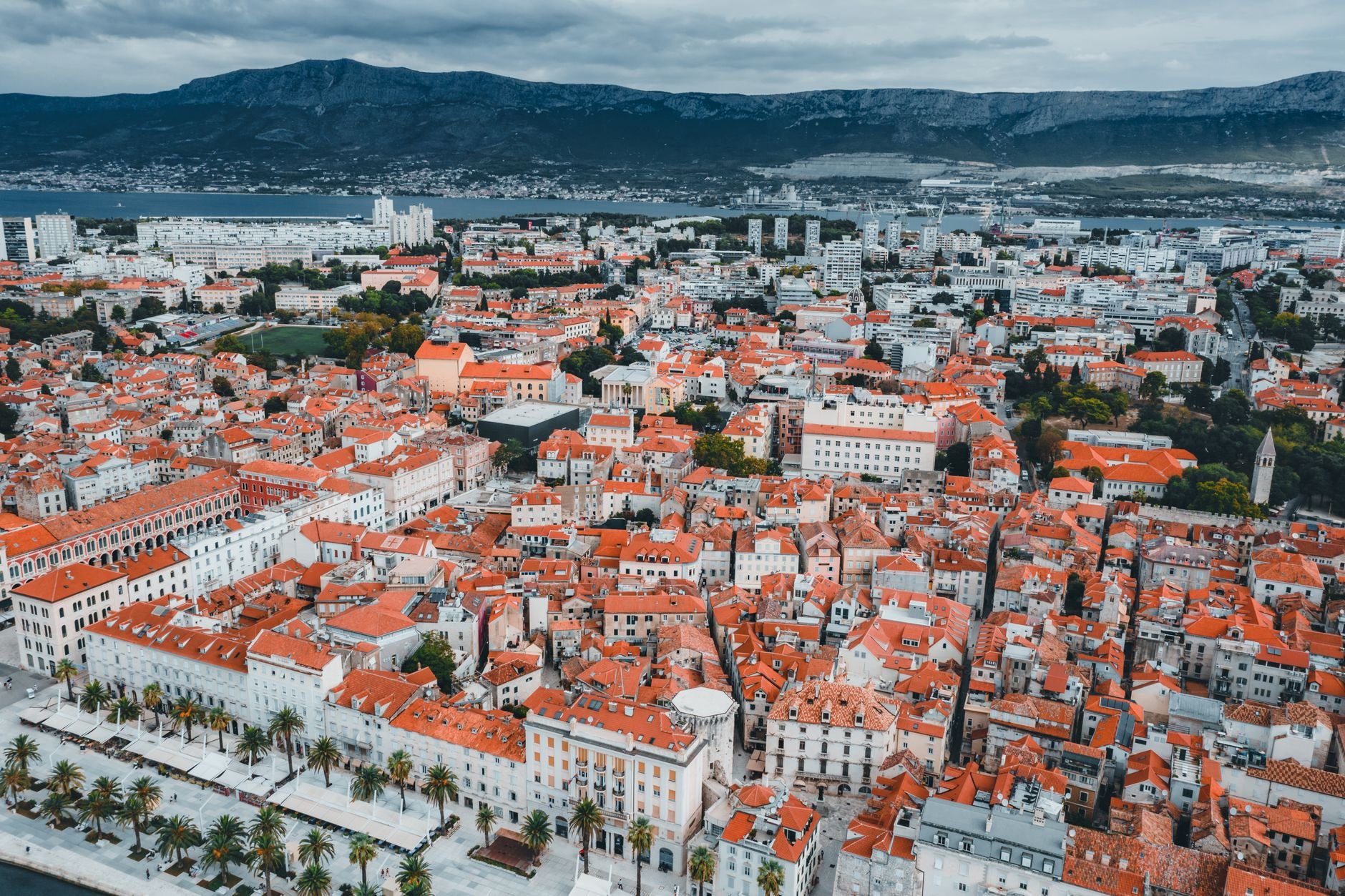
Split is a rare thing — a living city built inside a Roman emperor's retirement palace, its lanes still running between 1,700-year-old walls. Backed by mountains and facing the Adriatic islands, it is the buzzing heart of the Dalmatian coast, and far more than a stop on the way to the boats.

Type
city
Ideal length
~approx 2 days, more as an island base
Getting around
a walkable old town and waterfront; buses for the outskirts
Neighbourhoods
4 areas
Best season / months
May, June and September — warm, swimmable, and clear of the July–August crush
Language
Croatian
Currency
euro (€)
Budget level
moderate — dearer in the summer peak
Good for
  • History
  • Coast
  • Island-hopping
  • Food
▸ Discover

About Split

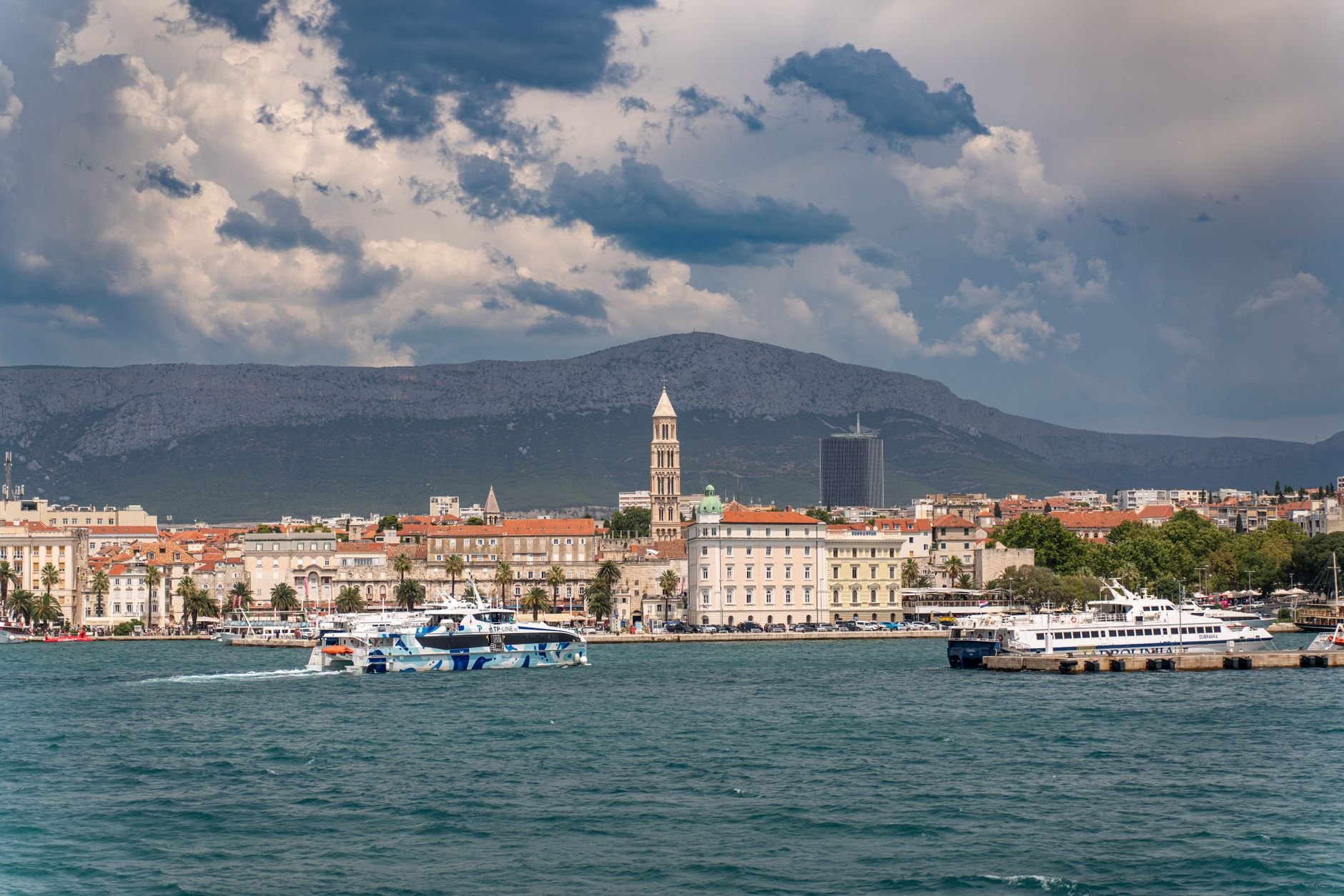
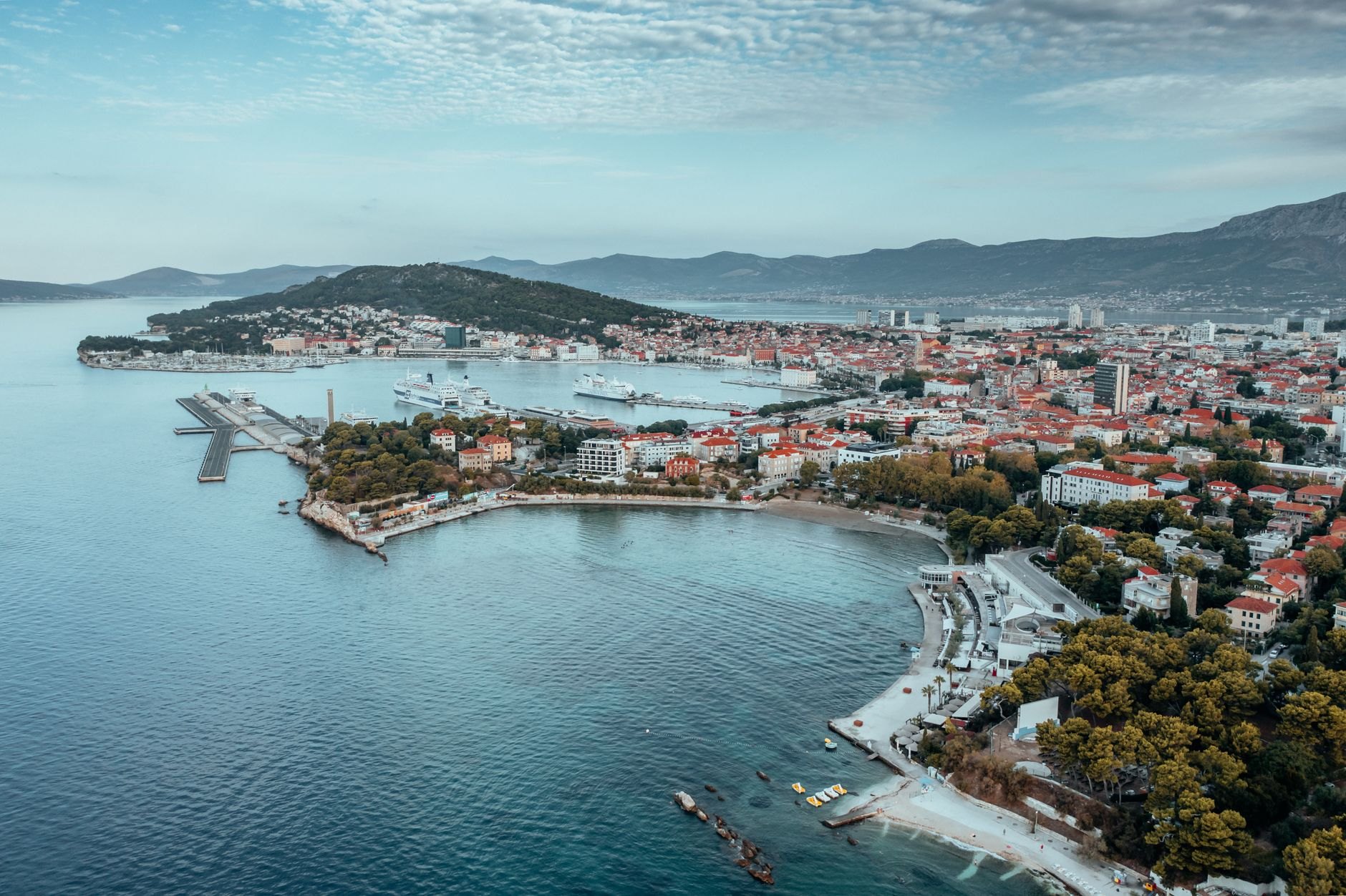
Split sits on a peninsula on Croatia's Dalmatian coast, mountains rising behind it and the islands scattered across the sea in front. Its heart is Diocletian's Palace — not a ruin but a lived-in warren, where a Roman emperor's seaside palace has been inhabited continuously for centuries, its cellars, temples and colonnades absorbed into a medieval town. Around it spread the harbour, the Riva promenade and the old fishermen's quarters, with the forested Marjan hill at the peninsula's end. It is compact, walkable and made for the coast.

Split is home to a UNESCO World Heritage Site — Historical Complex of Split with the Palace of Diocletian — inscribed in 1979.

Why go

Nowhere else lets you live inside a Roman palace — Split's old town is the palace, a maze of marble lanes, hidden courtyards and cafés wrapped in ancient walls. Beyond it, the city is the lively hub of the Dalmatian coast: a waterfront promenade made for evening strolls, a forested hill with beaches and viewpoints, superb seafood, and ferries to some of the Adriatic's best islands. It has become a proper destination in its own right, not just a gateway.

Don't miss

  • Diocletian's Palace — the living Roman palace that is the old town
  • The Peristyle — the palace's colonnaded ceremonial square
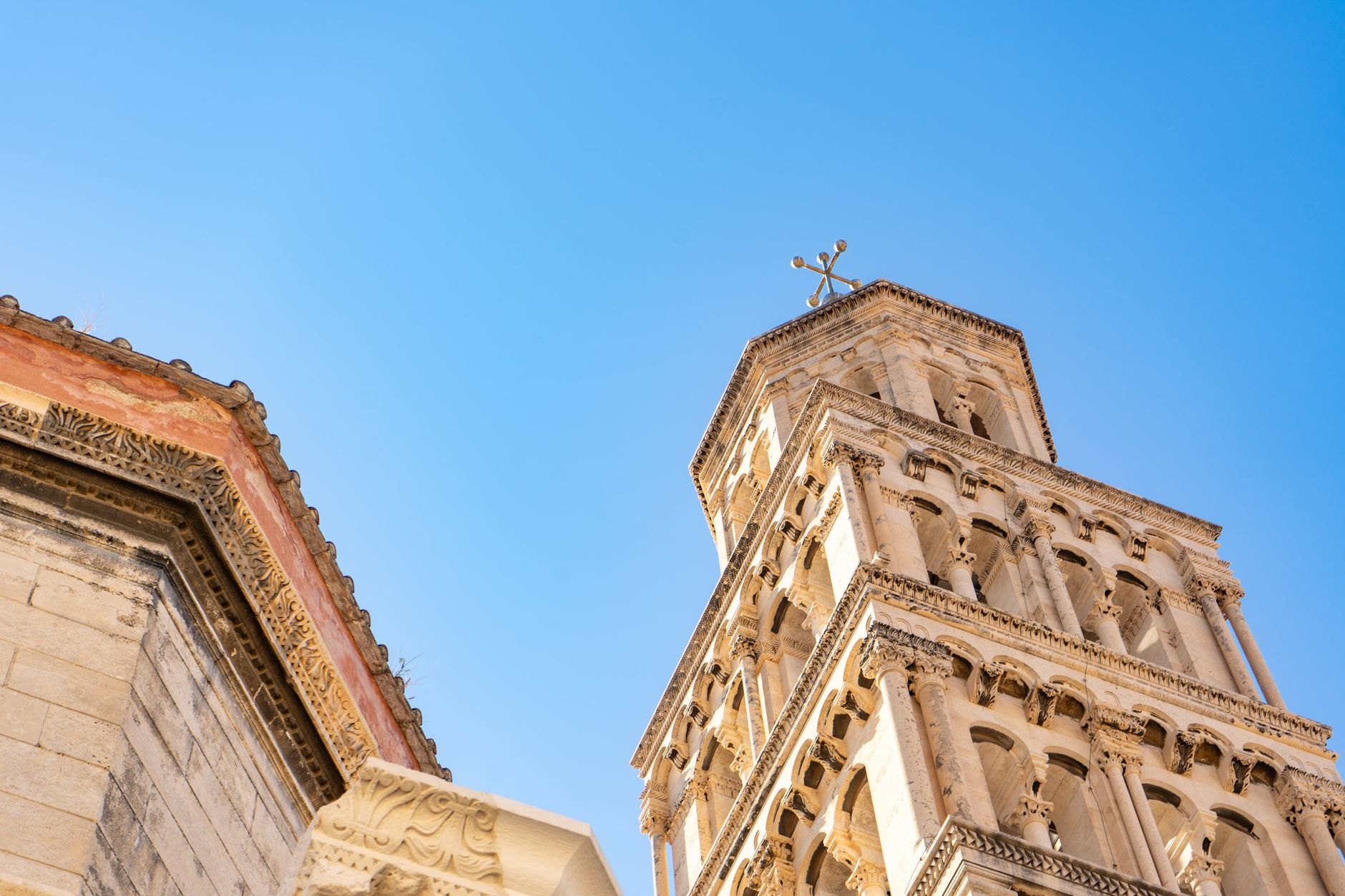
  • The Cathedral of St Domnius — a cathedral in an emperor's mausoleum
  • The Riva — the palm-lined waterfront promenade
  • Marjan hill — the forested peninsula park with views and beaches

Signature experiences

Living in a Roman palace — Split's old town is Diocletian's Palace, and the joy is that it never became a museum — cafés fill the ceremonial Peristyle, homes rise inside the ancient walls, and washing hangs between colonnades. Wander the marble lanes, go down into the vaulted cellars (once storerooms, now market and film location), and climb the cathedral bell tower — a cathedral that was the emperor's own mausoleum — for the view over it all. **The Riva and the evening ritual** — As the heat drops, the whole city comes out to walk the Riva, the palm-lined promenade along the palace's sea wall — coffee, an ice cream, and the slow evening stroll the Dalmatians call the passeggiata in spirit. It is the best free show in town, best with a drink as the sun sets over the harbour and the islands. **Marjan and a swim** — At the peninsula's end, the forested Marjan hill offers pine-shaded trails, clifftop chapels and viewpoints over the city and the sea, a green escape ten minutes from the Peristyle. On the other side, Bačvice bay is the city beach, where locals play the shallow-water game of picigin — join in, or just watch and swim. **The island gateway** — Split's harbour is the hub of the Dalmatian coast, with ferries and fast catamarans fanning out to Hvar, Brač, Vis and beyond. Base here and day-trip to the islands, or push off for longer — the boats leave right from the waterfront, and half the pleasure is choosing which blue-water island to point at.

Neighbourhoods

Split neighbourhood by neighbourhood — the character of each and who it suits.

  • Diocletian's Palace

    The old town itself — a Roman emperor's palace turned living quarter, a marble maze of colonnades, courtyards, temples and cellars packed with homes, bars and shops.

    Why go
    The single most extraordinary old town on the coast, lived-in and layered.
    Best for
    First-time sightseeingthe Roman ruinsatmosphere
    Known for
    The colonnaded Peristyle, the Cathedral of St Domnius in Diocletian's mausoleum and its bell tower, the vaulted substructure cellars, and the Golden and Bronze gates.
  • Varoš

    The old fishermen's quarter climbing the slope west of the palace — a tangle of narrow stone lanes and modest houses, quieter and more residential.

    Why go
    The village-like lanes and the walk up toward Marjan.
    Best for
    Quiet wanderinglocal characterkonoba dining
    Known for
    The steep stone lanes, the small chapels, the old taverns (konobas), and the path leading up into Marjan park.
  • The Riva and Waterfront

    The palm-lined seafront promenade along the palace's southern wall — the city's living room, all cafés and evening strolls, and the harbour beyond.

    Why go
    The promenade life, the harbour, and the sunset.
    Best for
    People-watchingcoffeeevening walks
    Known for
    The Riva promenade, the ferry and catamaran harbour for the islands, the Matejuška fishermen's harbour, and the cafés facing the sea.
  • Marjan and Bačvice

    The green end of the peninsula and the city beach — a forested hill park of trails and viewpoints on one side, and the sandy bay where locals swim and play on the other.

    Why go
    The nature, the views, and a swim close to town.
    Best for
    Walkingviewpointsbeachesswimming
    Known for
    The pine-forested Marjan hill and its trails, the clifftop chapels and viewpoints, the sandy Bačvice beach, and the local paddle-ball game of picigin played in the shallows.

Views & hidden gems

Best views

  • The Cathedral bell tower — over the palace roofs to the sea and mountains
  • Marjan hill's viewpoints — the whole city, the harbour and the islands
  • The Peristyle — the colonnaded heart of the palace, floodlit at night
  • The Riva at sunset — palms, harbour and the Adriatic

Hidden gems

  • The palace substructures — the vast Roman cellars beneath the old town
  • The Varoš lanes and their konobas — old taverns away from the tourist crush
  • The Marjan clifftop chapels — tiny hermit churches on the pine slopes
  • Matejuška — the little fishermen's harbour where locals drink at sunset
  • Klis Fortress above the city — a hilltop castle with vast coastal views

Food & drink

Dalmatian food is coastal and simple in the best way — grilled fish and shellfish straight off the boats, olive oil, and the slow-cooked dishes of the hinterland. The signature techniques are peka, meat or octopus baked slowly under a bell of coals, and black risotto stained with cuttlefish ink. Cured pršut ham and sheep's cheese start the meal; the wines are Dalmatian reds like Plavac Mali and crisp island whites, and rakija fruit brandy finishes it. Eat in a konoba, the traditional tavern.

  • Grilled Adriatic fish — the day's catch, simply grilled with oil and lemon
  • Crni rižot — black cuttlefish-ink risotto
  • Peka — meat or octopus slow-baked under a bell of coals
  • Pašticada — a slow-braised beef stew, often with gnocchi
  • Pršut and sheep's cheese — cured ham and cheese to start
  • Rakija — Dalmatian fruit brandy, the after-dinner shot
Dietary notes

Vegetarians manage with the vegetable, cheese and pasta dishes and the growing modern spots, though the classics are fish- and meat-forward, so ask. Vegan is thinner but present in the newer places. Halal and kosher food are limited and best arranged ahead. Gluten-free is understood in newer restaurants; grilled fish and risotto suit it — confirm the sauces.

Split in photos

▸ Where you'll stay

Where you'll stay in Split

Staying inside or beside the palace puts you in the atmospheric heart, steps from the Peristyle and the Riva, though the lanes can be noisy in summer with the bars. Varoš just west is quieter and characterful, a short walk in. Bačvice and the eastern seafront trade the old-town buzz for beach access. Prices climb steeply in July and August, when the city and its islands fill; book well ahead for the peak.

  • Budget
    Near the palace / Varoš hostels and budget rooms in or beside the old town, walkable to everything.
  • Mid-range
    The old town edge / Riva boutique stays in historic buildings, steps from the waterfront.
  • Luxury
    Inside the palace / the seafront converted-palace boutique hotels and seafront rooms with harbour views.
Stay

Hotels & rentals around Split

Pan, zoom and compare live prices — every stay in one map.

▸ Getting around

Getting around Split

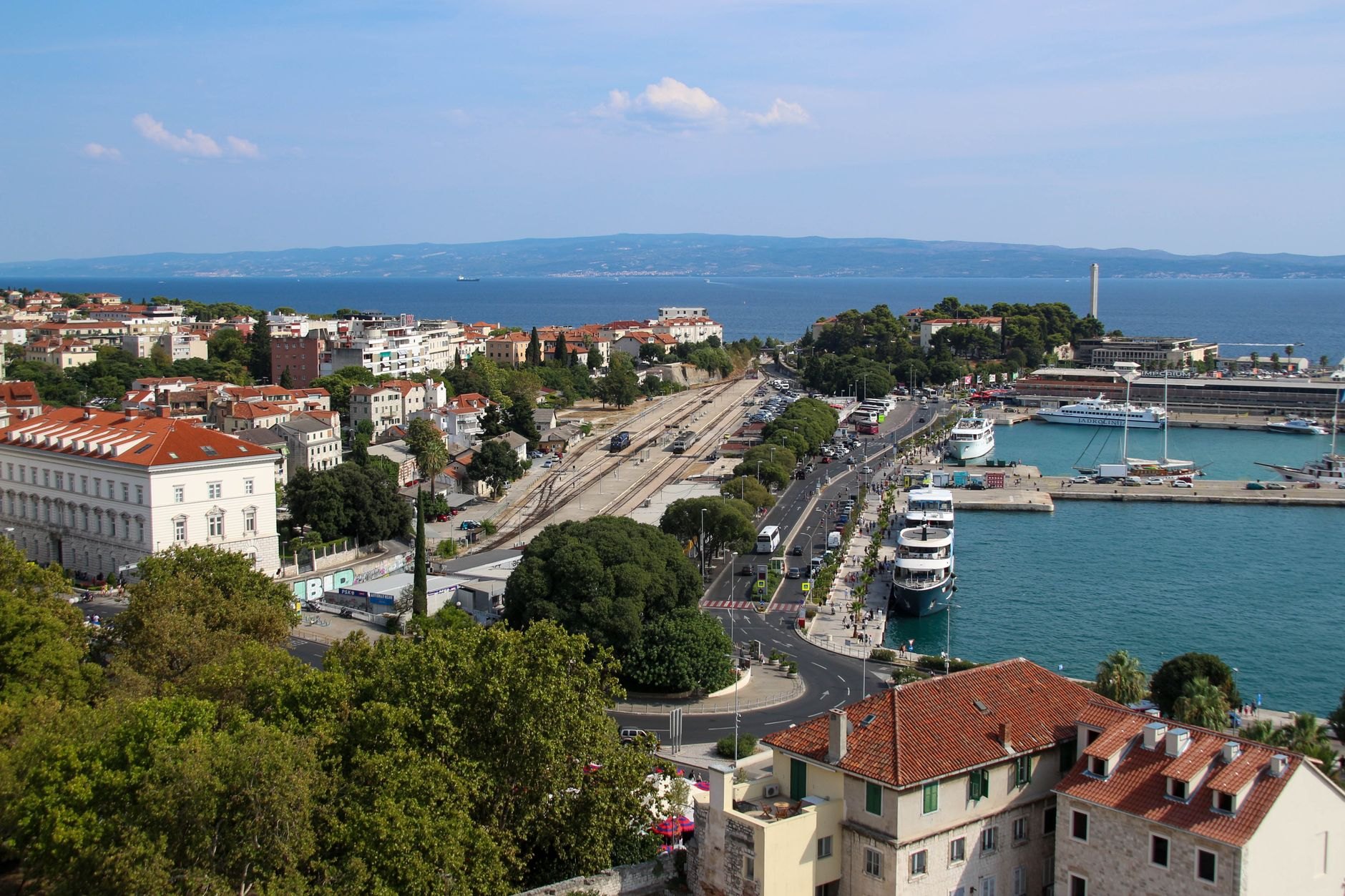
The old town and waterfront are compact and entirely walkable — a car is a liability in the pedestrian palace lanes. City buses reach the outskirts and the airport, and the ferry harbour is a short walk from the centre. For the islands you'll use the ferries and catamarans that leave from the Riva harbour.

The palace, Varoš and the Riva are all a short walk apart (~approx). Marjan hill is a walk or short bus from the old town's western edge; Bačvice beach is a few minutes east along the shore.

▸ Plan your days

Suggested itineraries

Ready-made day plans for Split — from a single day to a long weekend.

One day

Start early in Diocletian's Palace at the Peristyle, climb the cathedral bell tower, and explore the substructure cellars and the marble lanes. Break for a konoba lunch in Varoš, walk up Marjan hill for the viewpoints in the afternoon, and end with the evening stroll and a drink along the Riva at sunset.
Two days

Give day two to the sea. Take a morning ferry or catamaran to a nearby island — Brač for the beach, Hvar for the town, Šolta for the quiet — spend the day swimming and eating by the water, and return for a seafood dinner and a Matejuška sunset drink.

Three days

Use day three for the hinterland and more coast. Head up to Klis Fortress for the coastal views and the history, or take a longer island day to Vis, returning for a last night in the palace lanes.

▸ What you'll do

Insider tips

  • Explore the palace early or late — midday brings cruise crowds, and the marble lanes are magical when quieter and floodlit.
  • Book island ferries and catamarans ahead in July and August, and check whether you want a car ferry or a faster foot-passenger catamaran.
  • Wear proper shoes for the smooth, slippery palace marble and the Marjan trails.
  • Split makes a better base than a rushed stop — day-trip to the islands and Klis, and give the city itself a full day.
Explore

Explore the area

© OpenFreeMap · OSM · terrain Mapterhorn
Do

Local attractions & tours

Skip-the-line tickets and small-group tours in Split — compare across our partners.

We're still curating hand-picked tickets and tours for Split. In the meantime, the map above and the nearby cities are a great place to start.

Plan

Trips in Split

Day-by-day itineraries that take in Split — routes, timings and what to book.

▸ Budget

What it costs in Split

Backpacker
roughly €45–70 a day.
Mid-range
roughly €100–170 a day.
Luxury
€320 a day and up.
Cash vs card
Croatia uses the euro, and cards and contactless are widely taken; keep a little cash for markets, small konobas and ferry snacks.
Tipping
Around 10% is usual in restaurants if service isn't added; round up for cafés and taxis.
▸ When you'll go

When to visit Split

May, June and September — warm, swimmable, and clear of the July–August crush

Spring

What to expect — Mild warming to warm, the sea still cool early but swimmable by late spring, and the crowds light. Green hills and clear light.

What's best — Comfortable sightseeing before the heat, the old town uncrowded, early-season island trips, and warming days without the July crush.

Summer

What to expect — Hot, sunny and packed — July and August are the peak, the old town and islands crowded and prices high, the sea warm and the nights lively.

What's best — Warm swimming, buzzing nightlife, the fullest ferry schedules for the islands, and long balmy evenings on the Riva. Come in June or September to dodge the worst of the crush.

Autumn

What to expect — Warm easing to mild, the sea still swimmable into October, the summer crowds thinning and the light golden. Wetter as it turns.

What's best — Warm days and swimmable sea with fewer people, the food and wine harvest, and comfortable old-town wandering.

Winter

What to expect — Mild but wet and windy for the Mediterranean, with cool days, few tourists and many island ferries and restaurants scaled back. The cold bura wind can blow hard.

What's best — A quiet, local old town, low prices, and the Roman palace at its most atmospheric — pack for wind and rain, and expect a sleepier city.

▸ Know before you go

Know before you go

Honest swaps

Skip the tourist-menu restaurants on the Peristyle → eat grilled fish and peka in a konoba in Varoš or the back lanes.

Skip judging Split as just a ferry port → give it the palace, Marjan and a Riva evening, and it stands on its own.

Skip the crowded midday Hvar day-boats in peak season → take an early or late catamaran, or pick a quieter island like Vis or Šolta.

Skip paying for a "Game of Thrones tour" if you're not a fan → the palace cellars and Klis are worth seeing on their own terms.

Crowds & timing

The palace and the cathedral tower are busiest midday when cruise passengers and island day-trippers overlap — go early or in the evening.

July and August fill the old town and the island ferries; book accommodation and popular boats well ahead.

Local rules & etiquette

The palace is a living neighbourhood — keep the noise down in the residential lanes at night.

Cover shoulders and knees to enter the cathedral, and mind the bell-tower's steep, narrow climb.

On the beaches, the local picigin game is played in the shallows — join in good-naturedly, and mind that some coves are pebbly, so bring water shoes.

Money

Croatia is on the euro; cards work widely, but carry a little cash for konobas, markets and ferries.

Use bank ATMs, decline dynamic currency conversion, and check ferry timetables and tickets in advance in peak season.

After dark

The palace lanes hum with bars and cafés in summer, busy and central.

Matejuška and the Riva are the mellower waterfront drinking spots at sunset.

Bačvice has the summer beach-club and late-night scene east of the centre.

▸ Ready to book your trip?

Getting there

Split Airport (SPU) lies northwest of the city near Trogir, linked by shuttle bus and taxi to the centre (~approx 30–45 min). Split is also a rail and coach terminus, and above all a ferry hub — the harbour is right by the old town, with boats to the islands and along the coast.

Book

Ready to book your trip?

Flights, airport transfers and car hire — search and compare without leaving the page.

▸ Trip extras
Book

More trip extras

Parking, holiday extras, and more — coming soon.

Coming soon

We're lining up parking, holiday extras and activities you'll be able to add to any trip from here.