One day
Walk Old Havana's four plazas in the morning and lunch at a paladar, then take a classic-car ride along the Malecón into Vedado for sunset and live music after dark.
A decaying-glamorous time capsule on the Caribbean — crumbling colonial grandeur, 1950s American cars, rooftop salsa bars and a resilience that makes it unlike any city on earth.
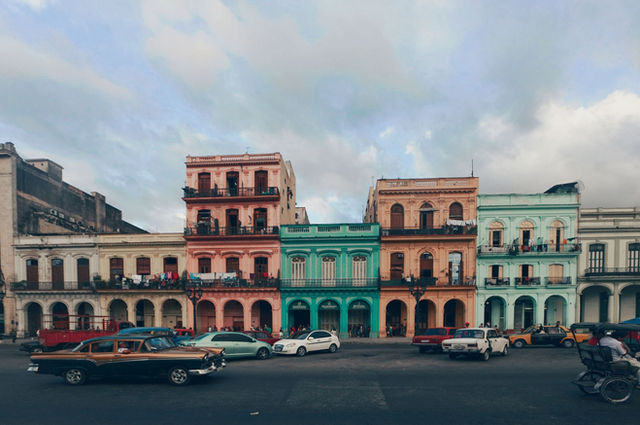
A pastel 1950s convertible rumbling along the sea wall, salsa drifting from an open doorway, and the salt spray of the Malecón catching the last of the light.
Havana rewards slow wandering and refuses to hurry. Walk the plazas, sit on the sea wall at dusk, and let a city caught between decay and revival hand you its rhythm one street at a time.
Havana is the capital and largest city of Cuba, a city of about 2.1 million people on the northwest coast of the island, facing the Straits of Florida. It is simultaneously one of the most beautiful and most complex destinations in the Americas: a UNESCO-listed historic centre (Habana Vieja, Old Havana) of Spanish colonial architecture in varying states of magnificent decay; a seafront Malecón boulevard that serves as the city's outdoor living room; and a living culture of music — son, salsa, Afro-Cuban jazz — that pulses from practically every open doorway. The city's political isolation under Castro's socialist state has paradoxically preserved much of its 1950s architectural fabric (the American hotels, the Buena Vista Social Club, the vintage Chevrolets and Buicks that serve as taxis) while generating genuine hardship for its residents. Visiting Havana is ethically complex and practically challenging (internet is limited; cash-only economy; two currencies until recently unifying) — but for those who engage with it honestly, it is one of the world's most unforgettable and irreplicable urban experiences.
Havana is one of the last places on earth where a major capital city feels genuinely outside the global tourism monoculture — there is no Starbucks, no McDonald's (at time of writing), and very little that feels designed for international visitors in the way that every Mediterranean resort destination has been smoothed into familiar shapes. Old Havana's Baroque and Neoclassical squares (Plaza de Armas, Plaza Vieja, Plaza de la Catedral) are architecturally extraordinary; the Malecón at sunset with the old American cars cruising past is one of the great urban spectacles; and a night of live music in a Casa de la Trova — a traditional music venue — with rum, dancing and an audience of mixed Cubans and visitors is the kind of experience that doesn't exist elsewhere. Havana also has real historical depth: the Museo de la Revolución in the former Presidential Palace, the fortresses of Morro and Cabaña across the bay, and the Ernest Hemingway connections (La Floridita bar, Finca Vigía estate) are all genuinely interesting. This is not a comfortable, easy destination — but that is part of why it is so vivid.
A drive in a classic American car — Havana's 1950s Chevrolets and Buicks still roll as taxis, and an open-top hour along the Malecón and up through Vedado is the city's set-piece thrill. Agree the price first, and go at golden hour when the sea wall and the pastel facades are at their best.
Live son and salsa after dark — Music is everywhere here, from a trova guitarist in a plaza to a full brass band in a Vedado club. Chase it at a casa de la música or a neighbourhood bar rather than the tourist floor shows, and expect the dancing to start late.
The colonial plazas of Old Havana on foot — The restored heart of the city links four grand squares — Plaza Vieja, Plaza de la Catedral, Plaza de Armas and Plaza San Francisco — within a short walk. Go early before the heat and the cruise crowds, and duck into the side streets where the restoration peters out into real life.
Rum, cigars and a Hemingway crawl — Havana is a rum-and-tobacco city, and the two threads meet in its old bars. Trace the writer's well-worn route from the mojitos of La Bodeguita del Medio to the daiquiris of El Floridita, and pair it with a cigar-factory visit to see the leaf rolled by hand.
Havana neighbourhood by neighbourhood — the character of each and who it suits.
The UNESCO-listed colonial core, a grid of cobbled plazas, Baroque churches and pastel mansions caught mid-restoration between the harbour and Centro. It is the most touristed but most beautiful part of the city.
The dense, crumbling, intensely lived-in quarter between Old Havana and Vedado, largely untouched by restoration — washing strung across balconies, street baseball, and almost no tourists.
The leafy 20th-century district of wide avenues, faded modernist mansions and 1950s hotels laid out on a grid above the sea. It is the city's cultural and nightlife heart.
The spacious, upmarket western district across the Almendares river, lined with embassies, mid-century villas and shady avenues. Quieter and greener than the centre.
A far-western fishing suburb transformed by the artist José Fuster into a sprawling, Gaudí-esque mosaic wonderland of tiled houses, benches and sculptures — known as Fusterlandia.
Cuban state food — the comida criolla staple of rice, black beans, roast pork (lechón), yuca and plantain — can be excellent when home-cooked or in a good paladar (privately owned restaurant), or deeply disappointing at state restaurants catering to international visitors. The paladar revolution that has been evolving since the 1990s has produced some genuinely impressive restaurants — La Guarida (in a crumbling Habana Vieja mansion, immortalised in the film 'Strawberry and Chocolate'), San Cristóbal (famously visited by Barack Obama), and several newer spots in Vedado serve sophisticated riffs on Cuban and Caribbean cooking. Rum is the city's great drink: a mojito (white rum, lime, mint, sugar, soda) at La Bodeguita del Medio (Hemingway's supposedly favourite bar, now very touristy), or a daiquiri at La Floridita, or simply Ron Santiago or Havana Club 7-year aged neat, are all part of the experience. Coffee is strong and served sweet. Fresh tropical fruit is abundantly available at the agromercados (farmers' markets).




For a first visit, base in Old Havana to be walking distance from the plazas, or in Vedado for nightlife, food and a more local feel. The classic Cuban stay is a casa particular — a room in a family home — which is great value and the best source of on-the-ground advice; restored boutique hotels in the colonial core cost more but put you in the thick of it. Miramar is quieter and more spacious but a taxi from the sights.
Pan, zoom and compare live prices — every stay in one map.
Getting around Havana requires flexibility and patience. The most atmospheric option is the classic American car 'almendrones' (shared taxis running fixed routes) — flag one down on a main boulevard and pay a peso fare to travel with locals. Individual classic-car taxis (the convertibles seen in photographs) charge much higher dollar/CUP rates and are geared to tourists. Coco-taxis (three-wheeled yellow pods) are novelty-value tourist conveyances rather than practical transport. Bicitaxis (cycle rickshaws) are useful for short Old Havana distances. City buses (Habana Bus Tour open-top double-deckers on the tourist route, and the regular city Metrobus/guagua) cover most of the city. Walking is entirely practical within Old Havana and Centro Habana; the Malecón is a 7km coastal walk that many visitors do end-to-end. Havana's layout is logical — Habana Vieja (Old Havana), Centro Habana, Vedado (the more modern district with hotels and restaurants) and Miramar (embassies, upscale) are the main zones. No Uber or equivalent; no reliable street maps at tourist shops. Download offline maps before arrival.
Havana's public transport is complex and largely geared to residents rather than tourists. The Habana Bus Tour (T1 and T3 routes, open-top double-deckers in the tourist style) connects major sights — Habana Vieja, Vedado, Miramar — and is the easiest option for visitors; a 24-hour pass costs around $5 USD equivalent. The city's standard buses (guagua, operated by Metrobús) are crowded, poorly marked and require some local knowledge but are the cheapest way to travel. Almendrones (shared American car taxis) run fixed routes along the main boulevards for a peso fare — ask Cubans which one goes where. Individual taxis (classic American cars or Geely Chinese-made modern taxis) are metered or negotiated; always agree the fare before getting in. No Uber or Bolt equivalent operates. Walking is perfectly practical within Old Havana and along the Malecón; bicycles and bici-taxis serve shorter distances.
Ready-made day plans for Havana — from a single day to a long weekend.
Walk Old Havana's four plazas in the morning and lunch at a paladar, then take a classic-car ride along the Malecón into Vedado for sunset and live music after dark.
Add a day for Centro Habana and the Callejón de Hamel rumba, a night at the Fábrica de Arte Cubano, and a half-day at the harbour fortresses of El Morro and La Cabaña.
Fold in Fusterlandia and Miramar, a day trip out to the tobacco country of Viñales or the beaches of Playas del Este, and unhurried time simply sitting on the Malecón.
The Malecón at dusk — when families, couples, fishermen, teenagers and musicians all converge on the seawall — is the best free experience in Havana and one of the great urban evening rituals anywhere. The Cementerio de Cristóbal Colón in Vedado is a city within a city: an extraordinary 57-hectare 19th-century cemetery with monumental neoclassical tombs that doubles as an open-air sculpture park — almost no tourists ever go there. For the best live music, the Casa de la Música in Miramar (and the one in Centro Habana) puts on nightly salsa concerts with Cuban audiences and exceptional local bands; far better than the tourist-facing venues on Obispo. The morning at the Plaza de Armas second-hand book market — Cuba's literary culture in action — is a quiet, authentic pleasure. Sort out cash before you arrive: international bank cards often don't work in Cuban ATMs (US sanctions affect many international banking partners) — carry sufficient euro or sterling in cash.
Skip-the-line tickets and small-group tours in Havana — compare across our partners.
We're still curating hand-picked tickets and tours for Havana. In the meantime, the map above and the nearby cities are a great place to start.
The best time to visit is Jan–Mar and Dec, when the weather is mildest with fewer rainy days.
What to expect — The dry-season peak — warm, sunny days, lower humidity and the busiest, priciest months, roughly November to April. Book ahead around Christmas and New Year.
What's best — The most reliable weather for walking the city and sitting out on the Malecón, and the liveliest cultural calendar.
What to expect — The tail of the dry season tipping into the first real heat and humidity; April and May stay largely dry, with thinning crowds after Easter.
What's best — Warm sea, long days and lower prices than midwinter, before the summer rains set in.
What to expect — Hot, humid and wet, with short heavy afternoon downpours and the start of the Atlantic hurricane season, which runs into November. Locals decamp to the beaches.
What's best — Cheaper stays, a buzzing beach scene at the nearby Playas del Este, and warm late evenings — just build flexibility around the weather.
What to expect — The peak of hurricane season, roughly August to October, brings the highest storm risk and steamy heat, easing toward drier, pleasant weather by late November.
What's best — The quietest, cheapest window, with the city to yourself between weather systems — travel insurance and a flexible plan matter most now.
Cuba runs largely on cash: bring enough euros or US dollars for your whole trip, as cards are unreliable and cards issued by US banks generally do not work at all. Check the latest guidance before you travel, as the rules change often.
Change money at official cadecas or banks into Cuban pesos for street stalls, markets and taxis; casas particulares and paladares are usually settled in cash.
Internet is limited and slow: buy an ETECSA data package or an eSIM where available, and download offline maps and any bookings before you arrive. Provision changes often, so check the current options.
Tip in cash for good service in restaurants and casas, and for musicians. Photography is welcome, but ask before photographing people, and avoid military or official buildings.
The long-running US trade embargo shapes daily life — shortages of fuel, medicines and some everyday goods are common, so bring any essentials and toiletries with you.
The dry winter months and the holidays are the busiest; book casas particulares and classic-car tours ahead in that window.
Power cuts (apagones) happen — a casa with a backup generator is worth seeking out, and a torch is handy.
Havana is considerably safer than many comparable Latin American capitals, with a low rate of violent crime against tourists; the police presence in tourist areas is high and the Cuban government places great emphasis on tourist safety. The most common issues are petty theft (pickpocketing in crowded Old Havana streets and markets), scams from hustlers (jineteros) who offer guided tours, cigars, or restaurant recommendations in exchange for a commission — politely declining and walking on is the standard approach. All 'official' cigars offered on the street are fakes; genuine Cuban cigars are bought at official Casa del Habano shops. The dual monetary system historically caused confusion and scope for overcharging; the currency situation is in ongoing flux — always check current advice. Medical facilities are variable; comprehensive travel insurance with medical repatriation cover is strongly recommended. The political situation means that freedom of speech norms are different; avoid political commentary in public.
Cubans are warm, outgoing, fiercely proud of their culture and history, and deeply curious about foreign visitors — a conversation begun at a bus stop or a café can go for hours. A willingness to engage — to listen to music, to accept a cup of coffee, to acknowledge the difficulty of Cuban daily life without reducing it to either a socialist paradise or a cautionary tale — will be appreciated. Basic Spanish is important here to a greater degree than in more tourist-saturated destinations; English is not widely spoken outside hotels and major tourist restaurants. Photography: always ask before photographing individuals; soldiers, police, and government buildings should not be photographed. Tipping: in restaurants (10–15% at paladares) and for musicians who perform for you. Bringing gifts (medicines, toiletries, school supplies) for host families or community hosts is deeply appreciated and a meaningful way to engage with the country's realities.
£55/day mid-range (budget £25, luxury £150+; note: currency situation volatile — verify current rates before travel)
106 (police), 104 (fire & ambulance), 107 (tourism police)
José Martí International Airport (HAV), Terminal 3, is the main international gateway for Havana, located 18km southwest of the city. Non-stop flights from Europe are available from Madrid (Iberia, Air Europa), Paris (Air France), Amsterdam (KLM), London Gatwick (Virgin Atlantic seasonal), Zurich (Edelweiss), and others. From the UK, the easiest option is typically a connection via Madrid, Paris or Amsterdam, or a charter flight. Most US citizens remain subject to travel restrictions (you must qualify under an OFAC licence category — tourism per se is not legal for Americans, though the rules shift). From the airport, metered taxis to Old Havana should cost around CUP 1,200–1,500 (dollar equivalent approximately $25–35 at time of writing, though Cuba's currency situation is complex and volatile — always confirm the current exchange situation before travelling). Ride-hail apps do not operate in Cuba; negotiate the fare before getting in a taxi or use the fixed-rate taxi queue at the terminal exit.
Flights, airport transfers and car hire to HAV — search and compare without leaving the page.
Parking, holiday extras, and more — coming soon.
We're lining up parking, holiday extras and activities you'll be able to add to any trip from here.