







Ethiopia
Injera and fiery stews shared by hand from one platter — and the coffee ceremony that gave the world coffee.
Ethiopian food arrives as one great shared round: a sheet of injera, the sour, spongy teff flatbread that is plate, cutlery and staple all at once, mounded with little heaps of stew. You eat with your right hand, tearing off pieces to scoop up doro wat — chicken and egg slow-simmered in the red heat of berbere spice and spiced butter — and to feed a companion by hand, a gesture of affection called gursha.
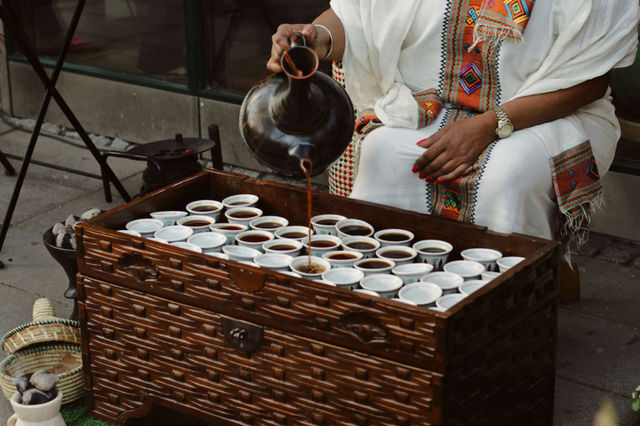
The Orthodox calendar splits the menu in two: on fasting days the platter turns vegetarian, a wheel of lentils, greens and pulses (beyaynetu); off them come kitfo minced raw beef and sizzling tibs. And then coffee, in the country that gave the world the bean — roasted over coals in front of you, ground, and brewed in three unhurried rounds through clouds of incense. Nowhere else eats quite like this.
- Injera (spongy sour teff flatbread)
- Doro wat (spiced chicken and egg stew)
- Kitfo (minced raw spiced beef)
- Tibs (sautéed meat cubes)
- Shiro (spiced chickpea purée)
- Beyaynetu (vegetarian fasting platter)
- Buna (coffee ceremony)