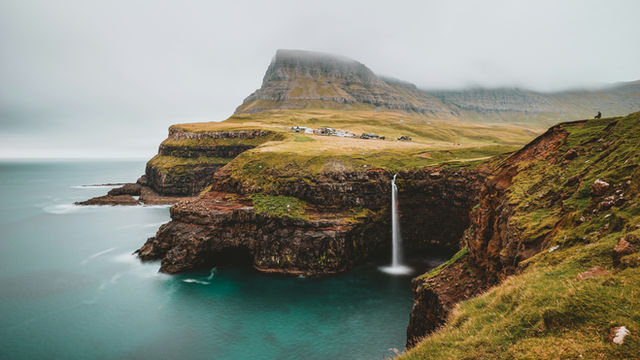
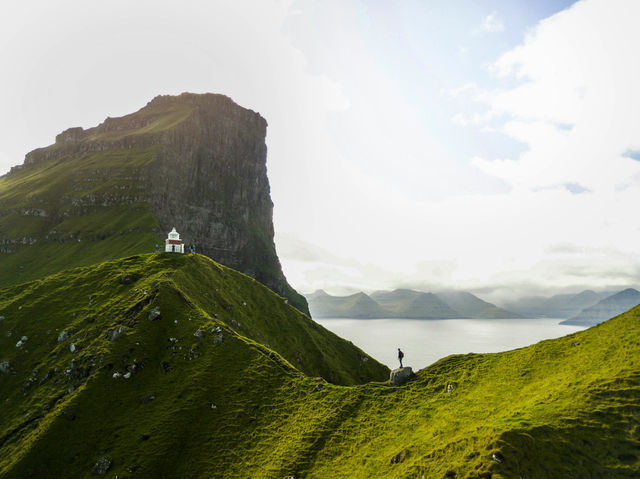
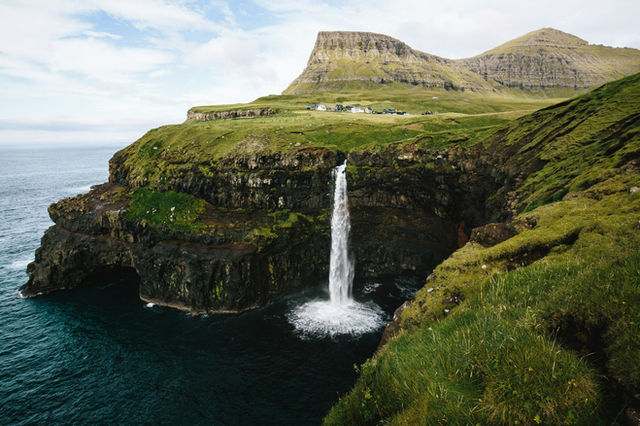
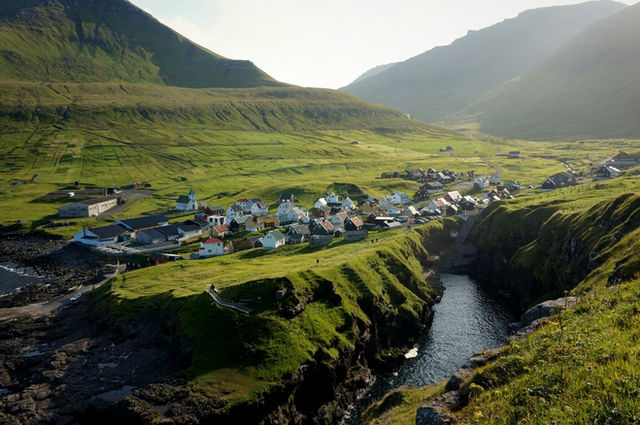
Faroe Islands
Wind-fermented mutton, grass-fed lamb and New Nordic tasting menus, out in the roaring North Atlantic.
Faroese food is shaped by wind. With no trees for fuel and little salt, islanders learned to hang meat and fish in slatted sheds and let the constant Atlantic gale cure them — a technique called ræst. The result is skerpikjøt, wind-dried mutton hung for months and sliced paper-thin like a cured ham, pungent and deeply savoury, and ræstur fiskur, matured fish eaten with tallow and potatoes. It's an acquired taste, and the Faroese wear it with pride.
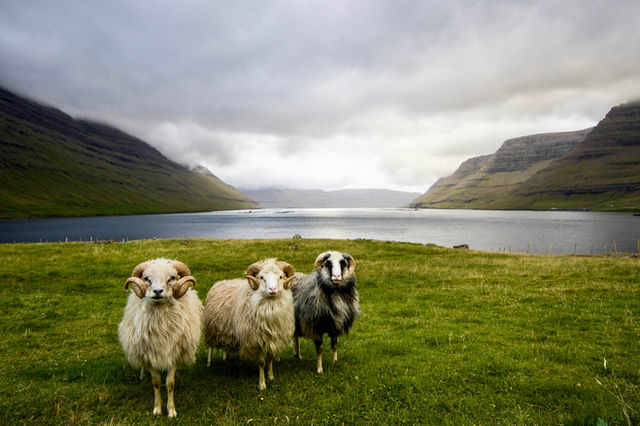
Underpinning it all is the sheep — they outnumber people here, and grass-and-herb-fed lamb is the islands' quiet glory. The pilot-whale hunt still supplies grind og spik, a communal and internationally debated tradition eaten less by the young. And in tiny Tórshavn, the two-Michelin-starred KOKS put these old drying and fermenting techniques on the world stage. Best of all is heimablídni — dining in a local family's home.
- Skerpikjøt (wind-dried mutton)
- Ræst kjøt (semi-fermented mutton)
- Ræstur fiskur (fermented fish)
- Seyðakjøt (grass-fed lamb)
- Grind og spik (pilot whale and blubber)
- Garnatálg (cured tallow)
- Föroya Bjór (local beer)