Biarritz
- City
- June, September, and October
- ~approx 2–3 days
- Atlantic Breakers
- Basque Taverns
- Imperial Frontages
Sea salt crusts the casino windows while surfers trot barefoot past stone villas into crashing waves.
A Basque coastal outpost shaped by imperial whims and heavy ocean swells, Biarritz balances grand architecture with raw surf culture.
- Type
- town
- Ideal length
- ~approx 2–3 days
- Getting around
- walking + local buses
- Neighbourhoods
- 3 districts
- Best season / months
- June, September, and October
- Any traveller · Surfing · Food · Architecture
About Biarritz
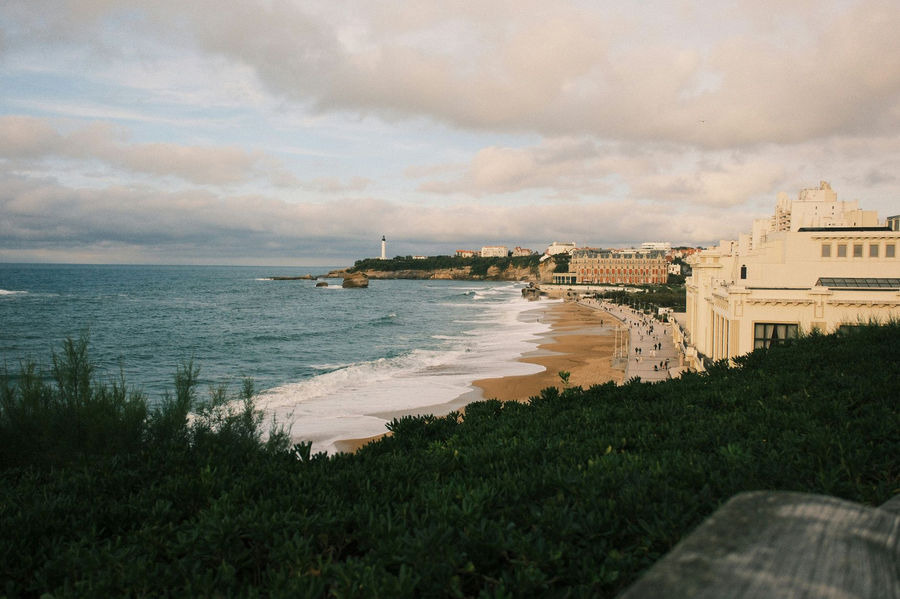
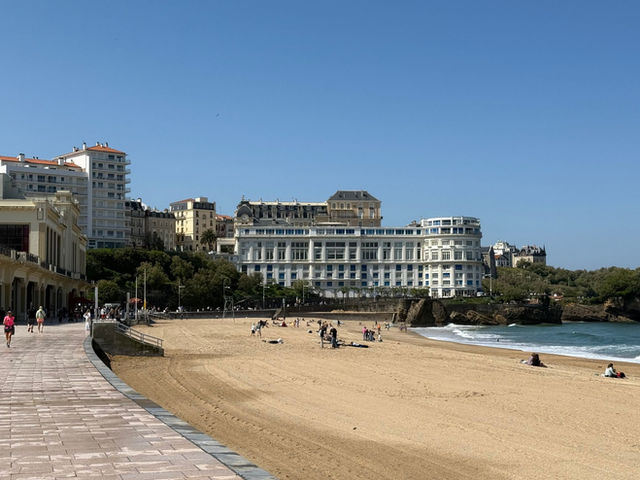
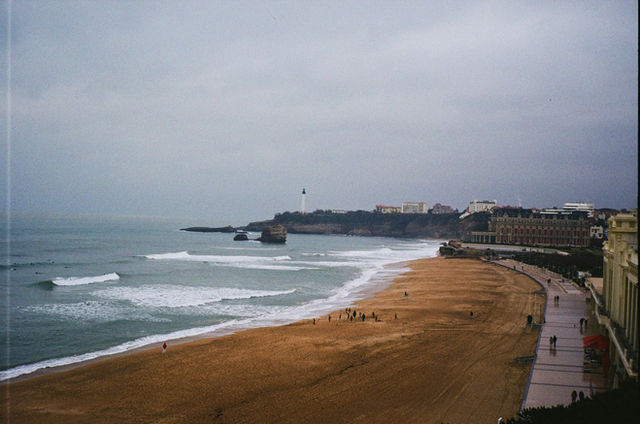
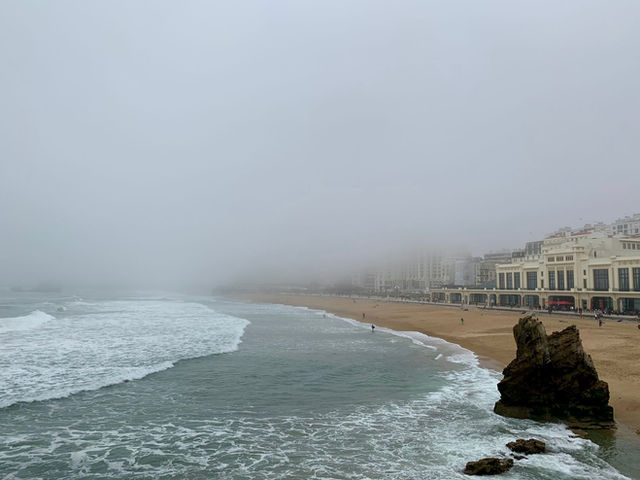
Biarritz clings to the rugged cliffs of the Bay of Biscay in the southwestern corner of France. The town contours around a series of rocky coves, defined by the wide sands of the Grande Plage and the promontory of the Rocher de la Vierge. The layout moves from the compact, market-driven streets of the center uphill into residential pockets and down toward the southern beaches, connected seamlessly by foot and local buses.
Why go
It offers premier Atlantic surfing alongside deep Basque heritage and grand architecture, avoiding the sterile plastic vibe of typical luxury resort strips.
Don't miss
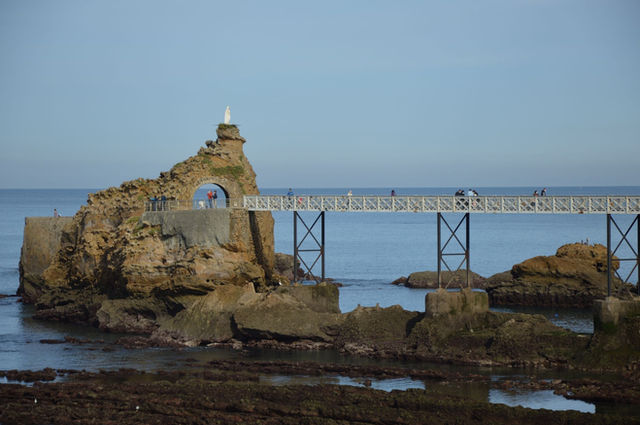
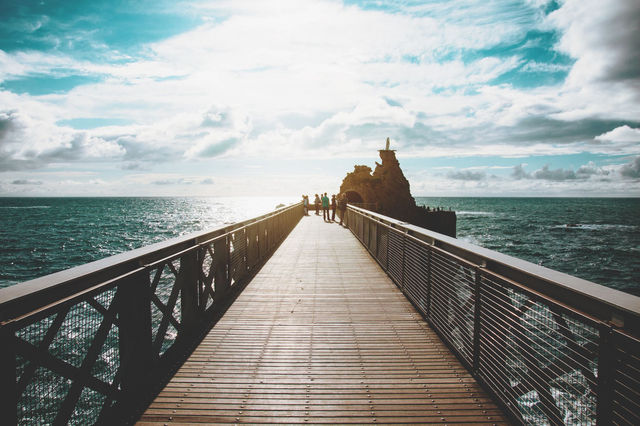
- Rocher de la Vierge — cross the historic bridge
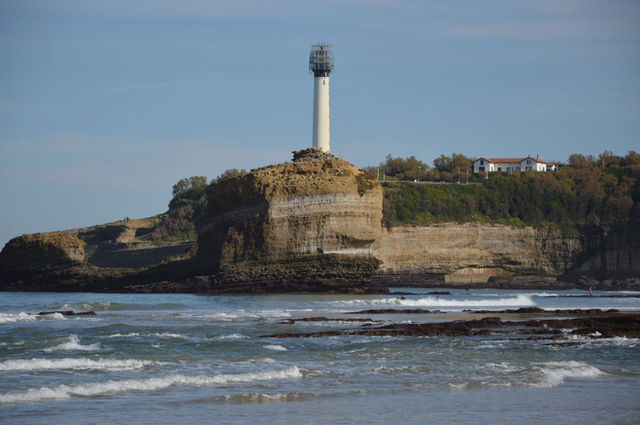
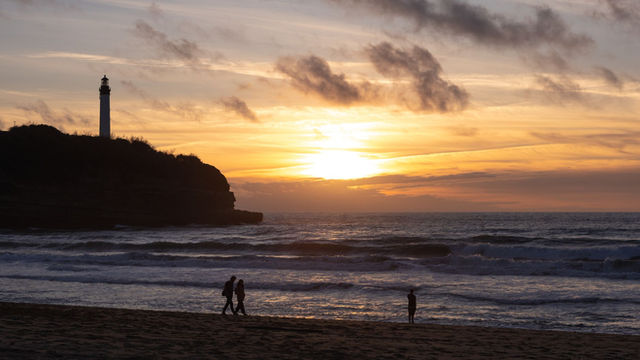
- Phare de Biarritz — climb the lighthouse for views
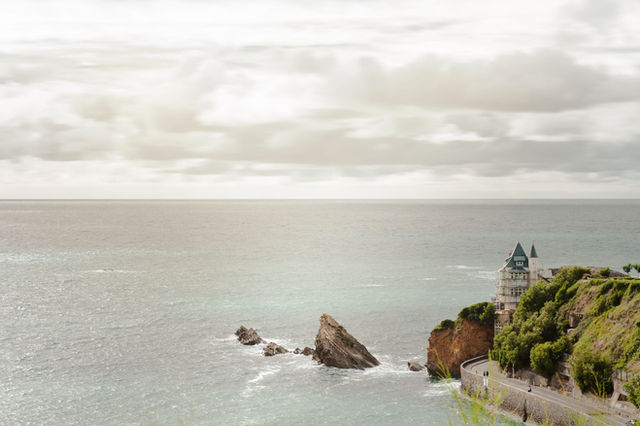
- Villa Belza — view the dramatic cliffside villa
- Les Halles de Biarritz — browse the covered market
- Côte des Basques — watch surfers ride Atlantic waves
Signature experiences
Market mornings and counter grazing — Start early at Les Halles de Biarritz, navigating between stalls piled high with regional products. Skip the sit-down cafes outside and squeeze into the indoor counters to eat pintxos and ham right next to the vendors.
Cliffside pacing past imperial relics — Walk the coastal path from the Grande Plage toward the rugged promontory of the Rocher de la Vierge. Crossing the metal footbridge—built by Gustave Eiffel's workshops—reveals the raw power of the Atlantic crashing through stone arches beneath the profile of Villa Belza.
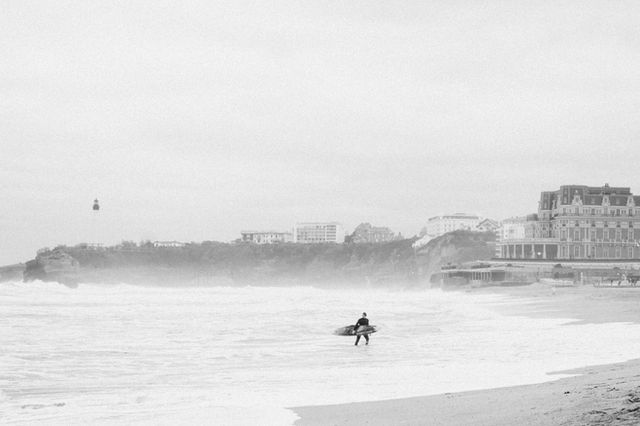
Swell watching at the surf birthplace — Head down the winding switchback paths to the sands of Côte des Basques. Find a spot on the stone sea wall to watch longboarders negotiate the heavy waves at the spiritual home of European surfing.
Neighbourhoods
Biarritz neighbourhood by neighbourhood — the character of each and who it suits.
-
Saint-Charles
Sitting north of the center toward the lighthouse, this district feels like a self-contained village. It trades the tourist flash for independent shops, quiet squares, and everyday routines.
-
Les Halles
The dense retail engine of the town centers around the covered market pavilions. By day it runs on the scent of ham and fresh fish; by night the alleys fill with taverns and outdoor tables.
-
Beaurivage
Perched on the cliffs overlooking the southern beaches, this old quarter operates as a surfing hub. Expect casual shacks, vintage shops, and people checking the ocean swell at every corner.
Views & hidden gems
Best views
- Phare de Biarritz — the rocky headland platform framing the sweep of the town beaches
- Plateau de l'Atalaye — an elevated walkway providing views of the fishing port and crashing waves
- Côte des Basques switchbacks — the clifftop paths overlooking the surf coast down toward Spain
Hidden gems
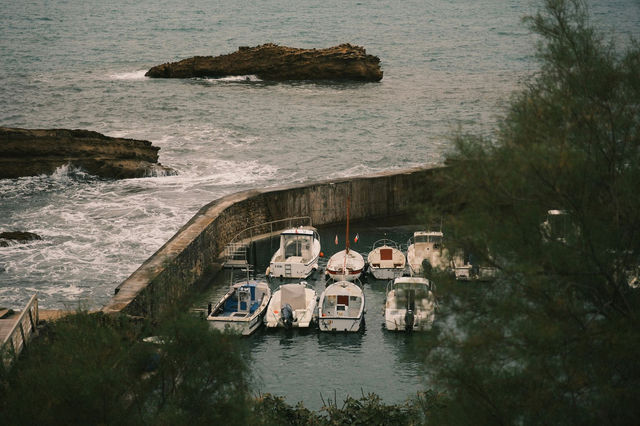
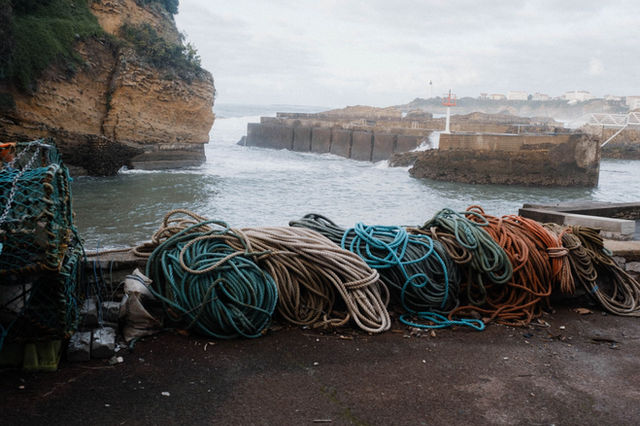
- Port des Pêcheurs — the tiny fishing shacks tucked beneath the main coastal road
- Plage du Port Vieux — a horseshoe-shaped sand cove protected from heavy waves by rocky walls
- Rue Gambetta steps — the narrow pedestrian stairways cutting through the central hills
Food & drink
The food scene bridges oceanic abundance and mountain tradition, heavily influenced by Spanish proximity. The lanes around Les Halles serve as the capital of eating, where formal dining is rejected in favor of hopping between Basque cideries and pintxos bars. Seafood is standard, but the unifying ingredient is the mild spice of the red Espelette pepper, which seasons everything from stews to cured meats.
- Gâteau Basque — a traditional pastry crust filled with black cherry jam or custard
- Axoa — a rustic Basque stew of minced veal, onions, and Espelette peppers
- Pintxos — tapas spiked on bread slices with toothpicks, lined up along bar counters
- Irouléguy — the robust wine poured from clay carafes
- Jambon de Bayonne — thin slices of salt-cured ham produced in the neighboring valley
Biarritz in photos
Where you'll stay in Biarritz
Base yourself around Les Halles if you want to walk out your door straight into morning market stalls and late-night wine bars, though you will battle scarce parking and street noise on summer weekends. Choose a cliffside spot in Beaurivage for direct beach access, sunset views, and a laid-back surf crowd. Avoid staying far inland near La Négresse or the airport unless transit convenience is your single priority, as these commercial car-centric strips lack any coastal charm.
Hotels & rentals around Biarritz
Pan, zoom and compare live prices — every stay in one map.
Getting around Biarritz
The historic core is highly dense and walkable; you can cross the main beach zones on foot in ~approx 20 min. The Txik Txak bus network handles longer trips to neighboring bays, while a car is an absolute liability due to narrow one-way cliff tracks and expensive parking meters.
Walk along the coastal promenade of Quai de la Plage to connect Saint-Charles to Les Halles in ~approx 10 min, or climb the steps south to reach Beaurivage.
Insider tips
- The beach at Côte des Basques disappears completely at high tide, leaving waves crashing directly against the concrete sea wall; check the local tide charts before heading down or you will find nowhere to stand.
- The free electric town shuttles loop the main beaches and center continuously, saving you a steep uphill walk from the shore.
While you're there
-
 3 OCT Cultural & Traditions See the event →
Explore the area
Local attractions & tours
Skip-the-line tickets and small-group tours in Biarritz — compare across our partners.
We're still curating hand-picked tickets and tours for Biarritz. In the meantime, the map above and the nearby cities are a great place to start.
When to visit Biarritz
June, September, and October
Spring
What to expect — Wildflowers carpet the cliff paths, the ocean looks emerald green, and the beaches are wide open, though spring showers can roll in from the sea without warning. Most surf schools restart their operations by late April.
What's best — Walking the coastal promenades in clean air before the summer vacation bottlenecks choke the paths.
Summer
What to expect — The town goes into holiday overdrive, beaches pack tight with towels, and prices climb steeply. If you hate crowded sand and slow-moving traffic, skip August entirely and swap it for a quieter June trip.
What's best — Long, warm evenings spent eating seafood on the rocks while the Atlantic rollers flatten into calm swimming waters.
Autumn
What to expect — The summer crowds vanish, the water stays warm enough for swimming, and the biggest surf swells arrive for major competitions. Evenings snap into a crisp chill by late October.
What's best — Catching the golden light on the imperial facades during quiet, unhurried September days.
Winter
What to expect — Biting ocean winds whip across the cliffs, heavy rainstorms can close the exposed rock paths, and many seasonal beach shacks close up until spring.
What's best — Witnessing the raw, spectacular violence of Atlantic winter storms crashing over the Rocher de la Vierge, shared only with rugged locals in heavy coats.
Know before you go
Honest swaps
Skip the expensive terrace restaurants on the Grande Plage promenade → grab a paper cone of fried calamari at the Port des Pêcheurs and eat it on the pier walls.
Skip the formal casino floors → climb up to the headland path behind the Phare de Biarritz with a local cider to watch the evening surf sets.
Crowds & timing
The narrow pedestrian lanes around Les Halles become completely blocked during the midday summer rush. Beat the squeeze by heading to the covered market before breakfast, then escape to the wider coastal paths of Saint-Charles when the tour buses arrive.
Local rules & etiquette
The red-flag warnings on Biarritz beaches are non-negotiable; the currents along the Atlantic coast can drag swimmers out to sea in seconds. Keep off the lower rocks of Rocher de la Vierge during heavy swells, as rogue waves routinely wash across the stone paths.
Money
Cards are standard across all surf shops and bars, but carry cash coins for the small vegetable stalls at the market. Avoid using the independent, unbranded ATMs standing right outside the main beach arcades to bypass unnecessary high fees.
After dark
Nightlife centers on casual drinking rather than sterile clubbing, splitting by zone: the alleys around Les Halles run on late-night Basque wine conversations, while the clifftops of Beaurivage favor outdoor beers and surf culture chat.
Getting there
Fly into Biarritz Pays Basque Airport (BIQ), located just inland, then catch local bus Line 36 straight to the town center (~approx 15 min). Long-distance trains arrive at Gare de Biarritz in La Négresse, connecting to the coast via frequent local bus lines.
Ready to book your trip?
Flights, airport transfers and car hire — search and compare without leaving the page.
More trip extras
Parking, holiday extras, and more — coming soon.
We're lining up parking, holiday extras and activities you'll be able to add to any trip from here.