The maritime breeze skips off the Garonne River to cool sun-baked limestone plazas where wine bars spill into medieval alleys.
A limestone metropolis built on a sweeping river curve, Bordeaux traded industrial grime for clean stone and heavy wine gravitas.
Type
city
Ideal length
~approx 3–4 days
Getting around
tram + walking
Neighbourhoods
4 areas
Best season / months
May, June, and September
Good for
Any traveller · Food · Wine · Architecture
▸ Discover
About Bordeaux
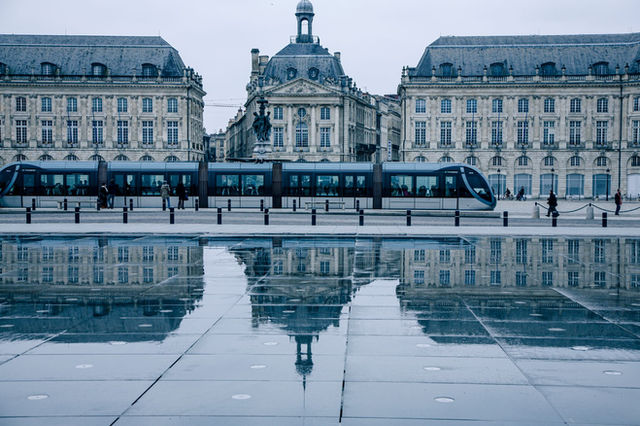
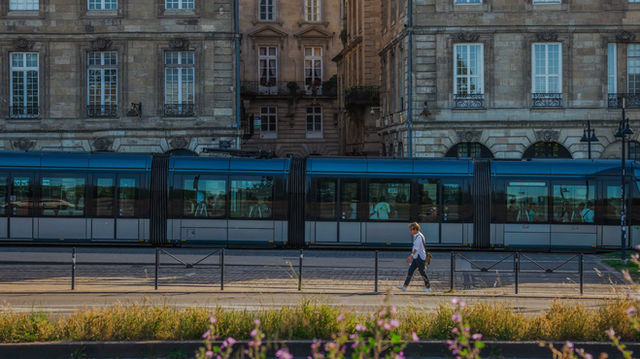
Bordeaux stretches along the crescent-shaped left bank of the Garonne River—historically dubbed the Port of the Moon. The city centers on the monumental neoclassical curve of the waterfront before breaking inland into a dense grid of medieval quarters, grand eighteenth-century boulevards, and old shipping districts. The right bank, once industrial, adds a creative edge, with all sides tied together by a sleek, battery-powered tram network that keeps the historic stone core blissfully free of overhead wires.
Why go
It packs world-class architectural cohesion and the planet’s premier wine scene into a fiercely walkable, energetic footprint that out-pastries and out-drinks Paris without the capital's exhaustion.
Don't miss
Miroir d'Eau — splash in the world's largest reflecting pool
Cité du Vin — explore the high-tech immersive wine museum
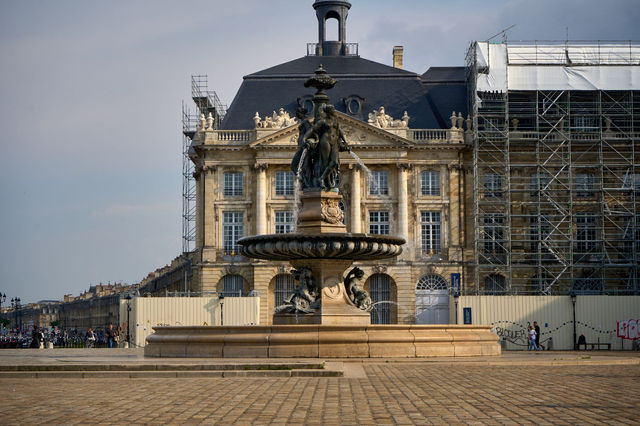
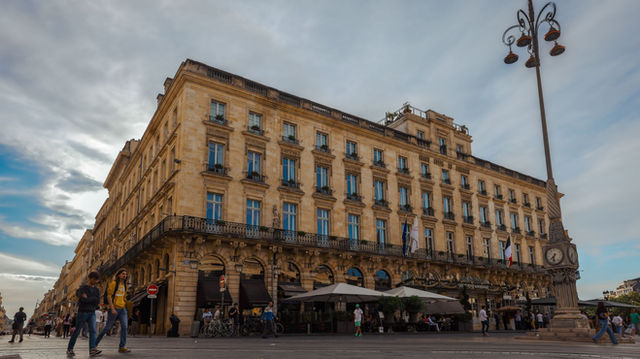
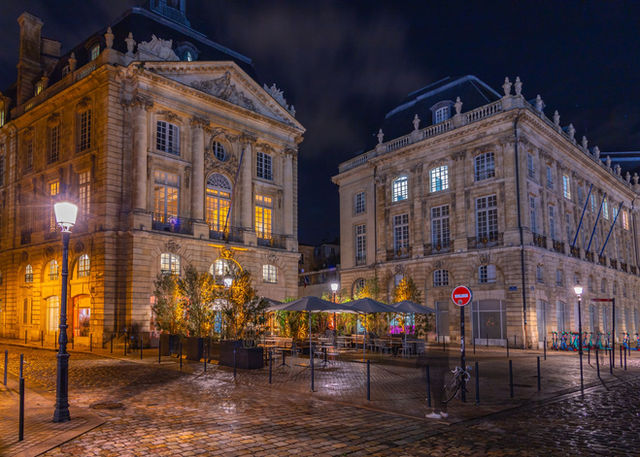
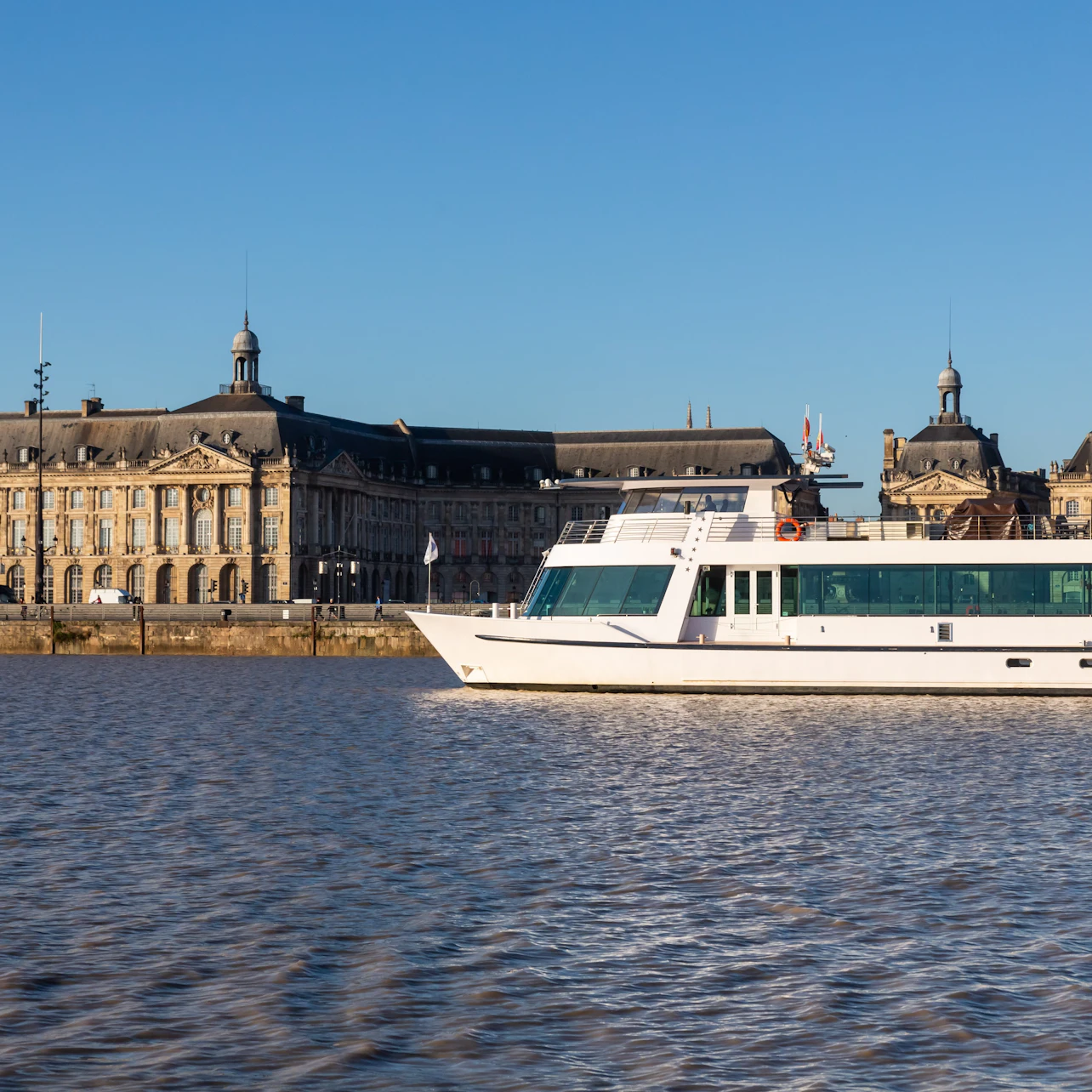
Place de la Bourse — admire the grand neoclassical riverfront plaza
Marché des Capucins — graze on oysters at the local market
Cathédrale Saint-André — gaze at the soaring gothic towers
Signature experiences
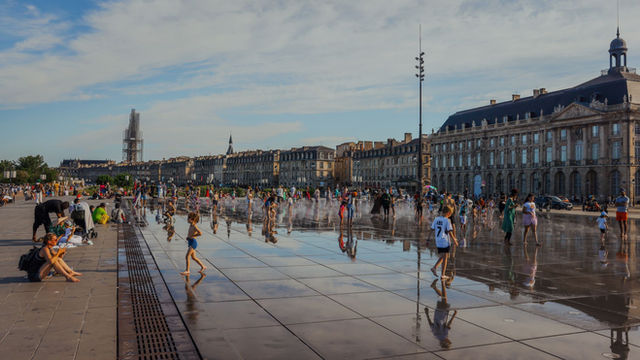
Splashing through the waterfront reflection — Spend an afternoon at the Miroir d'Eau, positioned directly opposite the grand stone curve of Place de la Bourse. The giant granite slab shifts between a thin sheet of reflective water and a dense cooling mist, capturing the city's symmetry in a massive outdoor playground.
Market grazing at the belly of Bordeaux — Arrive hungry at the Marché des Capucins on a weekend morning. Bypassing formal seated restaurants, squeeze onto a wooden bench at an indoor counter to down fresh Atlantic oysters paired with spicy local sausage and a glass of chilled white wine.
Climbing the hills of vintage wine culture — Take the tram north to the futuristic glass loop of the Cité du Vin. The interactive museum carries you through global wine history before sending you to the top-floor belvedere to sip a regional vintage with a panoramic view of the river docks.
Industrial recycling and alternative nights — Cross the river to the Darwin Ecosystem, a sprawling former military barracks transformed into a skate park, organic beer hall, and street-art gallery. It shows the city's modern subculture away from the grand neoclassical facades.
Neighbourhoods
Bordeaux neighbourhood by neighbourhood — the character of each and who it suits.
Chartrons
Once the damp stronghold of Anglo-Saxon wine merchants, this northern riverside quarter has traded old barrel warehouses for antique shops and sidewalk bistros. It retains a distinct village independence, defined by iron balconies and broad morning sun along the water.
Why go
To browse vintage markets and escape the dense medieval core.
Best for
shopping
Known for
Rue Notre-Dame, Quai des Chartrons, Église Saint-Louis-des-Chartrons
Saint-Pierre
The historic heart of the old city is a dense web of limestone alleys opening onto small tavern-lined plazas. It feels ancient, compact, and perpetually lively, with the soft yellow stone echoing with late-night patio conversations.
Why go
For central bar hopping and navigating preserved medieval geography.
Best for
history
Known for
Place de la Bourse, Porte Cailhau, Rue Saint-Rémi
Saint-Michel
Wrapping around a towering gothic spire, this southern district has a sharp, gritty edge shaped by decades of immigration. It runs on the smell of mint tea, secondhand book stalls, and flea market haggling.
Why go
For cheap market bites and an unpolished look at local city life.
Best for
food
Known for
Basilique Saint-Michel, Marché des Capucins, Place Meynard
Bastide
Located directly across the river on the right bank, this former industrial zone has reemerged as a creative playground. It offers green open riverfronts and massive community spaces looking back at the classic stone skyline.
Why go
For alternative nightlife and panoramic city views.
Best for
nightlife
Known for
Darwin Ecosystem, Pont de Pierre, Parc aux Angéliques
Views & hidden gems
Best views
Cité du Vin Belvedere — the high glass tower framing the river curve and northern docklands
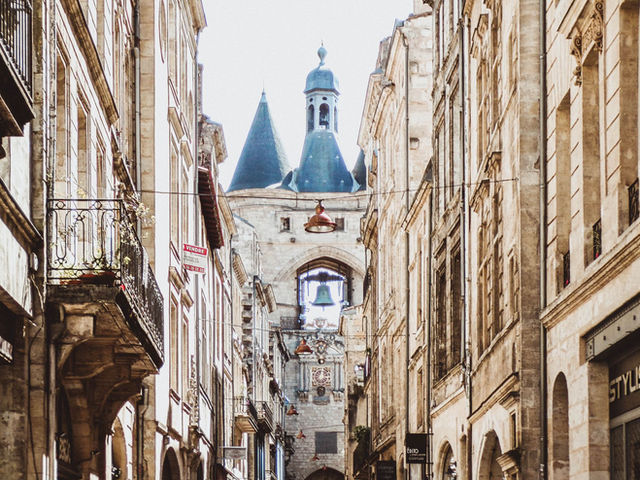
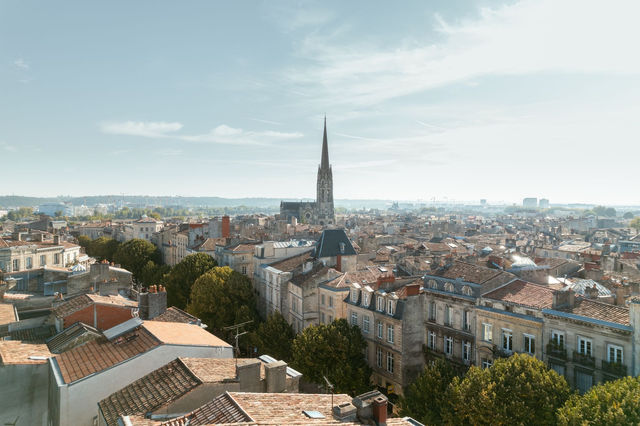
Tour Pey-Berland — the freestanding gothic bell tower providing a birds-eye view over the limestone roofs
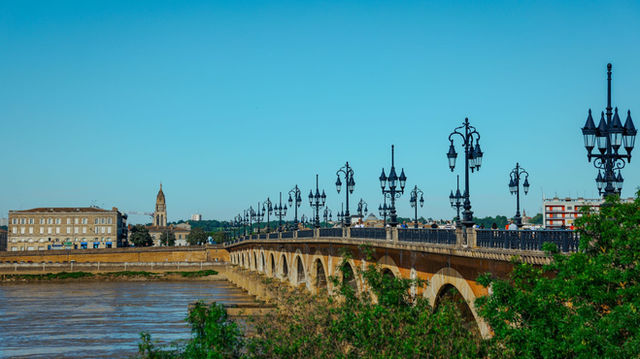
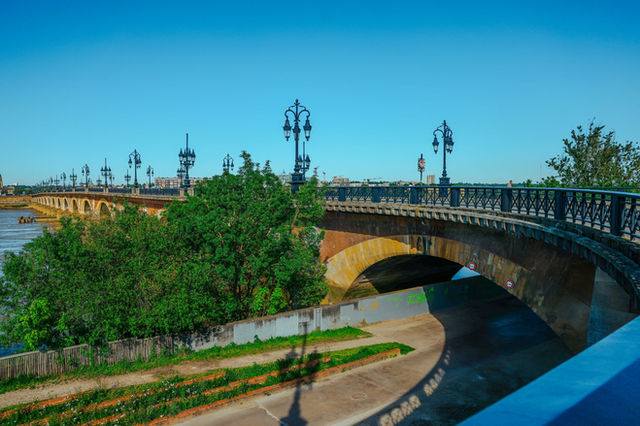
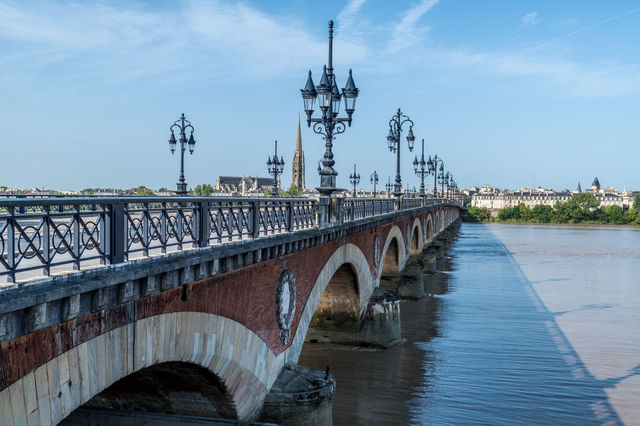
Pont de Pierre — the historic multi-arched stone bridge offering the classic riverfront skyline panorama
Hidden gems
Passage Sarget — a quiet glass-roofed nineteenth-century shopping arcade tucked between the grand boulevards
Ruines du Palais Gallien — the red-brick remains of a Roman amphitheater hidden in a residential northern block
Place du Chapelet — a quiet baroque square home to a stone church where locals escape the busy retail streets
Food & drink
The food scene highlights southwestern cooking, driven by duck, garlic, and fresh Atlantic seafood, backed by the heavy influence of the surrounding vineyards. The lanes of Saint-Pierre host a dizzying concentration of bistros, but heading south toward Saint-Michel yields authentic regional kitchens far removed from the polished tourist traps. Wine is the lifeblood here, with local bars competing on massive cellars that showcase the deep reds of Saint-Émilion and the bold cuts of the Médoc.
Canelé — a caramelized pastry with a dark crunchy shell and soft rum-and-vanilla custard center
Entrecôte à la Bordelaise — ribeye steak cooked in a rich red wine sauce with shallots and bone marrow
Lamproie à la Bordelaise — a rustic river fish stew slow-simmered with red wine and leeks
Dune Blanche — a light chou pastry puff filled with airy vanilla cream originating from the nearby coast
Bordeaux Clairet — a deep, robust dark rosé wine unique to the local region
Base yourself in Chartrons if you want a relaxed, village atmosphere lined with antique shops and easy walking paths along the river, though it sits slightly north of the main monuments. Settle in Saint-Pierre or near the grand boulevards of the Presqu'île if central proximity, late-night dining, and direct tram access are your absolute priorities. Avoid staying near Gare Saint-Jean unless early train connection trumps atmosphere, as the surrounding blocks retain a gritty, unglamorous transit character far from the historic stone plazas.
Stay
Hotels & rentals around Bordeaux
Pan, zoom and compare live prices — every stay in one map.
▸ Getting around
Getting around Bordeaux
The center is dense and highly walkable, though the TBM network runs four efficient tram lines (Lines A, B, C, and D) that cross the city. A car is an absolute liability due to massive pedestrian zones, automated bollards, and expensive parking garages.
Ride Tram Line B to move from the antique lanes of Chartrons down through Saint-Pierre to Saint-Michel in ~approx 15 min, or walk across the Pont de Pierre to hit the right bank.
▸ What you'll do
Insider tips
The city's TBM tram network uses a unique ground-level power system in the center to save the views, but a heavy downpour can occasionally short the tracks and cause brief system delays.
If you want to climb the Tour Pey-Berland bell tower, you must book a timed slot online in advance, as tickets sell out quickly.
Experience a sweeping cultural journey through France entirely by rail, connecting the iconic avenues of Paris to the sun-drenched coast of the Riviera. This masterfully timed itinerary links world-class wine regions, historic river valleys, and Roman heritage without the need for a rental car.
What to expect — The riverside parks turn green, outdoor terraces return to the limestone squares, and the ocean breeze feels crisp. Unpredictable Atlantic showers can slick the stones, but you escape the summer tour bottlenecks.
What's best — Walking the long riverfront docks in mild sunshine before the intense summer glare bounces off the stone buildings.
Summer
What to expect — Sun bakes the limestone plazas, making the city center feel intensely hot and humid. Tourism peaks, clogging the old town lanes, while many independent shops close down in August as locals head to the beaches. Swap August for June if you prefer an active local buzz.
What's best — Sitting outside along the river quays late into the evening, drinking cold white wine under clear twilight skies.
Autumn
What to expect — The heavy heat snaps into golden afternoons and cool nights, while grape harvesting brings a frantic energy to the surrounding wine estates. Early rains can roll in by late October.
What's best — Experiencing the city's wine bars at their absolute peak when fresh harvests roll into the cellars.
Winter
What to expect — A damp, cold Atlantic wind blows off the river, and grey skies can settle over the grand facades. Rain turns the polished stone pavements slick.
What's best — Having the halls of the Cité du Vin and the gothic naves completely to yourself without a single tour group in sight.
▸ Know before you go
Know before you go
Honest swaps
Skip the expensive tourist restaurants on Rue Sainte-Catherine → walk three blocks east to the alleys of Saint-Pierre for an authentic prix-fixe lunch menu.
Skip the commercial wine tours that spend hours in minivans → jump on the local train to Saint-Émilion or use the tasting bars at the Cité du Vin to sample regional labels at your own pace.
Crowds & timing
Rue Sainte-Catherine turns into a slow pedestrian bottleneck on Saturday afternoons. Dodge the shopping squeeze entirely by visiting the historic monuments early in the morning, then cross the river to the green paths of Bastide when the high-street rush peaks.
Local rules & etiquette
The polished limestone pavements turn into a literal ice rink during a sudden downpour; leave the slick leather soles at home. Cyclists and scooters dominate the waterfront paths; stepping into the marked green lanes without checking will result in a sharp bell warning or a collision.
Money
Card payment is standard across almost all city registers, even for a single canelé. Avoid using the independent, unbranded ATMs standing right near the main train station gates to skip high transaction fees.
After dark
Nightlife fragments neatly by style: the docks of Chartrons run on quiet wine bars, Saint-Pierre centers on lively outdoor plazas, and Saint-Michel favors unpretentious student pubs, while the commercial warehouses of the northern Bassins à Flot host late-night electronic clubs.
▸ Ready to book your trip?
Getting there
Fly into Bordeaux-Mérignac Airport (BOD), then take the direct Tram Line A straight into the city center (~approx 35 min). Long-distance TGV trains from Paris arrive at Gare Saint-Jean, which connects to the old quarters via Tram Lines C and D in ~approx 10 min.
Book
Ready to book your trip?
Flights, airport transfers and car hire — search and compare without leaving the page.
▸ Trip extras
Book
More trip extras
Parking, holiday extras, and more — coming soon.
Coming soon
We're lining up parking, holiday extras and activities you'll be able to add to any trip from here.
 © @Culturespaces / Geoffroy Groult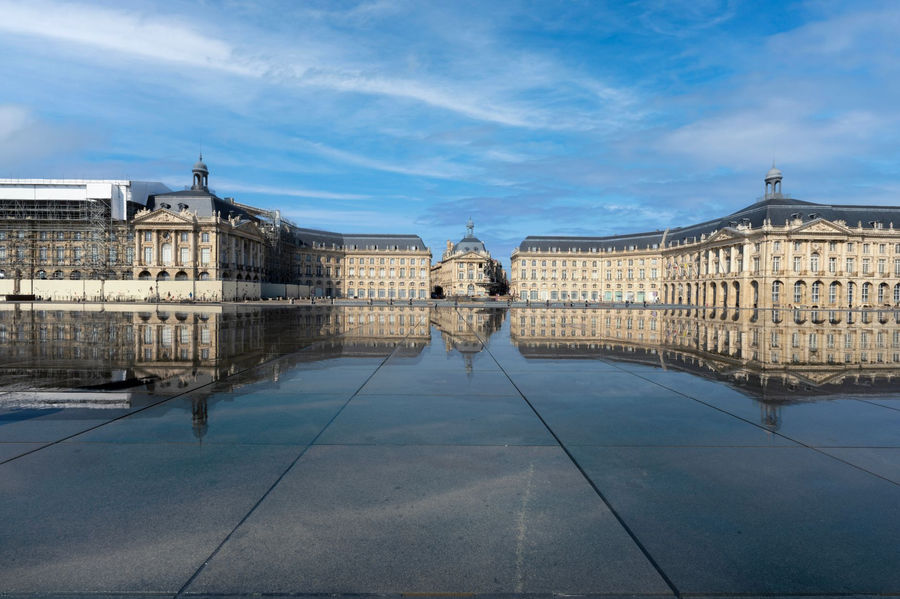
 3 OCT Cultural & Traditions See the event →


 © Carcassonne

 13 Nights