Historic Fortified City of Carcassonne
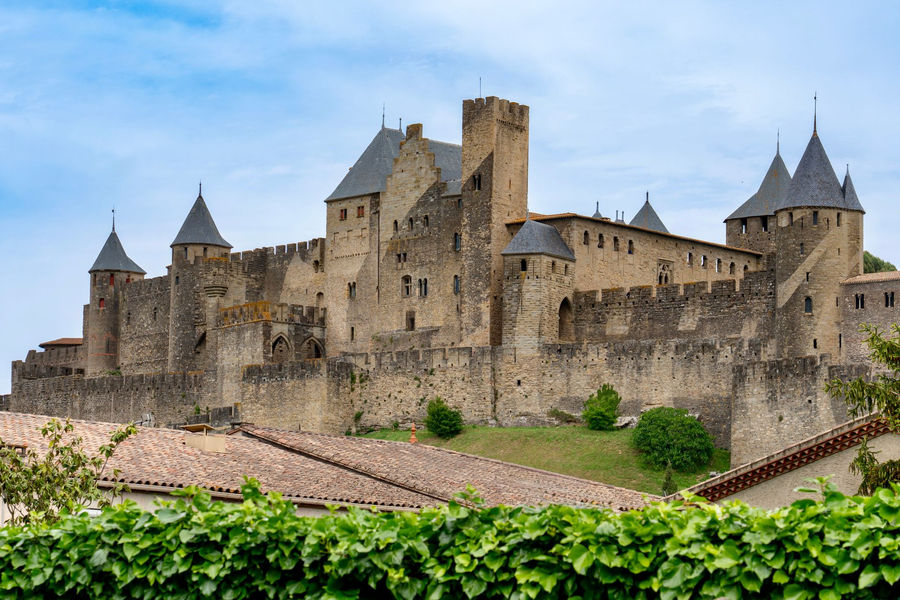
A storybook double-walled medieval citadel in southern France, bristling with 52 towers.
- City
- May, June, and September
- ~approx 1–2 days
Jondu11 via Wikimedia Commons (CC BY-SA 4.0)
- Double Ramparts
- Hearty Cassoulet
- Shaded Towpaths
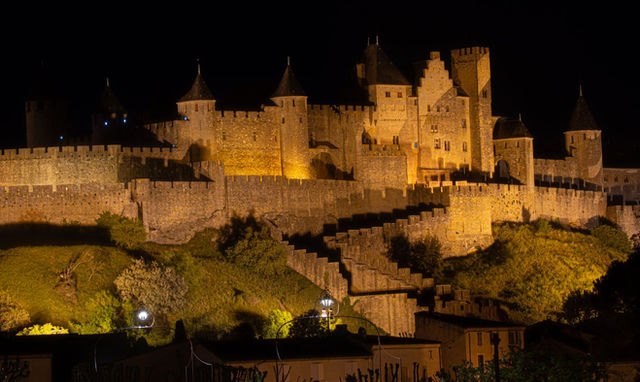
The stone towers glow amber under floodlights while the scent of duck stew drifts across a narrow medieval moat.
A fairytale fortress split by a river, Carcassonne balances the theatrical, double-walled medieval citadel against a grid-pattern lower town.
- Type
- town
- Ideal length
- ~approx 1–2 days
- Getting around
- walking + local buses
- Neighbourhoods
- 2 districts
- Best season / months
- May, June, and September
- Any traveller · History · Food · Wine
About Historic Fortified City of Carcassonne
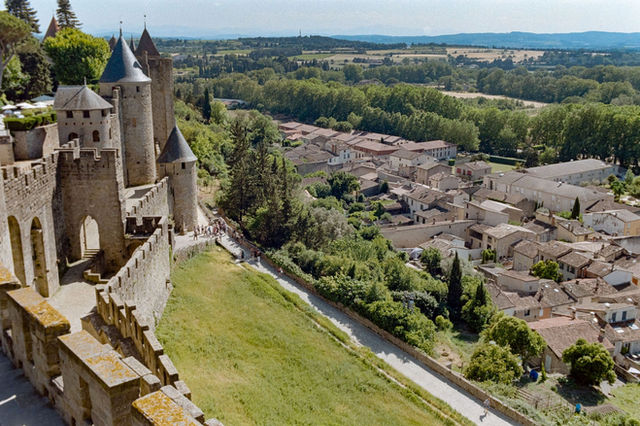
Carcassonne splits into two completely different worlds divided by the Aude River. On the east bank sits La Cité, the medieval fortress enclosed by a double ring of walls and fifty-two towers. On the west bank lies the Bastide Saint-Louis, a lower town where daily life happens away from tour-bus swarms. Connecting them is the stone spine of the Pont Vieux, keeping the entire town compact and perfectly walkable.
Why go
It delivers a grand fortification system paired with a slow southwestern pace.
Don't miss
- Cité de Carcassonne — wander the double-walled fortress
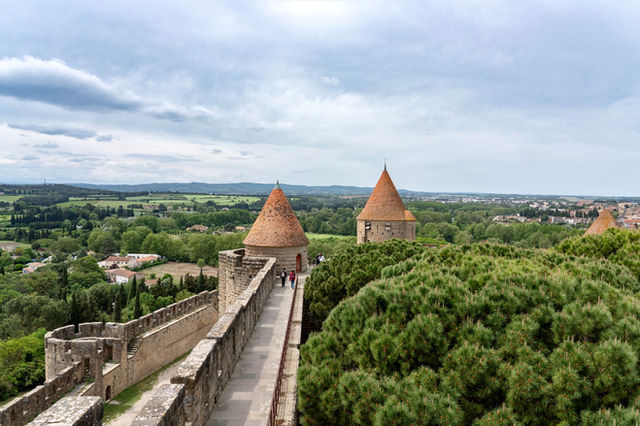
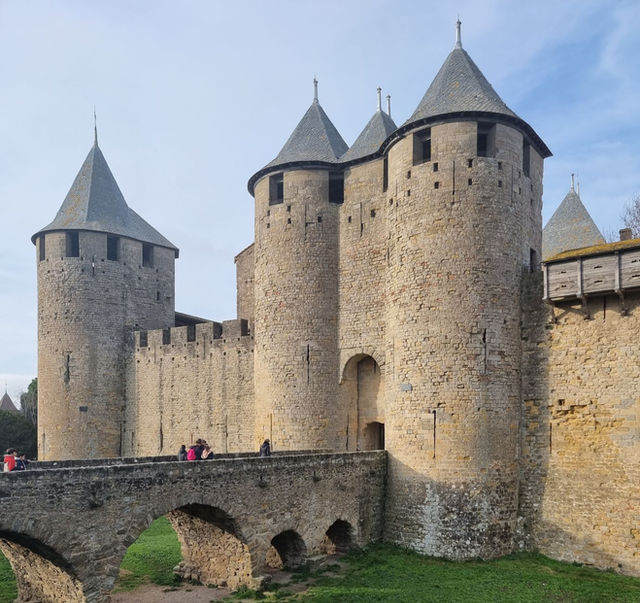
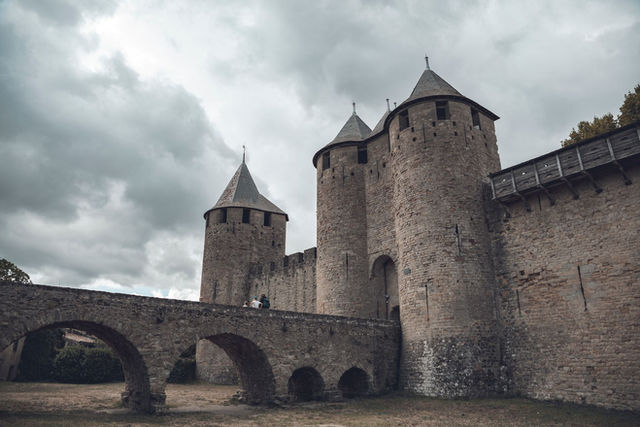
- Château Comtal — climb the inner castle ramparts
- Basilique Saint-Nazaire — admire the stained-glass windows
- Canal du Midi — stroll beneath shaded canal trees
- Pont Vieux — cross the ancient river bridge
Signature experiences
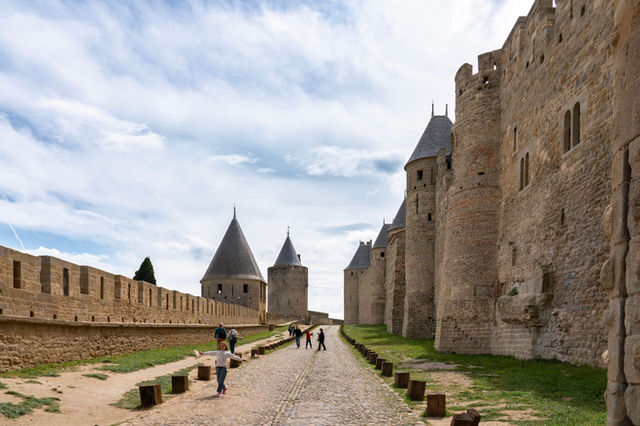
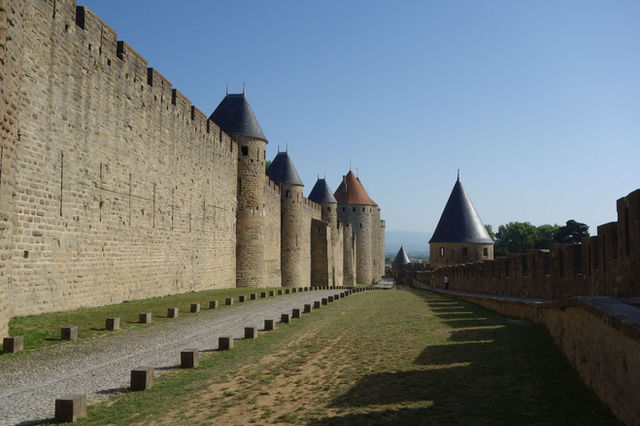
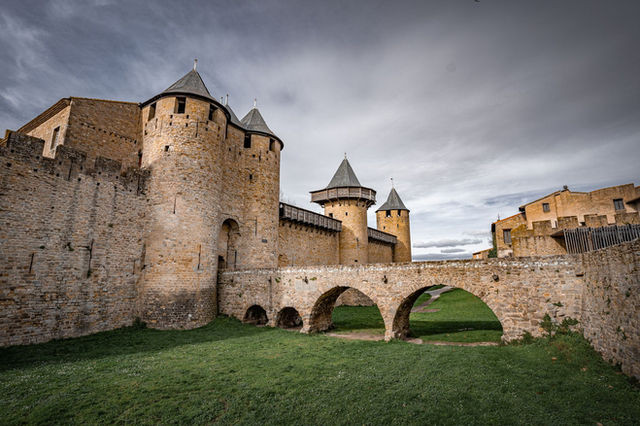
Walking the lices between walls — Slip into the open track known as the Lices, the defensive space sandwiched between the inner and outer ramparts of La Cité. Walking this loop reveals the scale of the fortifications away from the shopping lanes.
Sunset pacing over the ancient bridge — Cross the Aude River on the arches of the Pont Vieux as the light drops. It offers an excellent vantage point for watching the castle towers light up against the Pyrenean horizon.
Towpath strolling along the historic canal — Head to the northern edge of the Bastide Saint-Louis to trace the shaded banks of the Canal du Midi. Watch the water locks work or stroll beneath the plane trees that line the water.
Neighbourhoods
Historic Fortified City of Carcassonne neighbourhood by neighbourhood — the character of each and who it suits.
-
La Cité
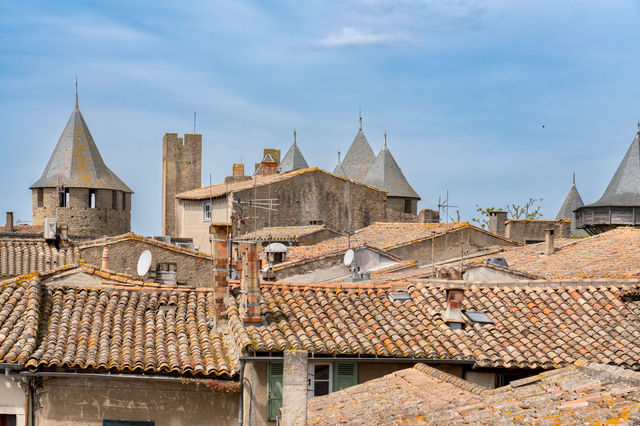
The citadel rises on its hilltop, a maze of cobblestone lanes, stone turrets, and timber facades. It feels theatrical by day, but transforms into an atmospheric ghost town once the day-trippers vanish at dusk.
-
Bastide Saint-Louis
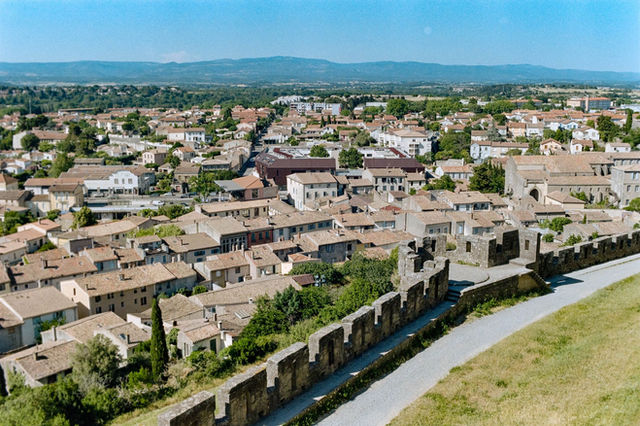
Laid out in a grid on the river's west bank, this lower town is where real life unfolds. Grand townhouses, market squares, and sidewalk cafes replace the defensive stone walls.
Views & hidden gems
Best views
- Pont Vieux — the classic angle looking up at the fortress skyline
- Île de la Cité — the river island offering views of the lower ramparts
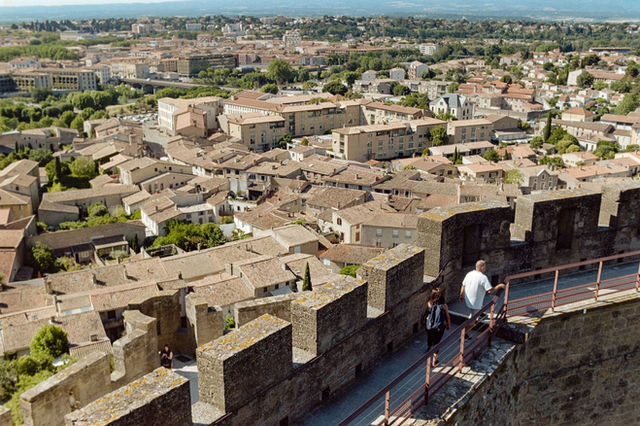
- Château Comtal ramparts — elevated walkways framing views over the lower town
Hidden gems
- Rue du Plô — a winding backstreet inside the citadel that misses the tourist rush
- Square Gambetta gardens — a shaded park in the lower town perfect for relaxing
- Porte d'Aude — the steep western gate into the fortress that tour buses bypass
Food & drink
The food scene splits along the river, with the citadel offering atmospheric taverns and the lower town delivering authentic bistros. Everything centers on the heavy cuisine of the Languedoc, driven by duck fat, garlic, and local sausages. This town is the spiritual home of cassoulet, the bean stew that sparks regional debates. Wash it down with red wines from the nearby Cabardès hills, which dominate local menus.
- Cassoulet Carcassonnais — a bean stew baked with duck confit and local sausage
- Cabardès wine — a robust red wine grown on the surrounding hillsides
- Petits Cochons de la Cité — almond biscuits flavored with orange blossom
- Foie gras de canard — smooth duck liver served with country bread
Historic Fortified City of Carcassonne in photos
Where you'll stay in Historic Fortified City of Carcassonne
Base yourself inside La Cité if you want the thrill of walking empty medieval lanes after dark, though you will trade off vehicle access and pay a premium. For better value, authentic restaurants, and seamless connection to the train station, choose the Bastide Saint-Louis. Avoid staying in the commercial zones on the northern highway fringes, which lack any historic flavor.
Hotels & rentals around Historic Fortified City of Carcassonne
Pan, zoom and compare live prices — every stay in one map.
Getting around Historic Fortified City of Carcassonne
This is strictly a walking town; you can cross the entire center on foot in ~approx 25 min. Local buses connect the train station to the base of the fortress.
Walk across the pedestrian-only Pont Vieux to cross from the lower town grid to the base of the citadel in ~approx 10 min.
Insider tips
- Walking up from the lower town to the citadel is a steep uphill slog; wear proper shoes and pace yourself.
- If you plan to tour the inner ramparts of Château Comtal, pre-book your entry slot online during summer to avoid hours standing in the sun.
While you're there
-
 3 OCT Cultural & Traditions See the event →
Explore the area
Local attractions & tours
Skip-the-line tickets and small-group tours in Historic Fortified City of Carcassonne — compare across our partners.
We're still curating hand-picked tickets and tours for Historic Fortified City of Carcassonne. In the meantime, the map above and the nearby cities are a great place to start.
When to visit Historic Fortified City of Carcassonne
May, June, and September
Spring
What to expect — The hillsides turn green, canal paths fill with fresh leaves, and crowds are thin, though unpredictable rain can slick the stone alleys. Most shops open back up after the winter break.
What's best — Exploring the castle battlements without melting in the sun or wrestling with tour groups.
Summer
What to expect — Intense heat bakes the stones, and the citadel streets can feel like a packed bottleneck of tour groups. If you hate heavy crowds, skip July and August and swap them for a late September visit instead.
What's best — Sitting outside in the lower town squares late into the night during local music festival weeks.
Autumn
What to expect — The heat snaps into golden afternoons and cool nights, while grape harvesting begins in the fields. Visitor numbers drop sharply.
What's best — Tasting fresh wines and stews in quiet taverns when the town returns to the locals.
Winter
What to expect — A cold wind can sweep down from the mountains, some citadel shops shut down entirely, and early dark lends a brooding mood to the stone walls.
What's best — Walking the misty ramparts completely alone, feeling the defensive purpose of the fortress.
Know before you go
Honest swaps
Skip the tourist restaurants on Place Saint-Jean → head over the bridge to the Bastide Saint-Louis to find an authentic cassoulet filled with local sausage.
Skip entering through the packed Porte Narbonnaise → hike up the steep path to the western Porte d'Aude for a dramatic entry.
Crowds & timing
Daytime in summer is a zoo inside the fortress walls. Dodge the peak crush by exploring the lower town or the canal towpaths during midday, then head up to La Cité after dinner when the stone lanes clear out completely.
Local rules & etiquette
The ancient stones leading up to the fortress are steep and turn slick when wet; leave smooth shoes at home. Lift your bags over the deep stone gutters rather than dragging them to save your wheels.
Money
Cards are accepted nearly everywhere, though small market vendors prefer coins. Avoid the standalone ATMs tucked near the tourist shops to dodge high transaction fees.
After dark
The citadel changes character at night, turning into a quiet zone of illuminated stone walls. If you want lively bars and local life, stick to the squares of the Bastide Saint-Louis.
Getting there
Fly into Carcassonne Airport (CCF), which connects to the center via a shuttle bus (~approx 15 min). Alternatively, arrive via the Gare de Carcassonne rail station on the northern edge of the lower town.
Ready to book your trip?
Flights, airport transfers and car hire — search and compare without leaving the page.
More trip extras
Parking, holiday extras, and more — coming soon.
We're lining up parking, holiday extras and activities you'll be able to add to any trip from here.