Honfleur
- City
- May, June, and September
- ~approx 1–2 days
- Slate-Front Houses
- Historic Harbours
- Normandy Cider
The salt air mixes with the scent of buttered galettes while yachts knock against stone piers under heavy northern skies.
A maritime outpost pinned against the Seine estuary, Honfleur clusters around a deep harbor basin flanked by sky-high wooden houses.
- Type
- town
- Ideal length
- ~approx 1–2 days
- Getting around
- walking + local buses
- Neighbourhoods
- 3 districts
- Best season / months
- May, June, and September
- Any traveller · History · Art · Maritime
About Honfleur
Honfleur maps itself tightly around the Vieux Bassin, a rectangular harbor carved into the Normandy coast where the Seine meets the Atlantic. The town spreads from this watery center into narrow sectors defined by timber frames and slate facades. To the west sits the old wooden core of Sainte-Catherine, while the ancient stone foundations of the Enclos flank the eastern docks, keeping the entire town compact enough to cross entirely on foot.
Why go
It delivers the raw visual texture that inspired the impressionist painters, serving up authentic maritime heritage without the plastic resort gloss of neighboring beach strips.
Don't miss
- Vieux Bassin — watch boats navigate the narrow stone harbor
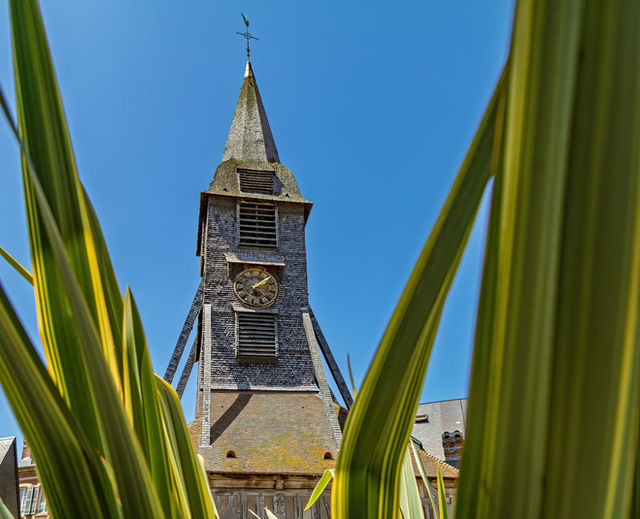
- Église Sainte-Catherine — explore the largest wooden church in France
- La Lieutenance — inspect the old stone fortress gateway
- Musée Eugène Boudin — view impressionist paintings of the estuary
- Notre-Dame de Grâce — climb the hill for estuary views
Signature experiences
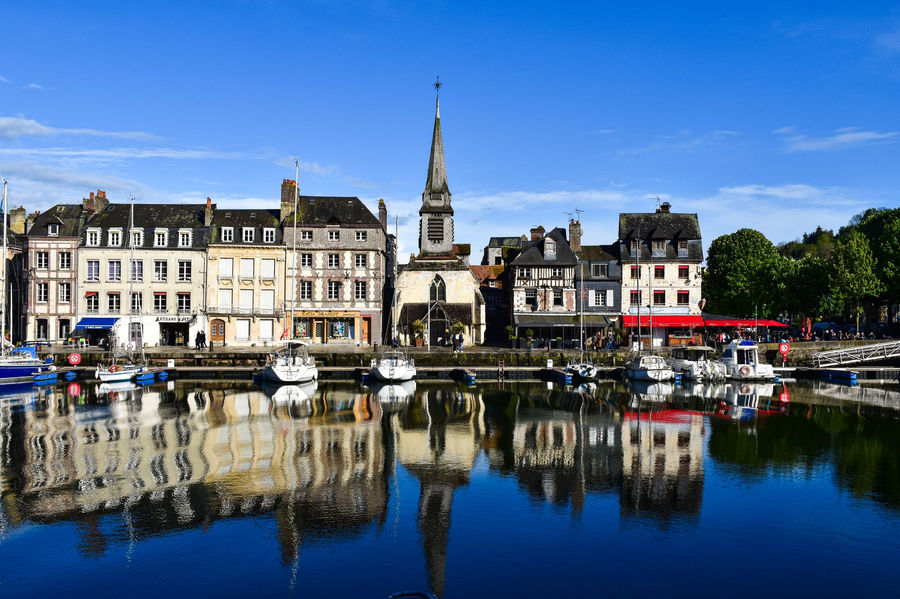
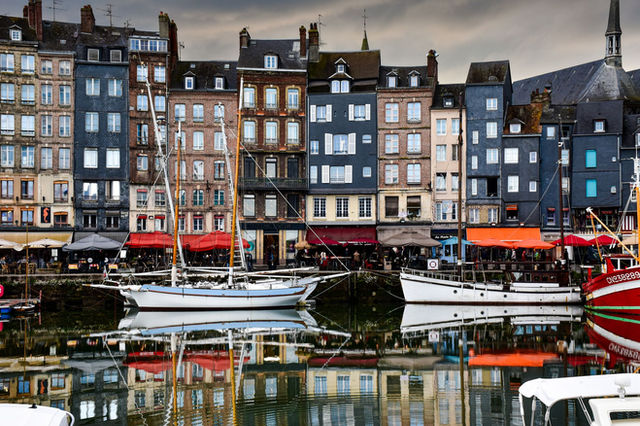
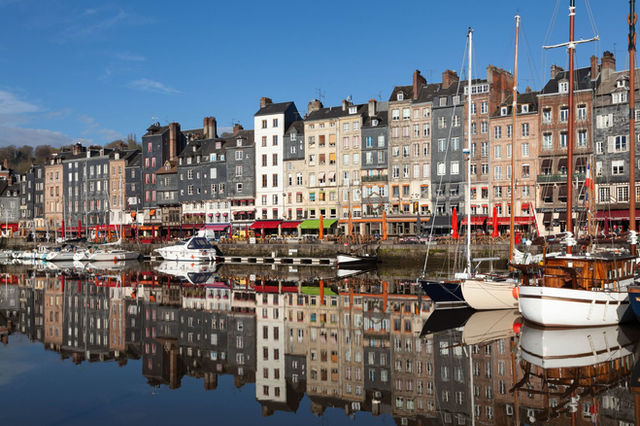
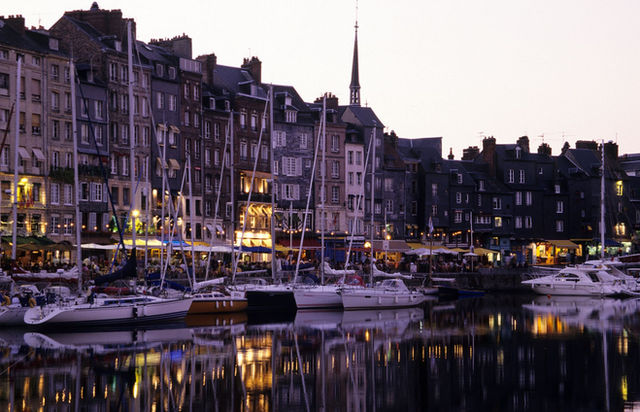
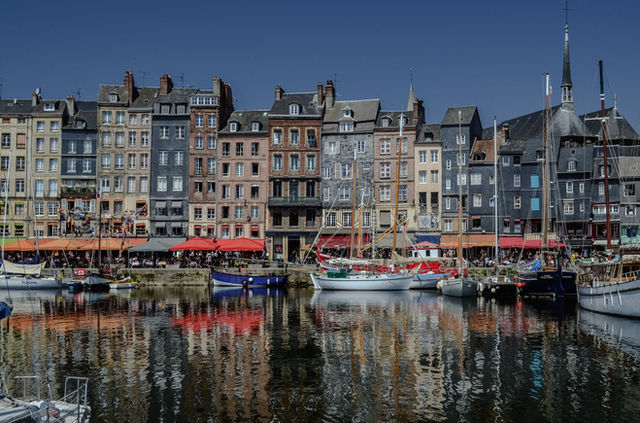
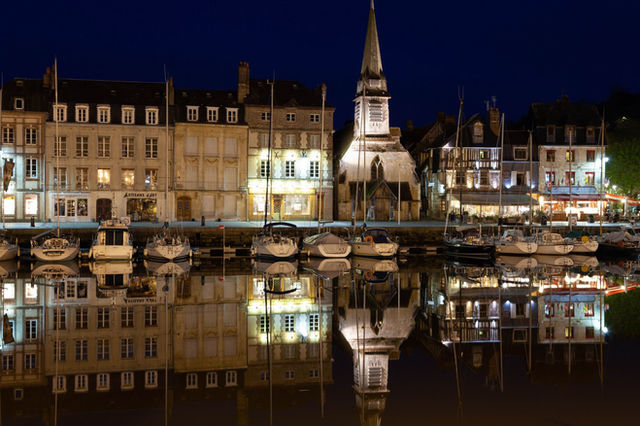
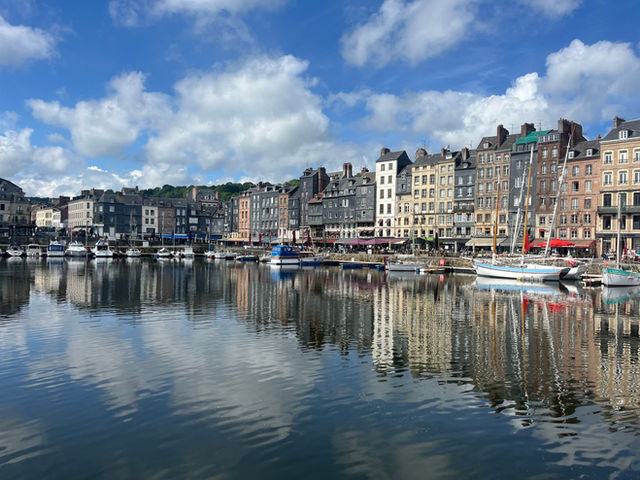
Harbour pacing past slate facades — Spend an afternoon tracing the stone perimeter of the Vieux Bassin. The narrow quay lets you view the tall, thin houses of Quai Sainte-Catherine, which stand squeezed together with slate fronts designed to repel the wet Atlantic winds.
Stepping inside wooden ship hulls — Walk through the stone porch of Église Sainte-Catherine to stand beneath its double-vaulted ceiling. Medieval shipwrights built the entire church out of local timber using naval techniques, making the roof look exactly like an overturned boat hull.
Impressionist hunting by the estuary — Head to the upper tracks of the town to explore the Musée Eugène Boudin. The rooms preserve the light-filled sky studies and beach scenes painted along this coast, letting you match the canvas brushstrokes directly to the changing estuary weather outside.
Neighbourhoods
Honfleur neighbourhood by neighbourhood — the character of each and who it suits.
-
Sainte-Catherine
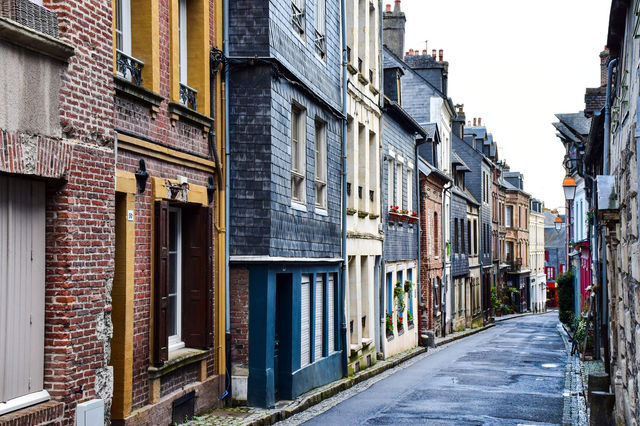
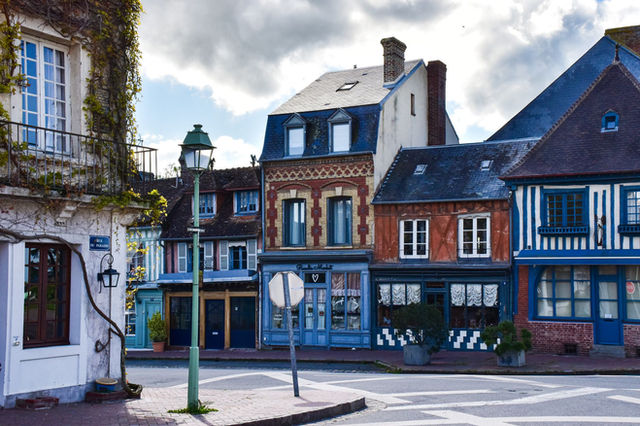
Winding alleys and leaning timber houses surround the main square of this historic sector. It runs on a maritime rhythm, dominated by slate-clad facades that bounce the gray estuary light down to the cobblestones.
-
Enclos
This ancient fortified zone sits on the eastern flank of the old harbor basin. It feels heavy and defensive, constructed from solid stone blocks and narrow walkways that hide quiet residential courtyards.
-
Saint-Léonard
Stretching slightly inland, this district circles a gothic church and its grassy public gardens. It carries a local residential character where traditional bakeries serve residents rather than coach tour groups.
Views & hidden gems
Best views
- Notre-Dame de Grâce — the hilltop chapel clearing that frames a view of the Seine estuary and the Pont de Normandie
- Quai Saint-Étienne — the classic angle capturing the reflection of the tall harbor houses in the water
- Jetée de Honfleur — the outer pier walkway looking back at the old shipping entrance
Hidden gems
- Lavoir Saint-Léonard — a quiet stone washing structure hidden below street level
- Rue de la Prison — a narrow stone alley featuring the oldest timber structures in the town
- Jardin Public paths — the green waterfront trails leading away from the harbor crowd toward the sea wall
Food & drink
The food culture relies heavily on Normandy abundance, driven by thick cream, local apples, and fresh catches from the channel. The alleys of Saint-Léonard and the backstreets behind Sainte-Catherine host authentic galetteries and seafood dens, completely bypassing the expensive tourist traps lining the main harbor basin. Drinking focuses completely on regional orchard products, with local taverns pouring dry cider and glasses of aged apple brandy.
- Galette Complète — a savory buckwheat pancake stuffed with local ham, egg, and melted cheese
- Moules Marinière — fresh channel mussels steamed with white wine, shallots, and heavy Normandy cream
- Calvados — the fiery, double-distilled apple brandy poured after dinners
- Teurgoule — a slow-baked rice pudding flavored with cinnamon and creamy milk
- Cidre Cotentin — the dry, crisp regional apple cider served in ceramic bowls
Honfleur in photos
Where you'll stay in Honfleur
Base yourself in Sainte-Catherine if you want historic character out your door and immediate access to morning bakeries, though you will tackle narrow stairs and hear morning deliveries on the stones. Look for a spot in Saint-Léonard for better room rates, flatter walking paths, and a quieter night routine. Avoid staying too far south near the industrial highway developments by the bridge approach, as these commercial strips lose all maritime charm.
Hotels & rentals around Honfleur
Pan, zoom and compare live prices — every stay in one map.
Getting around Honfleur
The historic center is highly dense and walkable; you can cross the entire core on foot in ~approx 15 min. A small network of local buses handles longer trips to the outer fields, and a car is an absolute liability.
Walk across the stone gate paths of La Lieutenance to connect Sainte-Catherine to the Enclos in ~approx 5 min.
Insider tips
- Parking inside the historic core is practically impossible due to tight medieval lanes; use the large peripheral lots near the edge of town and walk in.
- The harbor footbridge swings open to let yachts pass at regular intervals, which can temporarily block your walking route across the basin.
While you're there
-
 3 OCT Cultural & Traditions See the event →
Explore the area
Local attractions & tours
Skip-the-line tickets and small-group tours in Honfleur — compare across our partners.
We're still curating hand-picked tickets and tours for Honfleur. In the meantime, the map above and the nearby cities are a great place to start.
When to visit Honfleur
May, June, and September
Spring
What to expect — Apple blossoms cover the surrounding hillsides, and the harbor light turns bright and changeable, though spring squalls can whip off the channel without warning. Tourist numbers remain low before the summer rush.
What's best — Walking the old docks in comfortable peace without fighting coach groups for space.
Summer
What to expect — Sun hits the slate facades, and the narrow quays of the Vieux Bassin turn into a dense pedestrian bottleneck. August brings heavy crowds and premium accommodation rates; swap mid-summer for June if you prefer an active local life.
What's best — Sitting outside along the stone piers late into the night while the evening tide rolls in.
Autumn
What to expect — The orchard harvests bring fresh pressing juices to town, and golden light paints the timber frames. Evenings turn chilly quite quickly, moving public life inside.
What's best — Photography days along the estuary when the autumn fog frames the old stone gateways.
Winter
What to expect — Biting channel winds sweep across the basin, several art galleries close up for the season, and rain turns the cobblestones slippery.
What's best — Experiencing the raw, moody atmosphere that drew the painters here, shared entirely with the local fishermen.
Know before you go
Honest swaps
Skip the overpriced seafood terraces directly on Quai Sainte-Catherine → walk two blocks inland to the lanes of Saint-Léonard to find an authentic bistro serving fresh mussels to locals.
Skip the commercial horse carriage rides → explore the tight alleys of the Enclos on foot to catch historic details the carriages pass by.
Crowds & timing
Weekend afternoons bring a heavy wave of day-trippers from Paris trains and cruise ships. Dodge the worst of the human bottleneck by visiting Église Sainte-Catherine early in the morning, then escape to the green paths of the outer jetty when the harbor rush peaks.
Local rules & etiquette
The old stone paths of the Enclos turn into an absolute ice rink when it rains; leave the slick soles at home. Lift your suitcase over the high stone gutters rather than dragging it to protect your wheels on the rough cobblestones.
Money
Card payment is standard across almost all registers, but carry coins for the small cider stalls. Avoid using the generic independent ATMs near the main harbor bridge to skip high fees.
After dark
Nightlife stays quiet and early to bed here, splitting by zone: the harbor quays run on quiet wine conversations, while the residential streets of Saint-Léonard go fully to sleep after dinner.
Getting there
Fly into Deauville - Normandie Airport (DOL), then catch a local taxi to the center (~approx 20 min). Alternatively, arrive via train from Paris to Trouville-Deauville station, then take Nomad bus Line 122 straight to Honfleur (~approx 30 min).
Ready to book your trip?
Flights, airport transfers and car hire — search and compare without leaving the page.
More trip extras
Parking, holiday extras, and more — coming soon.
We're lining up parking, holiday extras and activities you'll be able to add to any trip from here.