Saint-Malo
- City
- June and September
- ~approx 1–2 days
- Granite Ramparts
- Atlantic Tides
- Salted Butter
Sea foam sprays over the high stone battlements while the scent of crisp buckwheat galettes fills the narrow grey alleys.
A granite stronghold pinned to the Breton coast, Saint-Malo sets formidable stone ramparts against the English Channel's most violent tides.
- Type
- town
- Ideal length
- ~approx 1–2 days
- Getting around
- walking + local buses
- Neighbourhoods
- 2 districts
- Best season / months
- June and September
- Any traveller · Maritime · History · Food
About Saint-Malo
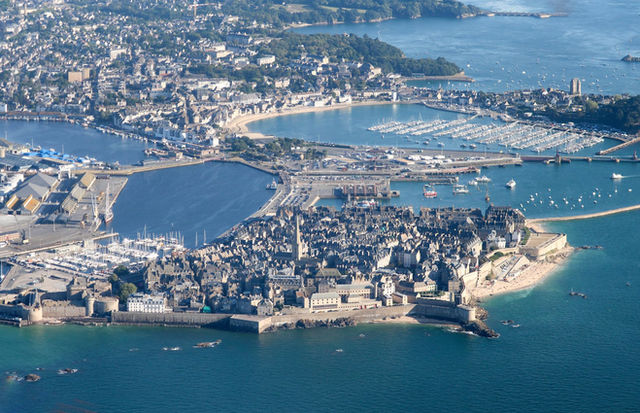
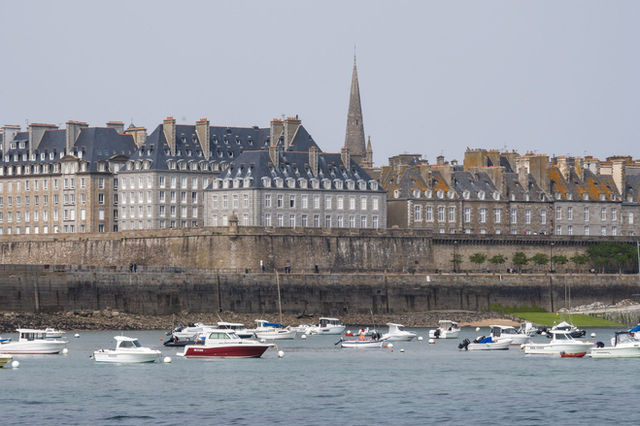
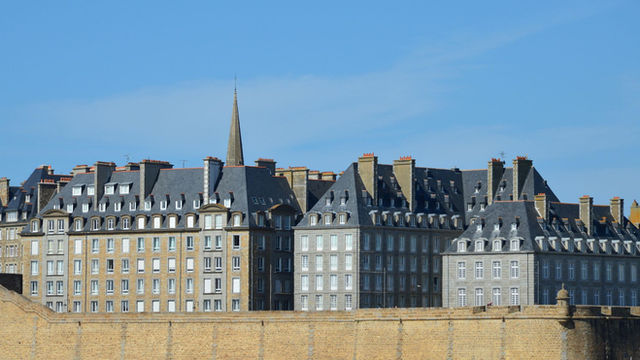
Saint-Malo splits decisively between the dense, stone-walled citadel of Intra-Muros and the modern port districts extending inland. The old town sits like a stone fist on its granite peninsula, encircled by high ramparts that look out toward defensive coastal forts and offshore islands. To the south, the historic maritime neighborhood of Saint-Servan hugs the old trading harbor, keeping the town footprint compact, vertical, and heavily oriented toward the sea.
Why go
It delivers the most theatrical coastal fortification system in France, powered by massive tidal shifts and serious maritime swagger.
Don't miss
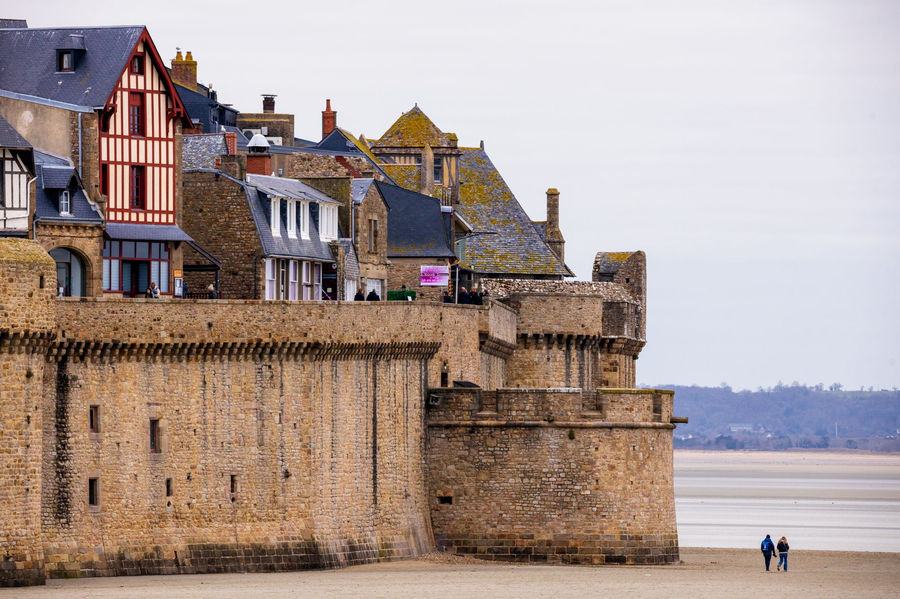
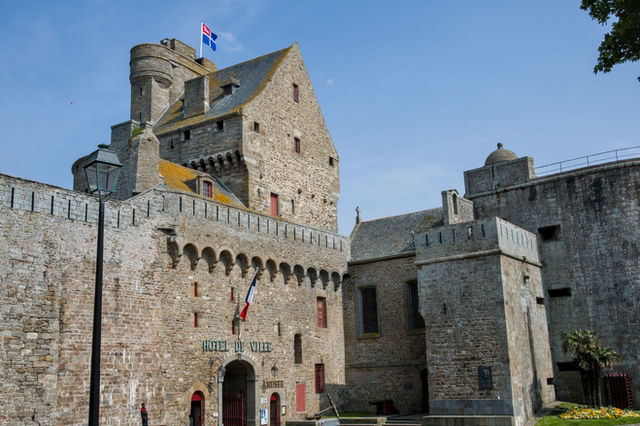
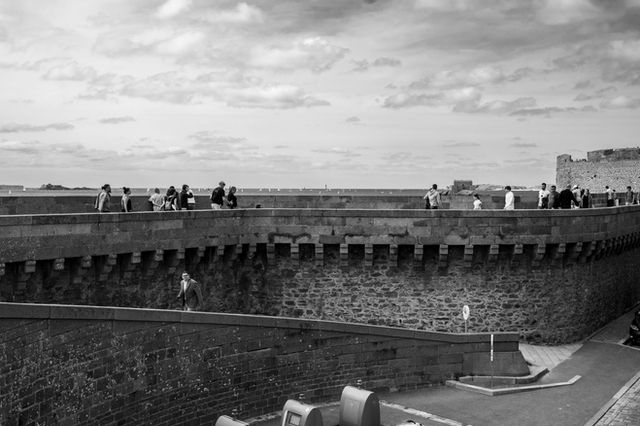
- Remparts de Saint-Malo — walk the high stone loop encircling the old town
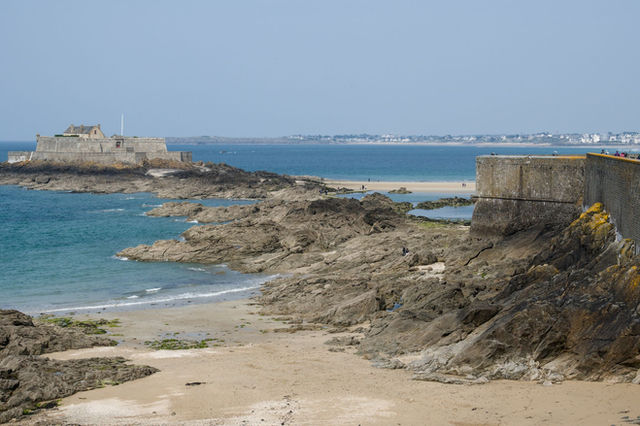
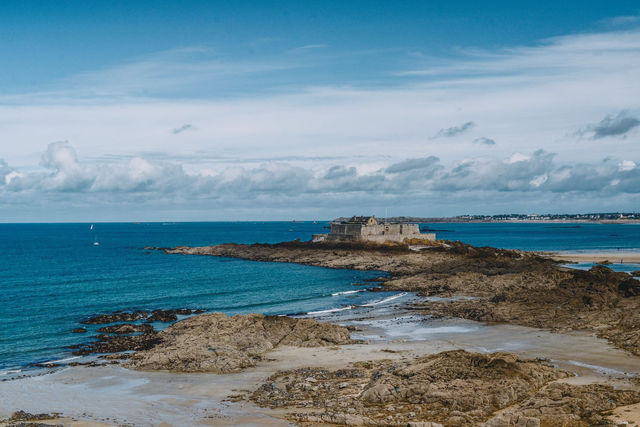
- Fort National — walk across the sea floor to the historic granite fortress
- Grand Bé — visit the island tomb of Chateaubriand at low tide
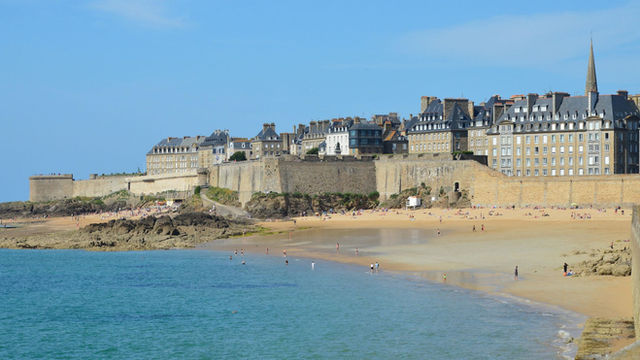
- Plage du Sillon — stroll the sweeping sandy beach lined with breakwater logs
- Grand Aquarium Saint-Malo — dive into deep maritime exhibits
Signature experiences
Automated markdown engine check — Step up to the high stone paths at Porte Saint-Vincent to pace the Remparts de Saint-Malo. The high walkway wraps around the entire old town, giving you an open view of slate roofs on one side and breaking waves on the other.
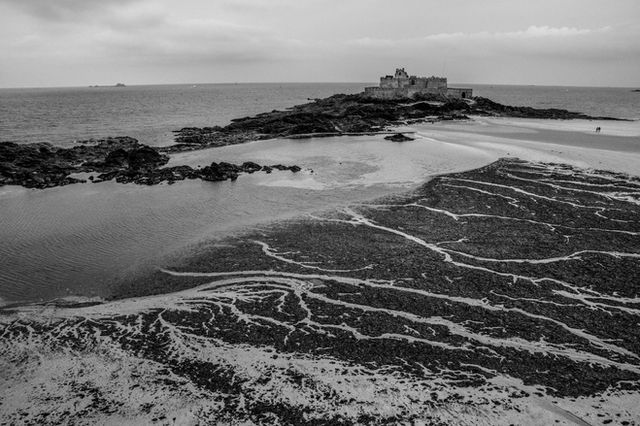
Chasing the low tide to offshore forts — Keep an eye on the local tide charts to walk across the damp sand to Fort National. The granite fortress becomes accessible only when the tide retreats, revealing rocky sea walls and deep pools left behind by the channel waters.
Island pilgrimages across the sea floor — Time your walk to cross the rocky causeway to Grand Bé before the water returns. The uninhabited island holds the solitary stone tomb of writer François-René de Chateaubriand, framing a wild view back at the citadel walls.
Neighbourhoods
Saint-Malo neighbourhood by neighbourhood — the character of each and who it suits.
-
Intra-Muros
The walled core is a dense labyrinth of tall granite houses, narrow stone alleys, and historic plazas. It carries a heavy seafaring energy, where corsair history lines the dark stone facades and wind whistles through high arches.
-
Saint-Servan
Sitting south of the main walls, this former fishing port offers a more local, relaxed pace. It replaces the dense granite towers with small yacht harbors, coastal paths, and everyday residential bakeries.
Views & hidden gems
Best views
- Bastion de la Hollande — elevated rampart viewpoint framing the outer islands and western beaches
- Tour Solidor quay — the southern waterfront path looking up at the triple-towered stone fortress
- Plage du Sillon promenade — the coastal walk capturing the perspective of high waves hitting the wooden breakwater posts
Hidden gems
- Cour de la Houssaye — a quiet medieval courtyard tucked away behind a modest stone arch inside the walls
- Rochers Sculptés de Rothéneuf — an array of granite rocks carved directly into the cliff faces just down the coast
- Anse de Sablons footpath — a low coastal track tracking the shoreline of the southern harbor
Food & drink
The food scene revolves completely around Atlantic catches and classic Breton baking, focusing on salted butter, crisp crêpes, and fresh oysters. The alleys of Intra-Muros host dozens of traditional creperies, though finding spots on the back lanes away from the main gate avoids standard tourist slop. Drinking focuses heavily on regional apple ciders poured into ceramic bowls, alongside local craft beers brewed along the rocky coast.
- Galette de sarrasin — a savory buckwheat pancake stuffed with local ham, cheese, and eggs
- Kouign-amann — a dense, multi-layered Breton pastry rich with caramelized sugar and salted butter
- Craquelins de Saint-Malo — light, hollow poached biscuits traditionally smeared with butter or jam
- Cidre de Bretagne — crisp, dry apple cider served in traditional ceramic bowls
- Plateau de fruits de mer — a massive platter of fresh channel crabs, oysters, and sea snails
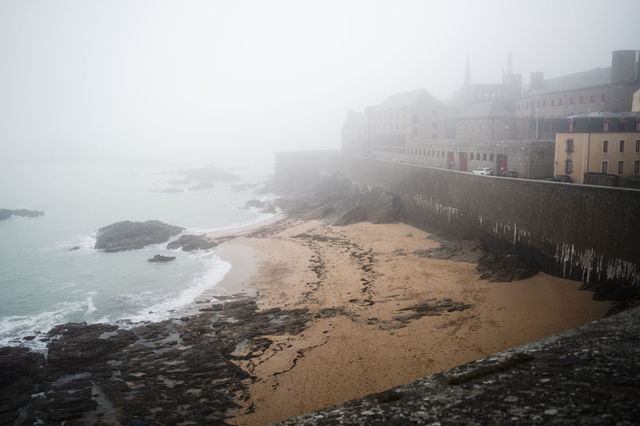
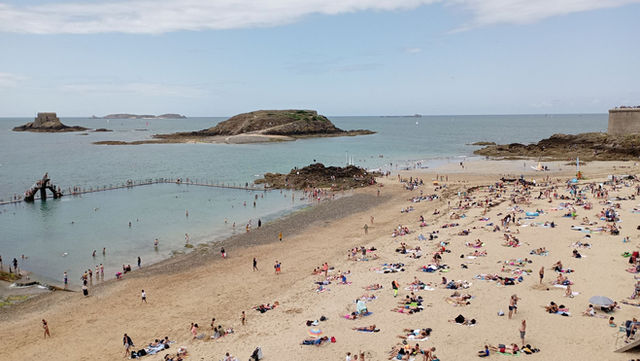
Saint-Malo in photos
Where you'll stay in Saint-Malo
Base yourself inside Intra-Muros if you want the romance of stone walls and stepping out directly into historic creperies, though you will trade off vehicle access and handle small rooms. Choose a spot in Saint-Servan for better value, easy car parking, and a quieter local neighborhood layout. Avoid staying too far inland near the modern commercial tracks of Paramé unless beach proximity is your single goal, as the modern concrete roads lack any historic flavor.
Hotels & rentals around Saint-Malo
Pan, zoom and compare live prices — every stay in one map.
Getting around Saint-Malo
The historic core is strictly a walking zone; you can cross the entire walled citadel on foot in ~approx 15 min. A network of clean local buses handles longer trips to outer villages, and a car is an absolute liability inside the walls.
Walk straight south along the harbor quays to connect Intra-Muros to Saint-Servan in ~approx 15 min.
Insider tips
- The walk from the railway station to the walled city is a flat but long march; use the local bus shuttle if carrying heavy luggage.
- The high stone ramparts have low open ledges and no safety railings in certain historic sections; keep a close eye on your footing when the wind blows hard.
While you're there
-
 3 OCT Cultural & Traditions See the event →
Explore the area
Local attractions & tours
Skip-the-line tickets and small-group tours in Saint-Malo — compare across our partners.
We're still curating hand-picked tickets and tours for Saint-Malo. In the meantime, the map above and the nearby cities are a great place to start.
When to visit Saint-Malo
June and September
Spring
What to expect — Coastal gorse turns yellow on the cliffs, the air clears up, and the ramparts remain uncrowded, though sharp spring winds can whip off the channel without warning. Most coastal ferry routes restart by late April.
What's best — Exploring the offshore forts at low tide without dodging lines of summer tour groups.
Summer
What to expect — Sun hits the granite walls, beaches pack tight with families, and the main citadel alleys turn into a dense pedestrian bottleneck. July and August bring premium room rates; skip mid-summer if you hate slow-moving crowds and swap it for a quieter June trip.
What's best — Swimming in the protected sea pools and sitting on the stone ramparts late into the evening twilight.
Autumn
What to expect — Massive autumn equinox tides send waves crashing over the stone walls, creating spectacular water displays. Tourism drops sharply by October, though early Atlantic storms can close exposed rampart paths.
What's best — Enjoying the dramatic, wild character of the Breton coast when the summer rush clears out.
Winter
What to expect — Biting northern winds howl through the granite streets, heavy grey fog rolls off the sea, and several tourist boutiques close up until spring. Cobblestones can turn slippery from frost.
What's best — Witnessing the raw, moody isolation of the old citadel shared entirely with rugged local fishermen.
Know before you go
Honest swaps
Skip the expensive seafood terraces inside the main gate of Porte Saint-Vincent → grab a buttered galette from a backstreet stall and eat it on the stone steps of Bastion de la Hollande instead.
Skip the commercial tourist mini-train → use your own legs to follow the stone rampart perimeter for a self-paced view of the coast.
Crowds & timing
The main thoroughfares of Intra-Muros clog completely on summer afternoons. Dodge the worst of the bottleneck by exploring the inner town paths early in the morning, then escape to the wide sands of Plage du Sillon when the tour buses arrive.
Local rules & etiquette
The tidal shifts in the bay are incredibly fast and dangerous; failing to check the daily tide tables before walking to Grand Bé can leave you trapped on the rocks surrounded by deep water. Lift your suitcase over the high stone gutters rather than dragging it to protect your wheels on the rough granite paving.
Money
Cards work at almost all registers, but carry cash coins for small market stalls. Avoid using the generic unbranded ATMs standing right near the tourist information center to escape high fees.
Getting there
Fly into Rennes Airport (RNS), then catch the regional train from Rennes station directly to Gare de Saint-Malo (~approx 50 min). The rail station sits just southeast of the old walled town.
Ready to book your trip?
Flights, airport transfers and car hire — search and compare without leaving the page.
More trip extras
Parking, holiday extras, and more — coming soon.
We're lining up parking, holiday extras and activities you'll be able to add to any trip from here.