← Germany
GERMANY · CITY

Bamberg

A perfectly preserved medieval gem in Bavaria — UNESCO World Heritage city with stunning sandstone architecture and famous smoked beer.

  • City
  • 2–3 days
▸ Where you'll stay

Where you'll stay in Bamberg

<h4>Altstadt (Old Town / Cathedral Hill)</h4><p>Staying within the UNESCO-listed old town puts you minutes from the cathedral, the New Residence and the main riverside walks. Family-friendly hotels in this area tend to be mid-range to boutique in scale; it is worth prioritising rooms facing away from the main pedestrian street if you're travelling with light sleepers. This is the most atmospheric option and my personal recommendation for families doing a short stay.</p><h4>Sand and Luitpoldstrasse area</h4><p>The streets immediately south of the old town, around the main train station, offer a wider spread of mid-range hotels, apartment rentals and guesthouses — useful if you're arriving by train with luggage. It's a 10–15 minute walk to the cathedral hill and a pleasant stroll through the lower town. Families with pushchairs or younger children may find the flatter terrain here more manageable than the old town's cobbled slopes.</p><h4>Gartenstadt / residential outskirts</h4><p>If you're driving and want more space for less money, Bamberg's quieter residential neighbourhoods to the north and east have family guesthouses and small hotels with car parking — a genuine advantage if you're travelling as a group of five. Connections to the centre are easy by bus or a 20-minute walk.</p><h4>How to choose</h4><p>For a two or three night stay, I'd always pick the old town — the atmosphere in the early mornings and evenings, when day-trippers have left, is extraordinary and worth the slight premium. For longer stays or larger families needing connecting rooms and parking, the Sand area offers the best balance of access, price and practicality.</p>

Stay

Hotels & rentals around Bamberg

Pan, zoom and compare live prices — every stay in one map.

▸ Getting around

Getting around Bamberg

Metro/subway

Bamberg does not have a metro or U-Bahn system — the city is compact enough that one is unnecessary. The old town and all major UNESCO heritage sites are within a small, walkable area.

Buses

Bamberg has a reliable local bus network operated by the Stadtwerke Bamberg. The main routes connect the train station to the city centre and the residential areas on the outskirts. For families staying in the old town, buses are mostly useful for getting to and from the station with luggage; day-to-day exploring is almost entirely on foot. Single tickets and day passes are available from drivers and machines at major stops.

Taxis and ride-hailing

Taxis are available at the train station and can be ordered by phone; Bamberg is small enough that taxi fares within the city are modest. Uber does not operate in Bamberg, but local taxi firms are reliable and can handle five-person family bookings with a larger vehicle on request — worth arranging in advance for airport runs.

Walking

Walking is genuinely the best way to experience Bamberg — and for the UNESCO old town, it is essentially the only way. The historic centre is pedestrianised or low-traffic across most of its area, the distances between sights are short, and the cobbled streets and stepped passages are part of the character of the place. I'd note that the cathedral hill involves some steep climbs; families with younger children or mobility considerations should plan for this. Good footwear is essential.

Cycling

Bamberg is a notably cycle-friendly city and bike hire is available near the train station. The riverside paths along the Regnitz are flat and excellent for family cycling; the surrounding Franconian countryside is also popular with cycling families. If you're combining a Bamberg visit with a wider Bavaria trip, a bike is a genuinely useful addition.

▸ What you'll do

Insider tips

Explore the UNESCO World Heritage town on foot

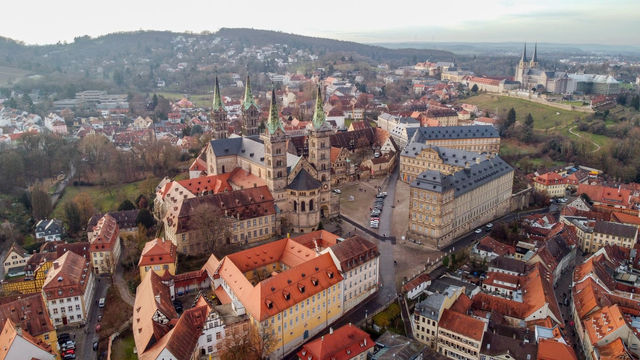
The single most important thing to do in Bamberg is simply walk the old town systematically — and I mean that seriously, not as a vague suggestion. The Town of Bamberg UNESCO World Heritage Site is essentially the entire historic centre, and the coherence of its medieval urban plan is what makes it exceptional. I'd recommend starting at the Domplatz (Cathedral Square) at opening time, before the day-tripper coaches arrive, and working outward in slow loops. Allow at least half a day for this alone; a full day is better. The cathedral hill, the upper town, the fishermen's quarter along the Regnitz, and the old town hall island are all within twenty minutes' walk of each other.

Bamberg Cathedral (Bamberger Dom)

The Bamberger Dom is one of the great Romanesque cathedrals of Germany, begun in 1004 and completed over two centuries in a distinctive style that blends Romanesque and early Gothic. Inside, the Bamberg Horseman — a twelfth-century equestrian statue of unknown identity, considered one of the finest medieval sculptures in existence — is genuinely jaw-dropping. Teenagers who are sceptical about churches tend to respond to the Horseman; its scale and skill are hard to dismiss. Entry is free and the cathedral is open daily.

Old Town Hall (Altes Rathaus)

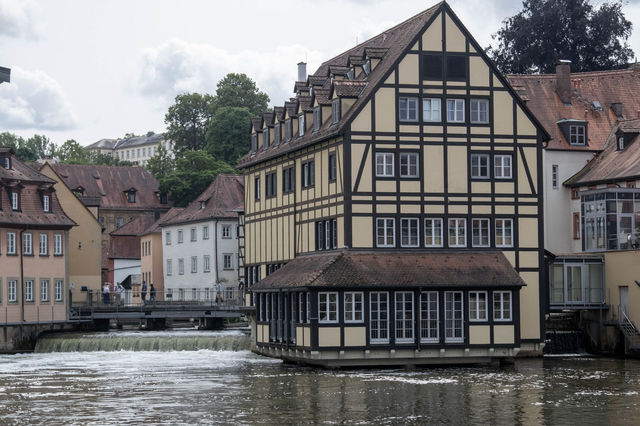
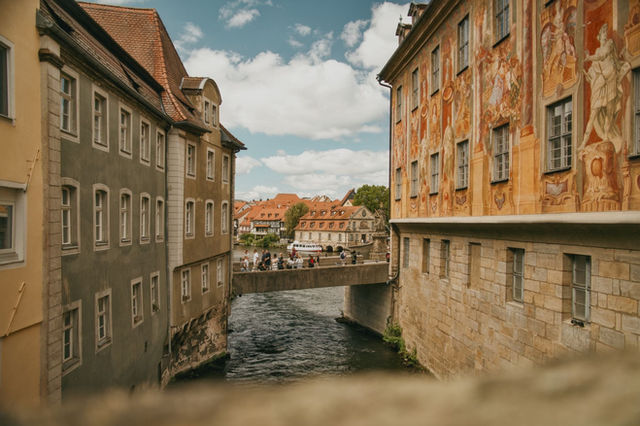
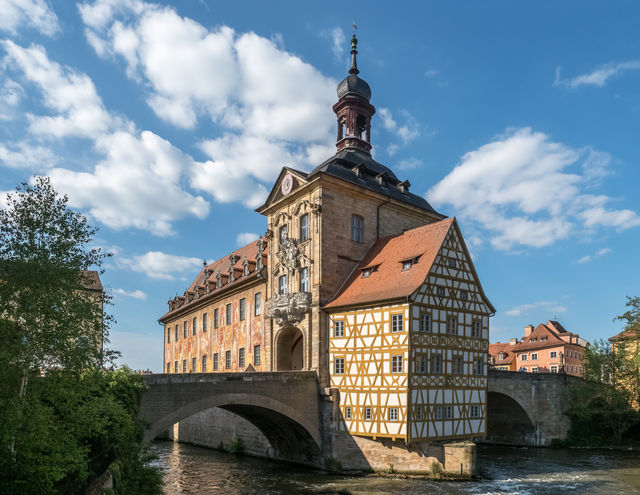
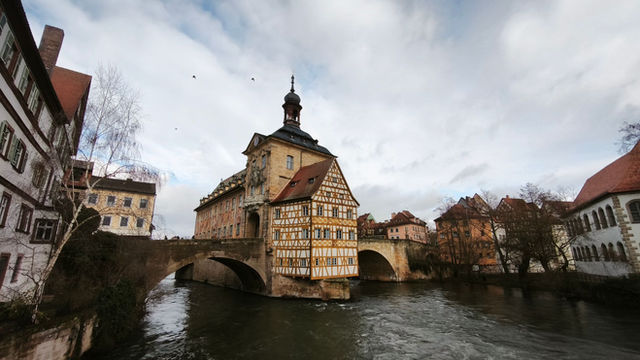
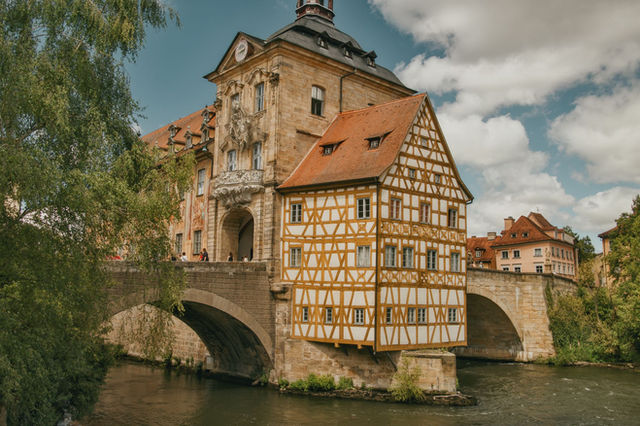
Bamberg's Old Town Hall is built on an artificial island in the middle of the Regnitz — a piece of medieval urban theatre that delights children of all ages. The building's trompe-l'oeil frescoes give the impression that carved figures are tumbling off the walls. Inside, the Ludwig Collection of Baroque porcelain is worth a visit for detail-lovers, though the exterior alone justifies crossing the bridge. It is one of the most photographed buildings in Germany and fully earns its fame.

New Residence and Rose Garden

The New Residence (Neue Residenz) was the episcopal palace; today its state rooms house a gallery of Bavarian paintings and its attic contains one of Germany's finest collections of medieval German art. The highlight for families is the rose garden behind the palace — 4,500 rose bushes arranged in formal patterns, with a panoramic view across the old town's red rooftops and the cathedral towers. Entry to the garden is free; the palace interior requires a ticket. I'd go for the garden and buy the palace ticket if time allows.

Regnitz river walk and Little Venice

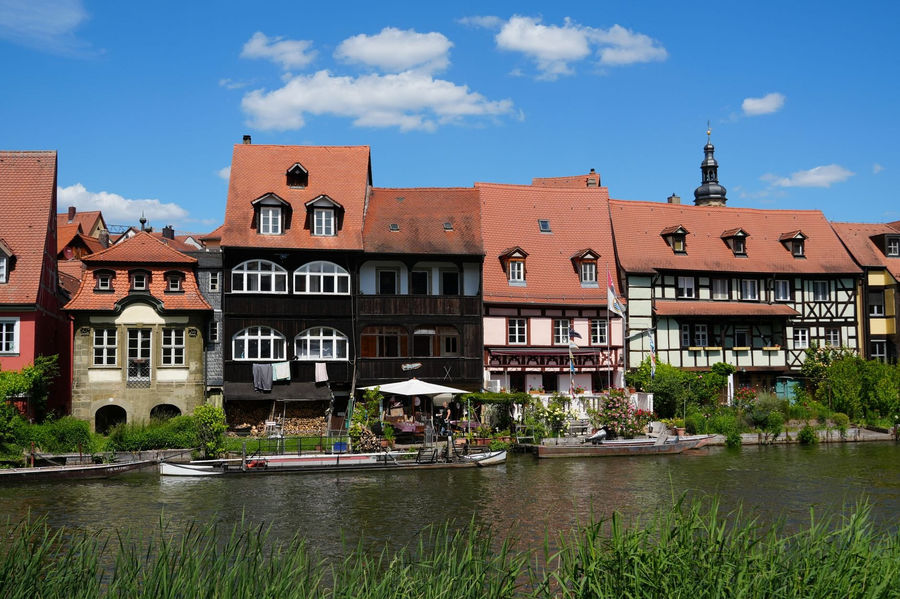
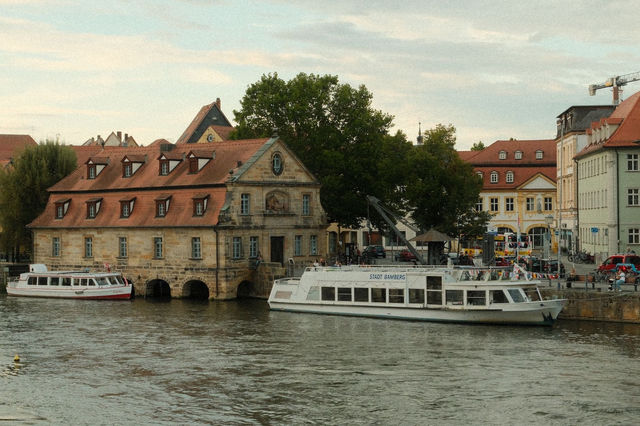
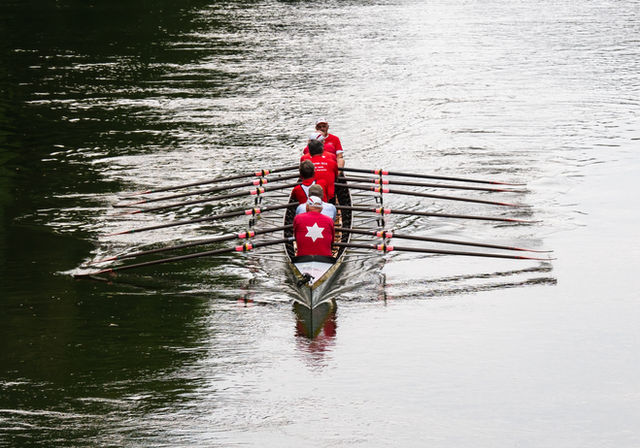
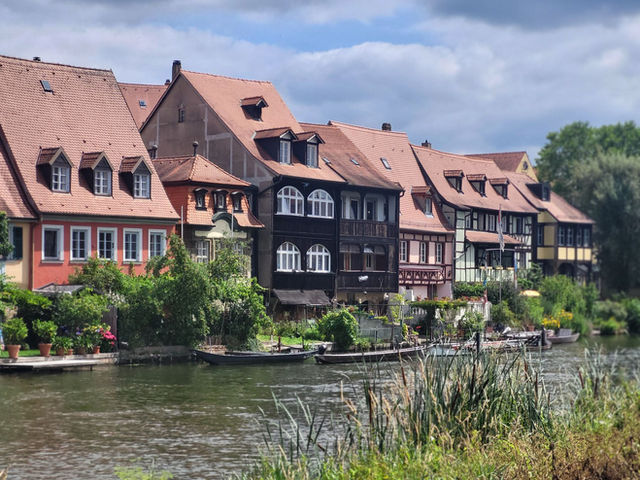
The stretch of riverside along the east bank of the Regnitz, known as Klein Venedig (Little Venice), is lined with half-timbered fishermen's houses whose gardens run down to the water. It looks improbably picturesque in the morning light. A slow walk along the bank, ideally supplemented by a boat trip on the river, is one of the most relaxing things to do in Bamberg and appeals to all ages. Boat tours on the Regnitz run from spring through autumn; they are affordable and the guides are excellent.

Rauchbier tasting in a traditional Bamberg brewery

Bamberg's Rauchbier (smoked beer) is brewed to a centuries-old method using malt dried over an open beechwood fire, giving it a distinctive smoky flavour that is unlike any other beer in the world. The city has several traditional brewery tap-rooms — family-run businesses that welcome all ages for food and soft drinks as well as beer. For teenagers, the history of the brewing tradition and the sensory contrast of tasting a Rauchbier versus a standard lager is genuinely interesting. I'd make this a deliberate experience rather than just a stop for the adults.

Michelsberg Monastery and viewpoint

The Kloster Michelsberg sits on one of Bamberg's seven hills and its terrace garden offers the classic panoramic view of the whole old town — cathedral towers, bridge, tiled rooftops — that appears in every photograph of the city. The walk up is steep but manageable for fit families; the monastery church is beautiful and free to enter. Go in the late afternoon when the light falls golden across the sandstone.

Frequently asked

How many days do I need in Bamberg?

Two nights and two full days is the minimum I'd suggest for a satisfying visit — enough time for the old town, the cathedral, the Old Town Hall, a river walk and a relaxed meal or two. Three nights lets you slow down, take a day trip to Würzburg or the surrounding Franconian countryside, and spend a proper evening in one of the traditional brewery tap-rooms. Bamberg is not a city that rewards rushing.

Is the UNESCO World Heritage Site worth it for teenagers?

In my experience, yes — but with some framing. The sheer survival of Bamberg's medieval street plan is a remarkable story: why did this city escape the bombing that destroyed so much of German urban heritage? That question alone tends to hook curious teenagers. The Bamberg Horseman in the cathedral is a genuinely mysterious twelfth-century masterpiece; the Old Town Hall balanced on a bridge island is a piece of medieval theatre that amuses all ages; and the Rauchbier tradition is a quirky sensory discovery. I'd lean into the historical detective angle rather than the architecture-appreciation angle for teens.

How do I get from Nuremberg Airport to Bamberg?

The most practical route is the regional train from Nuremberg Airport station to Nuremberg Hauptbahnhof (around 12 minutes), then a direct regional or ICE service from Nuremberg to Bamberg (around 35 minutes). Total journey time with a connection is roughly 1 to 1.5 hours. Alternatively, a taxi from the airport to Bamberg takes around 45–50 minutes and is worth considering for families with a lot of luggage, though the fare will be higher — roughly in the range of €70–90.

Is Bamberg expensive?

By German tourist-city standards, Bamberg is moderately priced and noticeably more affordable than Munich. Mid-range accommodation for a family of five is very achievable, restaurant meals at traditional Gaststätten are generous and reasonably priced, and most of the major sights (the cathedral, the rose garden, the riverside walks) are free or low-cost to enter. I'd budget roughly £80–120 per day for a family of five including accommodation, meals and entry fees — less if you self-cater for lunches.

Can we visit Bamberg as a day trip from Nuremberg?

Technically yes — the train journey is under an hour each way and most of the old town can be covered in four to five hours. But I would not recommend it. Bamberg in the early morning, before the day-trippers arrive, and in the evening, when the light on the cathedral is golden and the streets empty out, is a completely different experience from the midday rush. If you're based in Nuremberg and considering a day trip, I'd strongly suggest staying at least one night in Bamberg instead.

Are there good activities for teens beyond the historic sights?

Yes — the Rauchbier brewery tap-rooms are interesting for teenagers even if they're not drinking (the history is genuinely quirky and the food is excellent). The Regnitz river boat tours are a relaxed change of pace. For active teenagers, the cycling routes along the river and into the Franconian countryside are well-maintained. And the surrounding region — particularly Würzburg with its Residenz palace and wine cellars — is an easy and rewarding day trip that adds variety to a Bamberg-focused stay.

What is Rauchbier and should we try it?

Rauchbier is smoked beer — a style brewed in Bamberg for at least four hundred years, using malt that has been dried over a beechwood fire. The result is a dark, malty beer with a distinctive smoky flavour that divides opinion sharply: some people find it extraordinary, others find it challenging on first taste. I'd suggest ordering a small glass rather than a full half-litre on first encounter. Even if you don't enjoy it as a drink, the tasting is a genuine sensory experience and the story behind it is one of the best food-history encounters I've had anywhere in Germany.

What's on

While you're there

15
JUL
Imagine Dragons — Olympiastadion Berlin — Berlin, July 2026
Unter Den Linden 7, 10117 Berlin, Germany · concert
Build a trip around it →
18
JUL
Lollapalooza Berlin 2026 — Berlin, July 2026
Unter Den Linden 7, 10117 Berlin, Germany · festival
Build a trip around it →
19
SEP
Oktoberfest 2026
Matthias-Pschorr-Straße 4, 80339 München, Germany · festival
Build a trip around it →
Explore

Explore the area

Do

Local attractions & tours

Skip-the-line tickets and small-group tours in Bamberg — compare across our partners.

Not seeing offers? Try or — some destinations have thinner inventory on Tiqets.

▸ When you'll go

Best time to visit Bamberg

Seasons overview

Bamberg has a central European continental climate — warm, often sunny summers, cool springs and autumns, and cold winters. Summer (June–August) brings average highs of 24–27°C, with long days ideal for exploring the old town on foot and sitting in beer gardens along the Regnitz. July can occasionally bring thunderstorms, but they pass quickly and rarely ruin a day.

Spring (April–May) is genuinely lovely: the cathedral gardens and the rose garden of the New Residence come into bloom, temperatures are pleasant in the mid-teens to low twenties, and the city is quieter than in high summer. Autumn (September–October) is crisp, colourful and arguably the most atmospheric time to visit — the river mist in the mornings, amber light on the sandstone buildings, and the famous Franconian wine harvest in the surrounding countryside make it feel special. Winter (November–February) is cold (averaging 1–4°C) with occasional snow; the Bamberg Christmas market on Maximilianplatz is one of the more authentic in Bavaria, drawing German visitors rather than purely tourist crowds.

Best months for families

May, June and September are the sweet spot — warm enough for outdoor exploration, long daylight hours, and without the full pressure of July–August peak season. Easter week brings atmospheric celebrations at the cathedral; if you can time your visit around it, I'd recommend it.

▸ Ready to book your trip?

Getting there

By air

The closest international airport is Nuremberg Airport (NUE), approximately 60km south of Bamberg. From London, direct flights with British Airways, Lufthansa and budget carriers operate regularly; flight time is around two hours. Return flights typically cost ~£80–200 per person depending on season and how far ahead you book. From Nuremberg Airport, a regional train connects to Nuremberg Hauptbahnhof, then a direct ICE or regional service reaches Bamberg in around 35–45 minutes. The full journey from NUE to Bamberg central station takes approximately 1–1.5 hours. Alternatively, Frankfurt Airport (FRA) — a larger hub with more UK connections — is around 2.5 hours from Bamberg by train, which can work well if you're building a broader Germany itinerary.

By train

Bamberg is on the main Munich–Berlin high-speed rail corridor, which is a significant advantage. From London, the Eurostar to Brussels or Paris followed by an ICE to Bamberg via Frankfurt or Nuremberg is achievable in a long day — roughly 9–11 hours total. It is a genuine alternative for families who want to avoid airports, and the journey through the Rhine valley is beautiful. Bamberg Hauptbahnhof is about 15 minutes' walk from the old town and very well connected to the national DB rail network; I'd check the Deutsche Bahn website for through-ticket options from London.

By road

Bamberg is easily reachable by car from the UK via the Channel Tunnel or a cross-Channel ferry to France, then through Belgium and into Germany — a drive of roughly 10–12 hours from London, not counting breaks. This is a viable option for families with a lot of kit or those doing a wider Bavarian road trip; Bamberg has paid car parks close to the old town. The city is compact enough that you won't need a car once you arrive.

Book

Ready to book your trip?

Flights, airport transfers and car hire — search and compare without leaving the page.

▸ Trip extras
Book

More trip extras

Parking, holiday extras, and more — coming soon.

Coming soon

We're lining up parking, holiday extras and activities you'll be able to add to any trip from here.