← Germany
GERMANY · CITY

Lübeck

The former 'Queen of the Hanseatic League' — a brick-Gothic island city famed for its twin-towered gate and marzipan.

  • City
  • May to September for warmth; December for the Christmas market
  • ~approx 1 day, more with the Baltic coast
  • Queen of the Hanse
  • Brick-Gothic Old Town
  • Marzipan Capital
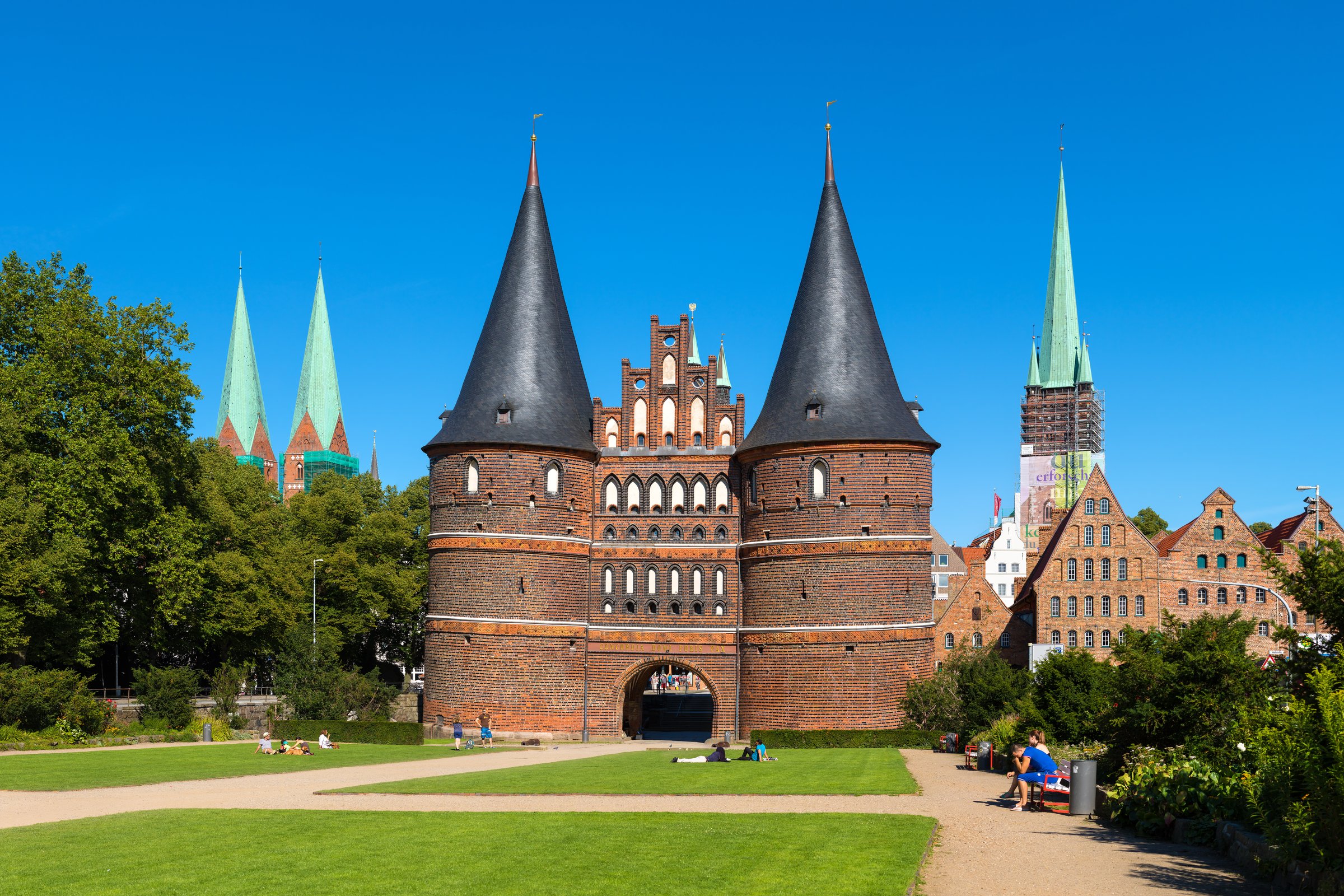
  • The Holsten Gate

A lopsided twin-towered brick gate leaning over its own reflection, the sweet almond smell of marzipan drifting from an old café, and seven green church spires needling a wide northern sky.

Lübeck was once the "Queen of the Hanseatic League", the medieval trading power of the Baltic, and its old town — a moated island of red-brick Gothic churches, gabled merchants' houses and a famous twin-towered gate — still looks the part. It also happens to be the marzipan capital of the world and the home town of two Nobel writers.

Type
city
Ideal length
~approx 1 day, more with the Baltic coast
Getting around
an entirely walkable old-town island
Neighbourhoods
3 areas
Best season / months
May to September for warmth; December for the Christmas market
Language
German
Currency
euro (€)
Budget level
moderate
Good for
  • History
  • Architecture
  • Food
  • Culture
▸ Discover

About Lübeck

Lübeck sits just inland from the Baltic coast in northern Germany, its historic old town set on an oval island ringed by the River Trave and its canals. As the leading city of the Hanseatic League, it grew rich on Baltic trade, and it built in brick — the distinctive North German brick-Gothic style, from its great churches to its stepped-gable warehouses. The compact island holds almost all the sights; the harbour and the modern city spread beyond. It is walkable, atmospheric and less visited than it deserves.

Why go

Lübeck is one of the best-preserved medieval cities in northern Germany — a UNESCO-listed old town of brick-Gothic grandeur, from the iconic Holsten Gate to the tallest brick church in the world, all on a moated island you can walk in an afternoon. It is the historic heart of the Hanseatic League, the home of the world's most famous marzipan, and the birthplace of the writer Thomas Mann. Close to the Baltic beaches and to Hamburg, it makes a rewarding, low-key short break.

Don't miss

  • The Holstentor — the leaning twin-towered brick gate
  • St Mary's Church (Marienkirche) — the tallest brick church in the world
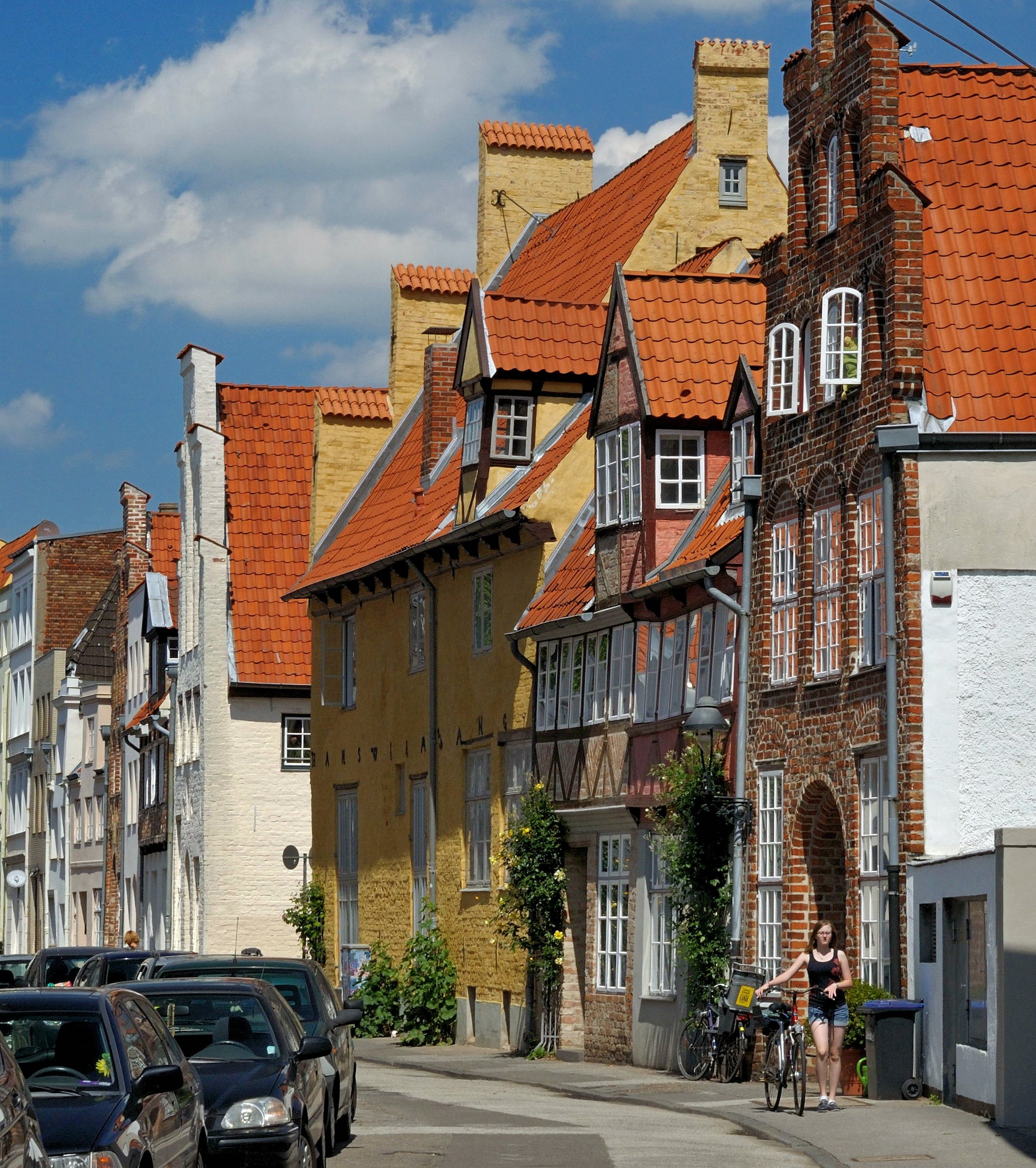
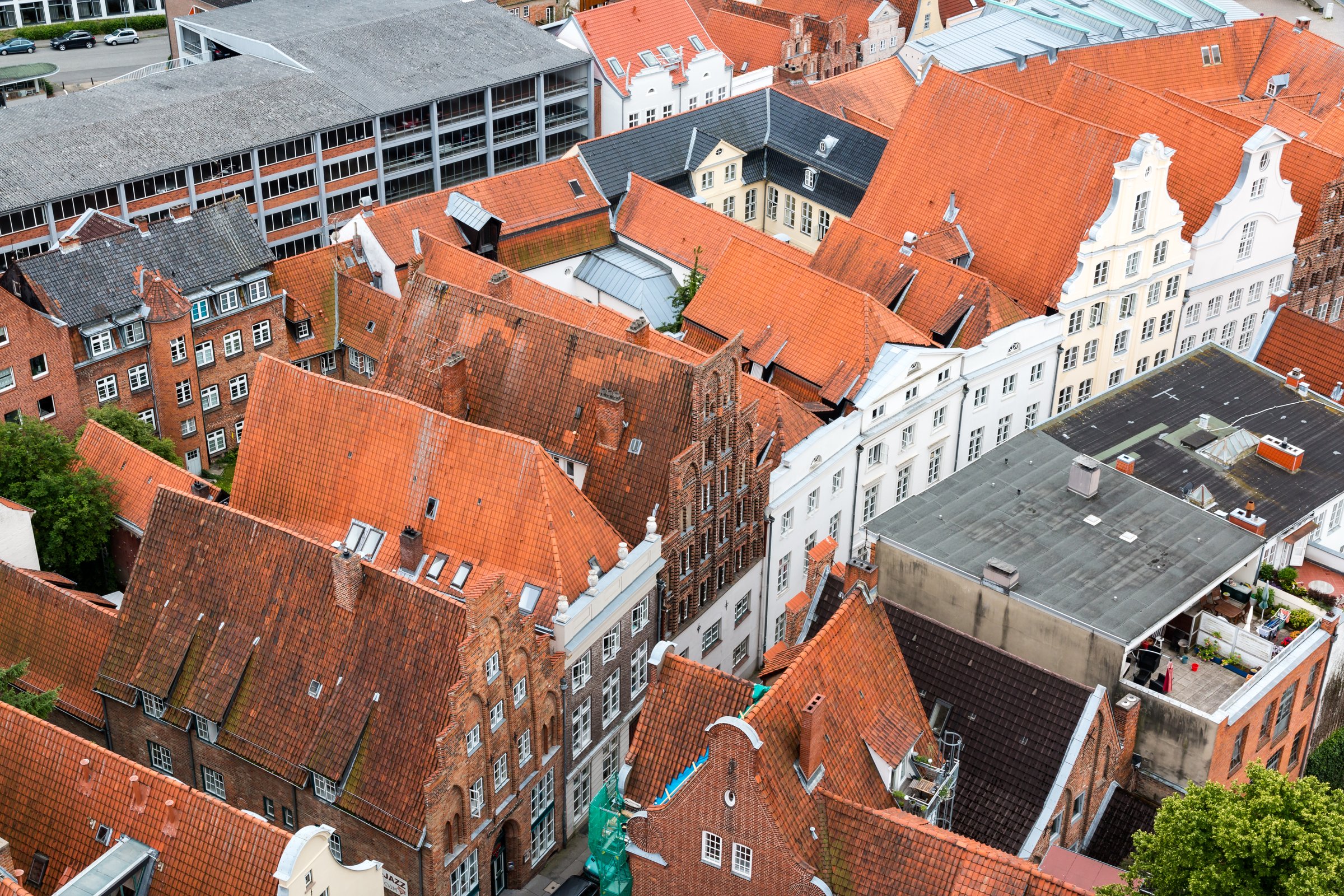
  • The old town island — the brick-Gothic streets and courtyards
  • Niederegger marzipan — the sweet the city is famous for
  • The Buddenbrook and Günter Grass houses — the literary heritage

Signature experiences

The Holsten Gate and the brick skyline — Lübeck's emblem is the Holstentor, a fat, twin-towered medieval brick gate that leans visibly with age, its two round towers reflected in the moat — the classic image of the city, and once its main landward defence. Beyond it rise the seven green copper spires of the old town's churches, a skyline built entirely in brick. Cross the gate onto the island and the medieval city opens up. **The brick-Gothic churches** — Lübeck built its faith in brick, and grandly. St Mary's (the Marienkirche) is the tallest brick church in the world and the model for dozens of others around the Baltic; inside, the bells that crashed to the floor in the wartime bombing have been left where they fell, a quiet memorial. The cathedral and the other spired churches complete a townscape of soaring dark-red brick. **Marzipan, the Lübeck sweet** — Lübeck is, by long tradition, the world capital of marzipan — the almond-and-sugar confection that has been made here for centuries. The historic Niederegger café and shop on the market square is the pilgrimage: a whole world of marzipan, a little museum of it, and a café to eat it with coffee and cake. It is the city's edible signature, and a genuinely good one. **Literary Lübeck** — For its size, Lübeck has an outsized literary legacy — Thomas Mann set his great novel Buddenbrooks in the merchant house of his own family here, and both he and the later writer Günter Grass, who lived in the city, won the Nobel Prize. The Buddenbrookhaus and the Grass house tell their stories, weaving the town's Hanseatic merchant past into the fiction that made it famous.

Neighbourhoods

Lübeck neighbourhood by neighbourhood — the character of each and who it suits.

  • The Old Town Island

    The moated oval island that is historic Lübeck — a dense weave of brick-Gothic churches, gabled merchants' houses, hidden courtyards and the famous gate, the whole medieval city in miniature.

    Why go
    The single densest run of brick-Gothic architecture in the north.
    Best for
    First-time sightseeingchurchescourtyards
    Known for
    The Holstentor gate, St Mary's Church, the market square and the Rathaus, the seven-spired skyline, and the hidden Gänge and Höfe alleyway courtyards.
  • The Marketplace and Museums

    The civic heart of the island — the market square and ornate brick town hall, the marzipan house, and the museum quarter of the two Nobel writers.

    Why go
    The town hall, the marzipan, and the literary houses.
    Best for
    The Rathausmarzipanliterary history
    Known for
    The Gothic Rathaus (town hall), the historic Niederegger marzipan café and shop, the Buddenbrookhaus (Thomas Mann) and the Günter Grass house, and the market square.
  • The Harbour and the Trave

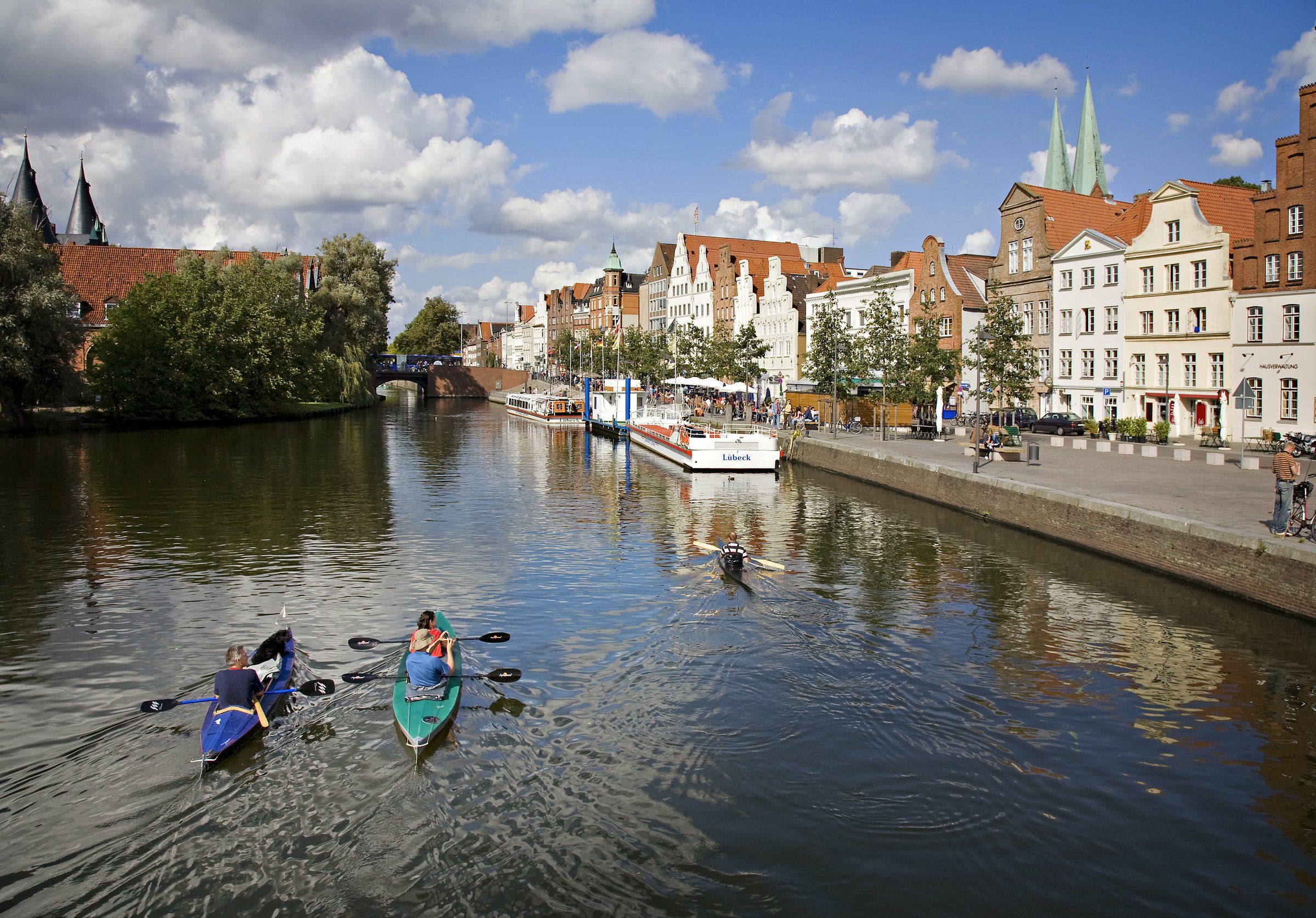
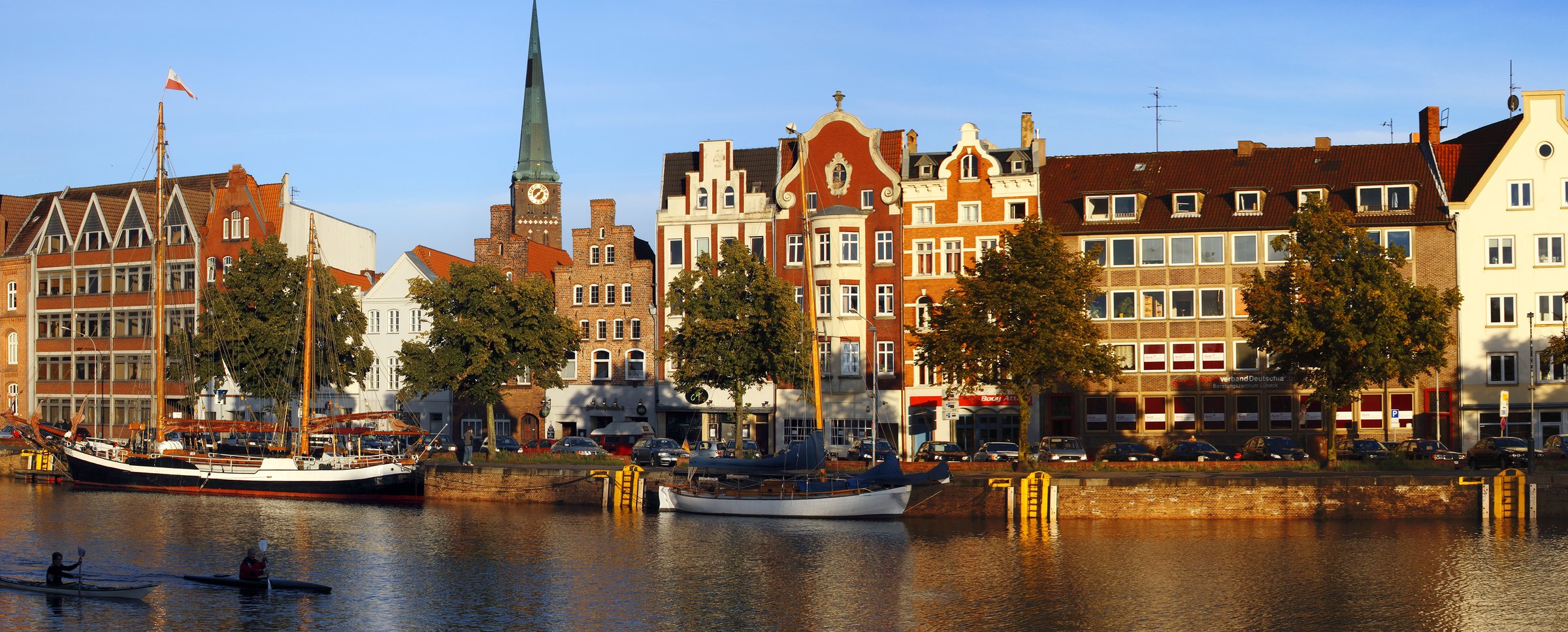
    The waterfront edge along the river — the old salt warehouses, the harbour, and the boats and views back to the brick skyline.

    Why go
    The waterfront, the warehouse row, and the old-town view from the water.
    Best for
    Waterfront walksboat tripsthe skyline
    Known for
    The historic Salzspeicher salt warehouses beside the Holstentor, the harbour and the museum ships, the boat trips around the island, and the riverside promenades.

Views & hidden gems

Best views

  • The Holstentor and its moat — the leaning gate reflected in the water
  • St Petri church tower — a lift up for the panorama over the brick skyline
  • The seven-spired skyline from across the Trave
  • The salt warehouses beside the gate — the Hanseatic waterfront

Hidden gems

  • The Gänge and Höfe — the hidden alleyway courtyards threading the old town
  • The fallen bells of St Mary's — left where the bombing dropped them, a memorial
  • The Museum Quarter's hidden gardens and almshouse courtyards
  • A traditional café for Lübeck marzipan and Rotspon, the local French-wine tradition
  • The Günter Grass house's small, quiet garden and gallery

Food & drink

Lübeck's food is northern German and Baltic — hearty, fishy and, famously, sweet. The Baltic supplies fresh and smoked fish; the classic regional dishes are heavy and warming, from the sailors' hash Labskaus to fish rolls and hearty stews. But the city's real fame is marzipan, made here for centuries and eaten in every form. An odd local tradition is Rotspon, French red wine shipped young and aged in Lübeck's cellars, a Hanseatic-trade legacy. Coffee and cake is a serious northern ritual.

  • Lübeck marzipan — the almond-and-sugar sweet the city is famous for
  • Fischbrötchen — a fresh Baltic fish roll, the northern street snack
  • Labskaus — a sailors' hash of corned beef, potato, beetroot and egg
  • Smoked Baltic fish — herring, eel and more from the coast
  • Rotspon — young French red aged in Lübeck cellars, a local tradition
  • Coffee and cake — the northern German café ritual
Dietary notes

Vegetarians and vegans manage with the café-and-cake culture, marzipan and the newer restaurants, though the traditional table is fish- and meat-heavy. Halal food is found in the wider city; kosher is limited and best sought in Hamburg. Gluten-free is understood in newer places. The strong café tradition caters comfortably to most sweet-toothed needs.

Lübeck in photos

▸ Where you'll stay

Where you'll stay in Lübeck

The old-town island is the atmospheric, convenient base — walkable to every sight, among the brick-Gothic streets and courtyards, quiet at night. The area near the market square and the Holstentor is the most central. The harbour edge offers waterfront stays with skyline views. The island is compact, so anywhere on it puts everything at your feet; the city is a manageable day or overnight from Hamburg or the Baltic coast.

  • Budget
    Near the station / island edge budget hotels and hostels, a short walk to the old town.
  • Mid-range
    The old-town island characterful hotels in historic buildings, walkable to every sight.
  • Luxury
    Central island / waterfront grander hotels near the market square or with river-and-skyline views.
Stay

Hotels & rentals around Lübeck

Pan, zoom and compare live prices — every stay in one map.

▸ Getting around

Getting around Lübeck

The old-town island is compact and entirely walkable — a car is unnecessary in the narrow streets. Buses link the station and the outskirts, and boats circle the island and reach the Baltic coast. Everything central is on foot.

The old-town sights — the gate, the churches, the market square — are all a short walk apart (~approx). The harbour and waterfront edge the island; Travemünde and the Baltic beach are a short train or boat ride away.

▸ Plan your days

Suggested itineraries

Ready-made day plans for Lübeck — from a single day to a long weekend.

One day

Enter the old town through the Holstentor and cross to the market square for the Rathaus and the Niederegger marzipan house. See St Mary's Church and its fallen bells, climb St Petri's tower for the skyline, and visit the Buddenbrookhaus or Günter Grass house. Wander the hidden courtyards, then end with a boat trip around the island or a waterfront dinner.

▸ What you'll do

Insider tips

  • Give Lübeck an afternoon or an overnight rather than a rushed stop — the island rewards a slow wander.
  • Seek out the hidden Gänge and Höfe courtyards threading the old town — the city's quiet, atmospheric secret.
  • Buy marzipan at the historic Niederegger house on the market square for the real thing.
  • It's a short, easy train from Hamburg and close to the Baltic beach at Travemünde — an easy add to a northern trip.
What's on

While you're there

19
SEP
Oktoberfest 2026
Matthias-Pschorr-Straße 4, 80339 München, Germany · festival
Build a trip around it →
Explore

Explore the area

© OpenFreeMap · OSM · terrain Mapterhorn
Do

Local attractions & tours

Skip-the-line tickets and small-group tours in Lübeck — compare across our partners.

We're still curating hand-picked tickets and tours for Lübeck. In the meantime, the map above and the nearby cities are a great place to start.

▸ Budget

What it costs in Lübeck

Backpacker
roughly €55–80 a day.
Mid-range
roughly €110–170 a day.
Luxury
€280 a day and up.
Cash vs card
Lübeck takes cards widely, but Germany still likes cash — carry some for bakeries, fish stalls and small cafés.
Tipping
Round up or add roughly 5–10% in restaurants; tell the server the total as you pay rather than leaving coins.
▸ When you'll go

When to visit Lübeck

May to September for warmth; December for the Christmas market

Spring

What to expect — Cool and changeable early, warming into pleasant weeks, the island fresh and the days lengthening. Baltic breezes and some rain.

What's best — Mild walking weather, the old town uncrowded, and the Baltic coast reawakening for the season.

Summer

What to expect — Mild rather than hot, long northern days, and the liveliest season, with the harbour, café terraces and the nearby Baltic beaches busy. Occasional showers.

What's best — Long light for old-town wandering and boat trips, the Baltic beach resort of Travemünde close by, and warm-enough café evenings. The best time to visit.

Autumn

What to expect — Cooling, crisp and often golden, the summer visitors gone and the brick glowing in the low sun. Damp and shortening days later.

What's best — Comfortable walking, quieter sights, cosy cafés, and the marzipan-and-coffee culture at its most inviting.

Winter

What to expect — Cold, grey and often damp, with short days, but December brings one of northern Germany's loveliest Christmas markets to the old town. Deep winter is quiet.

What's best — The Christmas market among the brick-Gothic streets, marzipan at its seasonal best, festive lights on the gate, and cosy cafés against the cold.

▸ Know before you go

Know before you go

Honest swaps

Skip the mass-market marzipan in souvenir shops → buy it at the historic Niederegger house or a traditional confectioner.

Skip only photographing the Holstentor → cross onto the island and give the churches, courtyards and skyline their time.

Skip the tourist-menu restaurants by the gate → eat fish and northern classics in a back-street spot on the island.

Skip a rushed hour on the way to Hamburg → Lübeck rewards an afternoon or an overnight.

Crowds & timing

The Holstentor and the market square are busiest midday; go early or late for the light and the calm.

The Christmas market fills the old town in December and spikes prices — lovely, but book ahead.

Local rules & etiquette

The churches are active and hold quiet memorials (like St Mary's fallen bells) — behave respectfully and mind photography.

Cover shoulders and knees for the churches, and keep the noise down inside.

The hidden courtyards (Höfe) are often residential — admire quietly and don't intrude.

Money

Cards work widely, but carry cash for bakeries, fish stalls and small cafés.

Use bank ATMs and decline dynamic currency conversion.

After dark

The old town is gentle after dark — cosy restaurants, wine bars and the odd pub, more than a nightlife.

The harbour and a few island bars keep a quiet buzz; students add some life.

A marzipan-and-coffee afternoon and a fish dinner suit the city better than a big night out.

▸ Ready to book your trip?

Getting there

Lübeck has a small airport, but most visitors arrive by train — it's about forty-five minutes from Hamburg (whose airport, HAM, is the nearest big one) on a frequent, easy line. Lübeck's central station is a short walk across to the old-town island.

Book

Ready to book your trip?

Flights, airport transfers and car hire — search and compare without leaving the page.

▸ Trip extras
Book

More trip extras

Parking, holiday extras, and more — coming soon.

Coming soon

We're lining up parking, holiday extras and activities you'll be able to add to any trip from here.