
Israel
A Levantine table rebuilt by immigrants from a hundred countries — and argued over, plate by plate, in the market.
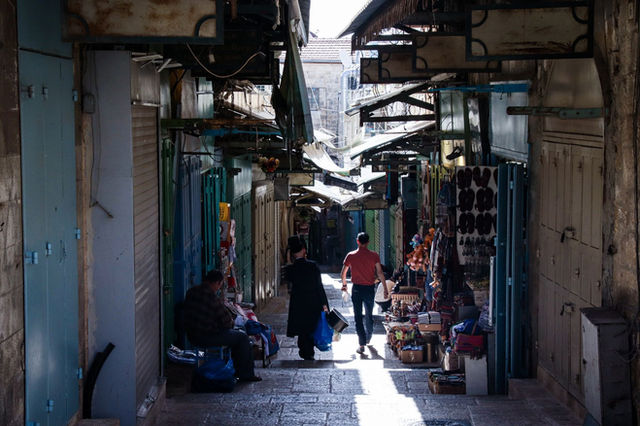
Breakfast is a bowl of hummus so warm and smooth it barely holds its shape, wiped up with torn pita before the plate cools, at a battered hummusiya that has served the same thing for generations. By mid-morning the market — Jerusalem's Mahane Yehuda, Tel Aviv's Carmel — is a wall of noise: halva by the slab, olives glistening in tubs, a queue snaking from the falafel man.
This is Levantine cooking with the whole Jewish diaspora folded in. Iraqi Jews brought sabich, fried aubergine and egg crammed into pita with tangy amba; North Africa brought shakshuka, eggs poached in a spiced tomato pan; Yemen brought slow Shabbat breads and fiery zhug. Almost everything comes with chopped salad, tahini and strong coffee. Eat late and in the street: a paper cup of rosewater malabi under syrup and coconut, or a hot slab of knafeh, orange cheese pastry soaked in sugar and pulled apart while it is still stretching.
- Hummus
- Falafel
- Shakshuka (eggs poached in spiced tomato)
- Sabich (fried aubergine & egg pita)
- Meorav Yerushalmi (Jerusalem mixed grill)
- Malabi (rosewater milk pudding)
- Knafeh (syrup-soaked cheese pastry)