

Mauritania
Where the Maghreb meets the Sahel: camel couscous and desert dates, fish-and-rice south, and three glasses of tea.
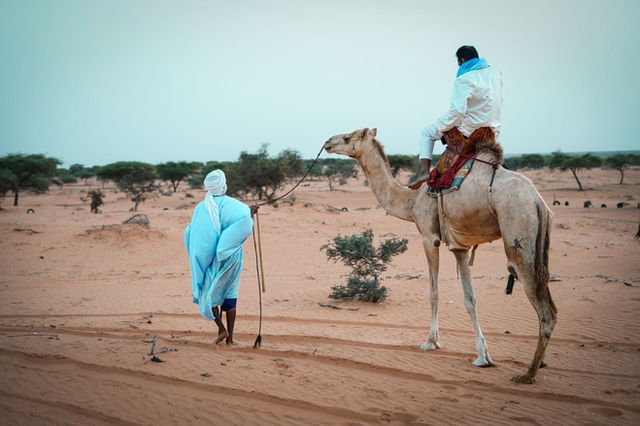
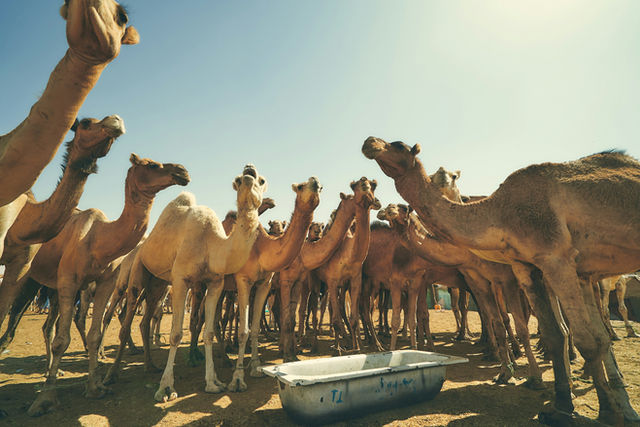
Mauritania's food sits exactly where the Arab-Berber desert meets Black West Africa, and it splits on that line. In the Moorish north the plate is couscous and rice with meat, prized méchoui — whole roast sheep — and camel, eaten in the shade with dates from the oasis. In the south, along the river, it turns to chebbujin, the local fish-and-rice descended from Senegal's thieboudienne.
Whatever you eat, the meal ends the same way: ataya, green tea poured from a height to raise a froth and served in three small glasses over the best part of an hour — bitter, then sweeter, then sweetest, a ceremony not to be rushed. There's zrig, sweet watered camel or goat milk, to drink alongside. Nomad hospitality, poured out one glass at a time.
- Chebbujin (fish and seasoned rice)
- Méchoui (whole roast sheep)
- Camel couscous (couscous with camel meat)
- Yassa (onion-lemon chicken or fish)
- Dates (oasis palm dates)
- Zrig (sweetened watered milk)
- Ataya (three-glass green tea)