


Mongolia
Steppe food for a cold country: steamed mutton dumplings, hot-stone barbecue and salted milk tea.
Mongolian cooking is built for the cold and the saddle. The everyday joy is the dumpling — buuz, mutton and onion steamed until the parcels burst with hot fat, eaten by the dozen at Tsagaan Sar, and khuushuur, the same filling fried flat and crisp and sold in stacks at the summer Naadam.
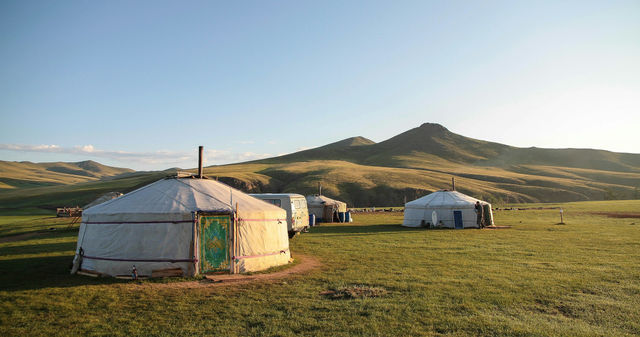
Out on the steppe the showpiece is khorkhog: mutton layered with fire-heated river stones in a sealed churn, the meat steaming from the inside while the smooth-worn stones are passed hand to hand, said to be good for you. Vegetables are scarce; dairy is everything. Expect racks of hard, sour dried curd (aaruul) drying on a ger roof, cups of salty suutei tsai milk tea pressed on every visitor, and, in season, a bowl of cloudy airag — fermented mare's milk, mildly boozy and an acquired taste worth acquiring.
- Buuz (steamed mutton dumplings)
- Khuushuur (fried meat pastry)
- Khorkhog (hot-stone mutton)
- Tsuivan (fried noodles with meat)
- Suutei tsai (salted milk tea)
- Aaruul (dried milk curds)
- Airag (fermented mare's milk)