← Netherlands
NETHERLANDS

Amsterdam

A city of golden-age canals, world-class museums and freewheeling cycling culture — compact enough to explore on foot, endlessly rewarding.

  • The best time to visit is May–Sep, when the weather is mildest with fewer rainy days.
  • AMS
  • 3–4 days
  • Concentric Canals
  • Dutch Masters
  • Bicycle City
  • Brown Cafés

Bikes streaming past in both directions, church bells over the Prinsengracht, and the smell of frying oil and old beer drifting out of a brown café as the light goes gold on the water.

Amsterdam is a small city built as a set of half-rings around water, where a Golden-Age merchant town still runs on bikes, brown bars and gabled canal houses. Cross one bridge and the crowds thin, the noise drops, and you're on a quiet stretch of water that looks the same as it did 400 years ago.

Type
city
Ideal length
~approx 3–4 days
Getting around
GVB trams and metro, plus a lot of walking and cycling; free ferries to Noord
Neighbourhoods
7 areas
Best season / months
April and May for tulips and King's Day, and September — mild, long light, before or after the summer crush
Language
Dutch, with near-universal, fluent English
Currency
euro (€)
Budget level
high — one of Europe's pricier cities, especially for beds
Good for
  • First-timers
  • Art
  • Cycling
  • Food
  • Couples
▸ Discover

About Amsterdam

Amsterdam is the Netherlands' capital and its beating cultural heart — a city of roughly 165 kilometres of canals, 1,500 bridges and some of the finest 17th-century merchant architecture on earth. Built on a series of concentric rings dug during the Dutch Golden Age, it is small enough that most major sights are within cycling distance of each other, yet rich enough to fill a week. The Rijksmuseum and Van Gogh Museum rank among Europe's finest art collections; the Anne Frank House is one of the continent's most powerful memorial sites; and the Jordaan neighbourhood's brown cafés and cheese shops offer a gentler, lived-in counterpoint to the tourist-heavy canal belt. Amsterdam rewards slow exploration: rent a bike, cross the bridges, pick a neighbourhood and let the city unfold at its own pace.

Why go

Amsterdam punches well above its size. Within a few square kilometres you have two of the world's great art museums (Rijksmuseum, Van Gogh), a haunting Holocaust memorial, a vibrant food scene stretching from Indonesian rijsttafel to Surinamese roti and contemporary Dutch tasting menus, and one of Europe's most storied LGBTQ+ communities. The city is also a supremely easy family destination — flat, bike-friendly, full of interactive science and history museums, and laced with parks that turn into outdoor stages in summer. Come in spring when the tulips bloom at Keukenhof, or in December when the canal houses are strung with lights and the chill keeps the crowds manageable. Avoid August peak-season weekends if you want breathing room.

Don't miss

  • The Grachtengordel — the UNESCO ring of Golden-Age canals
  • The Rijksmuseum — Rembrandt's Night Watch and the Dutch masters
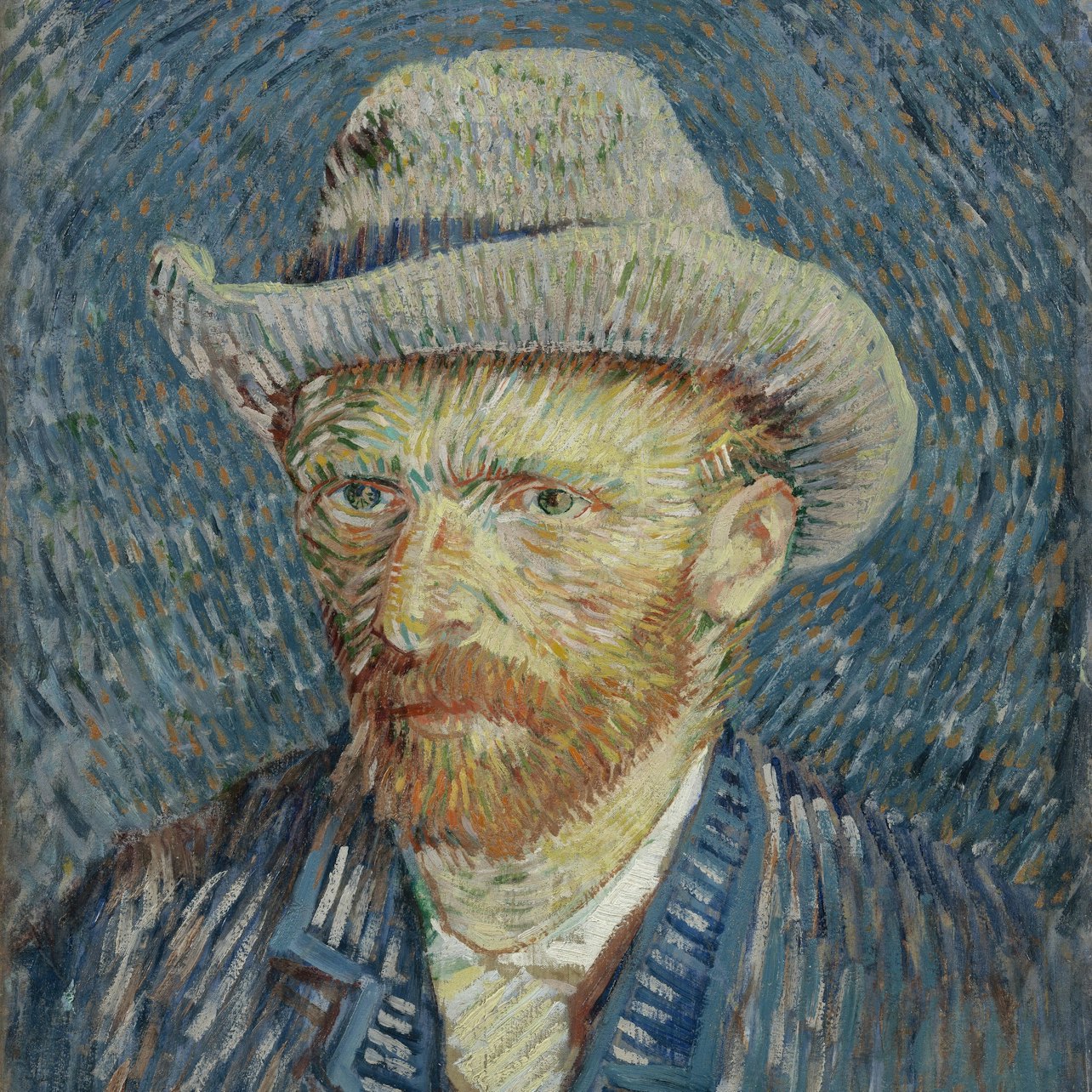
  • The Van Gogh Museum — the largest Van Gogh collection anywhere
  • The Anne Frank House — the hidden annex on the Prinsengracht
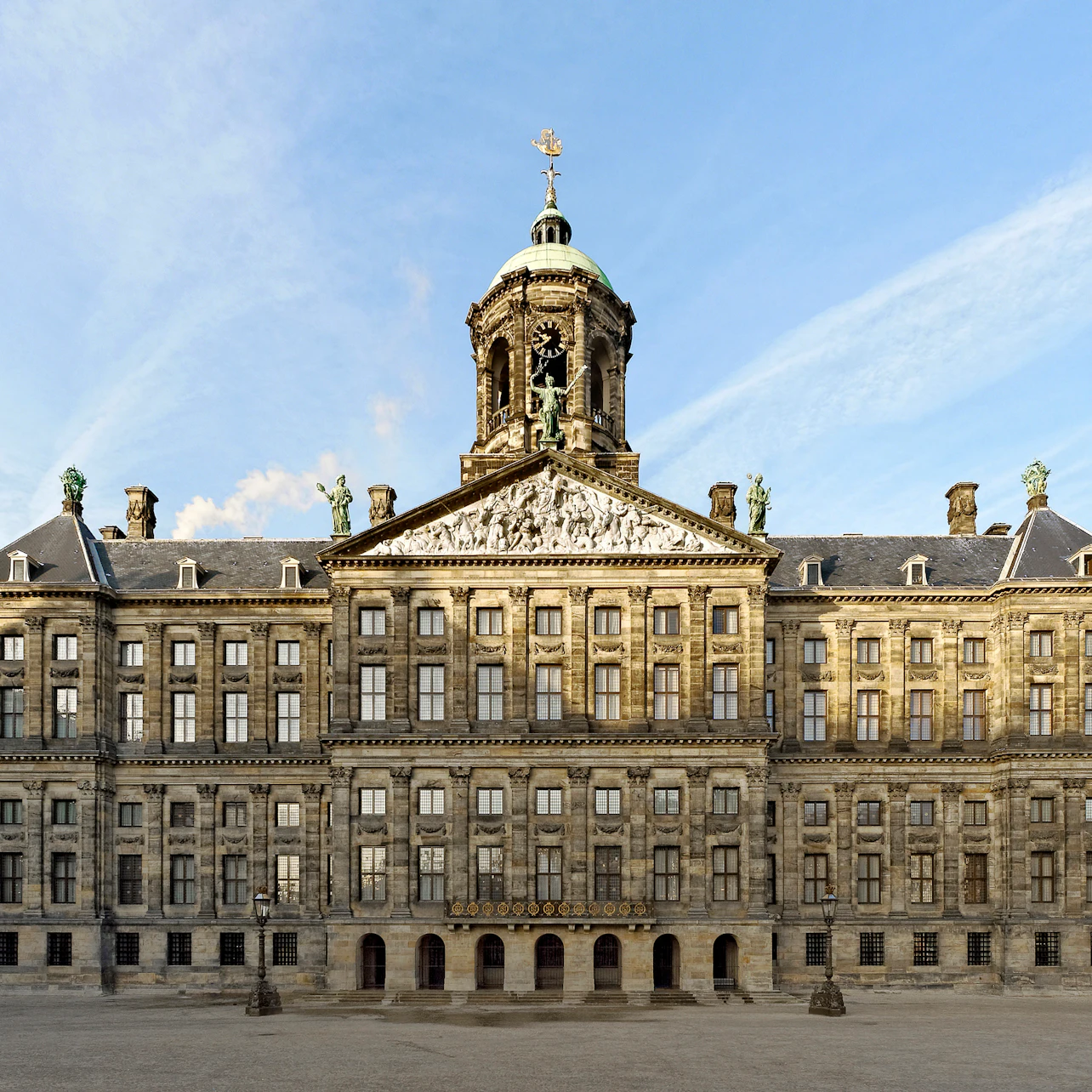
  • Dam Square and the Royal Palace — the city's civic heart

Signature experiences

Museum days on the Museumplein — You can spend a full day inside one square. Stand in front of Rembrandt's Night Watch and Vermeer's milkmaid at the Rijksmuseum, walk a lifetime of Van Gogh from the early dark canvases to the sunflowers next door, then finish with modern work at the Stedelijk — three of Europe's great collections within a two-minute stroll. Book the Van Gogh Museum ahead; it runs on timed slots and sells out. **The canals, on foot and by boat** — The Grachtengordel is the whole point, and the way to feel it is to walk one canal end to end, then cross to the next. Trace the Herengracht past the merchant houses of the Golden Bend, cut through the Nine Streets, and end at a bridge over the Reguliersgracht as the arches light up. A canal boat shows you the water-level view the city was designed for; skip the loud party boats and take a small open one. **Life on two wheels** — Amsterdam moves by bicycle, and renting one for a day is the fastest way to think like a local — provided you learn the rules quickly. Loop the Vondelpark, ride the quiet stretches of the Jordaan, glide out to the windmill in Oost. Just stay off the tram tracks and out of everyone's way; the locals ride fast and ring hard. **Brown cafés and jenever** — The city's drinking runs on the bruin café, the dark wood-panelled pub stained brown by centuries of smoke, and on jenever, the juniper spirit that gave the world gin. Order it the traditional way — a tulip glass filled to the brim in a proeflokaal tasting house, bent over to the first sip — and pair it with a plate of bitterballen. The Jordaan has the best of the old corner bars. **Markets and street snacks** — Eating here is a standing, walking, one-hand affair. Work the length of the Albert Cuyp Market in De Pijp for a fresh stroopwafel and a paper cone of chips, grab raw herring from a street cart the Dutch way — by the tail, head back — and pick up cheese at the Noordermarkt on a Saturday. On screen: the Anne Frank House and a canal-side bench turned the city into a pilgrimage for readers of The Fault in Our Stars, though the "real" bench is just an ordinary one on the Leidsegracht (in front of Leidsegracht 4) — go for the canals, not the photo.

Neighbourhoods

Amsterdam neighbourhood by neighbourhood — the character of each and who it suits.

  • Centrum

    The medieval core, packed tight between Centraal Station and the innermost canal. Dam Square opens it up; the lanes east of the Damrak twist into De Wallen, the Red Light District, oldest and most photographed part of town.

    Why go
    The greatest concentration of icons, all on foot — and the one part of the city that never really sleeps.
    Best for
    First-time sightseeinghistorylate nightspeople-watching
    Known for
    Dam Square and the Royal Palace (Koninklijk Paleis), the red-window lanes of De Wallen, the hidden Begijnhof courtyard off the Spui, the floating Bloemenmarkt flower stalls on the Singel, and Nieuwmarkt around its old weigh-house.
  • Grachtengordel

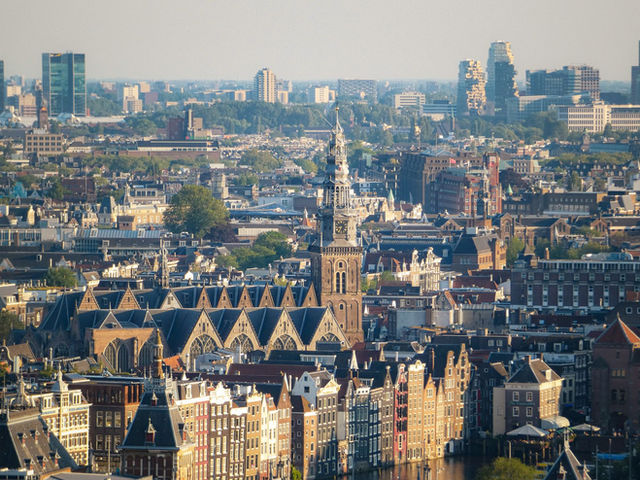
    The canal ring itself — three grand waterways lined with narrow gabled houses, humpback bridges and houseboats. The postcard Amsterdam, and still full of people actually living in it.

    Why go
    The best aimless walk in the city, and the water that defines the whole place.
    Best for
    Canal walksboutique shoppingcafésslow wandering
    Known for
    The Nine Streets (Negen Straatjes) for small shops, the nightlife squares of Leidseplein and Rembrandtplein, the wonky Reguliersgracht bridge view, and the leafy Herengracht "Golden Bend" of merchant mansions.
  • Jordaan

    A grid of narrow lanes just west of the ring, once working-class, now the softest and most sought-after quarter. Brown cafés on corners, hidden almshouse courtyards behind plain doors.

    Why go
    Amsterdam at its most intimate — small bars, canals without the crowds, and the hofjes.
    Best for
    Brown caféscourtyardsmarketsa quiet evening
    Known for
    The Westerkerk tower, the Anne Frank House on the Prinsengracht at its edge, the Saturday Noordermarkt, and quiet hofjes like the Karthuizerhof tucked off the street.
  • Museumkwartier

    The museum belt of Oud-Zuid, laid out around a single open green. Broad streets, grand brick, and the country's cultural heavyweights in a row.

    Why go
    Three world-class museums and the city's biggest park, side by side.
    Best for
    Museumsclassical musicgreen spaceupmarket shopping
    Known for
    The Rijksmuseum, the Van Gogh Museum and the Stedelijk on Museumplein, the Concertgebouw concert hall, the sprawling Vondelpark, and the luxury shops of P.C. Hooftstraat.
  • De Pijp

    A dense, young district just south of the ring, built on former marshland and now the city's most mixed eating quarter. Turkish, Surinamese and Dutch on the same block.

    Why go
    The Albert Cuyp street market and the food scene around it.
    Best for
    Street foodcheap eatsmarketsa local dinner
    Known for
    The Albert Cuyp Market, the Heineken Experience in the old brewery, the green square of Sarphatipark, and the café terraces around the Gerard Douplein.
  • Oost

    A wide, calm spread east of the centre, greener and more residential, with a colonial-era park and a working windmill. Where locals go when the ring gets too much.

    Why go
    Parks, a brewery under a windmill, and food streets with barely a tourist.
    Best for
    Parkscraft beermulticultural foodslow days
    Known for
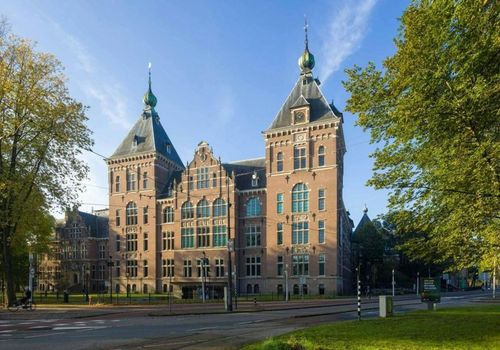
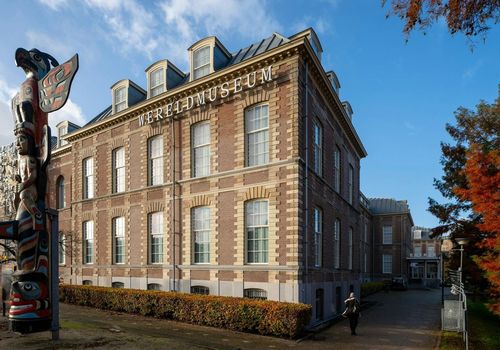
    The Oosterpark, the Tropenmuseum, the De Gooyer windmill with the Brouwerij 't IJ taproom at its foot, and the food stalls of the Dappermarkt and Javastraat.
  • Noord

    The other side of the IJ, reached by free ferry, and the city's reinvention story — old shipyards turned into studios, festival grounds and a landmark tower. Rougher, roomier, still changing.

    Why go
    A fast, free boat ride to a completely different Amsterdam, plus the best high view in town.
    Best for
    Viewsstreet artfestivalsdesign and film
    Known for
    The A'DAM Lookout tower and its "Over the Edge" swing, the EYE Filmmuseum on the waterfront, the NDSM wharf with its warehouse art scene, and the free GVB ferries that get you there.

Views & hidden gems

Best views

  • The A'DAM Lookout in Noord — the top-deck panorama over the IJ and the old city, with a swing off the edge
  • The NEMO Science Museum rooftop — a free stepped terrace over the eastern harbour
  • The Magere Brug (Skinny Bridge) over the Amstel — the classic lit-up bridge at dusk
  • The Blauwbrug just downstream — the wide view back along the Amstel to the centre

Hidden gems

  • The Begijnhof — a walled medieval courtyard off the Spui, with one of the city's oldest wooden houses (the Houten Huys)
  • Our Lord in the Attic (Ons' Lieve Heer op Solder) — a full hidden Catholic church built into the top floors of a De Wallen canal house
  • The hofjes of the Jordaan — quiet almshouse courtyards behind unmarked doors; push one open and step in, softly
  • The Amsterdammertje — the little brown street bollards stamped with the city's three St Andrew's crosses (XXX), the civic emblem you'll see everywhere once you spot it
  • The rooftop terrace of the OBA central library near Centraal — a free wide view over the centre from the top floor (the open terrace runs in the warmer months; the windows below give the view year-round)

Food & drink

Dutch classics

Fresh raw herring (haring) with raw onion and pickles, eaten at a fish stall at the Albert Cuyp Market, is the canonical Dutch street-food experience. Stroopwafels fresh off the waffle iron at the same market (Albert Cuyp, Monday–Saturday) are the correct version — the packet supermarket alternative exists but doesn't compare. Gouda from a specialist cheese shop (Henri Willig or a market stall) rather than a tourist trap is outstanding.

Colonial legacy

Indonesian rijsttafel (rice table — a spread of small dishes, a colonial-era Dutch institution) is Amsterdam's most distinctive restaurant genre. The best versions are at old-school neighbourhood restaurants in the Jordaan and De Pijp; the food quality is substantially higher and more authentic than what you'd typically find outside Indonesia and the Netherlands.

Other cuisines

Surinamese food (roti, pom, bakabana) — a legacy of the Dutch colonial Suriname — is hearty, cheap and available across the city. It is particularly good value and genuinely underrated.

Cafés & drinks

Amsterdam's bruine kroegen (brown cafés — low-lit, wood-panelled, ancient interiors) are the correct social institution: Heineken on tap or Dutch jenever (gin) in a small earthenware glass. The Brouwerij 't IJ windmill brewery (Funenkade, east of centre) brews exceptional craft ales and is worth a visit for the setting alone.

  • Stroopwafel — two thin waffles glued with warm caramel syrup, best straight off the market iron
  • Bitterballen — crisp-fried balls of beef ragout, with mustard, the default brown-café snack
  • Haring — raw brined herring with onion and pickle, eaten from a street cart
  • Poffertjes — puffy little pancakes under a snowfall of icing sugar
  • Gouda — the aged Dutch cheese, sold in wheels and shavings at the markets
  • Jenever — the juniper spirit that fathered gin, sipped from a brimful tulip glass
Dietary notes

Vegetarian and vegan food is everywhere and genuinely good — De Pijp and Oud-West are thick with plant-based kitchens, and most menus mark it clearly. Halal is easy across De Pijp and Oost, where the Turkish, Moroccan and Surinamese food lives. Kosher is thinner and concentrated in the south around Oud-Zuid and Buitenveldert. Gluten-free is well understood in cafés and modern restaurants, less so at a traditional snack cart.

Amsterdam in photos

▸ Where you'll stay

Where you'll stay in Amsterdam

Base yourself by how much quiet and space you want to trade for being in the middle. The Grachtengordel and Centrum put you inside the canal ring, walkable to everything and priced accordingly — beautiful, but the core gets loud at night and beds are dear. The Museumkwartier and Oud-Zuid are calmer and green, right by the big museums and Vondelpark, a short tram from the centre. For a local feel at a better rate, De Pijp and Oost give you markets, food and easy trams; Noord is cheapest and roomiest, a free ferry from Centraal.

  • Budget
    Noord or Oost cheaper and quieter, a ferry or a few tram stops out but well linked.
  • Mid-range
    De Pijp or Oud-West local, near the markets and food, a straight tram into the centre.
  • Luxury
    Grachtengordel or Museumkwartier canal houses and the museum belt, steps from the water and the art.
Stay

Hotels & rentals around Amsterdam

Pan, zoom and compare live prices — every stay in one map.

▸ Getting around

Getting around Amsterdam

Cycling

Cycling is the single best way to experience Amsterdam — the city is almost entirely flat, has over 800 km of dedicated cycle lanes, and bikes move faster than trams or taxis for most inner-city journeys. Tourist hire bikes are available near Centraal for approximately €12–15 per day; electric bikes are available on the same networks.

Trams

The GVB tram network (15 lines) covers the inner city efficiently and is the default transit for visitors not cycling. Key routes: trams 1, 2, 5, 11, 12 and 17 serve the main museum quarter, canal belt and Leidseplein. OV-chipkaart (rechargeable) or GVB app day/multi-day tickets — tap in and out on the yellow readers.

Metro

The GVB Metro (5 lines) connects the centre to outer neighbourhoods and to the Bijlmer arena area. The Noord/Zuidlijn (North/South line) runs from Amsterdam Noord directly through Centraal and south to De Pijp and the ring road.

Ferries

Free GVB ferries cross the IJ waterway to Amsterdam Noord from behind Centraal Station — the NDSM Wharf and Buiksloterweg piers. An increasingly popular area of creative and restaurant culture, under 10 minutes by ferry.

Taxis & ride-hailing

Taxis are available throughout the city; Uber also operates. Traffic in the canal belt is often slow — cycling or trams are faster for most central journeys. Water taxis cross the IJ on demand.

Networks

GVB operates trams (15 lines), Metro (5 lines), buses, and the free IJ ferries. The combined network covers all areas of the city comprehensively. Most visitor sightseeing is served by trams and the Metro Noord/Zuidlijn without needing buses.

Ticketing

The OV-chipkaart (rechargeable, available at Schiphol, Centraal and GVB service points) is the standard smart-card. Alternatively, buy a GVB 1-day (€9), 2-day (€15) or 3-day (€21) unlimited ticket via the GVB app or ticket machines. Always check in AND check out by tapping the yellow readers — failing to check out charges the maximum fare automatically.

Passes

The Amsterdam & Region Travel Ticket combines GVB unlimited + airport train + regional buses in a single 24/48/72-hour pass — good value if arriving by air and using public transport extensively. For most visitors staying 3+ days, loaded OV-chipkaart or the GVB multi-day ticket is more cost-effective.

Night services

Night buses (N-lines) operate from 00:30–05:30 covering the main city corridors when trams and Metro are closed. Cycling is a practical alternative to night buses for those comfortable on Amsterdam's well-lit bike lanes after midnight.

▸ Plan your days

Suggested itineraries

Ready-made day plans for Amsterdam — from a single day to a long weekend.

One day

Start on Dam Square for the Royal Palace, then wander the lanes of De Wallen and slip into the hidden Begijnhof off the Spui. Walk out into the Grachtengordel through the Nine Streets, following the Herengracht and Prinsengracht past the merchant houses to the Anne Frank House and the Westerkerk. Cross into the Jordaan for the afternoon and end the day in a brown café with a jenever and a plate of bitterballen.
Two days

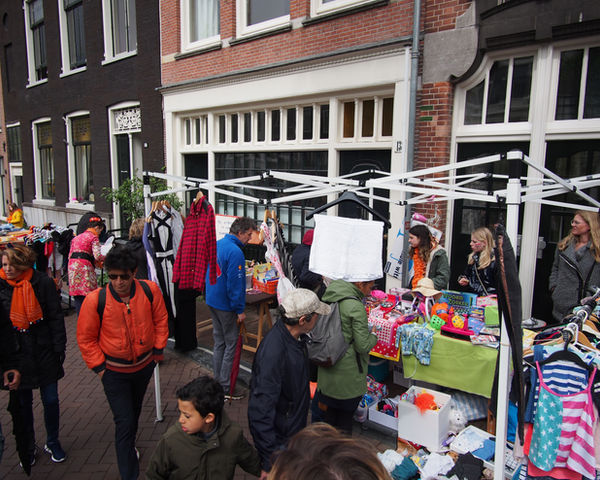
Give day two to the art and the green. Spend the morning on Museumplein between the Rijksmuseum and the Van Gogh Museum — both booked ahead — then walk it off in the Vondelpark next door. In the afternoon drop south into De Pijp for the Albert Cuyp Market, a stroopwafel and an early dinner among the Surinamese and Turkish kitchens around the Gerard Douplein.

Three days

Use day three to cross the water. Take a free GVB ferry from behind Centraal to Noord for the view off the A'DAM Lookout and the waterfront EYE Filmmuseum, then out to the NDSM wharf for its warehouse art. Or, staying south of the IJ, spend it in Oost — the Oosterpark, the Tropenmuseum, and a beer under the De Gooyer windmill at the Brouwerij 't IJ.

▸ What you'll do

Insider tips

Book museums in advance

The Rijksmuseum and Van Gogh Museum require timed-entry tickets booked online — in spring and summer, walk-up queues can run to two hours. The Anne Frank House sells out days ahead during peak season; book the moment tickets are released (released online 2 months in advance). Same-day availability is extremely rare in summer.

Canal boat hire

Renting a pedal boat or electric boat (no licence required) for an hour gives a completely different perspective on the canal ring. Multiple hire points along the Prinsengracht and Keizersgracht; costs around €15–20 per hour. The canals look dramatically different at water level and the best canal-house photos are taken from the water.

Market eating

The Albert Cuyp Market (De Pijp, Monday–Saturday) is the best single street-food destination in Amsterdam: fresh stroopwafels from the waffle iron, raw herring at stalls, Indonesian snacks and strong coffee, all at local rather than tourist prices. It is also a genuine neighbourhood market rather than a tourist performance.

Quiet canal walking

For canal-ring views without the Damrak crowds, walk east from Centraal to the Plantage neighbourhood or south along the Amstel river — both retain a quieter, more residential character with excellent canal architecture and far fewer tourists per metre.

Frequently asked

How many days do I need in Amsterdam?

Three to four days is the sweet spot: Rijksmuseum, Van Gogh Museum, Anne Frank House, canal-belt neighbourhood walking, De Pijp and a day of cycling or a day trip. Five to seven days allows a trip to Keukenhof (seasonal), Haarlem or Utrecht, and deeper neighbourhood exploration.

Is Amsterdam good for families?

Yes — the NEMO Science Museum (boat-shaped building on the IJ waterfront, excellent hands-on exhibits), the canal boat rides, the Albert Cuyp Market and cycling together on the flat lanes all work well for families. The Red Light District is a small and avoidable corner of a very large city.

Is cycling safe for tourists?

Cycling in Amsterdam is straightforward on the well-maintained, dedicated bike lanes — but requires confidence navigating a city where cyclists have absolute right of way. Walking is entirely sufficient for the main sights; cycling adds value mainly for longer cross-city routes and exploring outer neighbourhoods.

Should I book museums in advance?

Always. The Anne Frank House sells out days ahead; the Rijksmuseum and Van Gogh Museum have 1-2 hour walk-up queues in summer. Booking online eliminates all queuing time. The Stedelijk Museum and EYE Film Museum rarely need advance booking and are excellent alternatives on the day.

What is the canal ring?

The Grachtengordel (canal ring) — listed as a UNESCO World Heritage Site — is Amsterdam's defining feature: four concentric canals (Herengracht, Keizersgracht, Prinsengracht, Singel) lined with 17th-century merchant houses, each with the distinctive stepped or bell-shaped gable. Walking or cycling the canal ring is the core Amsterdam experience.

Worst time to visit?

Mid-July to August weekends: highest prices, most crowded, museum bookings tightest. King's Day (late April) is fabulously busy — street parties throughout the city — but accommodation is booked months ahead and prices are very high.

What's on

While you're there

07
AUG
Grachtenfestival Amsterdam 2026 — Amsterdam, August 2026
Stationsplein 12a, 1012 AB Amsterdam, Netherlands · festival
Build a trip around it →
27
APR
King's Day Amsterdam 2027
Meester Visserplein 7, 1011 RD Amsterdam, Netherlands · festival
Build a trip around it →
Explore

Explore the area

© OpenFreeMap · OSM · terrain Mapterhorn
Do

Local attractions & tours

Skip-the-line tickets and small-group tours in Amsterdam — compare across our partners.

Van Gogh Museum: Entry Ticket

Amsterdam

from £22.93

4.8 (10k)
Book on Tiqets →

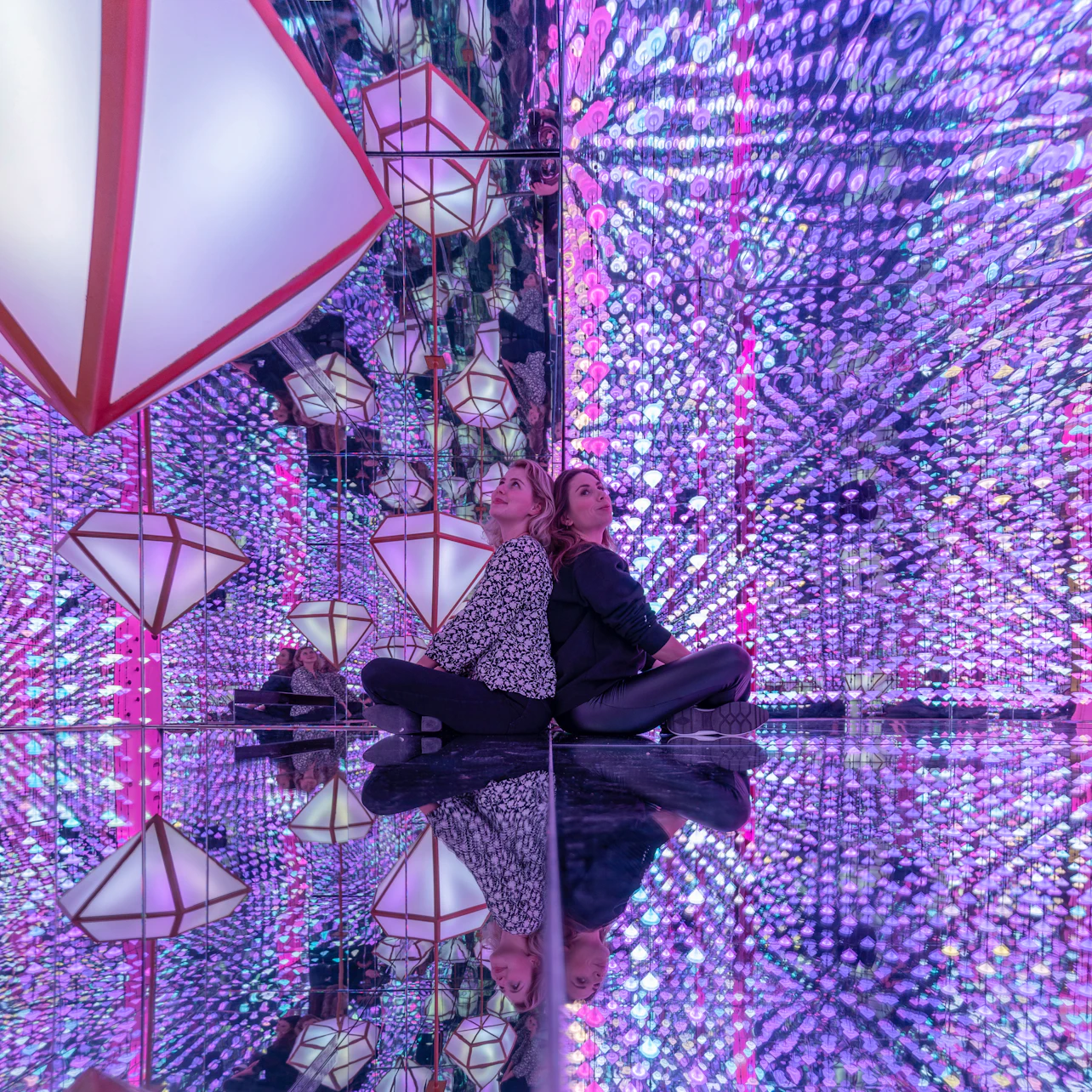
Fabrique des Lumières: From Vermeer to Van Gogh

Amsterdam

from £15.29

4.7 (3.5k)
Book on Tiqets →

ARTIS Amsterdam Royal Zoo: Entry Ticket

Amsterdam

from £25.9

4.7 (1.7k)
Book on Tiqets →

Royal Palace Amsterdam (Koninklijk Paleis): Entry Ticket + Audio Guide

Amsterdam

from £11.47

4.7 (1.1k)
Book on Tiqets →

Rembrandt House Museum: Entry Ticket + Multimedia Guide

Amsterdam

from £19.96

4.7 (1.1k)
Book on Tiqets →

Dutch Resistance Museum: Entry Ticket + Audio Guide

Amsterdam

from £14.86

4.8 (318)
Book on Tiqets →

THIS IS HOLLAND: Entry Ticket

Amsterdam

from £20.38

4.7 (638)
Book on Tiqets →

Amsterdam: Open-Boat Canal Cruise

Amsterdam

from £12.7

4.7 (178)
Book on Tiqets →
Plan

Trips in Amsterdam

Day-by-day itineraries that take in Amsterdam — routes, timings and what to book.

▸ Budget

What it costs in Amsterdam

Backpacker
roughly €60–100 a day.
Mid-range
roughly €150–250 a day.
Luxury
€400 a day and up.
Cash vs card
Amsterdam is close to cashless — contactless cards and phones tap through nearly everything, and plenty of places are card-only and will wave off your cash. Carry a little for a market cart or a tip.
Tipping
Service is included by law, so tipping is discretionary — round up or leave a euro or two for good table service, a bit more (~5–10%) at a proper restaurant.
▸ When you'll go

When to visit Amsterdam

The best time to visit is May–Sep, when the weather is mildest with fewer rainy days.

Spring

What to expect — Cool, breezy and changeable, warming as the tulips come out and the parks green up. King's Day (Koningsdag) on 27 April turns the whole city orange and floods the canals with boats — huge fun, but book beds months ahead and expect chaos.

What's best — Tulip season and the surrounding bulb fields, long softening evenings, and terraces reopening. The sweet spot before the summer wall of visitors hits.

Summer

What to expect — The warmest, longest days and the busiest streets — the centre and De Wallen get genuinely packed, beds spike, and the honeypot canals are shoulder to shoulder by midday. Rain still gatecrashes.

What's best — Light until late, festivals and open-air everything, café terraces and the canals full of small boats. If crowds grate, come in June or September rather than July or August.

Autumn

What to expect — Cooler, damper and mistier, with the summer crush draining away. Reliable museum weather and the canals going gold and quiet.

What's best — Fewer people, comfortable cycling, the leaves turning in the Vondelpark, and brown cafés coming back into their own.

Winter

What to expect — Cold, grey and often wet, dark early, with a raw wind off the water. Snow is rare and a full canal freeze rarer still — don't come expecting to skate them.

What's best — The Amsterdam Light Festival strung along the canals, cosy candlelit brown cafés, the museums near-empty, and the year's lowest room rates once the New Year passes.

▸ Know before you go

Know before you go

Honest swaps

Skip the tourist-trap "coffeeshops" and neon along the Damrak → walk five minutes into the Nine Streets or up Haarlemmerstraat for far better food and shops.

Skip the Heineken Experience queue → drink actual local beer at the Brouwerij 't IJ taproom under the De Gooyer windmill in Oost.

Skip elbowing down Kalverstraat for chain shopping → the Jordaan and the Nine Streets have the small independent stuff.

Skip a loud party canal boat → take a small open electric boat, or just walk the Reguliersgracht at dusk for the same water for free.

Crowds & timing

The medieval core and De Wallen are saturated from late morning on, and worst on summer weekends and stag nights — do the icons at opening, then retreat to the ring, Jordaan or Noord.

Anne Frank House and the Van Gogh Museum run on timed tickets and sell out weeks ahead in summer; Anne Frank House releases online only, in a weekly batch every Tuesday at 10am for dates six weeks ahead, and goes in minutes. Book the moment you can. The Rijksmuseum rarely sells out but still book a day or two ahead.

Local rules & etiquette

Stay out of the bike lanes — the red-asphalt strips are for cyclists, who ride fast and will ring hard; drifting into one on foot is the fastest way to get hurt or shouted at.

No photos of the sex workers in the De Wallen windows — it's strictly forbidden and enforced, and stewards or the workers themselves will make you delete shots, with phones grabbed or thrown in the canal. Filming counts even if a worker is only in the background.

Street drinking and, since 2023, smoking cannabis on the street in the central Wallen area are banned and fined; keep it to bars and licensed coffeeshops.

Look both ways twice at every crossing — the danger is the near-silent bike coming from an unexpected direction, not the car.

Money

Card and contactless rule; some places are card-only and won't take cash at all. Decline "pay in your own currency" (dynamic currency conversion) at card terminals and ATMs — always choose euros.

After dark

Leidseplein and Rembrandtplein are the mainstream night out — big bars, clubs and late-night eating, loud and central.

De Wallen is the windows, the crowds and the stag traffic, best treated as a walk-through, not a night out.

The Jordaan is the grown-up option — brown cafés and small bars over a quiet canal.

Noord, out at the NDSM wharf, runs the warehouse-and-festival scene for a later, rougher-edged night.

Safety

Overall safety

Amsterdam is one of Western Europe's safer cities for visitors overall. The specific hazards are city-specific: most are avoidable with awareness rather than requiring genuine caution.

Cyclists

The single biggest practical danger for tourists: cycle lanes are fast, high-traffic and invisible to many visitors. Never walk in a cycle lane — they look identical to footpaths to the untrained eye and cyclists move quickly and silently. Check painted surfaces and listen carefully when crossing any lane. This is genuinely the top risk in Amsterdam for tourists.

Pickpocketing & theft

Pickpockets operate in the Red Light District, on Damrak and at Centraal Station. Keep bags secured and phone out of sight in crowded tourist areas. The tourist season (June–August) has the highest incident rates.

Red Light District & nightlife

The Red Light District (De Wallen) is well-policed and busy but rowdy on weekend nights — standard urban awareness applies. Photography of sex workers in their windows is illegal; the 'No Photo' rule is enforced by both police and residents. Leidseplein bars attract a loud international crowd but are generally safe.

Drugs

Offers of drugs from strangers on the street are invariably a scam or illegal product. Licensed coffeeshops (clearly signed, tourist-facing) are the legal and regulated option; street purchases involve significant legal and quality risk.

Culture & etiquette

Dutch directness

Dutch communication style is famously direct — bluntness is efficiency rather than rudeness. A straightforward 'no' is a complete answer; elaborate softening is not expected. This applies in both commercial and social contexts and is worth understanding rather than reading as hostility.

Cycle lane respect

Respecting cycle lanes is not a soft cultural preference — it is a genuine safety rule. Walk only on footpaths; stop and look carefully before crossing any lane. This single rule matters more in Amsterdam than in any other European city.

Tipping

Tipping is appreciated but not obligatory. Rounding up the bill or leaving 5–10% at a restaurant is the local norm; rounding up for a taxi or café is standard. No tip is expected at a bar when ordering drinks.

Cannabis

Cannabis is tolerated in licensed coffeeshops but is not legal on the street or in public spaces. Smoking (tobacco or cannabis) is banned in all indoor public spaces including bars and restaurants. Many residential neighbourhoods have restrictions on street cannabis consumption; check locally.

Language

English is spoken to a very high standard throughout Amsterdam — it is genuinely one of the most English-fluent non-Anglophone cities in the world. 'Dank je wel' (thank you) is always warmly received; no Dutch language requirement exists for any tourist purpose.

Daily budget

£140/day mid-range (budget £70, luxury £300+)

Emergency numbers

112 (all emergencies)

▸ Ready to book your trip?

Getting there

By air

Amsterdam Schiphol Airport (AMS) is one of Europe's major hubs — served by direct flights from London Heathrow, Gatwick, Stansted, Luton and Bristol, plus direct services from North America, Asia and the Gulf. The Intercity Direct train connects Schiphol to Amsterdam Centraal in 15–17 minutes — the fastest and most convenient airport transfer in any major European city. Taxis from Schiphol take 25–45 minutes depending on traffic and are significantly more expensive.

By train

London to Amsterdam is one of Europe's best city-centre rail journeys: Eurostar to Brussels (~2 hours) connects to Thalys or a direct Eurostar service to Amsterdam Centraal, total journey approximately 4 hours from London St Pancras. Brussels to Amsterdam alone takes 1h45. FlixBus coach services connect Amsterdam to numerous European cities at lower cost but significantly more time.

  • Rotterdam The Hague Airport (RTM)
  • Eindhoven Airport (EIN)
Book

Ready to book your trip?

Flights, airport transfers and car hire to AMS — search and compare without leaving the page.

▸ Trip extras
Book

More trip extras

Parking, holiday extras, and more — coming soon.

Coming soon

We're lining up parking, holiday extras and activities you'll be able to add to any trip from here.