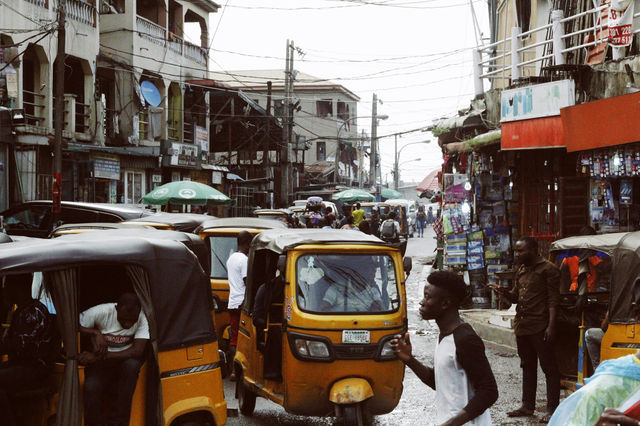
Nigeria — hero
← All destinations Country

Nigeria

Africa's pulsating giant: Lagos energy, Afrobeats and Nollywood, ancient kingdoms and Yoruba, Igbo and Hausa cultures in one vast country.

  • Currency ₦ Nigerian Naira (₦)
  • Language English
  • Best time January – April & October – November
  • Visa Visa required in advance — apply via the Immigration Service portal (visa on arrival withdrawn; ~US$160–180)
Why visit

Why Nigeria

Africa's pulsating giant: Lagos energy, Afrobeats and Nollywood, ancient kingdoms and Yoruba, Igbo and Hausa cultures in one vast country.

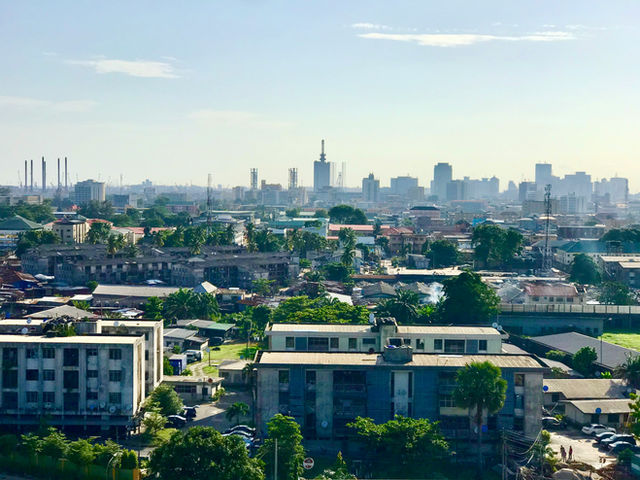
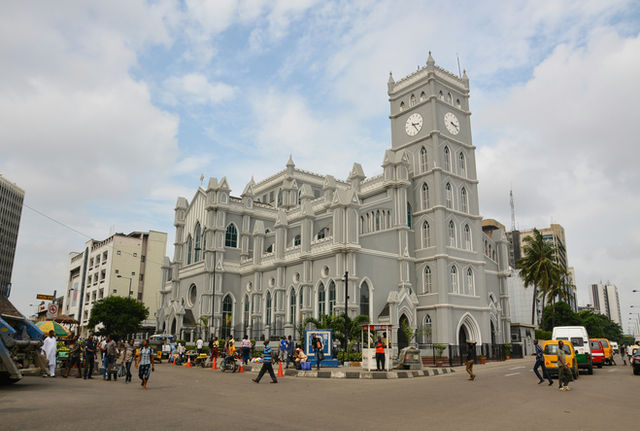
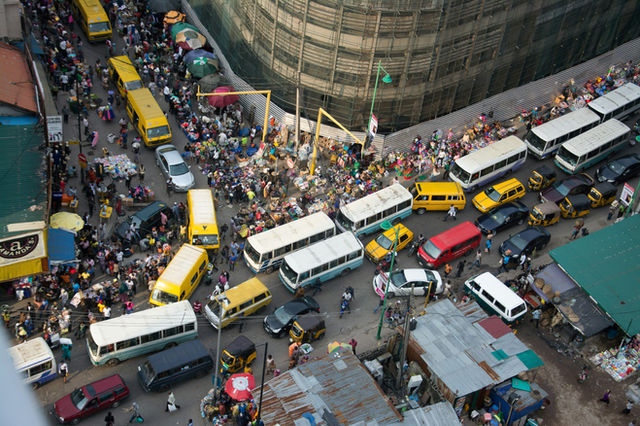
  • Lagos — Nollywood, Afrobeats nightlife, galleries and Lekki markets
  • Osun-Osogbo Sacred Grove, a UNESCO Yoruba forest shrine
  • Yankari National Park, with elephants and the warm Wikki spring
  • Calabar Carnival, one of Africa's biggest street festivals
Read more

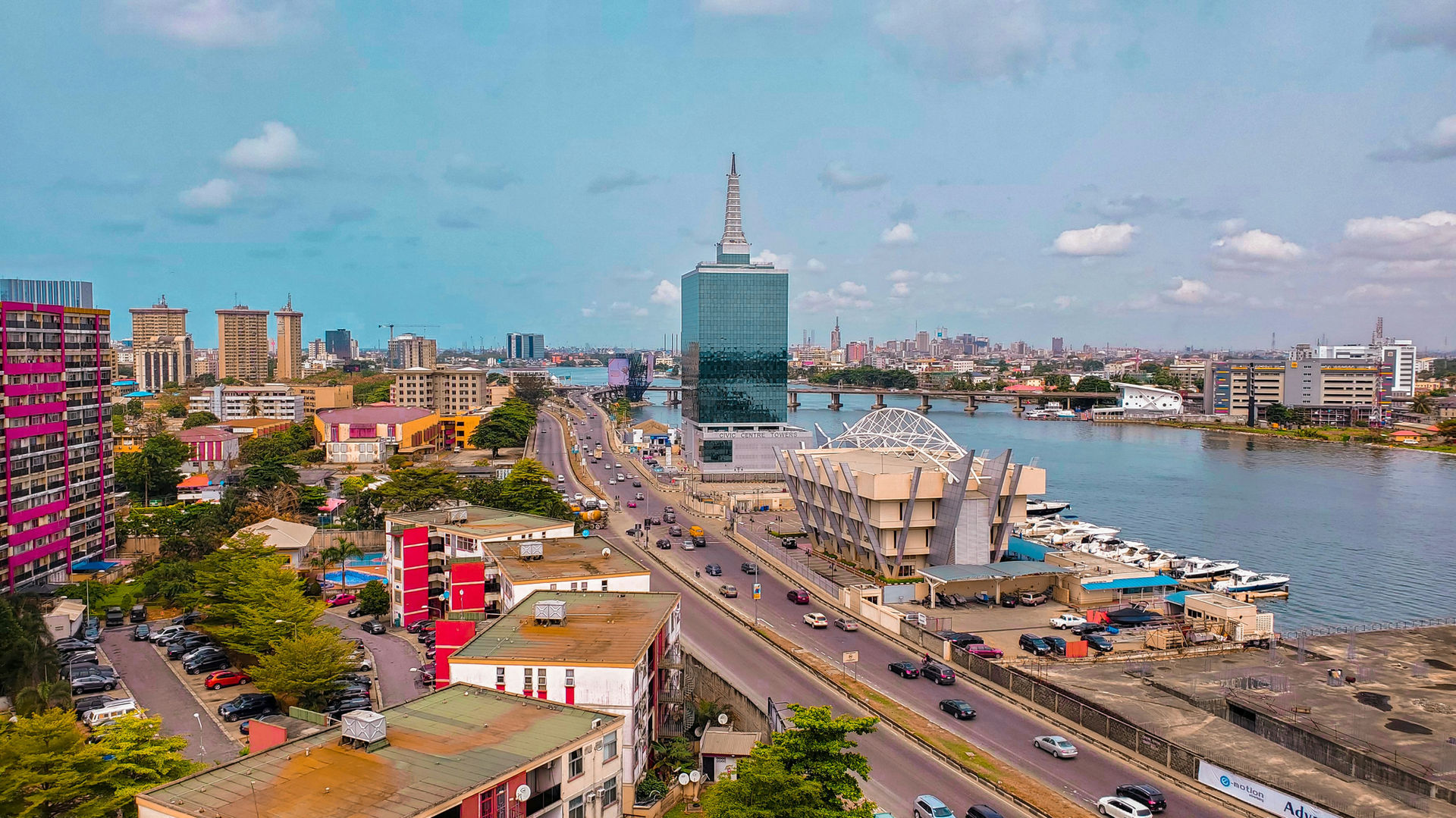
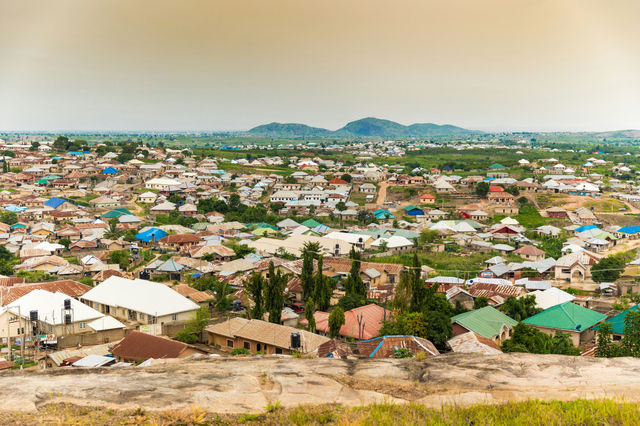
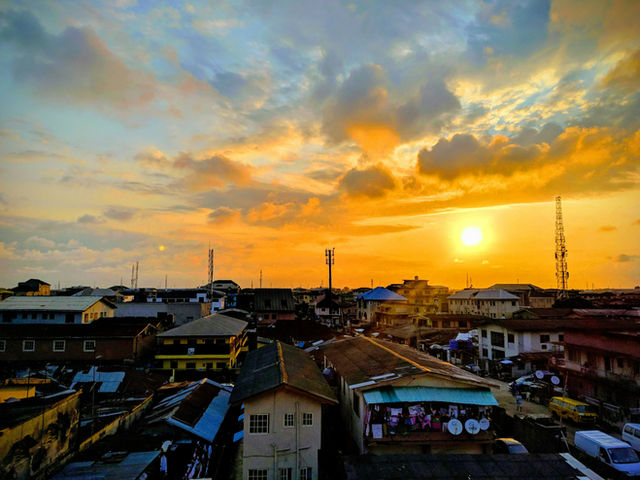
Nigeria is Africa's most populous nation and its cultural powerhouse, the birthplace of Afrobeats, Nollywood and a booming creative scene that now shapes global culture. Lagos alone crackles with an energy few cities can match.

Beyond the megacity lie deep roots: the ancient kingdoms of Benin and Ife, sacred Yoruba groves, the emirates of the north, and a mosaic of hundreds of ethnic groups, languages and cuisines.

Nature surprises too, from the Obudu plateau and Yankari's wildlife to Atlantic beaches. This is a destination for the culturally curious, urban-minded traveller ready for a big, bold, fast-moving country; check current advice before you go.

A pillar, not a footnote

Eat your way through Nigeria

The single reason many travellers come back — the food culture worth reshaping a trip around, and the dishes to seek out region by region.

Nigeria

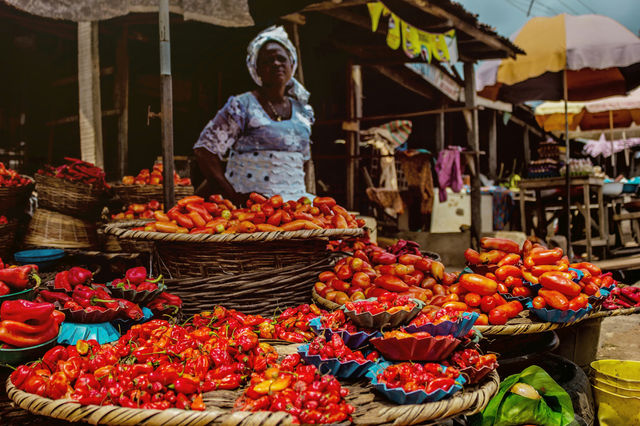
Jollof worth fighting over, egusi soup and pounded yam, and suya smoking on every corner.

Nigerian food is loud, generous and fiercely regional, and it runs on the 'swallow and soup': a ball of pounded yam, amala or eba, pinched off by hand and dipped into a thick, rich soup — egusi ground from melon seeds, dark ogbono, efo riro greens. Which starch and which soup depends entirely on whose grandmother is cooking.

Then there's jollof, the tomato-and-pepper rice Nigerians will defend to the last grain against Ghana in the never-ending 'jollof wars', and suya, skewers of beef rubbed in spicy peanut yaji and grilled over coals at every roadside as night falls. Cool the heat with a chilled zobo hibiscus or a cold Star lager — though up in the Muslim north the drink is something soft. Come hungry; leave loyal to a camp.

Dishes to seek out
  • Jollof rice (tomato-pepper one-pot rice)
  • Egusi soup (melon-seed and greens stew)
  • Pounded yam (starchy yam swallow)
  • Suya (spiced grilled beef skewers)
  • Pepper soup (spicy peppery broth)
  • Moin moin (steamed bean pudding)
  • Zobo (chilled hibiscus drink)
Things to do

Nature, culture & hidden gems

Editorial content coming soon

We're hand-picking the standout places, hidden gems and can't-miss activities in Nigeria. Meanwhile, the cities above are a great starting point.

Plan your trip

Curated Nigeria itineraries

Browse all Nigeria trips →
When to go

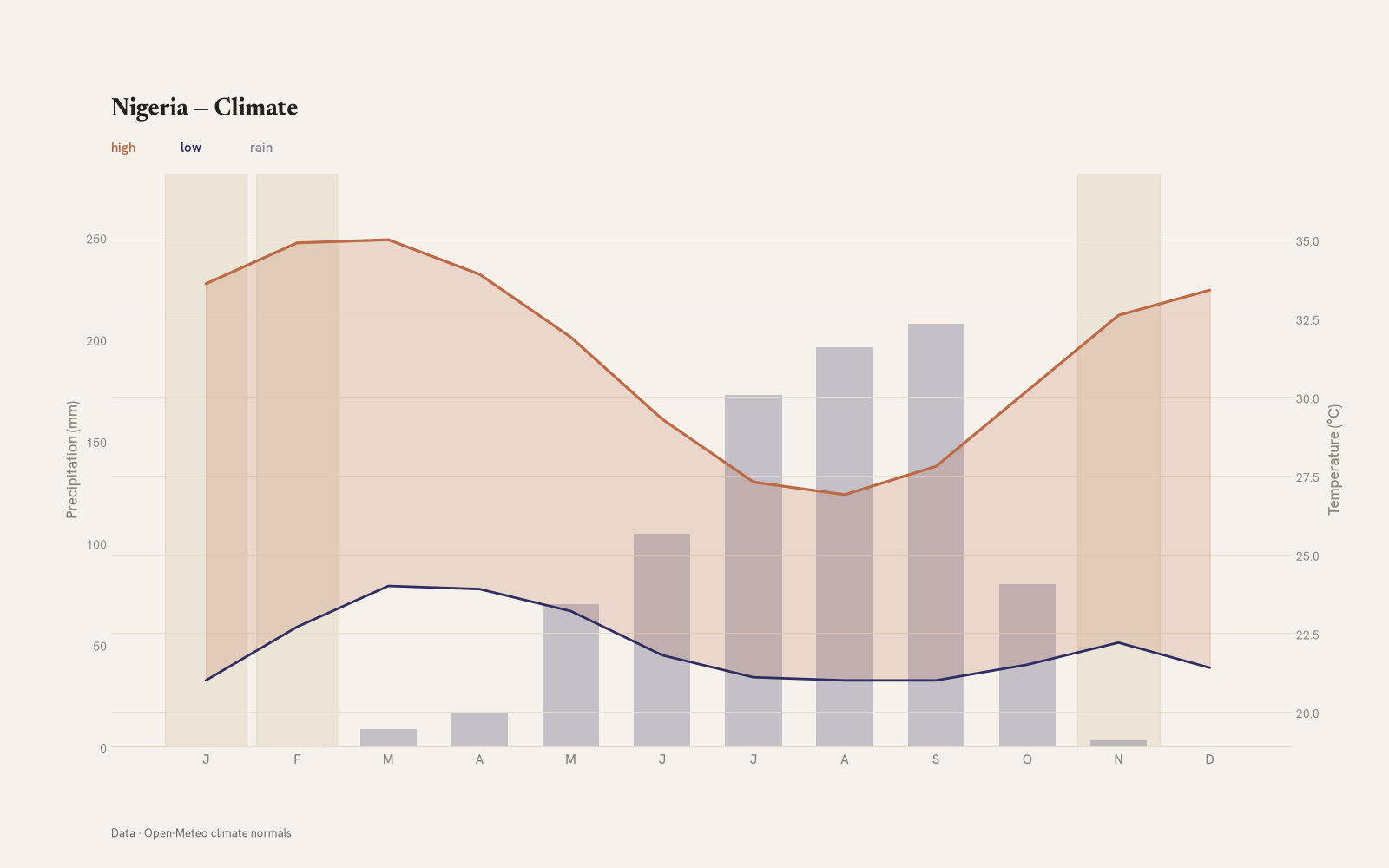
Weather & timing in Nigeria RIGHT NOW 25° cloudy

Best Jan–Feb, Nov · Shoulder Mar–Apr, Oct

  1. Jan / -4°
  2. Feb / -2°
  3. Mar 12° /
  4. Apr 18° /
  5. May 24° / 14°
  6. Jun 28° / 18°
  7. Jul 30° / 20°
  8. Aug 28° / 18°
  9. Sep 24° / 14°
  10. Oct 18° /
  11. Nov 12° /
  12. Dec / -2°

Best time to visit

January – April & October – November

Best for
  • Culture
  • Cuisine
  • Landscape
  • History
At a glance
Sunshine 7 hr/day (est.)
Rain days 8 days/mo (est.)
Wettest December · 60mm
Driest June · 10mm
Part of West Africa →
By season
Spring (Mar–May)

What to expect — Daytime highs average about 18°C with overnight lows near 8°C, and it stays largely dry.

What's best — Mar and Apr are comfortable, with thinner crowds.

Summer (Jun–Aug)

What to expect — Daytime highs average about 29°C with overnight lows near 19°C, and it stays largely dry.

What's best — Peak heat and the biggest crowds — many travellers prefer spring or autumn.

Autumn (Sep–Nov)

What to expect — Daytime highs average about 18°C with overnight lows near 8°C.

What's best — Nov is among the best time to visit — good weather with manageable crowds. Oct also works well.

Winter (Dec–Feb)

What to expect — Daytime highs average about 7°C with overnight lows near -3°C.

What's best — Jan and Feb are among the best time to visit — good weather with manageable crowds.

A little context

A little history

To read what you're looking at — the empires and eras that shaped Nigeria's food, art and streets.

The Nok culture (c.1000 BC) and later the Hausa city-states, the Oyo and Benin empires and Kanem-Bornu — leaving deep artistic traditions like the Benin bronzes and Yoruba beadwork — the Sokoto Caliphate founded in 1804 by Usman dan Fodio, entrenching Islam and Sharia-influenced governance across the north, which still shapes food, dress and the alcohol ban there — unified under British rule when the northern and southern protectorates were amalgamated in 1914, creating the north-south fault line — independent on 1 October 1960 as a federation binding 250-plus ethnic groups in English — and, since the Biafran war (1967–70) and the oil boom, Africa's most populous nation and largest economy, with Lagos its megacity engine of Nollywood and Afrobeats.
Before you book

Know before you go

The practical back-matter — safety, drones and the essentials, in one place.

Safety

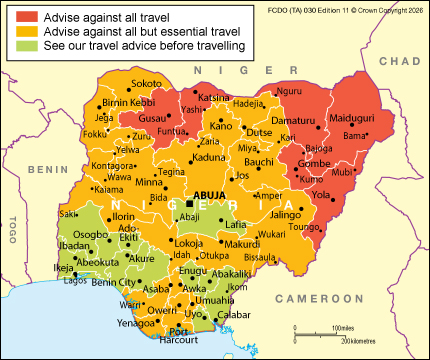
Moderate — check FCDO advice FCDO advice →

Official UK Foreign, Commonwealth & Development Office guidance is the definitive source — check it close to your travel dates.

Drone rules (sub-250g)

  • Nigeria
    Doable but strictly policed: drones over 250g must be registered with the NCAA and foreign visitors need a 'Recognition of Ownership' on arrival, with sub-250g exempt — but enforcement is tight, especially at airports, and flying unregistered risks fines or worse. A new NCAA portal launched in 2026. ⚠ Airports, military sites, government buildings and the Abuja presidential complex are no-fly, and the FCDO advise-against-all-travel zones (the north-east, parts of the north-west and the Niger Delta riverine areas) make flying there both illegal and dangerous. Rules checked: Jul 2026

National parks, protected sites and religious/heritage venues often have their own rules and permits — always check the specific site before you fly.

The essentials

Plug & voltage Type D/G · 230V
Daily budget Mid-range
Region Western Africa