Palestine
Built on olive oil, sumac and za'atar — a table where the new season's oil is a genuine event.
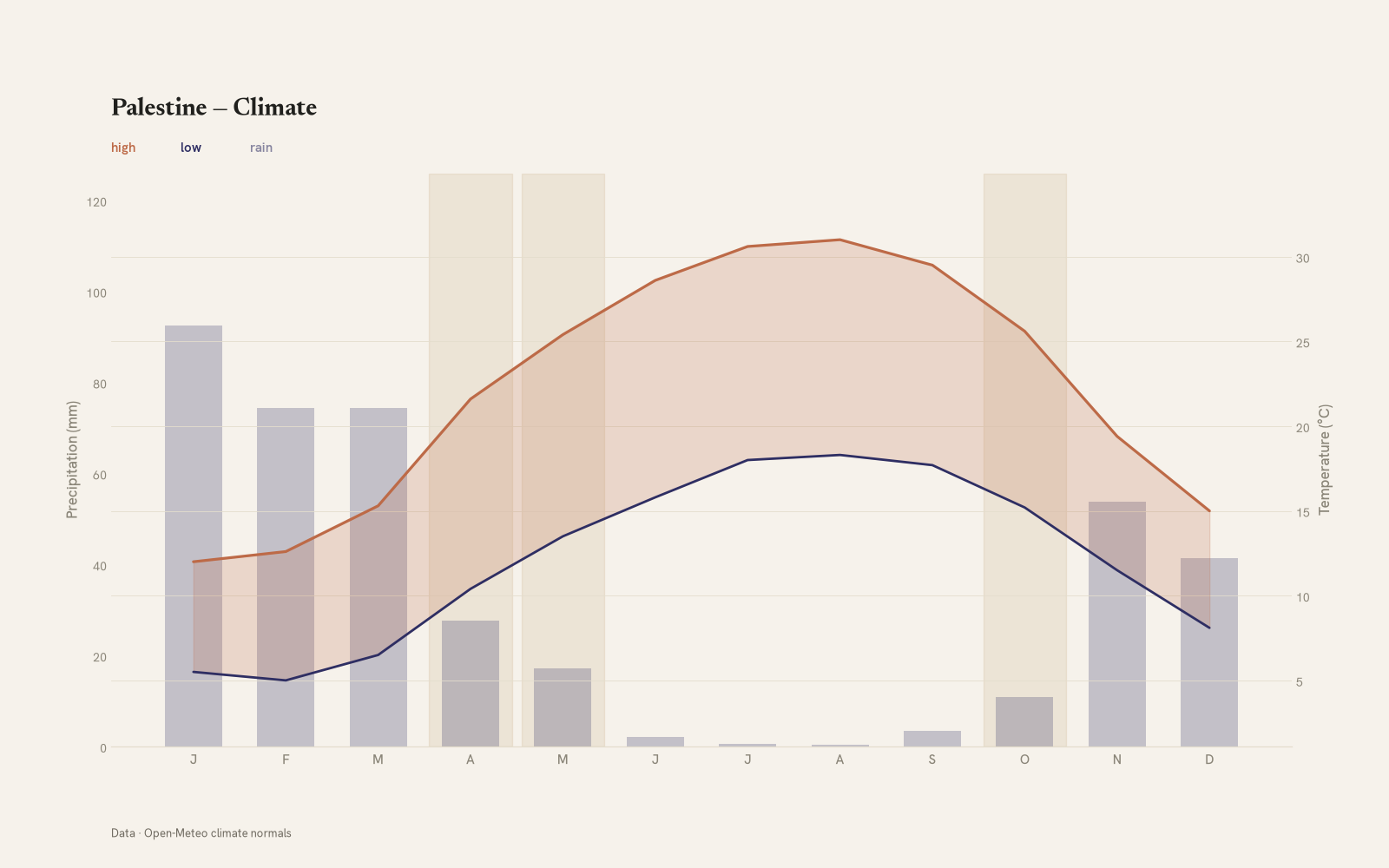
When the olive harvest comes in, the kitchens make musakhan: chicken roasted over flatbread that has soaked up sweet cooked onions, sumac and the first pressing of the year's oil, scattered with pine nuts and torn apart by hand. It is the national dish and, more than that, a way of marking the season.
The everyday table runs on olive oil, bread and za'atar — the wild-thyme blend you dip warm flatbread into at breakfast, or bake onto dough as manaqish. There is maqluba, a pot of rice, meat and fried vegetables flipped upside-down to serve, and, from Nablus, knafeh so renowned that people drive across the West Bank for it — white cheese under orange pastry, hot and syrup-soaked. All of it is wrapped in hospitality: cardamom-scented coffee pressed on every guest, and everyday tea steeped with maramiya, the wild sage that grows on the hillsides.
- Musakhan (sumac chicken on taboon bread)
- Maqluba (upside-down rice & meat)
- Knafeh Nabulsi (Nablus cheese pastry)
- Mansaf (lamb in fermented-yogurt sauce)
- Za'atar manaqish (thyme flatbread)
- Hummus
- Falafel