Bohol
The Central Visayas island of the Chocolate Hills and the tiny Philippine tarsier — with world-class diving off Panglao, a countryside of rivers and forest, and honest trade-offs on the tourist trail.
- Island
- December – May (dry season)
- TAG
- 4–5 days
PHwikicontributor / Wikimedia Commons (CC BY-SA 4.0)
About Bohol
Bohol is a roughly oval island in the Central Visayas region of the Philippines, the country's tenth-largest, sitting between Cebu to the west and Leyte to the east, with the small, flatter island of Panglao joined to its south-west corner by bridges. Its capital and main port is Tagbilaran, but most first-time visitors barely see the town — they head straight for Panglao's beaches or into the interior. That interior is Bohol's calling card: a rolling limestone countryside of rice paddies, rivers, man-made forest and, at its heart, the Chocolate Hills — more than a thousand near-symmetrical grass-covered mounds that dry to a cocoa brown in the summer months and give the island its signature image. Bohol is also the home of the Philippine tarsier, one of the world's smallest primates, a nocturnal, saucer-eyed creature best seen at a proper conservation sanctuary rather than a roadside cage. Offshore, Panglao and the islets around it deliver some of the Visayas' best accessible diving and snorkelling. Bohol suits travellers who want to pair a beach-and-diving base with a genuine countryside day or two — families, divers, couples and independent travellers alike. It carries real recent history: a 7.2-magnitude earthquake in October 2013 destroyed several centuries-old stone churches, and Typhoon Rai (locally Odette) battered the island in December 2021. Both have been substantially recovered, but they shape what you see today.
Why go
Bohol packs an unusual variety into a compact, easy-to-tour island. In a single day you can stand above the Chocolate Hills at Carmen, watch a wild tarsier grip a branch in a Corella forest, drift down the Loboc River on a floating-restaurant lunch cruise and walk through the cool green tunnel of the man-made mahogany forest at Bilar — then be back on Panglao for sunset. The diving is the other half of the case: Balicasag Island is a marine sanctuary with dramatic wall dives, resident sea turtles and schools of jacks; Napaling reef off north Panglao is famous for a shimmering bait-ball of sardines you can free-dive into; and the deep channel off Pamilacan Island is a reliable spot for dolphin (and seasonal whale) watching. Add Hinagdanan Cave's underground lagoon, the quiet white sand of Anda on the east coast, and Spanish-colonial heritage at Baclayon and the Blood Compact site, and Bohol earns four or five days rather than a rushed two. It pairs naturally with Cebu (a two-hour fast ferry away) for a classic Visayas week, or with Siquijor and Camiguin for a slower island-hop further south.
Highlights
- Chocolate Hills viewpoint at Carmen
- Ethical tarsier viewing at Corella sanctuary
- Balicasag Island wall diving and turtles
- Napaling reef sardine run and snorkelling
- Loboc River floating-restaurant lunch cruise
- Bilar man-made mahogany forest
Food & drink
Bohol's food is Visayan home cooking with a strong emphasis on seafood, root crops and coconut. The island is famous for Peanut Kisses (meringue sweets shaped like the Chocolate Hills) and for calamay, a sticky sweet of glutinous rice, coconut milk and brown sugar sold in halved-coconut-shell containers, especially around Jagna. Along the coast you'll eat grilled fish, squid and prawns, kinilaw (raw fish 'cooked' in vinegar and calamansi, the Filipino ceviche), and plenty of rice; inland, look for local free-range chicken and the ubiquitous lechon (spit-roast pork) at fiestas. The signature experience is the Loboc River lunch cruise — a floating-restaurant buffet of Filipino staples with live music as you drift upriver; it's touristy and the food is average, but the setting carries it. On Panglao, Alona Beach has a broad international spread — Italian, seafood grills, dive-crowd cafés and beach bars — while the honest local eating is at carinderias and roadside grills away from the strip. For drinks, expect ice-cold San Miguel and Red Horse beer, fresh buko (young coconut) juice, and calamansi juice everywhere.
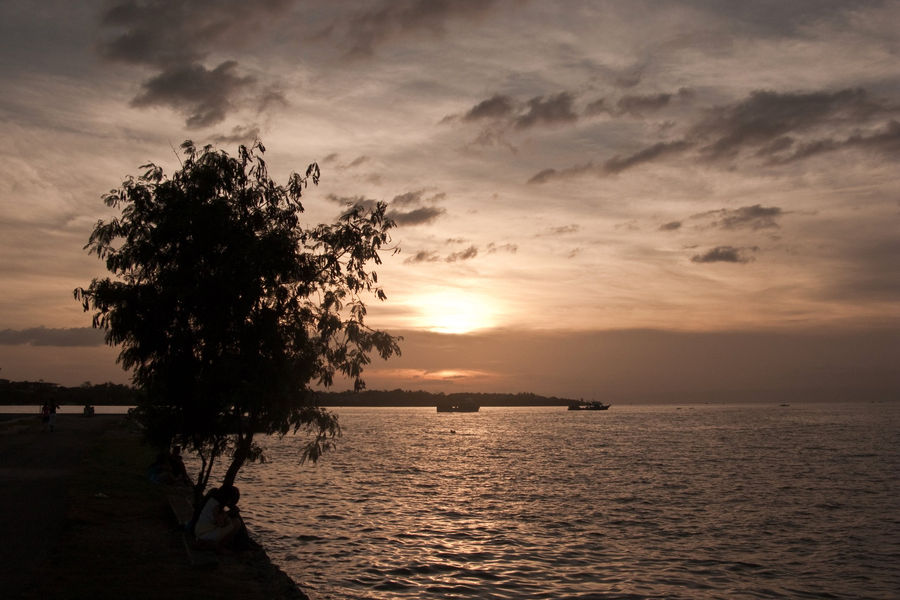
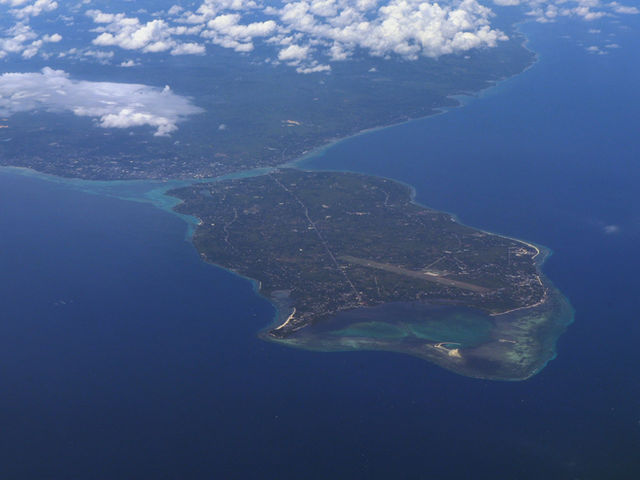
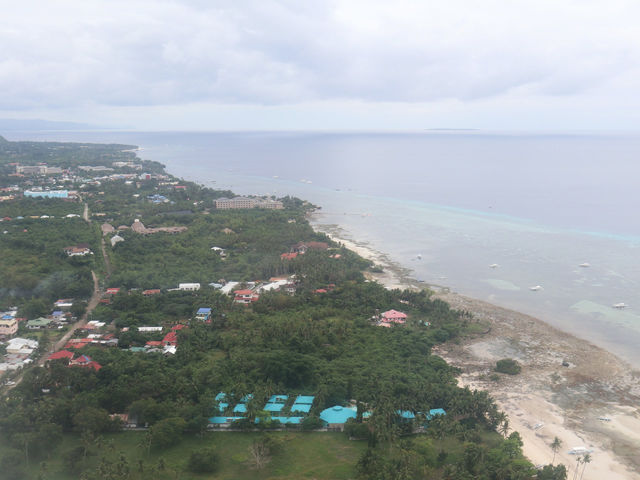
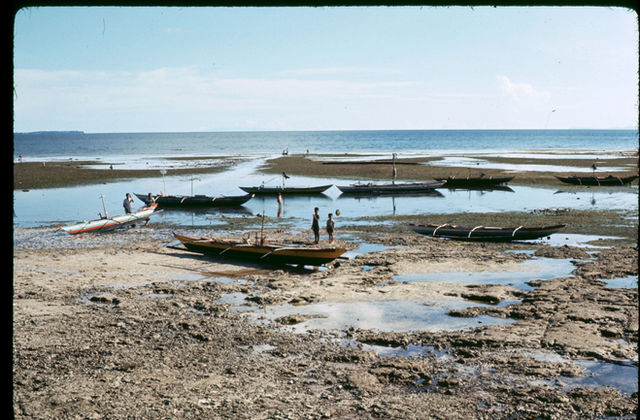
Bohol in photos
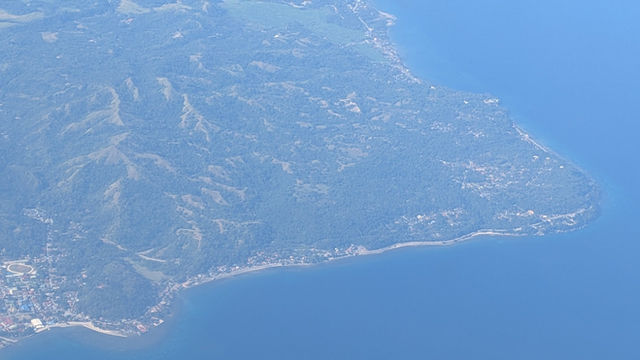
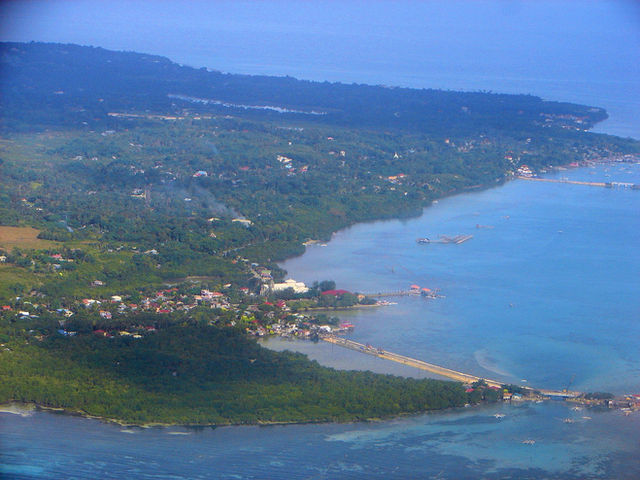
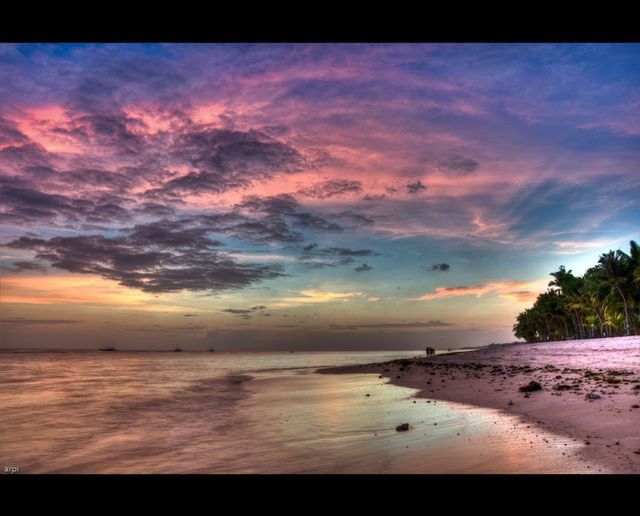
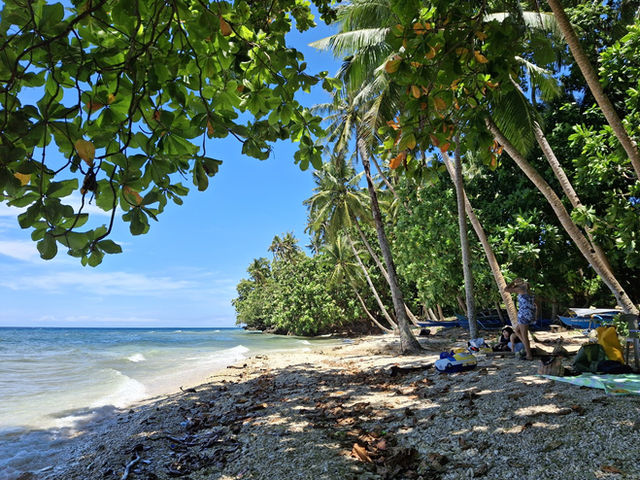
Where you'll stay in Bohol
Live map of hotels and villas around Bohol — powered by Stay22. Pan, zoom and compare live prices to pick your base.
Hotels & rentals around Bohol
Pan, zoom and compare live prices — every stay in one map.
Getting around Bohol
Bohol is a large island and the sights are spread out, so most visitors arrange a car with driver or join a countryside tour for the interior loop — the classic route strings together the Blood Compact site, Baclayon Church, the Loboc River cruise, the tarsier sanctuary, the Bilar mahogany forest and the Chocolate Hills in a single long day. A private van or car-with-driver (booked through your hotel or a local operator) is the most comfortable way to do it and not expensive by UK standards. Self-drive hire cars are available but less common; many independent travellers instead rent a motorbike or scooter on Panglao (roughly ₱400–600 a day) to explore the island's beaches and get to Alona, though the main highways carry fast trucks and buses and are not for nervous riders. On Panglao itself, distances are short and tricycles and habal-habal (motorbike taxis) cover them cheaply. For the sea — Balicasag, Pamilacan, Napaling, Virgin Island — you hire an outrigger banca through a dive shop or the Alona boat association; going as part of an organised island-hopping trip is simplest.
Public transport on Bohol centres on the Dao Integrated Bus Terminal in Tagbilaran, from which buses and air-conditioned vans (locally 'V-hires') run to the main towns — Carmen (for the Chocolate Hills), Loboc, Jagna, Anda, Ubay and Talibon. Fares are very cheap (roughly ₱50–200 depending on distance) but services can be slow, infrequent to smaller places, and awkward for stringing sights together, which is why most visitors hire a driver instead. Within Tagbilaran and out to Panglao, jeepneys and multicabs run fixed routes, and tricycles handle short hops for a negotiated ₱15–150. On Panglao, tricycles and habal-habal motorbike taxis are the everyday way to get around; agree the fare before you set off. There is no train or organised tourist bus network — for the countryside sights a chartered van, a scooter or a guided tour is far more practical than piecing together public routes.
Insider tips
See the tarsiers ethically: go to the Philippine Tarsier and Wildlife Sanctuary in Corella (run by the Philippine Tarsier Foundation), a 134-hectare forest reserve where wild tarsiers are viewed in silence at a distance — not the roadside cages on the Loboc road where tour agencies stop and where animals are handled and photographed with flash. Do the Chocolate Hills at first light, before the coaches reach the Carmen viewing complex; the main viewpoint is heavily commercialised (an entry fee and a climb up concrete steps), and the quieter Sagbayan Peak is a good alternative. For the best of Panglao's diving, ask about Napaling's sardine run — a huge bait-ball you can free-dive or snorkel, best in the morning — and get to Balicasag early, as boat numbers to its marine sanctuary are now capped. Skip Alona's crowded sand for swimming and walk or ride east to Dumaluan or Danao (Bikini) Beach for wider, calmer sand. If you want the countryside unhurried, sleep a night near Loboc rather than day-tripping from the coast. And time a visit for February–April if seeing the hills actually chocolate-brown matters to you.
Frequently asked
Explore the area
Bohol · Around the island · 1 island
Local attractions & tours
Skip-the-line tickets and small-group tours in Bohol — compare across our partners.
We're still curating hand-picked tickets and tours for Bohol. In the meantime, the map above and the nearby cities are a great place to start.
When to visit Bohol
December – May (dry season)
Bohol has a tropical climate that is warm and humid year-round, with daytime temperatures typically 28–33°C. The dry season runs roughly from December to May and is the best time to visit: the driest, sunniest weather, calm seas and the best underwater visibility for diving. The cooler amihan (north-east monsoon) months of December to February are the most comfortable, while March to May are the hottest. The Chocolate Hills are at their most photogenic — genuinely cocoa-brown — from around February to April, when the grass dries out; in the wet months they are green. The wet season runs roughly June to November, with the heaviest rain and highest humidity, though showers are often short and afternoon-based rather than all-day. Bohol sits south of the main Philippine typhoon belt and is hit less often than Luzon, but it is not immune: Typhoon Rai (locally Odette) struck the island directly in December 2021 with severe damage, a reminder that late-year storms do occasionally reach this far south. Check forecasts if travelling June–December, when a passing typhoon can disrupt ferries and flights.
Know before you go
Safety
Bohol is a relaxed, tourist-friendly island and violent crime against visitors is rare, but the everyday hazards are the ones to respect. Roads and scooters are the biggest risk: the main highways carry fast buses and trucks, drink-driving is not unknown, and rental scooters and habal-habal rides are a common source of tourist injuries — wear a helmet, don't ride at night on unfamiliar roads, and don't ride if inexperienced. At sea, outrigger bancas are the standard transport to the dive islands; check that life jackets are aboard and don't push a skipper to sail in rough conditions. Diving and free-diving carry their own risks — use a reputable dive centre, respect depth and current briefings at Balicasag's walls, and never touch or chase the turtles or the tarsiers. The tropical sun is strong even when it's cloudy, so protect against sunburn and dehydration. Petty issues are limited to the usual: mild overcharging and persistent touts at Alona, occasional pickpocketing in crowds. Tap water is best avoided — drink bottled or filtered. Keep an eye on typhoon and weather advisories in the wet season, when ferries and boat trips can be cancelled at short notice.
Culture & etiquette
Bohol, like most of the Philippines, is predominantly Roman Catholic, and the island's Spanish-colonial churches — Baclayon among the oldest in the country — are active places of worship as much as heritage sites; dress modestly (shoulders and knees covered) and be quiet if a service is on. Boholanos are famously warm and easy-going; a smile, please and thank you go a long way, and English is very widely spoken alongside the local Boholano/Cebuano (Bisaya). The most important etiquette point on the island is around the tarsiers: they are fragile, nocturnal and easily stressed to the point of self-harm, so at any proper sanctuary you must stay quiet, keep your distance, never use flash, and never handle them — choose the conservation-run sanctuary in Corella rather than roadside operations that let tourists hold the animals. Beachwear is fine on Panglao but cover up in towns and villages. Tipping isn't obligatory but is appreciated for guides, drivers and dive crew; rounding up or 10% is normal.
Daily budget
£45/day mid-range (budget £22, luxury £180+; Panglao beach resorts and diving push costs up)
Emergency numbers
911 (national emergency hotline)
Getting there
The gateway is Bohol–Panglao International Airport (TAG), which opened in November 2018 on Panglao Island, replacing the old downtown Tagbilaran airfield. It handles frequent domestic flights from Manila, Cebu, Clark and Davao on Philippine Airlines, Cebu Pacific and AirAsia, plus limited and seasonal international/charter service — but from the UK there are no direct flights, so you connect through Manila (MNL) or Cebu (CEB). The most common routings from London are via a Gulf, Asian or Manila hub into Cebu, then either a short hop to TAG or the ferry. The sea route is genuinely good: fast catamaran ferries (OceanJet and SuperCat) cross from Cebu City's Pier 1 to Tagbilaran in about two hours, with up to around 30 sailings a day; there are also slower ferries and RORO services from Cebu to Talibon in the north and to Jagna in the east, and links from Camiguin, Siquijor and Dumaguete. Book fast-ferry seats online in high season and on weekends, when the popular sailings sell out.
- Bohol–Panglao International Airport (TAG — on Panglao Island, the main gateway)
- Mactan–Cebu International Airport (CEB — connect by flight or 2h fast ferry)
- Ninoy Aquino International Airport (MNL — Manila, domestic connection to TAG)
Ready to book your trip?
Flights, airport transfers and car hire to TAG — search and compare without leaving the page.
More trip extras
Parking, holiday extras, and more — coming soon.
We're lining up parking, holiday extras and activities you'll be able to add to any trip from here.