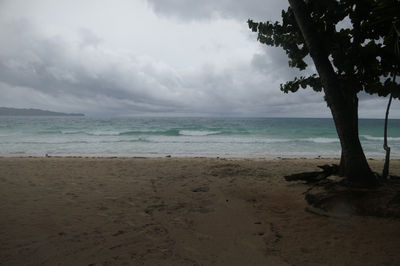
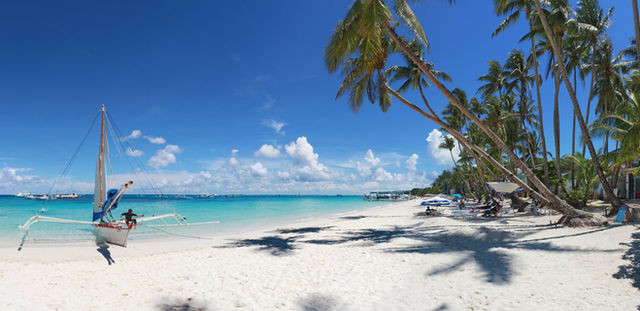
 Long sandy © Dinesh Valke (CC BY-SA 2.0)
 White Beach
Four kilometres of powder-white sand lined with resorts, bars and Boracay's famous glowing sunsets.
Best for swimming and sunset walks
The Philippines' most famous island — four kilometres of powder-white sand, sunset paraw sails and kitesurfing wind, now run under strict post-rehabilitation rules.
Christopher Punzalan / Wikimedia Commons (CC BY-SA 4.0)
Boracay is a small island — barely 10km long and about 1km wide at its narrowest — off the northwest tip of Panay in the Western Visayas, part of Aklan province. Its fame rests almost entirely on White Beach, a four-kilometre arc of unusually fine, powder-white sand on the west coast, traditionally divided into three sections: Station 1 (the widest beach and the upmarket resorts), Station 2 (the lively centre, home to the D'Mall shopping and dining lanes) and Station 3 (quieter and cheaper). The east coast holds Bulabog Beach, the country's kitesurfing and windsurfing capital, while the northern tip has the quieter, shell-strewn Puka Shell Beach. This is not a wild or undiscovered island — it is the Philippines' most developed and most visited beach destination, densely built and openly commercial, with a boat-hop of day-trippers and a carrying-capacity cap of roughly 19,000 visitors a day. In April 2018 the government closed Boracay entirely for six months after President Duterte publicly called its overwhelmed waters a 'cesspool'; the rehabilitation that followed rebuilt the sewerage, cleared illegal beachfront structures, banned single-use plastics and single-file drinking-and-partying on the sand, and tamed the once-notorious nightlife. It suits travellers who want a good-value, sociable, water-sports-and-sunset beach holiday and can accept crowds and commercialisation as part of the deal.
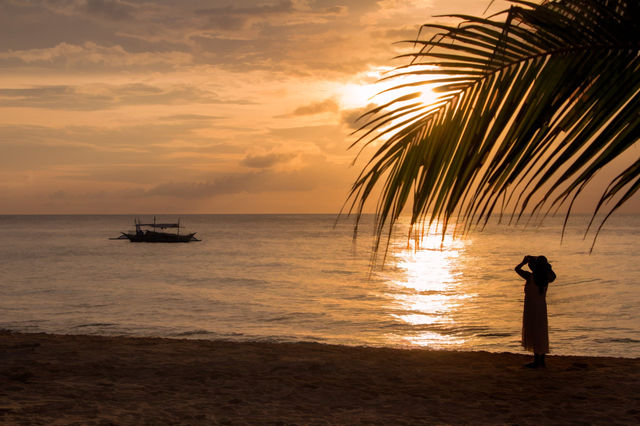
The sand is the reason to come, and it genuinely lives up to its reputation: White Beach is among the finest-grained, whitest beaches in Southeast Asia, and in the Amihan season (roughly late November to May) it lies flat and wide against calm, shallow, warm water — the classic image. The island packs an unusual amount into a small space: a sunset paraw ride (the traditional double-outrigger sailboat, its coloured sails leaning into the breeze as the sky turns), snorkelling and island-hopping trips, helmet diving, and at nearby Ariel's Point a set of coastal cliff-jumping platforms reached by boat. Bulabog Beach, a ten-minute walk across the island's waist, is one of Asia's best-value places to learn kitesurfing, with steady side-onshore wind from December to March. Mount Luho gives a viewpoint over the whole island, and Puka Shell Beach offers a quieter, less-built alternative for a half-day. After dark, D'Mall and the Station 2 beachfront still have bars and restaurants, though the rehabilitation deliberately toned down the old all-night beach parties. Boracay pairs naturally with Panay itself, with the diving and Chocolate Hills of Bohol, or with a few days in Palawan for the wilder, quieter side of the Philippines.
Boracay's dining runs from beachfront barbecue to international restaurants, concentrated around D'Mall and the Station 2 beachfront. Filipino staples are the thing to seek out: fresh seafood grilled to order (the D'Talipapa wet market lets you buy fish, prawns and crab and have a nearby eatery cook them), chicken inasal (the char-grilled, annatto-marinated Visayan speciality), sinigang (sour tamarind soup), kinilaw (the Filipino ceviche of raw fish cured in vinegar and calamansi), and lechon on special occasions. Calamansi juice, fresh buko (young coconut), and San Miguel beer are the everyday drinks; the island is also known for its mango shakes and for Real Coffee's famous calamansi muffins. Chori burgers — a grilled chorizo patty in a bun sold from beachfront stalls — are the classic cheap snack. Eating and drinking directly on the sand is now restricted under the post-rehabilitation rules, so meals happen at the beachfront restaurants and inland lanes rather than sprawled across the beach itself. Prices span backpacker-cheap carinderia plates to resort-level bills, so the island works on almost any budget.
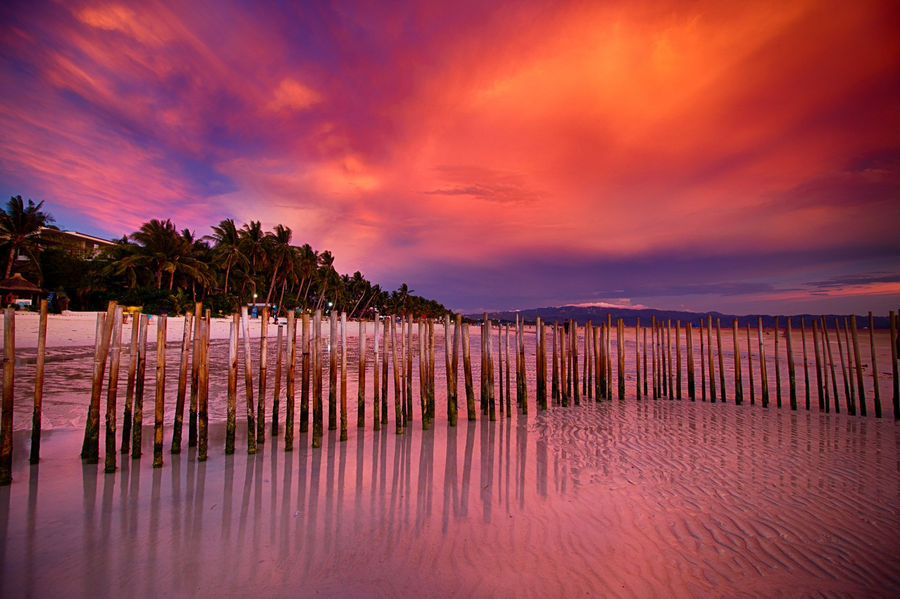
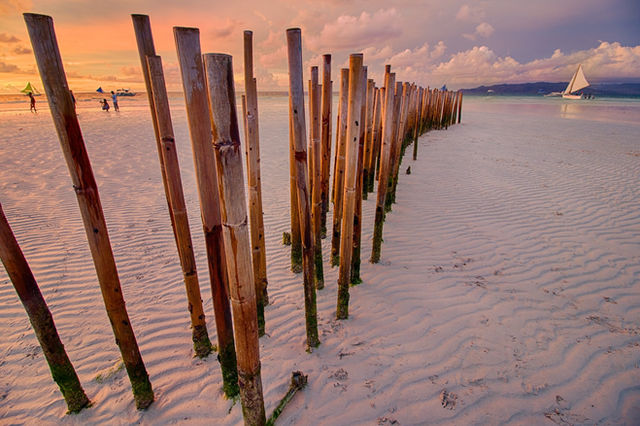
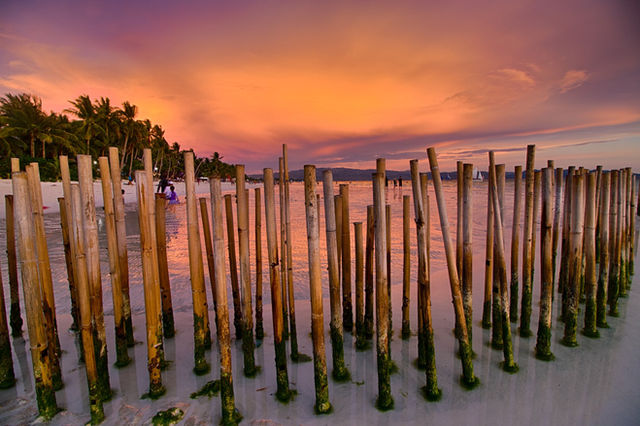
Live map of hotels and villas around Boracay — powered by Stay22. Pan, zoom and compare live prices to pick your base.
Pan, zoom and compare live prices — every stay in one map.
Boracay is tiny and the White Beach path is car-free, so most of your movement is on foot: the full length of Stations 1 to 3 is a pleasant beachfront stroll of perhaps 30–40 minutes end to end. The single main road running the spine of the island is served by e-trikes (electric tricycles) and tricycles, the standard way to cross from White Beach to Bulabog, reach Puka Shell Beach in the north, or get to Mount Luho — short hops are cheap and shared rides cheaper still; agree the fare before you set off. There is no need or real scope for a hire car, and self-drive scooters are far less common here than on other Philippine islands given the compact size and congestion. Getting on the water is the point of the place: paraw sailboats, island-hopping bangkas, and dive and kite boats all launch from the beaches, and are arranged through operators along White Beach and at D'Mall. Note the single-use plastic ban applies island-wide, so carry a refillable bottle.
Boracay has no bus or rail network — public transport is the tricycle and, increasingly, the electric e-trike that ply the main road along the island's spine. These are the workhorses for crossing between White Beach, Bulabog, Puka Shell Beach and the jetty; a shared seat on a fixed route is very cheap (a matter of a few tens of pesos), while a private 'special trip' hired for yourself costs several times more — always confirm whether you are paying the shared or special fare before boarding. There are no metered taxis on the island. For anything beyond the main road, or to reach a beach cove, small boats fill the gap. Coming and going from the mainland, the Caticlan Jetty Port pump boats and RORO ferries are effectively the island's public link, with the terminal and environmental fees payable at the port on each crossing.
Book a sunset paraw sail for your first evening rather than your last — if the wind or weather cancels it you then have days to reschedule, and it is the single most memorable thing to do here. For the beach at its best, come in the Amihan window (late November to May) when White Beach is flat and wide; if you visit during the Habagat and find White Beach choppy or seaweedy, cross to the sheltered lee side or head to Puka Shell Beach in the north, which is quieter and better for a low-key half-day. Eat at least once from the D'Talipapa market, choosing your own seafood and having it cooked at a nearby eatery — better value and fresher than the tourist restaurants. Walk up (or e-trike up) to Mount Luho early for the island panorama before the haze builds. Stations 1 and 3 give you the beach without Station 2's density, and rooms even one lane back from the beachfront are far cheaper than seafront rates for a two-minute walk. Carry a refillable water bottle from the outset given the plastic ban. Ariel's Point cliff-jumping is a morning boat trip and one of the better day excursions off the island.
The 6 shores actually worth the trip on Boracay — ranked, with the vibe of each and where to stay nearby. Tap a card to fly the map to it.
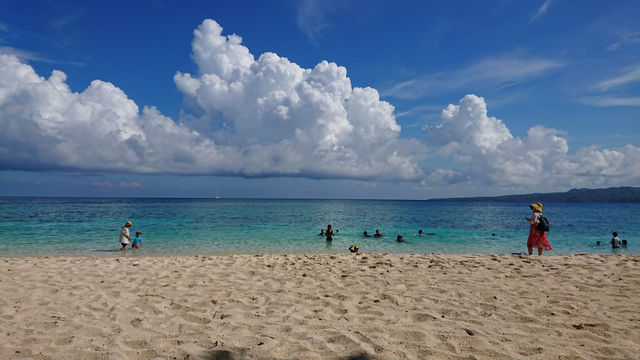
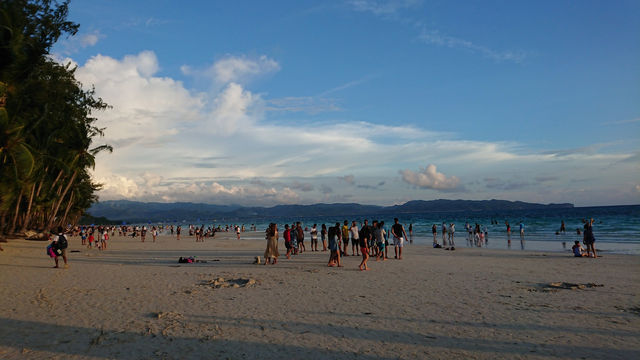
Long sandy © Dinesh Valke (CC BY-SA 2.0) Four kilometres of powder-white sand lined with resorts, bars and Boracay's famous glowing sunsets.
Best for swimming and sunset walks
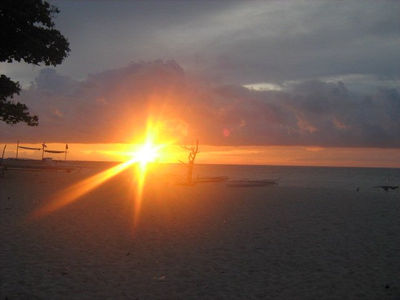 Swimming © Sarahr (public domain)
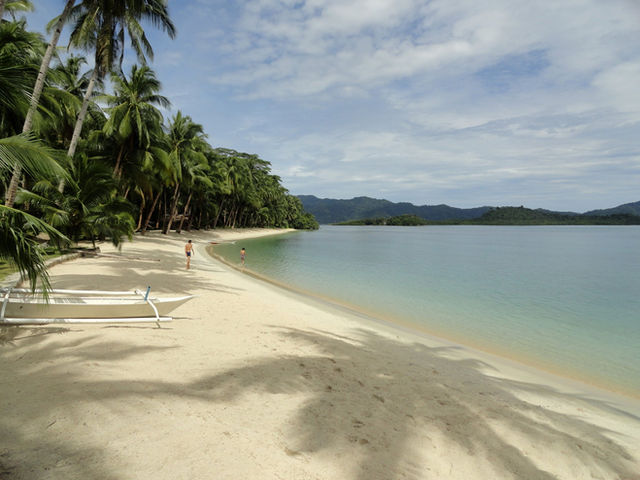
 Wilder and quieter than White Beach, with coarse shell-flecked sand and clear water to swim in.
Best for quiet swims and shells
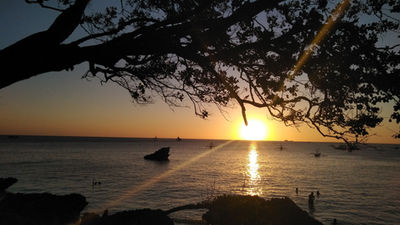 Sunset © Christopher Punzalan (CC BY-SA 4.0)
 A small cliff-backed cove a short walk north of White Beach, calm and made for evening sundowners.
Best for laid-back sundowners
Undeveloped beach on the northeast coast with coral to snorkel, shady coves and a small bat cave.
Best for snorkelling and coves
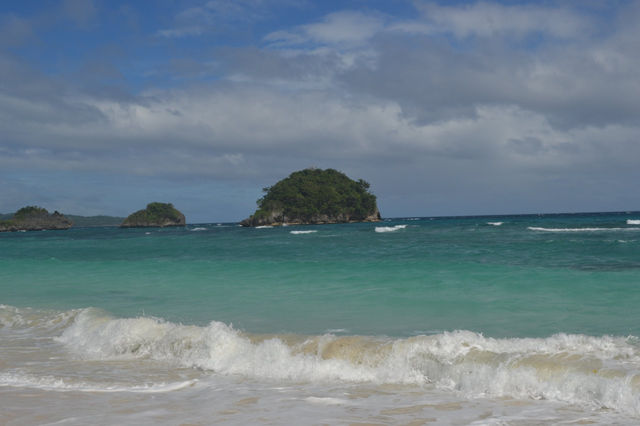
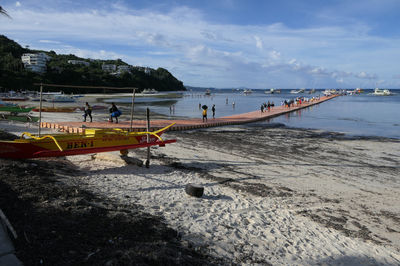 Dramatic © Dinesh Valke (CC BY-SA 2.0)
 Boracay's breezy east-coast lagoon, full of kitesurfers and chop rather than calm swimming water.
Best for kitesurfing and windsports
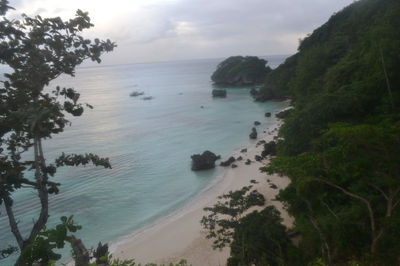 Secluded © Wallpaperhd.io (CC0)
 A secluded rock-strewn cove reached down steep steps, private and quiet but shrinks at high tide.
Best for a hidden cove escape
Boracay · Around the island · 1 island · 6 beaches
Skip-the-line tickets and small-group tours in Boracay — compare across our partners.
We're still curating hand-picked tickets and tours for Boracay. In the meantime, the map above and the nearby cities are a great place to start.
Late November – May (Amihan dry season)
Boracay is tropical, hot and humid year-round, with sea temperatures warm in every season and daytime air temperatures generally in the high 20s to low 30s °C. The character of a trip is set by two monsoons. The Amihan (the northeast monsoon, roughly November to April or May) is the dry, calmer season for White Beach: the west-facing sand lies flat and wide against sheltered water — the classic postcard — while the wind blows across to the east coast, making December to March the peak kitesurfing months on Bulabog. The Habagat (the southwest monsoon, roughly June to October) reverses this: the wind and waves now strike White Beach directly, the sea gets choppier, the beach narrows and seaweed can wash up along it, while Bulabog falls calm. Habagat also brings the wettest months and overlaps the Philippine typhoon season, when passing storms can cancel boat crossings and flights for a day or two at a time, though Boracay sits far enough south to be hit less often than Luzon. The reliably best weather for the beach is late November through May.
Boracay is a well-policed tourist island and violent crime against visitors is rare; the everyday hazards are practical rather than sinister. The sun is intense this close to the equator, and the sea's glare on White Beach makes it easy to burn — cover up and reapply. The water off White Beach is shallow and usually calm in the Amihan season, but in the Habagat months it can develop stronger currents and surf, so watch conditions before swimming out. Watersports carry the usual risks: only kite with a reputable Bulabog school and heed the wind, and treat boat operators and Ariel's Point cliff-jumping platforms with sensible caution. Tricycle and e-trike traffic on the narrow main road is the main road-safety concern. Common annoyances are commercial rather than dangerous — persistent beach vendors and tour touts, and occasional overcharging, so agree tricycle and boat fares in advance and use accredited operators. Petty theft can occur in crowded nightlife spots; watch your belongings. Standard traveller precautions on food, water (drink bottled or filtered) and mosquito bites apply.
The Philippines is a warm, overwhelmingly Catholic and famously hospitable country, and English is very widely spoken, so communication is easy. Filipinos value courtesy and a friendly, unhurried manner — a smile and patience go a long way, and open confrontation is best avoided. On Boracay specifically, the post-rehabilitation rules are strictly enforced and are a matter of both law and local pride: single-use plastics are banned island-wide (fines start around ₱2,500), building sandcastles and beachfront bonfires or fire-dancing are prohibited, smoking and drinking alcohol directly on the beach are not allowed, and the old anything-goes party culture has been deliberately reined in. Respect the beach easement rules and clean up after yourself. Modest beachwear is fine on the sand but cover up when heading into D'Mall, shops or restaurants. Tipping is appreciated but not obligatory. As across the Philippines, treating staff and vendors with respect and good humour is the surest way to a good reception.
£70/day mid-range (budget £30, luxury £250+; Station 1 beachfront commands a premium)
911 (national emergency hotline)
The quickest gateway is Godofredo P. Ramos Airport (MPH), universally called Caticlan or Boracay Airport, on the Panay mainland about a five-to-ten-minute tricycle ride from the Caticlan Jetty Port. Cebu Pacific, Philippine Airlines and AirSwift fly here from Manila, with Cebu Pacific also serving Clark and Cebu; the runway is short, so these are turboprops and smaller jets. The alternative is Kalibo International Airport (KLO), about 60km away, which takes more airlines and often cheaper fares but adds a 1.5–2 hour road transfer to the jetty. From London there are no direct flights: route via Manila (typically 14h+ plus a connection) on Philippine Airlines, or via a Gulf or Asian hub, then take the domestic hop to Caticlan or Kalibo. From the Caticlan Jetty Port you cross to Boracay by pump boat or ferry in about 10–15 minutes. Every visitor pays a terminal fee (around ₱150 each way) and a one-time environmental fee (around ₱300), plus the boat fare, all collected at the jetty; you must also show a confirmed booking at a Department of Tourism-accredited hotel to be allowed across. Pre-booked hotel transfers bundle the tricycle, boat and island leg into one price and remove the hassle.
Flights, airport transfers and car hire to MPH — search and compare without leaving the page.
Parking, holiday extras, and more — coming soon.
We're lining up parking, holiday extras and activities you'll be able to add to any trip from here.