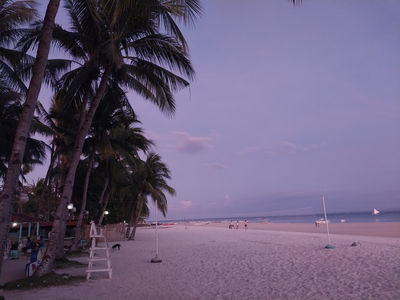
 Long sandy © SYKE Travel & Tours
 Kota Beach
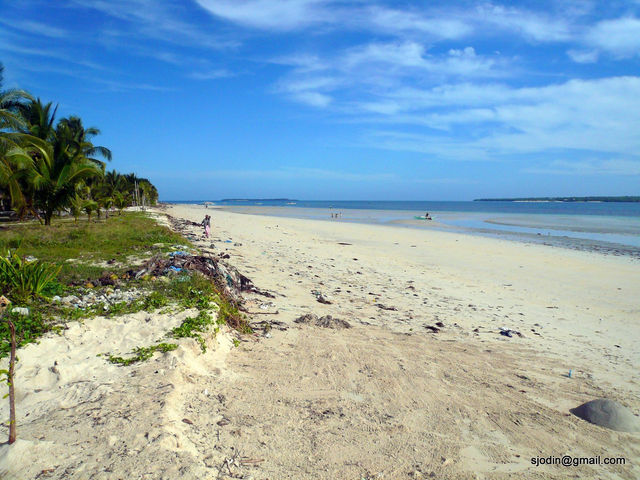
A kilometre-long sweep of pale sand where a wide sandbar surfaces at low tide for shallow wading.
Best for low-tide sandbar walks
The Visayas' gateway island — the cradle of Philippine Christianity, thresher-shark and sardine-run diving, and white-sand escapes reached from the country's second-busiest airport.
Armcen / Wikimedia Commons (CC BY 4.0)
Cebu is a long, narrow, mountainous island in the Central Visayas, around 200km from tip to tip and rarely more than 40km wide, with a limestone spine running its length and a densely populated eastern corridor centred on Cebu City — the oldest city in the Philippines and, after Metro Manila, its second metropolis. This is where Ferdinand Magellan landed in 1521, planted a cross and converted the local ruler, before being killed at Mactan by the chieftain Lapu-Lapu; the island still calls itself the cradle of Christianity in the country, and its Roman Catholic identity is worn openly, nowhere more than at the vast Sinulog festival each January. As a destination Cebu is defined by range rather than a single postcard image. The city itself is congested, hot and short on conventional beauty but rich in history; the adjacent island of Mactan holds the international airport and a strip of beach resorts; the mountainous south delivers the island's signature experiences — the Moalboal sardine run, Kawasan Falls canyoneering, the Oslob whale sharks — while the far north offers thresher-shark diving off Malapascua and the quiet white sand of Bantayan. It suits divers, active travellers and island-hoppers more than those after a single luxury beach; most visitors use Cebu as a hub, combining it with neighbouring Bohol, Siquijor or the wider Visayas.
Cebu's case is accessibility married to genuine variety. Because Mactan–Cebu is the Philippines' second-busiest airport, with direct international flights, you can be diving or on a white-sand beach within hours of landing — no double domestic hop from Manila required. The underwater draw is exceptional and unusually reliable: Malapascua in the north is the only place in the world where thresher sharks are seen at a cleaning station almost daily, while Moalboal in the south-west has a resident sardine run — millions of fish shoaling in a shimmering wall — just metres off the beach, alongside green turtles you can snorkel with from shore. Above water, the canyoneering down Kawasan Falls at Badian, jumping and sliding through turquoise pools, is one of South-East Asia's best adventure days. Cebu City adds a layer few Philippine beach destinations have: Magellan's Cross, the Basilica del Santo Niño (home to the country's oldest Christian relic), Fort San Pedro and the Sinulog festival. Pair Cebu with Bohol (a two-hour fast ferry away, for the Chocolate Hills and tarsiers), with Siquijor, or with Malapascua and Bantayan for a north-island loop — the ferry and bus network makes multi-island trips straightforward.
Cebu is a serious food island, and its signature is lechon — spit-roasted suckling pig, which Cebuanos (and many chefs beyond) consider the best in the country, seasoned with lemongrass and herbs so it needs no dipping sauce. Seek it out at the Talisay and Carcar roadside lechon stalls, or the well-known city houses. The other local institution is the puso — rice steamed in woven coconut-leaf pouches — eaten by hand with grilled seafood, chicken and pork at the raucous open-air 'sugba' grills such as those at Larsian in the city. As a fishing region the seafood is excellent and cheap: grilled tuna, squid, prawns and the Filipino staple of kinilaw (raw fish cured in vinegar and calamansi, the local ceviche). Dried mangoes are a Cebu export you'll see everywhere, and the fresh mangoes are among the sweetest in the world. Sweet-toothed travellers should try the rings of dried mango and the local delicacy budbud (sticky-rice cake). For drinks, San Miguel and the craft-beer scene cover the city; fresh buko (coconut) and calamansi juice are everywhere; and in the beach towns the dive-shop bars keep things simple with cold beer and grilled catch of the day.
Live map of hotels and villas around Cebu — powered by Stay22. Pan, zoom and compare live prices to pick your base.
Pan, zoom and compare live prices — every stay in one map.
Cebu is large and getting around means road journeys, not a quick island loop. The backbone is the Ceres/Cebu bus network from Cebu City's South Bus Terminal (for Moalboal, Badian, Oslob and the south) and North Bus Terminal (for Maya and Hagnaya in the north) — cheap, air-conditioned or fan buses that take three to five hours to reach the far coasts. Vans (V-hire) cover the same routes faster and fuller. Within Cebu City and the towns, ride-hailing (Grab) works well in the metro, while motorised tricycles and habal-habal (motorcycle taxis) handle short local hops everywhere. Renting a car with a driver is a popular way to string together the southern sights (Kawasan, Oslob, Moalboal) in a day or two without the bus waits. Scooter and motorbike hire is available in Moalboal, Mactan and the beach towns and is the most flexible way to explore locally, though Cebu's traffic and road standards demand real caution. The two offshore island bases are reached by boat: banca from Maya to Malapascua (30–40 min) and ferry from Hagnaya to Santa Fe on Bantayan (about an hour).
Public transport is cheap and workable but slow. Long-distance travel runs on the Ceres bus lines out of Cebu City's two terminals — a fan bus to Moalboal or Oslob costs only a few pounds and takes three to four hours; air-conditioned services are a little more. Vans (V-hire) shadow the main routes for a small premium and leave when full. Around the city and suburbs, traditional jeepneys and the newer modern PUV minibuses run fixed routes for well under a pound a ride, though they're bewildering for first-timers — Grab (ride-hailing) is far simpler for visitors in the metro. Tricycles and habal-habal motorcycle taxis cover the last mile in towns and on the small islands, negotiated per trip. For the offshore bases, public bancas from Maya to Malapascua and the Hagnaya–Santa Fe ferry to Bantayan run to timetables that thin out in the afternoon, so aim to travel in the morning. Fares across all of these are modest by Western standards; carry small cash, as change and card acceptance are limited outside the city.
Split your trip by region rather than day-tripping everything from the city — the drives are long, and basing a few nights each in the south and north beats hours on the bus. For the Oslob whale sharks, understand what you're buying before you commit (see the FAQ): if you'd rather see the animals wild, thresher-shark diving at Malapascua or the free-swimming turtles and sardines at Moalboal are the ethical alternatives, and many divers skip Oslob entirely. Do the Kawasan canyoneering early — the first morning slots avoid both the midday heat and the crush of tour groups on the jumps. At Moalboal the sardine run is best in the calm early morning and, brilliantly, is reachable by snorkel straight from Panagsama's shore, so you don't strictly need to dive to see it. In Cebu City, eat lechon where the locals do — the roadside houses in Talisay and Carcar rather than the mall food courts — and try a Larsian 'sugba' grill for cheap seafood and puso rice by hand. If your dates are flexible and Sinulog isn't your aim, avoid the third week of January in the city, when rooms triple and the streets are gridlocked. Finally, build slack into ferry-dependent legs in the wet season: crossings are cancelled the moment the coastguard raises a storm signal.
The 6 shores actually worth the trip on Cebu — ranked, with the vibe of each and where to stay nearby. Tap a card to fly the map to it.
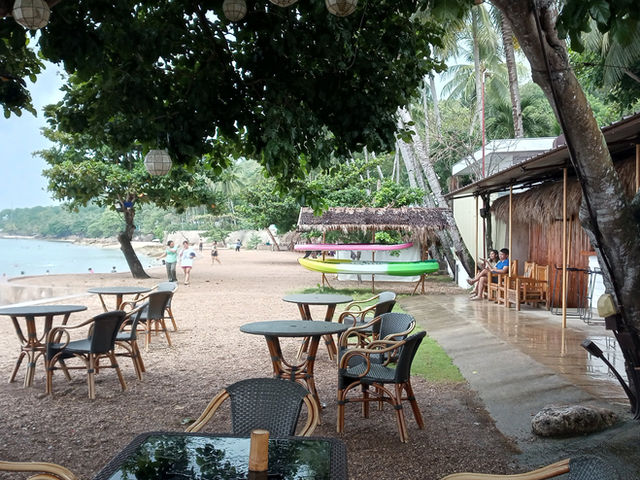
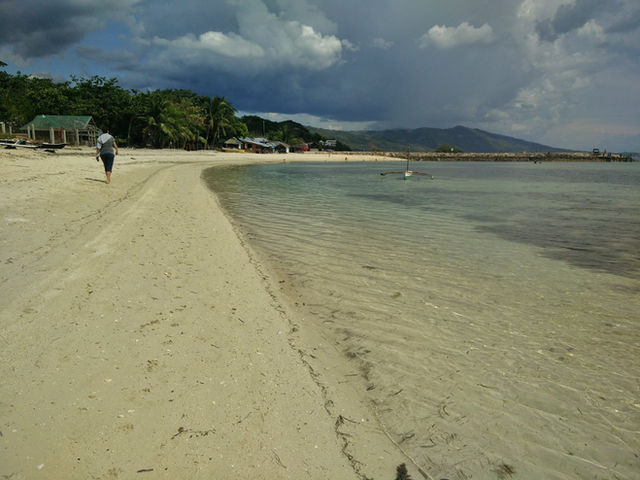
Long sandy © SYKE Travel & Tours A kilometre-long sweep of pale sand where a wide sandbar surfaces at low tide for shallow wading.
Best for low-tide sandbar walks
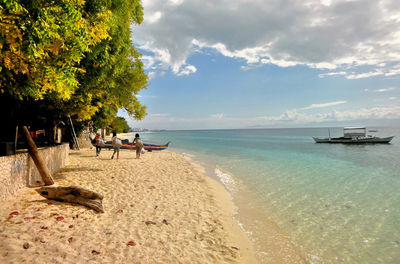 Sunset © Lindstrm
 The go-to public swimming beach on Moalboal's west coast, best at dusk when the sun drops over the strait.
Best for west-coast sunsets
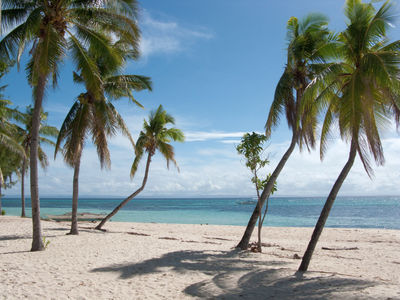 Swimming © Vyacheslav Argenberg
 Malapascua's main strip of soft white sand, calm and shallow, fringed with low-key dive lodges and cafes.
Best for swimming and dive trips
 Snorkelling © Warrendering
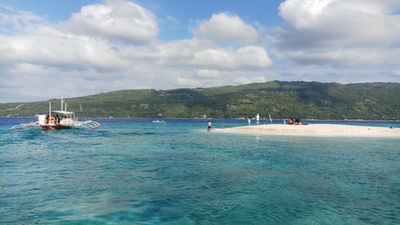
 A shifting spit of white sand off Oslob backed by a protected reef that draws snorkellers to the shallows.
Best for snorkelling day trips
Camotes' longest beach, its powdery shallows staying ankle-deep far out, so small kids can wade safely.
Best for families with young kids
A long, quiet, barely-developed beach backed by coconut palms, with far fewer visitors than the south coast.
Best for quiet beach escapes
Cebu · Around the island · 1 island · 6 beaches
Skip-the-line tickets and small-group tours in Cebu — compare across our partners.
We're still curating hand-picked tickets and tours for Cebu. In the meantime, the map above and the nearby cities are a great place to start.
December – May (dry season)
Cebu has a tropical climate that is warm and humid year-round, with temperatures mostly in the 27–33°C range and little seasonal variation in heat. The practical division is wet versus dry rather than hot versus cold. The best window is the dry season, roughly December to May, when skies are clearer, the sea calmest and diving visibility best; March to May is the hottest and driest stretch, ideal for the water but fierce in the midday sun. The wetter months run June to November, overlapping the Philippine typhoon season — Cebu is more sheltered than the eastern-facing islands but not immune. The island's vulnerability was made brutally clear in December 2021, when Super Typhoon Rai (locally Odette) struck the Visayas directly, placed the whole province under a state of calamity and caused widespread damage and power loss; recovery took years. Typhoons are unpredictable and can arrive outside the classic season, so check forecasts if travelling in the wet months and build in schedule flexibility around ferries, which are grounded when the coastguard raises storm warnings. Sea temperatures stay warm enough for diving without a thick wetsuit all year.
Cebu is a generally safe destination for visitors, with the usual caveats of a busy developing-world island. The commonest real hazards are on the road and in the water rather than crime. Cebu City traffic is heavy and driving standards loose; scooter and motorbike hire in the beach towns carries genuine risk, so wear a helmet, go slowly and be sure your travel insurance covers riding. In the water, respect currents when snorkelling the Moalboal drop-off and diving the northern shoals, and only do the Kawasan Falls canyoneering with a licensed guide and helmet/life-vest — the jumps are exhilarating but injuries happen when people freelance. The tropical sun is strong; dehydration and sunburn catch out newcomers. Petty theft (bag-snatching, pickpocketing in crowds and markets) exists in the city and at festival time, so keep valuables discreet. Standard scams — inflated taxi fares, over-eager island-hopping touts — are more annoying than dangerous; agree prices first and use Grab in the metro. Government travel advisories flag parts of the far southern Philippines (Mindanao, the Sulu archipelago) for serious risks, but these are a separate region well away from Cebu and the central Visayas, which are not covered by those warnings.
Cebu is devoutly Roman Catholic — this is where Christianity entered the Philippines — and faith is woven into daily life, from the queues of pilgrims at the Basilica del Santo Niño to the fiesta calendar. Dress modestly when visiting churches (shoulders and knees covered) and be quietly respectful during Mass, which is frequent and well attended. The Sinulog festival, on the third Sunday of January, is the island's biggest event: a vast street procession and dance parade honouring the Santo Niño, drawing enormous crowds and worth planning around (either to join or to avoid the packed hotels and prices). Filipinos are famously warm, hospitable and easy-going; a smile, patience and politeness go a long way, and open displays of anger or public embarrassment ('losing face') land badly. English is very widely spoken alongside Cebuano, so communication is rarely a barrier — a few words of Cebuano ('salamat' for thank you) are appreciated. Tipping is not obligatory but a modest amount for good service is welcome. On the beaches and in the water, modest swimwear is fine at resorts but conservative dress is expected away from tourist areas.
£55/day mid-range (budget £25, luxury £180+; Mactan resorts and dive packages push higher)
911 (national emergency hotline)
Mactan–Cebu International Airport (CEB), on Mactan island just east of the city, is the Philippines' second-busiest airport and the island's decisive advantage: it takes direct international flights from across Asia and the Gulf (Singapore, Hong Kong, Tokyo, Seoul, Taipei, Dubai and Doha among them), so many visitors avoid the usual Manila transfer entirely. From the UK there is no direct service — route via a Gulf or Asian hub (Dubai, Doha, Singapore, Hong Kong) into Cebu, or connect through Manila on Philippine Airlines, Cebu Pacific or AirAsia. Cebu Pacific is headquartered here, giving cheap, frequent domestic links to Manila, Davao, Palawan and the rest of the country. By sea, Cebu City's piers are one of the Philippines' main ferry hubs: fast catamarans (OceanJet and SuperCat) run several times daily to Tagbilaran on Bohol in about two hours, with further services to Ormoc (Leyte), Dumaguete (Negros), Siquijor and other Visayan ports. Within the island, buses from the North and South Bus Terminals reach the coastal towns, and roll-on/roll-off ferries connect the northern ports of Maya (for Malapascua) and Hagnaya (for Bantayan).
Flights, airport transfers and car hire to CEB — search and compare without leaving the page.
Parking, holiday extras, and more — coming soon.
We're lining up parking, holiday extras and activities you'll be able to add to any trip from here.