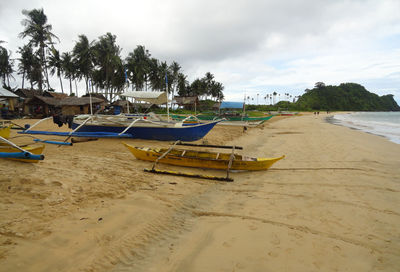
 Long sandy © Fabio Achilli
 Nacpan Beach
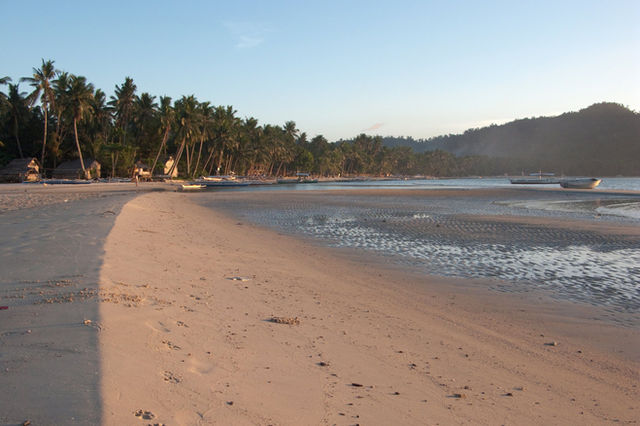
A four-kilometre curve of cream sand and coconut palms, with small waves calm enough for kids to splash in.
Best for long beach walks
The Philippines' long, thin western frontier — limestone karst islands, hidden lagoons, WWII wrecks and a navigable underground river, repeatedly voted among the world's best islands.
Micluna / Wikimedia Commons (CC BY-SA 4.0)
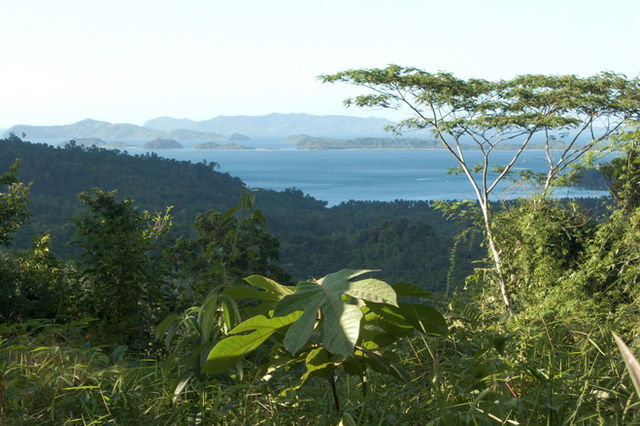
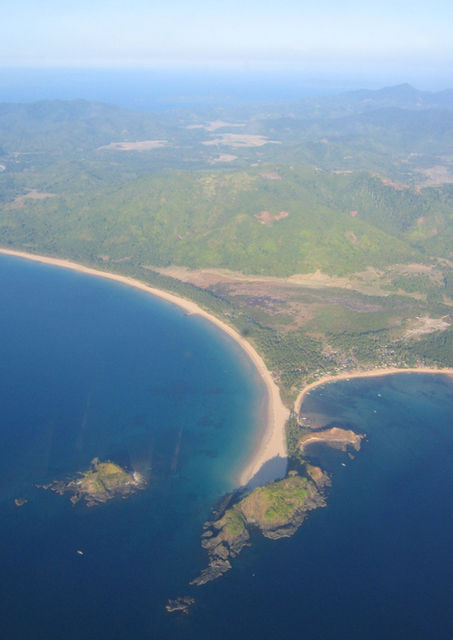
Palawan is a long, narrow island and province on the south-western frontier of the Philippines, running roughly 450km from the Calamian Islands in the north down towards Borneo, and it is repeatedly voted among the best islands in the world by travel magazines. The scenery that earns those votes is a specific kind: sheer limestone karst islands rising straight out of impossibly clear water, hidden lagoons reached through gaps in the rock, and white-sand beaches on islands with no road and no electricity. Most visitors split their time between two headline bases. El Nido, at the northern tip of the main island, is the gateway to the Bacuit Archipelago — around 45 karst islands wrapped in a marine reserve, explored on the classic island-hopping Tours A, B, C and D. Coron, a boat or short flight further north in the Calamianes, pairs its own lagoons and lakes with the best wreck-diving in Southeast Asia, a fleet of WWII Japanese ships sunk in 1944. The provincial capital, Puerto Princesa, is the main air gateway and home to the UNESCO-listed Subterranean River, a navigable underground river running under a karst mountain. Palawan suits travellers who want dramatic seascapes, snorkelling and diving, and are willing to trade convenience for it — the roads are rough, distances are long, and almost everything worth seeing involves a boat. It is not a place for a quick, polished city-break; it rewards time.
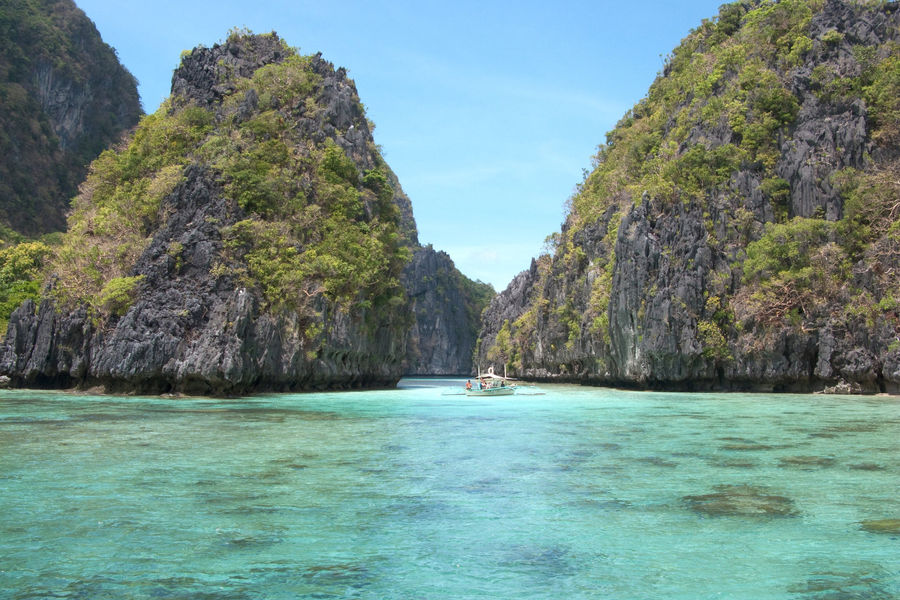
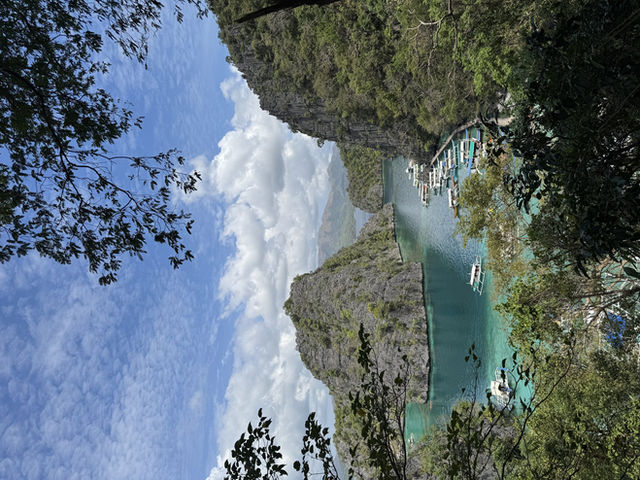
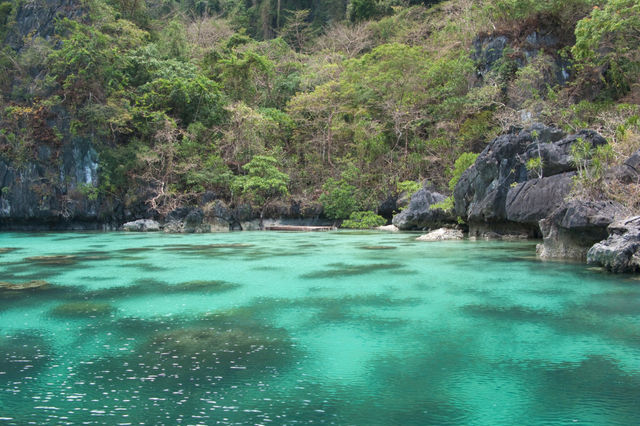
Palawan delivers the single most photographed seascape in the Philippines: the karst islands and lagoons of the Bacuit Archipelago off El Nido, where you kayak into the Big Lagoon between limestone walls or swim through a crack in the rock into the Secret Lagoon. It is the rare place that looks like the brochure. Coron adds a second, entirely different pull — Kayangan Lake, often called the cleanest lake in the Philippines, ringed by cliffs; the strange warm-and-cold layers of Twin Lagoon and Barracuda Lake; and a cluster of shallow WWII Japanese shipwrecks that make it one of the world's great wreck-diving sites, accessible to snorkellers as well as scuba divers. Near Puerto Princesa, the Subterranean River lets you paddle 45 minutes into a genuine underground river beneath a mountain, a UNESCO World Heritage site. Beyond the headline bases lie the sandbars and turtle beaches of remote Balabac in the far south, and the Tubbataha Reefs, a marine park reachable only by liveaboard dive boat during a short spring season (roughly March to June). Palawan pairs naturally with the rest of the Philippines — a few days on the beaches of Boracay or the chocolate hills of Bohol — or as a first stop before wider Southeast Asian travel via Manila or Cebu.
Palawan's food is Filipino home cooking built around the sea, and eating well here means eating simply. Grilled fresh fish and seafood — inihaw (grilled), often with a dip of soy, calamansi lime and chilli — is the everyday standout, alongside classics found across the Philippines: adobo (meat braised in soy, vinegar and garlic), sinigang (a sour tamarind soup), kinilaw (the local ceviche, raw fish 'cooked' in vinegar and calamansi) and lechon (roast pork). Puerto Princesa is famous for two things: tamilok, the wood-worm 'oyster' eaten raw from mangrove trunks, which is more novelty than staple, and crocodile sisig, served near the city's crocodile farm. On the island-hopping tours, lunch is typically grilled on the beach — fish, chicken, rice and fruit — and is one of the pleasures of the day. Puerto Princesa has the widest choice of restaurants, from local carinderias to a cluster of well-regarded seafood and international places; El Nido's town has a surprisingly broad, if pricey, traveller-oriented dining scene; Coron Town is more modest. Drink the fresh calamansi juice, the buko (young coconut), and San Miguel beer; tap water is not safe to drink, so stick to bottled or filtered.
Live map of hotels and villas around Palawan — powered by Stay22. Pan, zoom and compare live prices to pick your base.
Pan, zoom and compare live prices — every stay in one map.
Getting around Palawan is slow, and honesty about that saves disappointment. The main island has one spine road, much of it rough, and the Puerto Princesa–El Nido drive takes 5–6 hours by van or private car despite looking short on a map. Within El Nido and Coron the sightseeing is done almost entirely by boat: the island-hopping Tours A–D out of El Nido, and the lake-and-wreck day trips out of Coron, are full-day outrigger (bangka) excursions booked through operators or hotels, and they are the whole point of being there. Between the two headline bases you have a choice of a fast ferry (Phimal, Atienza and others; roughly 3.5–4 hours in good weather, longer if the sea is rough) or a short AirSWIFT flight (ENI–USU, about 45 minutes, roughly daily). On land, tricycles handle short hops in the towns, and vans (shared or private) cover the long inter-town legs. Scooter hire is available but the roads, other traffic and occasional livestock make it riskier than it looks. Build slack into your itinerary — a single day of rough weather or a missed connection reshapes the plan.
Palawan has no rail and only a basic road network, so 'public transport' means shared vans, jeepneys, tricycles and boats. Shared vans (locally 'vans for hire') are the workhorse for inter-town travel — Puerto Princesa to El Nido is the busiest route, running through the day, with a fare that is a modest sum for a 5–6 hour journey; they leave from van terminals rather than to a strict timetable. Tricycles (a motorbike with a sidecar) cover short trips within towns and to nearby beaches for a small negotiated fare; agree the price before you get in. Jeepneys serve some rural routes cheaply but slowly and infrequently. Between islands you rely on scheduled fast ferries (El Nido–Coron) and the tour boats; there is no scheduled public boat network for casual hopping, so island days are bought as organised tours. In practice most visitors mix shared vans for the long legs, tricycles for the short ones, and booked boat tours for the sightseeing, rather than trying to travel independently by public transport alone.
Book El Nido's private island-hopping tours rather than the crowded joined tours if the budget allows — the Big Lagoon and Secret Lagoon are transformed when you arrive early and ahead of the flotilla, so aim to be the first boat out. Nacpan Beach, about 40 minutes from El Nido town, is the antidote to the busy in-town beachfront and is well worth a half-day. For Kayangan Lake in Coron, the same logic applies: the first boats of the morning get the famous viewpoint and the clear water largely to themselves before the crowds and the light flattens. Consider doing your Palawan trip in the El Nido-then-Coron direction and flying home from Busuanga (USU), which saves backtracking. If you dive, Coron's shallow wrecks like Okikawa Maru and Lusong Gunboat are accessible even to snorkellers and confident freedivers, not just scuba divers. Keep your environmental-fee receipts — they are valid for several days and save you paying twice. Finally, carry cash: ATMs in El Nido and Coron are limited, sometimes out of service, and many small operators and guesthouses do not take cards.
The 7 shores actually worth the trip on Palawan — ranked, with the vibe of each and where to stay nearby. Tap a card to fly the map to it.
Long sandy © Fabio Achilli A four-kilometre curve of cream sand and coconut palms, with small waves calm enough for kids to splash in.
Best for long beach walks
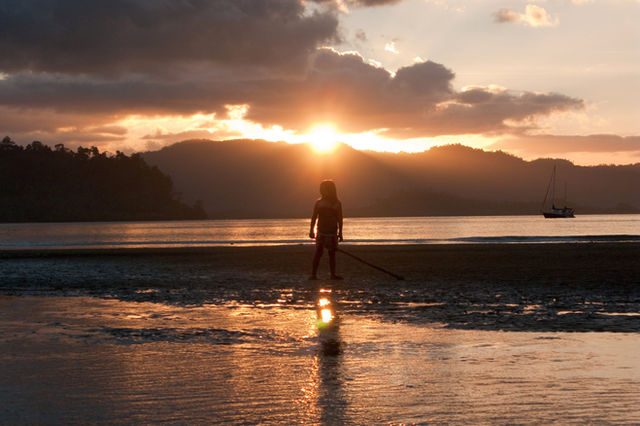
Palm-lined golden sand where the beach-shack bars fill up each evening for El Nido's most-watched sunset.
Best for sunset drinks
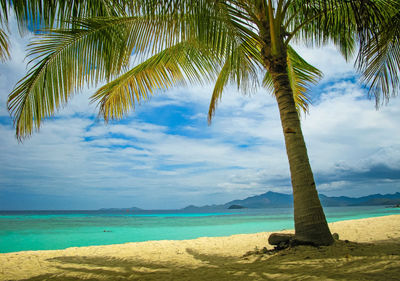 Swimming © Ray in Manila
 Powdery white sand shelves into a shallow turquoise lagoon, with reef a short swim offshore.
Best for swimming and sunbathing
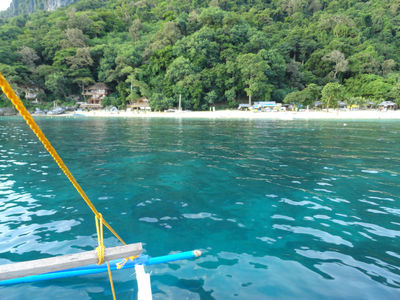 Family © Fabio Achilli
 A photogenic white-sand spit and the usual last stop on Tour A, with a coconut bar and easy swimming.
Best for island-hopping day trips
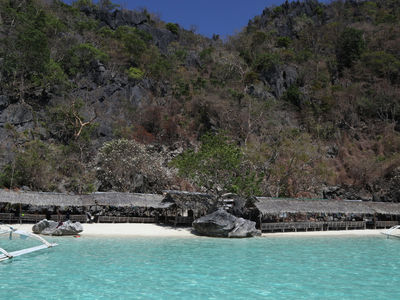 Dramatic © Patrickroque01
 A small strip of sand tucked beneath towering limestone cliffs, best reached before the tour boats pile in.
Best for dramatic cliff scenery
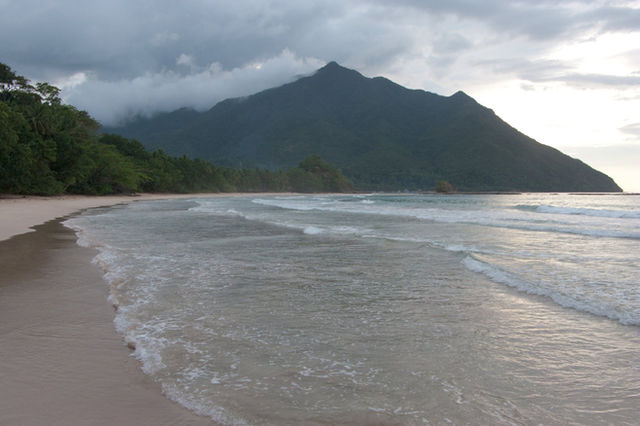
A wild, jungle-backed sweep of golden sand where El Nido's small surf crowd rides the beach break.
Best for surfing and solitude
A tiny mangrove-fringed sandbar where the shallows stay waist-deep far out, ideal for young paddlers.
Best for kids and beginner snorkelers
Palawan · Around the island · 1 island · 7 beaches
Skip-the-line tickets and small-group tours in Palawan — compare across our partners.
We're still curating hand-picked tickets and tours for Palawan. In the meantime, the map above and the nearby cities are a great place to start.
Late November – May (dry season)
Palawan has two seasons: a dry season running roughly late November to May, and a wet season from June to October or early November. The dry season is the time to come — calm seas, reliable sun and the best conditions for island-hopping and diving; February and March are typically the driest and most settled, with daytime temperatures around 28–32°C and warm nights. El Nido and Coron in the north are noticeably drier from November to May, while Puerto Princesa in the centre stays reasonably good much of the year. The wet season brings frequent, often heavy afternoon downpours, higher humidity and rougher water, with the heaviest rain usually July to September; boat tours and inter-island ferries are cancelled outright when the sea is too rough. On the typhoon question, be accurate but not complacent: Palawan sits on the western edge of the Philippines and is far less typhoon-exposed than the eastern seaboard (Samar, Leyte, Bicol), and many storms pass to its north — but it is not typhoon-proof, and the wet season still brings the risk of a passing storm, days of rain and disrupted boats. Plan the water-based part of your trip for the dry months and keep your schedule flexible if you travel in the shoulder or wet season.
Palawan is a straightforward and generally safe place for visitors, but the real hazards are practical rather than criminal. The biggest is the sea and the boats: island-hopping and ferries run in outrigger and fast craft that are weather-dependent, and operators do cancel when conditions turn — respect that, wear the life jacket, and do not pressure a captain to sail in rough weather. The El Nido–Coron ferry crossing can be uncomfortable and occasionally rough; those prone to seasickness should medicate ahead. Snorkelling and diving carry the usual risks of currents, boat traffic and, for wreck and Barracuda Lake dives around Coron, depth and thermoclines — dive within your certification and use reputable operators. Roads are poor and long-distance van drives can feel fast; scooter hire on rough roads is a common cause of tourist injury. The tropical sun is intense on the water — high-factor sunscreen (ideally reef-safe), a rash vest and shade are essential. Budget for the mandatory environmental and eco-tourism fees on El Nido and Coron tours, and keep the receipts, which are valid for several days. On the wider security picture, standard UK government travel advice flags the far south-west of the Philippines (around the Sulu Sea and Mindanao) — the mainstream Palawan tourist areas of El Nido, Coron and Puerto Princesa are well away from that and are routinely visited; check current FCDO advice before booking, especially if you plan to reach remote Balabac.
The Philippines is predominantly Roman Catholic and Palawan is warm, easy-going and English-speaking — English is widely spoken alongside Filipino and local languages, which makes travel here notably smooth. Filipino social manners run to friendliness, patience and a dislike of confrontation; raising your voice or losing your temper in a dispute (over a fare or a booking) is counter-productive and loses respect on both sides. Dress is relaxed and beachwear is fine on the islands and boats, but cover up modestly when visiting churches, and away from the resorts and tourist strips more conservative dress is appreciated. Tipping is not obligatory but is welcomed for good service, and small change for boat crews and guides after a day's tour is normal. Palawan markets itself as the country's 'last ecological frontier', and the environmental fees, single-use-plastic restrictions and reef-protection rules are taken seriously — follow the guides' instructions on not touching coral or wildlife, and do not buy shells or turtle products. A basic 'salamat' (thank you) goes a long way.
£75/day mid-range (budget £35, luxury £400+; private-island resorts run into the hundreds per night)
911 (national emergency hotline)
There are no direct flights from the UK; you connect through Manila or Cebu, which are reached from London via a Middle Eastern or Asian hub (typically 16–20 hours total with one stop). From Manila or Cebu, three airports serve Palawan. Puerto Princesa (PPS) is the main gateway, taking frequent, relatively cheap jet flights (Philippine Airlines, Cebu Pacific, AirAsia) from Manila and Cebu — about 75–90 minutes — and it is the sensible arrival point for most trips. El Nido / Lio (ENI) is a small private airport served only by turboprops, principally AirSWIFT, from Manila-area airports and Cebu; note that from 29 March 2026 AirSWIFT and Cebu Pacific moved their El Nido turboprop operations from Manila's NAIA to Clark International Airport, about 80km north of central Manila, so check which Manila airport your onward flight uses. Coron / Busuanga (USU — Francisco B. Reyes Airport) takes both jets and turboprops from Manila and Cebu. Flying into ENI or USU saves the long land transfer but costs more and is weather-sensitive. The cheapest reliable route into the region is a jet to PPS, then travel overland and by boat.
Flights, airport transfers and car hire to PPS — search and compare without leaving the page.
Parking, holiday extras, and more — coming soon.
We're lining up parking, holiday extras and activities you'll be able to add to any trip from here.