 Long sandy © Cristina Perneta (CC BY-SA 4.0)
 Porto Santo Beach (Praia do Porto Santo)
Nine kilometres of soft golden sand on its own island - the archipelago's only genuinely long sandy beach.
Best for long sandy days
Portugal's Atlantic island of dramatic peaks, year-round flowers, world-class levada trails and a UNESCO laurel forest older than the ice age.
Madeira stopped me in my tracks the moment I landed. The island rises almost vertically from the Atlantic — a volcanic mass of green ridges, cloud-capped peaks and terraced fields tumbling down to the sea — and nothing I'd read had quite prepared me for the scale of it. This is not a beach holiday destination in the conventional sense (though the natural lido pools of the north coast and the black-sand coves are genuinely beautiful). Madeira is a place that rewards walkers, nature lovers and families who want something more substantial than sunbeds and cocktails.
At the heart of everything is the Laurisilva of Madeira, a UNESCO World Heritage Site inscribed in 1999. This is the world's largest surviving laurel forest — a relic ecosystem dating back more than 15 million years, covering 90% of Madeira's mountainous interior. The laurisilva once blanketed much of Europe and North Africa; today, Madeira's intact forest is the last place on earth where you can walk through it as our ancestors might have done. The UNESCO designation is not a bureaucratic footnote — it is the reason the forest looks the way it does, protected by strict conservation rules that keep development off the central highlands and the trail network in excellent condition.
For families, Madeira has a very specific magic: it is physically dramatic enough to hold teenagers' attention, safe and well-organised enough that parents can relax, and genuinely educational without ever feeling like a school trip. The levada irrigation channels that thread through the laurisilva are one of the great engineering wonders of the Atlantic world, and walking them with children who are old enough to manage moderate terrain is an experience I still think about years later.
Madeiran food is robust, flavourful and rarely expensive. Espada com banana (black scabbardfish with fried banana) is the island's signature dish — an unlikely combination that works beautifully, sweet and savoury in a single plate. Carne de vinha d'alhos (pork marinated in wine and garlic) is the original dish that Portuguese settlers brought to Brazil and eventually became Brazilian carne de porco. Bolo do caco — a circular flatbread made with sweet potato, grilled and served with garlic butter — is sold from street stalls and bakeries across the island and makes the best breakfast I have found on any Portuguese island. For dessert, poncha is the local firewater (aguardente with honey and lemon) and genuinely not for the faint-hearted; children get the non-alcoholic passion fruit version.
The Old Town in Funchal has a dense concentration of good restaurants along Rua de Santa Maria — book ahead in summer. The municipal market area around Mercado dos Lavradores is excellent for lunch: family-run cafés serve the freshest espada and limpets (lapas grelhadas) at honest prices. For a family evening meal, the Lido strip west of the Old Town has a range of mid-range options from Portuguese to international. Village restaurants in the north (particularly around Santana and São Vicente) are often excellent value and almost entirely locally frequented.
Madeira wine is one of the world's great fortified wines and available everywhere — the lodge tastings in Funchal are free or low-cost and suitable for older teenagers as educational visits even if they are not drinking. Bica (espresso) is strong and cheap; the island's banana milkshakes are genuinely exceptional.


Live map of hotels and villas around Madeira — powered by Stay22. Pan, zoom and compare live prices to pick your base.
Pan, zoom and compare live prices — every stay in one map.
Madeira has no metro or train network. The island is mountainous and public bus routes, while they do exist (operated by SAM and Rodoeste), are infrequent outside Funchal and impractical for reaching trailheads on a schedule. For a family, a hire car is strongly recommended and transforms the holiday. Roads are good (the expressway network is modern) though mountain roads to trailheads can be narrow and require careful driving. Hire cars are available at the airport from around ~£30–£50/day in shoulder season.
Within Funchal, the Horários do Funchal bus network covers the city and near suburbs effectively. The number 48 and number 103 are useful for reaching Monte and the hotel zone. Single fares are inexpensive; a day pass costs very little and is worth buying at the terminal on Avenida do Mar. Buses are air-conditioned and run reliably through the day, though become less frequent after 8pm.
Taxis in Funchal are cream-coloured and metered — reliable and not expensive by UK standards. Uber operates in Funchal and is often slightly cheaper than taxis for short journeys. For day trips to trailheads, some families negotiate a fixed-price hire with a local taxi driver for a full day — a sensible option if you do not want to drive mountain roads yourself. Expect to pay ~£60–£100 for a full-day private driver, depending on itinerary.
Funchal's Old Town, waterfront and hotel zone are all walkable, though the city is steep — the hills between the seafront and the cable car station will give you a workout. Comfortable shoes are essential. The city centre is entirely pedestrian-friendly and safe for families on foot day and evening.
Five to seven days is the ideal range for a family. Three days covers Funchal, Monte and a levada walk but feels rushed. A full week lets you combine south coast sightseeing, one or two serious levada trails in the UNESCO forest, a north coast day trip, a whale-watching trip and time to simply sit with a poncha and watch the sunset over Funchal Bay.
Genuinely, yes — and I say that as someone who has taken teenagers to many World Heritage Sites where the designation means more to the parents than the children. The laurisilva walks are physically engaging (torches required for the tunnel sections, uneven rocky paths, waterfall spray), visually unlike anything in Europe, and carry a credible wow-factor. The fact that this forest is 15 million years old and was once spread across Europe and North Africa lands differently when you are standing inside it than when you read it in a guidebook.
Not in the conventional sand-and-sunbeds sense on most of the island — Madeira is volcanic, so natural beaches are mostly black pebble or dark sand. The exception is Porto Santo island (45 minutes by ferry, or 15 minutes by plane) which has a stunning 9km golden beach. On Madeira itself, the natural volcanic rock pools at Porto Moniz and Seixal are spectacular alternatives — the sea fills the lava formations and creates calm, clear pools that are genuinely more interesting than most beaches I have swum at. Calheta has an artificial imported sand beach that works well for families.
For a family, yes — strongly recommended. The levada trailheads, the north coast pools, Cabo Girão, the central peaks and most of the island's best experiences are not reachable on a reasonable schedule without a car. Within Funchal itself you can manage on foot and bus, but you will miss most of what makes Madeira extraordinary if you do not venture out. Roads are well-maintained, though mountain routes to trailheads require confident driving on narrow switchbacks.
April to June and September to October are my preferred windows: the weather is settled and warm, the levada trails are in their best condition, school holiday surcharges do not apply and Funchal is busy but not overwhelmed. July and August work well but prices are higher, trails are crowded and the natural pools at Porto Moniz get very busy at weekends. The Christmas and New Year period (late December) is spectacular — the island is decorated lavishly and the New Year's Eve fireworks over Funchal are reputedly among the finest in Europe.
Most levada walks are suitable for children aged ten and upward who are comfortable with walking on uneven paths, though some sections pass very close to unfenced drops and require close adult supervision. The Levada das 25 Fontes (PR6) from Rabaçal is the most family-accessible of the major routes. The Levada do Caldeirão Verde (PR9) includes four narrow tunnels — torches are essential and small children may find them unsettling. Book a guided walk for your first levada if you are uncertain about route-finding; local guides know which sections are exposed and adjust for group capabilities.
Madeiran Portuguese is the local language, but English is very widely spoken across the island — in hotels, restaurants, tour operators and most shops. Staff at the major levada trailhead car parks and tourist sites routinely operate in English. Learning a few basic Portuguese phrases (obrigado/obrigada for thank you, por favor for please) is appreciated and will earn you warm smiles in village cafés.
 24 JUN
  24 JUN
  1 JUN
1 JUN The 6 shores actually worth the trip on Madeira — ranked, with the vibe of each and where to stay nearby. Tap a card to fly the map to it.
Long sandy © Cristina Perneta (CC BY-SA 4.0) Nine kilometres of soft golden sand on its own island - the archipelago's only genuinely long sandy beach.
Best for long sandy days
 Family © Don Amaro (CC BY 2.0)
 Golden sand shipped in from Morocco fills two sheltered man-made bays with calm, swimmable water.
Best for calm family swimming
 Swimming © muffinn (CC BY 2.0)
 A crescent of imported Moroccan sand in the town bay, sheltered by two breakwaters for easy swimming.
Best for sheltered town swimming
 Snorkelling © Hannes Grobe (CC BY-SA 2.5)
 Not sand but lava - seawater-fed volcanic rock pools where families swim sheltered from Atlantic waves.
Best for volcanic rock pools
 Dramatic © VinceTraveller (CC BY 2.0)
 Natural black volcanic sand and tidal rock pools tucked beneath towering green north-coast cliffs.
Best for black sand and pools
 Secluded © Michael Gaylard (CC BY 2.0)
 Madeira's only naturally sandy beach - a small coppery-black cove hidden near the Sao Lourenco tip.
Best for quiet natural sand
Madeira · Around the island · 1 island · 6 beaches
Skip-the-line tickets and small-group tours in Madeira — compare across our partners.
We're still curating hand-picked tickets and tours for Madeira. In the meantime, the map above and the nearby cities are a great place to start.
Day-by-day itineraries that take in Madeira — routes, timings and what to book.
 6 Nights
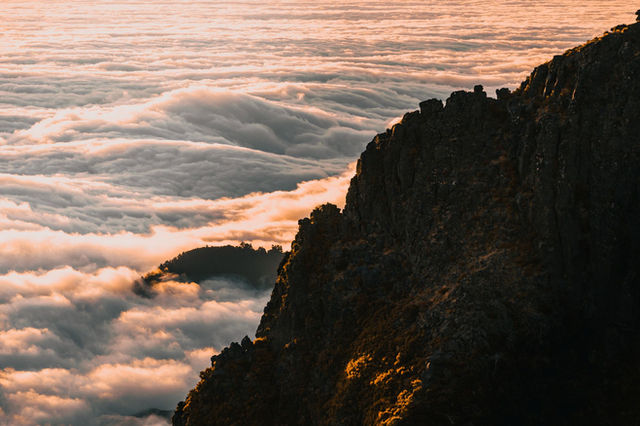
 Immerse yourself in the dramatic volcanic topography and subtropical ecosystems of Madeira on an active one-week self-drive expedition. This route transitions smoothly from the vibrant historic alleys and deep-ocean marine canyons of Funchal to high-altitude mountain sunrises, hidden river rappelling, and rugged volcanic natural pools along the northern surf.
Price on enquiry
View tripYear-round (April – June for flowers)
Madeira earns its nickname — the Island of Eternal Spring — through a climate of remarkable consistency. Funchal, the capital on the sheltered southern coast, rarely drops below 16°C in winter or rises above 26°C in summer. The sun shines most days on the south coast even when clouds are sitting on the peaks. Spring (March–May) brings the island's famous flower explosion: agapanthus, hydrangeas, bird of paradise and jacaranda colour the terraces in vivid blues and purples.
Summer (June–September) is the island's busiest and warmest season — ideal beach weather on the south coast, though the central highlands stay cooler and the laurisilva can feel moody and atmospheric with low cloud. This is prime walking season if you choose lower levada routes. Autumn (October–November) is one of my favourite times: visitor numbers drop, the light turns golden and the hills stay green. Winter (December–February) is Madeira's party season, culminating in one of Europe's most spectacular New Year's Eve fireworks displays over Funchal Bay — but be aware that January and February bring more rain, particularly in the north and at altitude.
April to June and September to October are the sweet spots: settled weather, comfortable temperatures, thinner crowds and the levada trails at their best. School summer holidays (July–August) work well but expect higher prices and busier cable cars; book accommodation and levada tours well in advance.
~£80–£120/day mid-range (budget: ~£50/day; luxury: £200+/day)
The gateway for UK visitors is Madeira Airport (FNC), also called Cristiano Ronaldo International Airport, located on the east of the island near Santa Cruz. Direct flights from London operate year-round; typical fares from London Gatwick and Heathrow run ~£80–£200 return per person outside peak summer, with prices rising to ~£200–£350 in July–August school holidays. Easyjet, TAP Air Portugal, Jet2 and BA all operate the route. Regional carriers connect via Lisbon (TAP) if direct flights are full. Flight time from London is approximately 3 hours 20 minutes.
The airport is famous among pilots for its dramatic approach over the sea with a cliff at one end of the runway — extended by a remarkable concrete platform built on pillars over the water. The landing is perfectly safe; it just tends to be memorable. Airport to Funchal by taxi is around 20–25 minutes and costs roughly ~£15–£25 depending on traffic; an Aerobus (line 2) runs regularly and costs a fraction of that.
Portline and other operators run a car ferry between Portimão (mainland Portugal) and Funchal, but the crossing takes roughly 36–40 hours each way and is primarily used for vehicle transport — not a realistic option for a family holiday from the UK. Porto Santo (Madeira's smaller sister island, 45 minutes away by ferry) is worth a day trip or overnight for its famous 9km golden beach.
Flights, airport transfers and car hire — search and compare without leaving the page.
Parking, holiday extras, and more — coming soon.
We're lining up parking, holiday extras and activities you'll be able to add to any trip from here.