← Russia
RUSSIA · CITY

Historical Centre of the City of Yaroslavl

A grand Golden Ring city where the Volga meets the Kotorosl — merchant churches and neoclassical plazas.

  • City
  • May to September for mild weather and river life
  • ~approx 1–2 days
  • Golden Ring
  • 17th-Century Churches
  • Volga Confluence
  • Merchant Frescoes

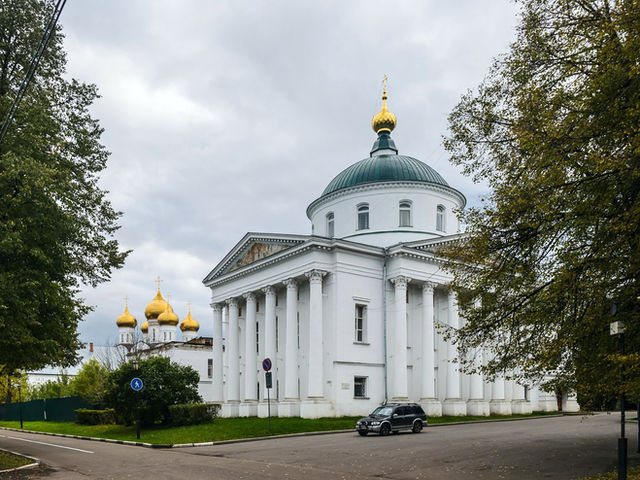
A green-and-gold church rising over a wide bend of the Volga, its walls inside a swirl of faded frescoes, and a riverside promenade where the whole town comes to walk on a summer evening.

The grandest of the Golden Ring towns: a thousand-year-old merchant city where the Volga meets the Kotorosl, its skyline a run of green-domed churches whose interiors are painted floor to ceiling with 17th-century frescoes.

Type
city
Ideal length
~approx 1–2 days
Getting around
an easily walkable historic centre, with trams and buses beyond it
Neighbourhoods
4 areas
Best season / months
May to September for mild weather and river life
Language
Russian (Cyrillic signage; limited English)
Currency
Russian rouble (₽)
Budget level
low to moderate — cheaper than the capitals
Good for
  • History
  • Architecture
  • Orthodox art
  • Slow travel
▸ Discover

About Historical Centre of the City of Yaroslavl

Yaroslavl stands on the high right bank of the Volga where the smaller Kotorosl River joins it, about 250 km northeast of Moscow — the traditional heart of the Golden Ring of old Russian towns. Founded, tradition says, by Prince Yaroslav the Wise in 1010, it grew rich in the 17th century as a Volga trading hub, and its merchants poured their money into churches, leaving one of the finest concentrations of that era's architecture and mural painting anywhere. After a fire, Catherine the Great had the centre rebuilt on a radial-circular plan of squares and classical facades, and that planned old town — laid over the medieval churches — is now a UNESCO World Heritage site. It is compact, walkable and best seen on foot.

Why go

This is where Russia's 17th-century church-building reached its peak, and Yaroslavl still holds it in quantity: whole interiors of fresco, tiled friezes, and clusters of onion domes over the river. It is also a rare, coherent example of an Enlightenment-era town plan wrapped around a medieval core, which is what earned the UNESCO listing. Add the broad Volga, a long riverside promenade and a walkable scale, and it is the single best day or two you can give the Golden Ring.

Don't miss

  • Church of Elijah the Prophet — 17th-century frescoes under green domes
  • Spassky (Transfiguration) Monastery — the walled medieval core
  • The Strelka — the Volga and Kotorosl confluence park
  • The Volga embankment and its rotunda — the riverside walk
  • Church of St John the Baptist, Tolchkovo — the 15-domed brick church on the banknote

Signature experiences

Church interiors and frescoes — Yaroslavl's genius is on the inside. The Church of Elijah the Prophet keeps one of the most complete cycles of 17th-century wall painting in Russia, its every surface covered in scenes; the Church of St John the Baptist in the Tolchkovo quarter across the Kotorosl carries fifteen domes and a famous painted interior — the church you may recognise from the old 1,000-rouble note. **The Volga and its promenade** — The river is the reason the city exists, and the terraced embankment is where you feel it. Walk from the Strelka along the top of the bank past the rotunda and the merchants' houses, drop to the water for a river-boat in summer, and watch the light change over the far, low forested shore. **A walk through the Golden Ring's grandest town** — Yaroslavl rewards simply crossing it on foot: the radial plan from Sovetskaya Square, the monastery walls at Bogoyavlenskaya, the small churches tucked between classical facades. It is a lesson in how a medieval Russian town was reordered by Enlightenment planners without losing its churches.

Neighbourhoods

Historical Centre of the City of Yaroslavl neighbourhood by neighbourhood — the character of each and who it suits.

  • The Strelka

    The spit of land where the Kotorosl flows into the Volga — the exact spot the city was founded, now a terraced park dropping to the water.

    Why go
    The founding site, the best river views, and the millennium monument.
    Best for
    River viewsa first orientationan evening walk
    Known for
    The Strelka park and its fountains, the monument to the city's 1000th anniversary, the rebuilt Assumption Cathedral, and the panorama across both rivers.
  • Sovetskaya Square

    The hub of Catherine the Great's radial street plan — a formal square from which the old town's avenues fan out, with the city's single most celebrated church at its centre.

    Why go
    The Church of Elijah the Prophet and the classical heart of the town.
    Best for
    Frescoesarchitecturethe town's core sights
    Known for
    The Church of Elijah the Prophet with its near-complete 17th-century frescoes, the governor's-era facades ringing the square, and the radiating streets of the UNESCO plan.
  • Bogoyavlenskaya Square

    The Kotorosl-side square built around the fortified monastery that was the city's stronghold and treasury for centuries.

    Why go
    The Spassky Monastery walls and the oldest surviving buildings in town.
    Best for
    Medieval historymonastery museumsthe bear symbol
    Known for
    The Spassky (Transfiguration) Monastery and its cathedral, the tiled Epiphany Church, the equestrian statue of Yaroslav the Wise, and the museum's live mascot honouring the bear on the city's coat of arms.
  • Volga Embankment

    The long classical promenade along the top of the Volga bank, lined with merchants' mansions and museums, where the town takes its evening stroll.

    Why go
    The riverside walk, the art museum and a string of small churches above the water.
    Best for
    A slow riverside afternoonmuseumscafés
    Known for
    The riverside rotunda arbour, the Yaroslavl Art Museum in the former governor's house, the Church of St Nicholas Nadein, and the leafy promenade running the length of the old town.

Views & hidden gems

Best views

  • The Strelka terraces at sunset, with both rivers meeting below
  • The Volga rotunda arbour framing the river
  • The monastery bell tower for a rooftop view over the domes

Hidden gems

  • The Church of St John the Baptist in Tolchkovo — fifteen domes and the banknote view, a walk across the Kotorosl
  • The Church of St Nicholas Nadein — one of the earliest merchant churches, with a rare surviving iconostasis
  • The Museum of Music and Time — a private collection of clocks, bells and gramophones on the embankment
  • The Vlasyevskaya and Znamenskaya gate towers, the last of the old town's defensive walls

Food & drink

Yaroslavl eats hearty Russian home cooking, with the Volga adding freshwater fish to the table. Expect soups and dumplings, pancakes and pickles, and the sweet things the Golden Ring is known for — honey cakes, gingerbread and mead, a legacy of the old trading towns. The cafés and restaurants cluster around Sovetskaya Square, the pedestrian Kirov Street and the embankment. It is an easy, cheap place to eat well and simply.

  • Ukha — a clear Volga fish soup
  • Pelmeni — boiled meat dumplings with sour cream
  • Blini — pancakes with jam, honey or sour cream
  • Medovukha — a light fermented honey drink from the Golden Ring towns
  • Pryaniki — spiced honey gingerbread
  • Kvass — cold fermented rye, drunk in summer
Dietary notes

The Orthodox fasting tradition means "lean" vegetable, mushroom and grain dishes are widely understood, which helps vegetarians; vegan and strict gluten-free options are thinner and best confirmed ahead. Halal and kosher are limited in a town this size — check in advance if it matters.

Historical Centre of the City of Yaroslavl in photos

▸ Where you'll stay

Where you'll stay in Historical Centre of the City of Yaroslavl

The historic centre is small enough that staying anywhere inside Catherine's radial plan puts you within walking distance of everything. Around Sovetskaya Square and the pedestrian Kirov Street you are among the sights, the cafés and the evening life. Closer to the Volga embankment you trade a slightly quieter setting for the river on your doorstep. Budget rooms sit further out along the tram lines but stay a short ride from the core.

  • Budget
    Out along the tram lines simple hotels and hostels, a short ride to the centre.
  • Mid-range
    Around Kirov Street / Sovetskaya Square walkable to every sight, with the cafés at the door.
  • Luxury
    Near the Volga embankment the smarter riverside hotels, steps from the promenade.
Stay

Hotels & rentals around Historical Centre of the City of Yaroslavl

Pan, zoom and compare live prices — every stay in one map.

▸ Getting around

Getting around Historical Centre of the City of Yaroslavl

The historic centre is flat and small enough to cover entirely on foot. Trams, trolleybuses and buses reach the outer districts and the stations; a car is unnecessary in the old town.

The Strelka, Sovetskaya Square, Bogoyavlenskaya Square and the embankment are all within a short walk of each other (~approx). Tolchkovo and the fifteen-domed church are across the Kotorosl — a longer walk or a short bus hop.

▸ Plan your days

Suggested itineraries

Ready-made day plans for Historical Centre of the City of Yaroslavl — from a single day to a long weekend.

One day

Start at the Strelka for the river confluence and the millennium monument, then walk up to Sovetskaya Square for the frescoes of the Church of Elijah the Prophet. Cross to Bogoyavlenskaya Square for the Spassky Monastery and the Yaroslav the Wise statue, then finish along the Volga embankment past the rotunda and the art museum as the light drops.

Two days

Give day two to the details. Cross the Kotorosl to the Tolchkovo quarter for the fifteen-domed Church of St John the Baptist, come back for the small merchant churches like St Nicholas Nadein, and spend the afternoon slowly along the embankment — the Museum of Music and Time, a river boat if it's running, and a last walk through Catherine's radial streets.

▸ What you'll do

Insider tips

  • Cyrillic-only signage is normal away from the main square — a bilingual map helps.
  • Yaroslavl is an easy train run from Moscow's Yaroslavsky Station and pairs naturally with Rostov Veliky and Kostroma if you have longer.
  • Several churches double as museums with separate tickets and their own closing days — check the day you visit.
Explore

Explore the area

© OpenFreeMap · OSM · terrain Mapterhorn
Do

Local attractions & tours

Skip-the-line tickets and small-group tours in Historical Centre of the City of Yaroslavl — compare across our partners.

We're still curating hand-picked tickets and tours for Historical Centre of the City of Yaroslavl. In the meantime, the map above and the nearby cities are a great place to start.

▸ Budget

What it costs in Historical Centre of the City of Yaroslavl

Backpacker
roughly ₽2,000–3,500 a day.
Mid-range
roughly ₽5,000–9,000 a day.
Luxury
₽15,000 a day and up.
Cash vs card
Foreign-issued cards generally do not work in Russia under current sanctions; the money situation must be checked before travelling.
Tipping
Rounding up or roughly 10% at restaurants is the usual courtesy, not expected elsewhere.
▸ When you'll go

When to visit Historical Centre of the City of Yaroslavl

May to September for mild weather and river life

Spring

What to expect — A late, muddy thaw into April, greening and drying through May as the river ice clears. Cool but brightening, and quiet before the summer visitors.

What's best — Fresh light on the domes, the embankment reopening, and the churches to yourself.

Summer

What to expect — Warm, long days and the town at its liveliest — river boats running, the promenade busy in the evenings, and the main season for visitors and festivals.

What's best — River trips on the Volga, outdoor cafés, the Strelka fountains, and the fullest programme of what's on.

Autumn

What to expect — Cooling and often wet, gold turning to grey through October, with the summer crowds gone.

What's best — Autumn colour along the embankment, warm church interiors, and the calmest time to see the frescoes.

Winter

What to expect — Long, cold and snowy, with short daylight. The town looks its most Russian under snow, though river life stops.

What's best — Snow on the green domes, cosy church and museum visits, and New Year lights on the squares.

▸ Know before you go

Know before you go

Before you go — official advisories

Check your own government's current travel advice for Russia before planning — guidance and entry rules change, and this guide does not assess present-day safety.

Most nationalities need a Russian visa; confirm the current process and any e-visa eligibility well ahead.

Sanctions affect flights, banking and foreign card use in ways that shift over time — verify the current practicalities before committing.

Honest swaps

Skip trying to "do" the whole Golden Ring in a rushed day → Yaroslavl alone, walked slowly, gives you more than a coach circuit of five towns.

Skip photographing churches only from outside → the frescoes inside Elijah the Prophet are the actual point; buy the interior ticket.

Crowds & timing

Summer weekends and the river-cruise season bring day-trippers to the Strelka and Sovetskaya Square — early morning is calmest for photos.

Church museums keep short hours and close days that vary — check before a tight schedule.

Money

Foreign cards are widely unusable under current sanctions; research the cash-and-payment reality carefully before arriving.

▸ Ready to book your trip?

Getting there

Yaroslavl is an easy train from Moscow's Yaroslavsky Station (~approx 3–4 hours by fast train) and sits on the main line north; the town has two stations, Yaroslavl-Glavny and Yaroslavl-Moskovsky. The small local airport (IAR) has limited service.

Book

Ready to book your trip?

Flights, airport transfers and car hire — search and compare without leaving the page.

▸ Trip extras
Book

More trip extras

Parking, holiday extras, and more — coming soon.

Coming soon

We're lining up parking, holiday extras and activities you'll be able to add to any trip from here.