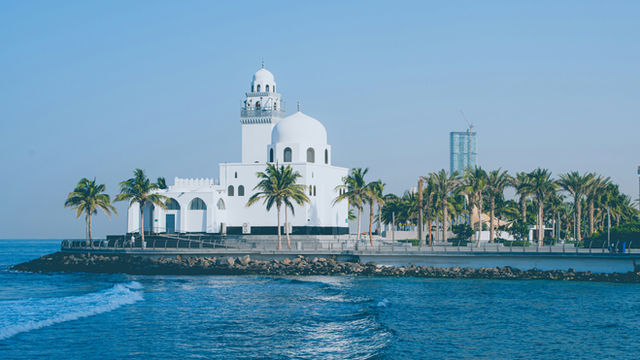
Saudi Arabia — hero
← All destinations Country

Saudi Arabia

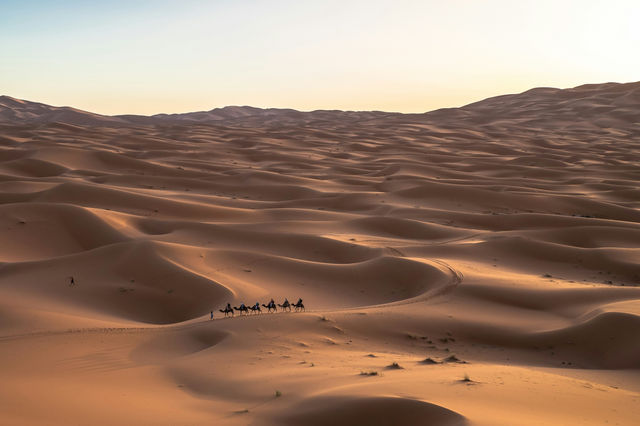
The Arabian frontier newly opened to the world — ancient Nabataean tombs, vast deserts, Red Sea reefs, and futuristic cities in one epic land.

  • Currency ر.س Saudi Riyal (SAR)
  • Language Arabic
  • Best time November – April
  • Visa ETA required from 1 Jul 2026 (up to 180 days/yr)
Why visit

Why Saudi Arabia

The Arabian frontier newly opened to the world — ancient Nabataean tombs, vast deserts, Red Sea reefs, and futuristic cities in one epic land.

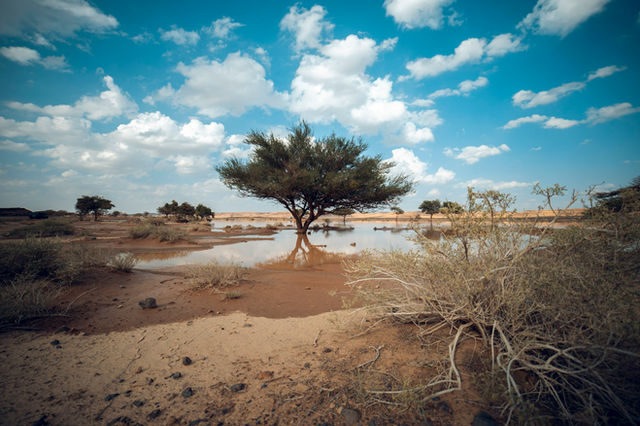
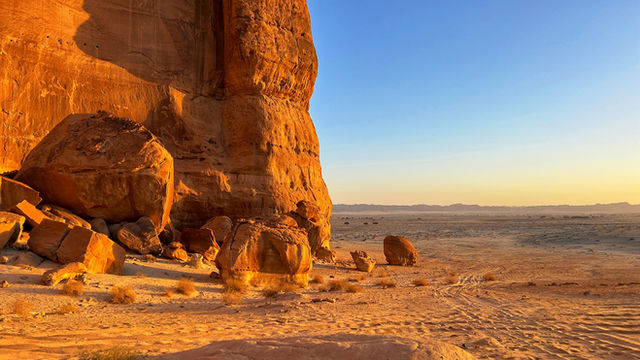
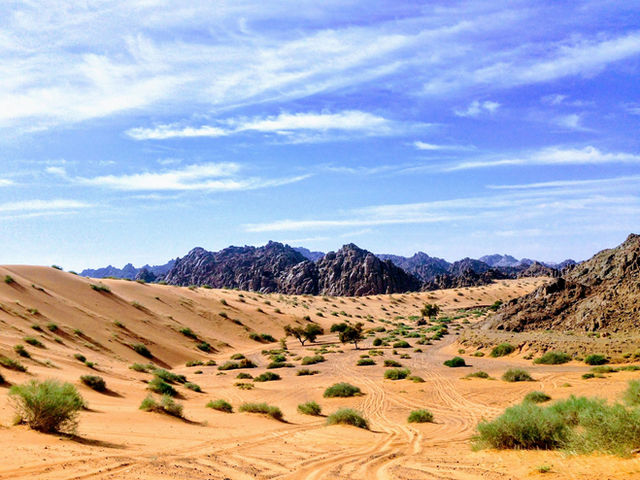
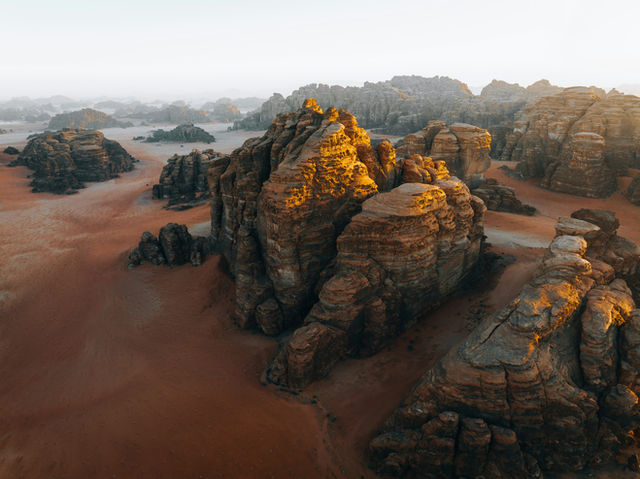
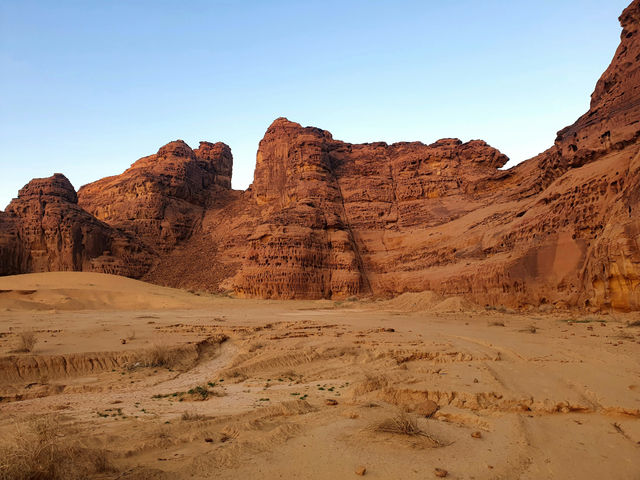
  • AlUla desert & the Hegra Nabataean tombs
  • Edge of the World cliffs near Riyadh
  • Historic Diriyah & Red Sea diving
  • Jeddah's old town (Al-Balad)
Read more

Saudi Arabia is one of travel's most dramatic new frontiers — a vast land of golden deserts, Red Sea reefs, and ancient wonders that only recently opened its doors to leisure visitors with a straightforward tourist e-visa.

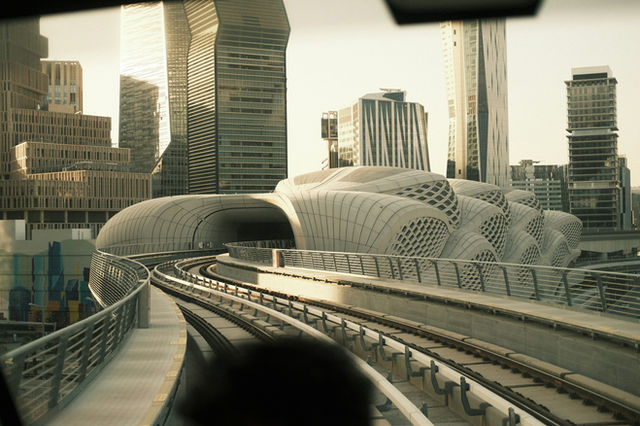
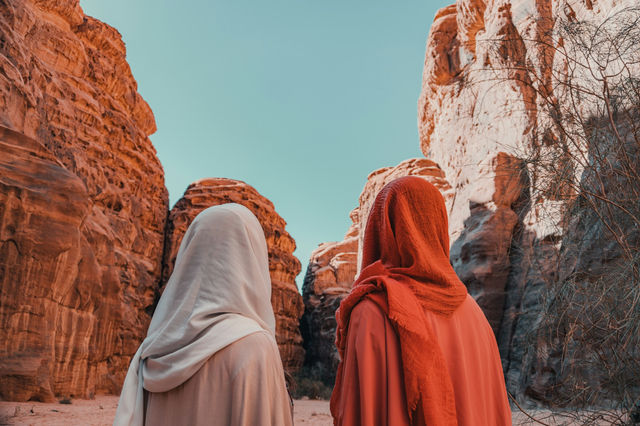
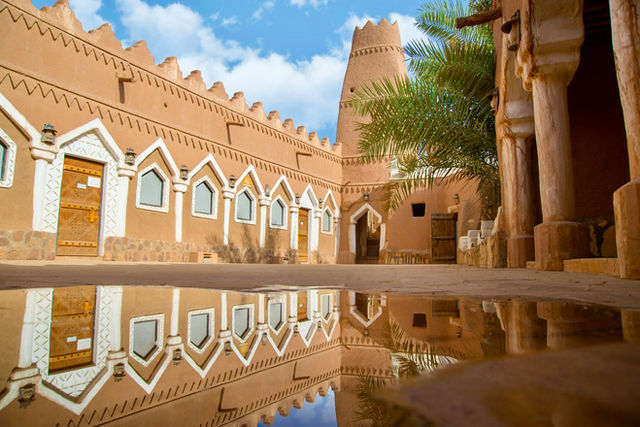
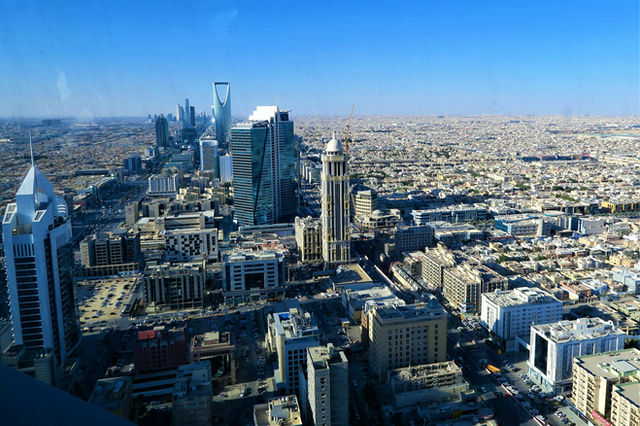
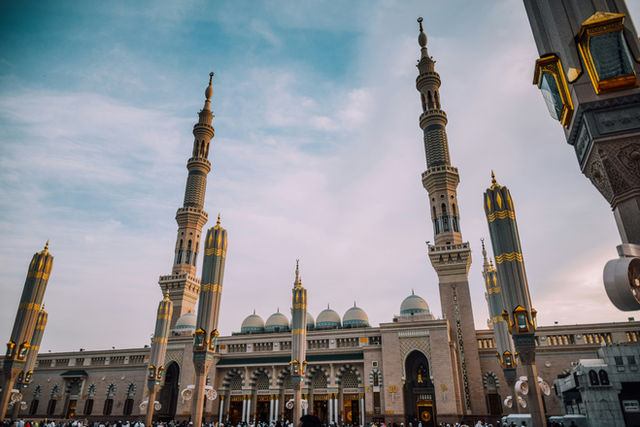
Marvel at the Nabataean tombs of AlUla and Hegra, wander the palm oases and old towns, and feel the pace of change in fast-rising cities like Riyadh and Jeddah, gateway to Islamic heritage.

From desert soft adventure and stargazing to world-class diving, it rewards the curious traveller ready to explore somewhere genuinely undiscovered — with cultural sensitivity and a spirit of respect.

A pillar, not a footnote

Eat your way through Saudi Arabia

The single reason many travellers come back — the food culture worth reshaping a trip around, and the dishes to seek out region by region.

Saudi Arabia

A kingdom that eats by hand from one great platter — pit-smoked meat, saffron rice, cardamom coffee and dates.

Sit down to eat in Saudi Arabia and the meal arrives as one shared landscape: a vast platter of kabsa, long-grain rice stained with saffron and loomi (dried lime), a whole roast chicken or lamb buried in the middle, and everyone reaching in with the right hand. This is desert hospitality made edible — generous, communal, unhurried.

The real cooking hides in homes and in the Hejaz. Look for mandi, meat lowered into an underground oven until it slides off the bone, and creamy Medinan saleeg, rice cooked soft in broth like a savoury pudding. On the street it is Levantine — shawarma turning on the spit, foul and falafel at dawn. There is no wine here; the ritual is qahwa, thin green cardamom coffee poured from a long-spouted dallah, chased with a sticky Ajwa date. Come for the pilgrimage cities and the new desert of AlUla; stay for the plate that everyone shares.

Dishes to seek out
  • Kabsa (saffron rice with meat)
  • Mandi (pit-oven lamb)
  • Saleeg (creamy Hejazi rice)
  • Jareesh (crushed-wheat porridge)
  • Mutabbaq (stuffed fried pancake)
  • Qahwa (cardamom coffee)
  • Dates
Things to do

Nature, culture & hidden gems

Editorial content coming soon

We're hand-picking the standout places, hidden gems and can't-miss activities in Saudi Arabia. Meanwhile, the cities above are a great starting point.

Plan your trip

Curated Saudi Arabia itineraries

Browse all Saudi Arabia trips →
When to go

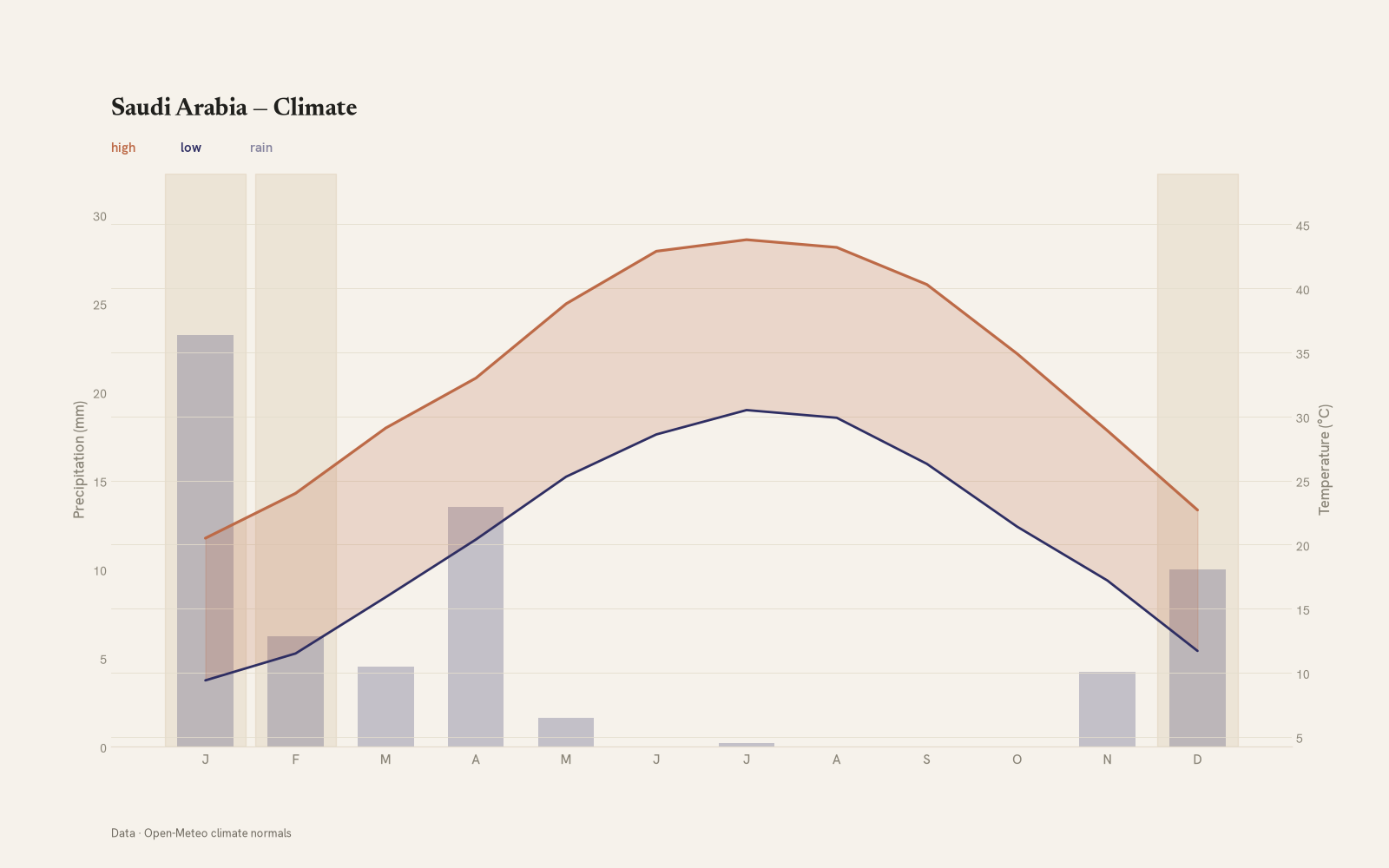
Weather & timing in Saudi Arabia RIGHT NOW 45° clear

Best Dec–Feb · Shoulder Mar–Apr, Nov

  1. Jan / -4°
  2. Feb / -2°
  3. Mar 12° /
  4. Apr 18° /
  5. May 24° / 14°
  6. Jun 28° / 18°
  7. Jul 30° / 20°
  8. Aug 28° / 18°
  9. Sep 24° / 14°
  10. Oct 18° /
  11. Nov 12° /
  12. Dec / -2°

Best time to visit

November – April

Best for
  • AlUla
  • Red Sea
  • Deserts
  • Heritage Cities
At a glance
Sunshine 7 hr/day (est.)
Rain days 8 days/mo (est.)
Wettest December · 60mm
Driest June · 10mm
Part of Gulf →
By season
Spring (Mar–May)

What to expect — Daytime highs average about 18°C with overnight lows near 8°C, and it stays largely dry.

What's best — Mar and Apr are comfortable, with thinner crowds.

Summer (Jun–Aug)

What to expect — Daytime highs average about 29°C with overnight lows near 19°C, and it stays largely dry.

What's best — Peak heat and the biggest crowds — many travellers prefer spring or autumn.

Autumn (Sep–Nov)

What to expect — Daytime highs average about 18°C with overnight lows near 8°C.

What's best — Nov is comfortable, with thinner crowds.

Winter (Dec–Feb)

What to expect — Daytime highs average about 7°C with overnight lows near -3°C.

What's best — Dec, Jan and Feb are among the best time to visit — good weather with manageable crowds.

A little context

A little history

To read what you're looking at — the empires and eras that shaped Saudi Arabia's food, art and streets.

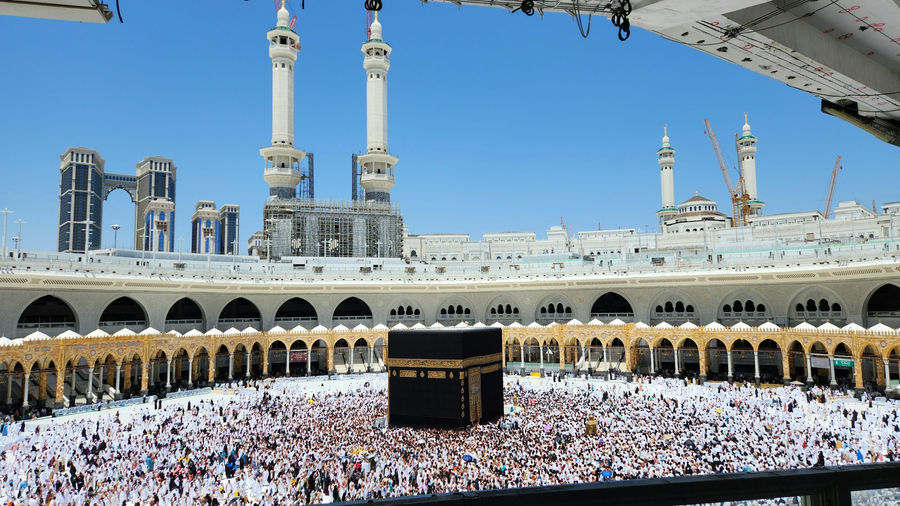
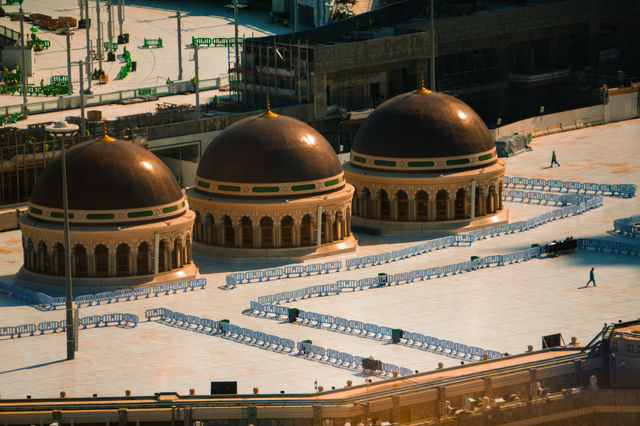
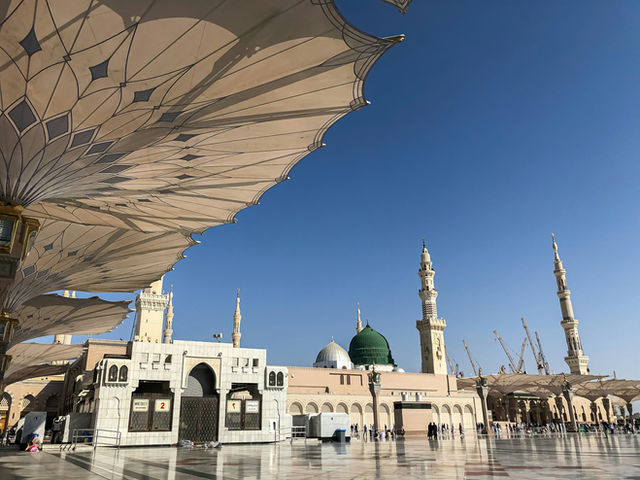
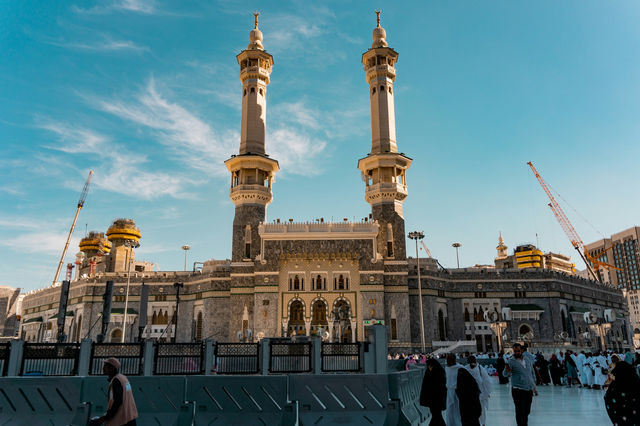
Mecca and Medina, the birthplace of Islam, make the kingdom guardian of the two holy mosques and host to millions of Hajj and Umrah pilgrims each year
unified only in 1932 by Abdulaziz Ibn Saud, it remains a young state under a single ruling dynasty
oil struck at Dammam in 1938 funded the leap from desert emirate to skyline nation and now bankrolls the Vision 2030 diversification push
leisure tourist visas opened only in 2019, which is why AlUla, the Hegra tombs and the Red Sea feel newly discoverable.
Before you book

Know before you go

The practical back-matter — safety, drones and the essentials, in one place.

Safety

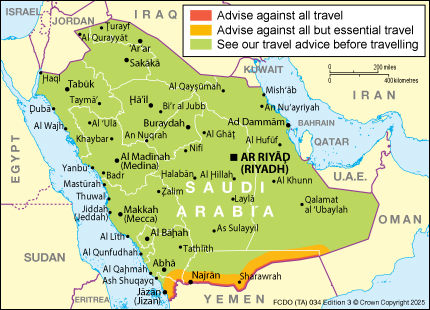
Moderate — check FCDO advice FCDO advice →

Official UK Foreign, Commonwealth & Development Office guidance is the definitive source — check it close to your travel dates.

Drone rules (sub-250g)

  • Saudi Arabia
    Not a casual-drone destination. GACA's registration portal needs a Saudi ID or residence permit, so a visiting tourist has no way to register or fly, and camera drones are often held or refused at customs regardless of the sub-250g weight class — there's no tourist permit route. ⚠ Flying near Mecca and Medina, airports, military and government sites and the many security zones is prohibited on top of the national barrier; heritage sites such as AlUla require separate GACA filming permits arranged through a local fixer. Rules checked: Jul 2026

National parks, protected sites and religious/heritage venues often have their own rules and permits — always check the specific site before you fly.

The essentials

Plug & voltage Type A/B/F/G · 127/220V
Daily budget Mid-to-high (Gulf prices)
Region Western Asia