Serbia
Charcoal-grilled meat, clotted kajmak cream and homemade plum rakija — the Balkans at full, generous volume.
You smell a Serbian meal before you see it: charcoal smoke off the roštilj, the country's beloved grill. Out come ćevapi, little fingers of minced pork and beef, tucked into warm lepinja bread with raw onion, a spoon of roasted-pepper ajvar and a smear of kajmak, the clotted milk-skin cream that sits somewhere between butter and cheese. Nobody leaves hungry; that isn't how it works here.
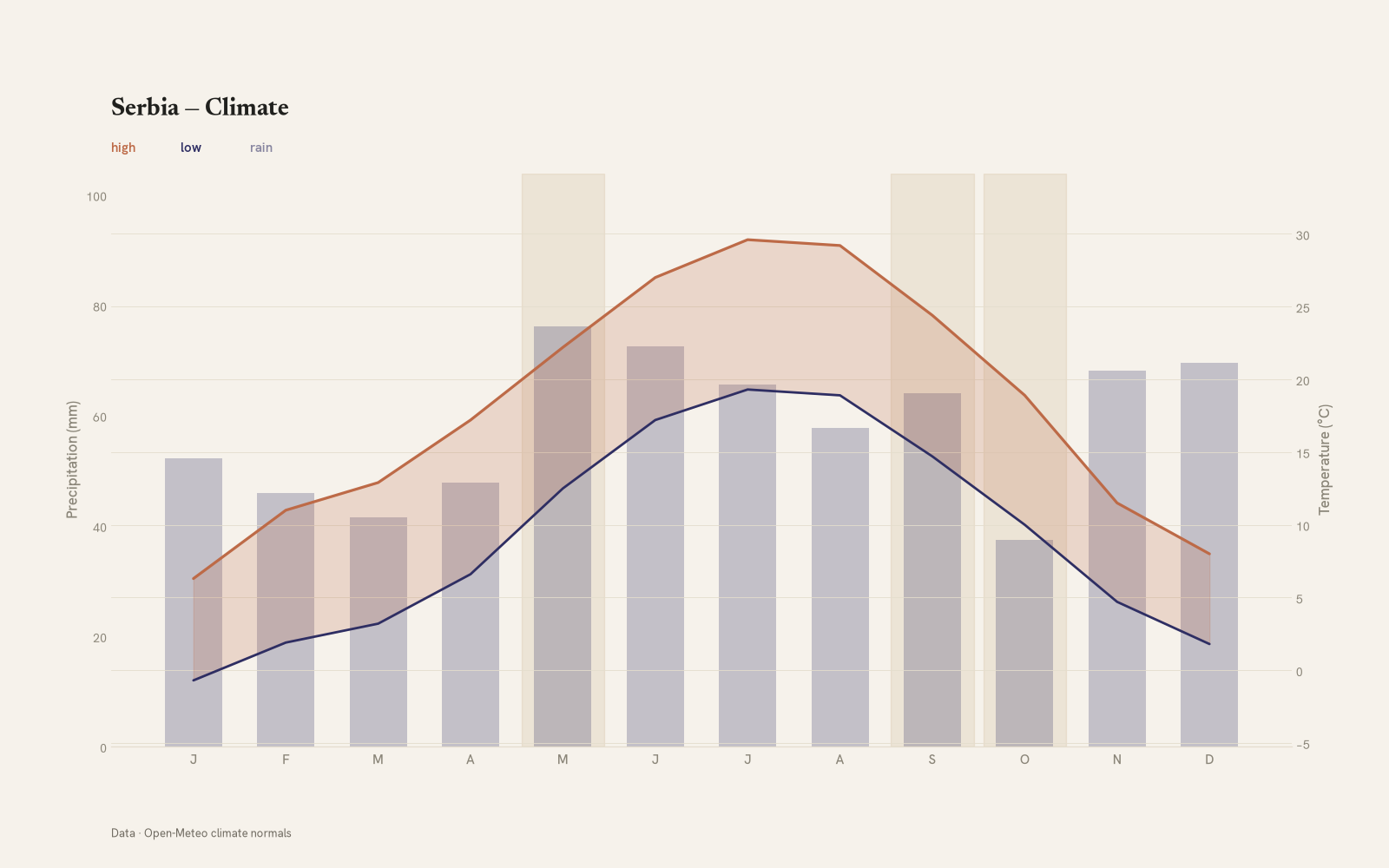
The country eats in three accents — paprika-rich Hungarian on the northern Vojvodina plains, pure charcoal grill in the centre, spicier Ottoman flavours in the south. Autumn is ajvar season, when whole families roast and jar peppers for the year and distil plum rakija in the yard. Sit down in a Belgrade kafana with a carafe of it and live Balkan music, and the meal turns into a night. Cheap, generous, unbothered by fashion.
- Ćevapi (grilled minced-meat fingers)
- Pljeskavica (Serbian burger)
- Karađorđeva šnicla (kajmak-stuffed schnitzel)
- Sarma (stuffed sour cabbage)
- Ajvar (roasted-pepper relish)
- Gibanica (cheese filo pie)
- Rakija (plum brandy)