


Tajikistan
Central Asia's mountain table — plov by the cauldron, torn bread in sour milk, and green tea poured all day.
The national dish of Tajikistan is meant to be eaten with your hands, from a plate everyone shares. Qurutob starts with flaky bread torn into a warm, tangy sauce of qurut — dried, reconstituted sour milk — then piled with vegetables and fried onions and set down in the middle of the table for the whole company to dig into. It's homely, a little sour, deeply Central Asian, and it tells you at once that this is a culture where food is shared and tea is never far away.
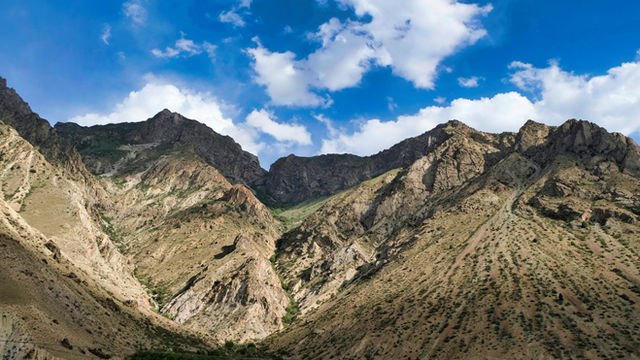
The other centrepiece is osh — the plov of the region — rice fried with mutton, carrots and fat in a wok-shaped kazan over an open flame, cooked in vast quantities for guests and celebrations. Round non flatbread, baked in a tandoor and stamped with patterns, is treated with real reverence: torn, never cut, and never set down upside-down. Everything runs on choy, green tea poured all day in the choyxona teahouse. Climb into the Pamirs, the 'Roof of the World', and the cooking turns to simple bread, dairy and warming stews; down in Khujand, the Panjshanbe Bazaar heaps up dried fruit, nuts and spices under one grand facade.
- Qurutob (bread in sour-milk sauce)
- Osh / plov (mutton rice pilaf)
- Non (stamped tandoor flatbread)
- Shashlik (grilled skewers)
- Mantu (steamed dumplings)
- Laghman (hand-pulled noodles)
- Sambusa (baked meat pastries)