Tuvalu — hero
← All destinations Country

Tuvalu

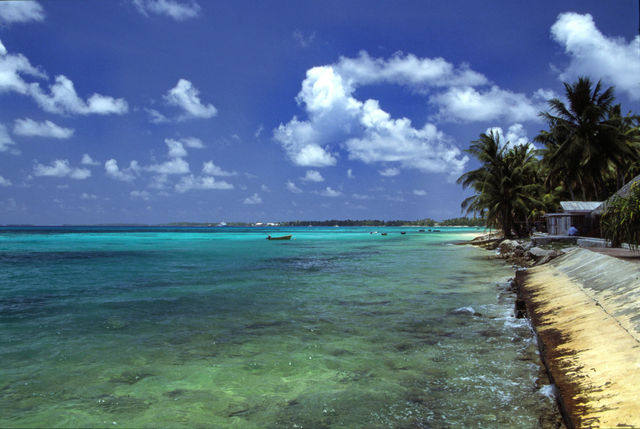
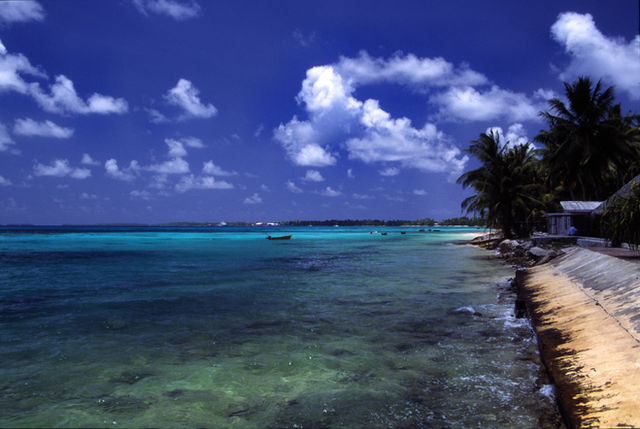
One of earth's least-visited nations: mirror-still lagoons, coral atolls barely metres above the sea, and a rare, profound taste of pristine Pacific isolation.

  • Currency $ Australian Dollar ($)
  • Language English, Tuvaluan
  • Best time March – May
  • Visa Visa on arrival (up to 30 days)
Why visit

Why Tuvalu

One of earth's least-visited nations: mirror-still lagoons, coral atolls barely metres above the sea, and a rare, profound taste of pristine Pacific isolation.

  • Funafuti Conservation Area lagoon and reef
  • The runway that doubles as the village green
  • Remote outer atolls like Nanumea
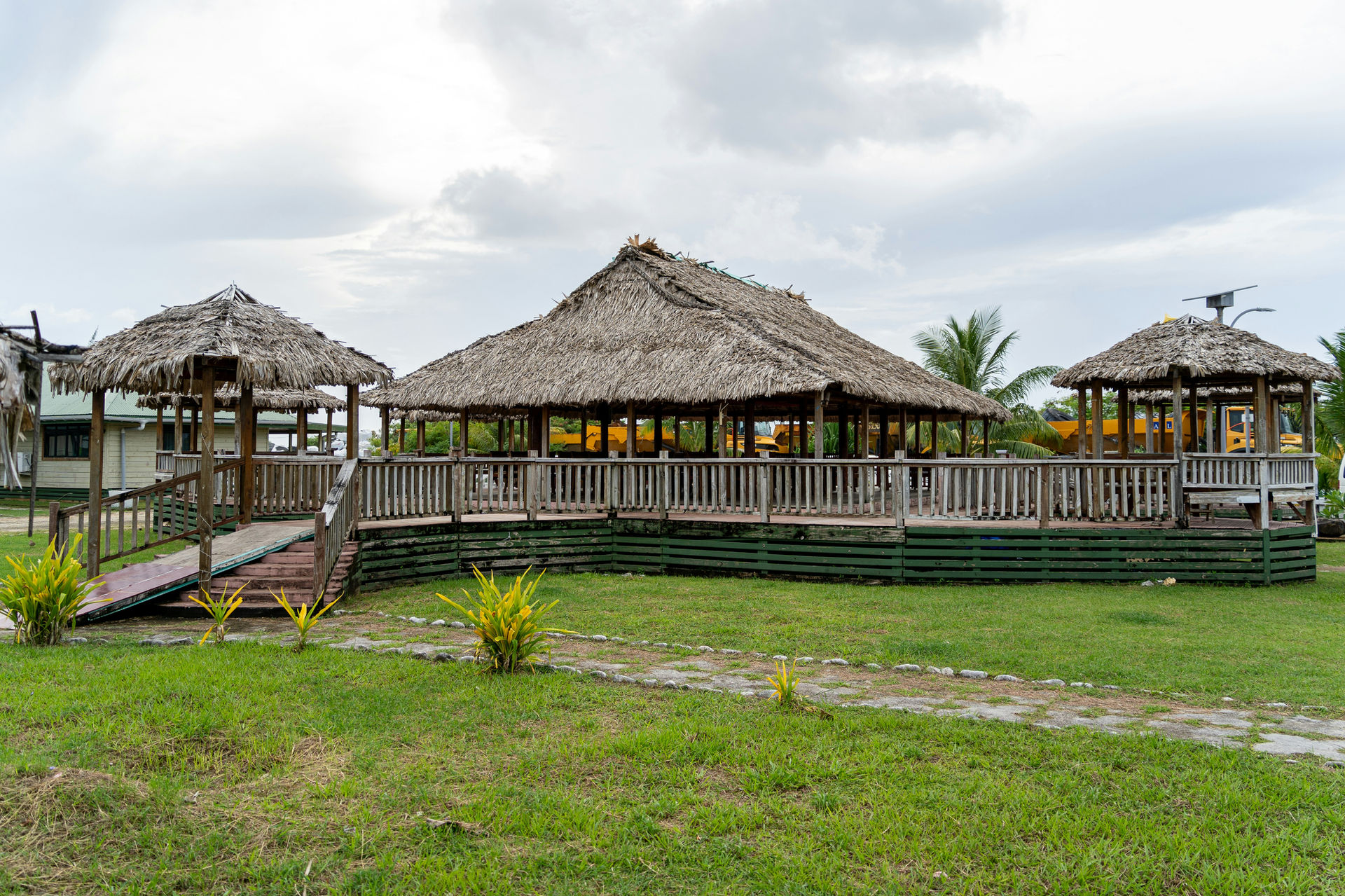
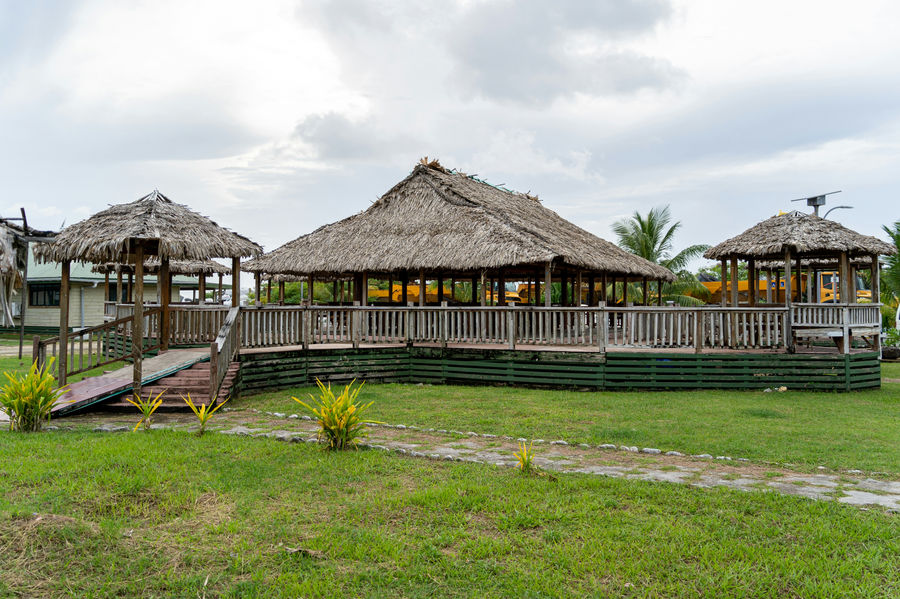
  • Everyday lagoon-fishing and maneapa life
Read more

Tuvalu is one of the world's most remote and least-visited countries, a scattering of tiny coral atolls in the vast Pacific. For travellers seeking true isolation and a deep sense of place, few destinations compare.

Life here revolves around the sea and the sky. Expect mirror-still lagoons, untouched reefs, warm island hospitality and the unhurried rhythm of a nation of just a few thousand people.

A global frontrunner in regenerative, conservation-first travel, Tuvalu invites mindful visitors to witness its beauty and resilience firsthand, an extraordinary, purposeful journey to the edge of the map.

A pillar, not a footnote

Eat your way through Tuvalu

The single reason many travellers come back — the food culture worth reshaping a trip around, and the dishes to seek out region by region.

Tuvalu

Swamp-taro pulaka, coconut-cream fekei, and lagoon fish — earth-oven cooking on nine tiny atolls.

Tuvalu is nine low coral atolls with almost no soil, so the food base is narrow and deeply tied to the land and lagoon. The national staple is pulaka, giant swamp taro grown for years in hand-dug pits that reach the freshwater lens, dense and slow-cooked; its signature form is fekei, grated pulaka blended with coconut cream and steamed in leaves into a subtly sweet pudding eaten across all nine islands. Reef fish, skipjack tuna and coconut crab supply most of the protein.

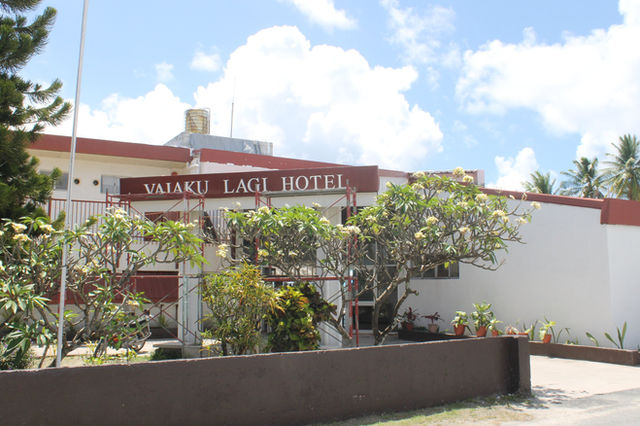
Coconut is everything here — water to drink, cream in nearly every dish, and sap tapped into kaleve toddy that's drunk fresh or fermented sour and baked into dense toddy bread. With so little land and only intermittent supply ships, imported rice and tinned fish have become everyday staples too. The best eating isn't in Funafuti's few lodges but at a falekaupule feast — umu-cooked pulaka and reef fish, shared communally with dance and song.

Dishes to seek out
  • Pulaka (giant swamp taro)
  • Fekei (swamp-taro-and-coconut pudding)
  • Reef fish and tuna
  • Coconut crab
  • Palusami (taro leaves in coconut cream)
  • Toddy bread (falafa)
  • Kaleve (coconut toddy)
Things to do

Nature, culture & hidden gems

Editorial content coming soon

We're hand-picking the standout places, hidden gems and can't-miss activities in Tuvalu. Meanwhile, the cities above are a great starting point.

Plan your trip

Curated Tuvalu itineraries

Browse all Tuvalu trips →
When to go

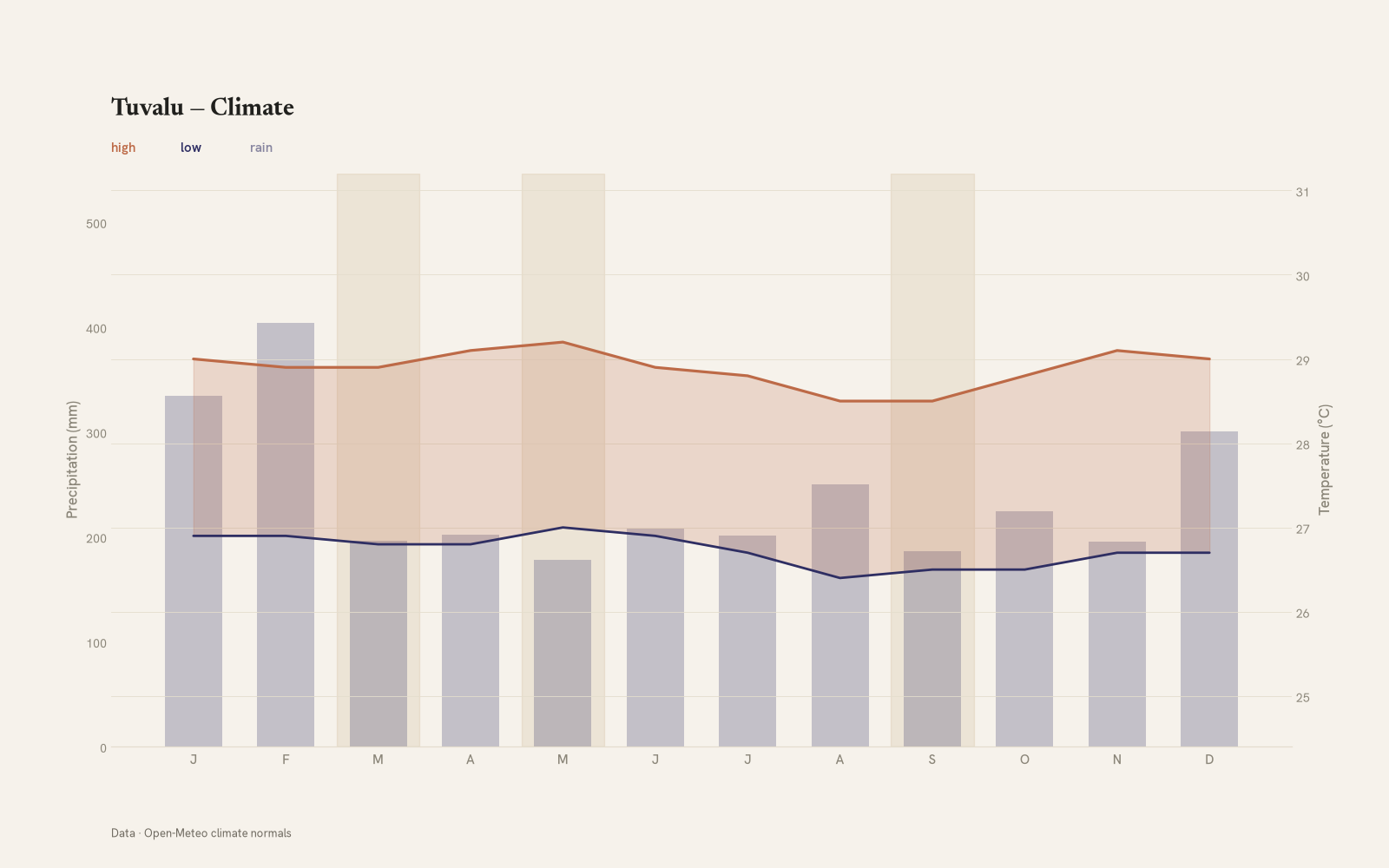
Weather & timing in Tuvalu RIGHT NOW 29° clear

Best Mar, May, Sep · Shoulder Apr, Jul, Nov

  1. Jan / -4°
  2. Feb / -2°
  3. Mar 12° /
  4. Apr 18° /
  5. May 24° / 14°
  6. Jun 28° / 18°
  7. Jul 30° / 20°
  8. Aug 28° / 18°
  9. Sep 24° / 14°
  10. Oct 18° /
  11. Nov 12° /
  12. Dec / -2°

Best time to visit

March – May

Best for
  • Culture
  • Cuisine
  • Landscape
  • History
At a glance
Sunshine 7 hr/day (est.)
Rain days 8 days/mo (est.)
Wettest December · 60mm
Driest June · 10mm
Part of Pacific Islands →
By season
Spring (Mar–May)

What to expect — Daytime highs average about 18°C with overnight lows near 8°C, and it stays largely dry.

What's best — Mar and May are among the best time to visit — good weather with manageable crowds. Apr also works well.

Summer (Jun–Aug)

What to expect — Daytime highs average about 29°C with overnight lows near 19°C, and it stays largely dry.

What's best — Jul is comfortable, with thinner crowds.

Autumn (Sep–Nov)

What to expect — Daytime highs average about 18°C with overnight lows near 8°C.

What's best — Sep is among the best time to visit — good weather with manageable crowds. Nov also works well.

Winter (Dec–Feb)

What to expect — Daytime highs average about 7°C with overnight lows near -3°C.

What's best — Cold and quiet; some mountain roads and sights run reduced hours.

A little context

A little history

To read what you're looking at — the empires and eras that shaped Tuvalu's food, art and streets.

Polynesian voyagers settled Tuvalu navigating by star, swell and bird, giving it a Polynesian culture distinct from its Micronesian neighbours
named the Ellice Islands, it was a British protectorate from 1892 and part of the Gilbert and Ellice colony from 1916
cultural difference from the Gilbertese drove a 1974 referendum to separate, and full independence came in 1978
among the world's smallest and lowest nations, it leased its .tv domain for royalties and is now a leading climate-advocacy voice
Before you book

Know before you go

The practical back-matter — safety, drones and the essentials, in one place.

Safety

Low risk FCDO advice →

Official UK Foreign, Commonwealth & Development Office guidance is the definitive source — check it close to your travel dates.

Drone rules (sub-250g)

  • Tuvalu
    Tuvalu has no published drone rules, so regional aviation-safety guidance applies by default with no functioning registration portal — a grey area rather than clearly permitted, best cleared with civil aviation first. ⚠ Funafuti's single runway doubles as the island's main public space — locals walk, play sport and socialise on it between the few weekly flights — so it's a sensitive area, not open-flying space; keep well clear of the airstrip and its schedule. Rules checked: Jul 2026

National parks, protected sites and religious/heritage venues often have their own rules and permits — always check the specific site before you fly.

The essentials

Plug & voltage Type I · 220V
Daily budget Mid-range to expensive
Region Polynesia