Everglades National Park
A vast subtropical wetland at Florida's tip — sawgrass 'river of grass', mangroves, alligators and wading birds.
- National park
- The dry season from about December to April offers the best wildlife viewing, cooler comfort and far fewer mosquitoes.
- MIA
- 2-3 days
About Everglades National Park
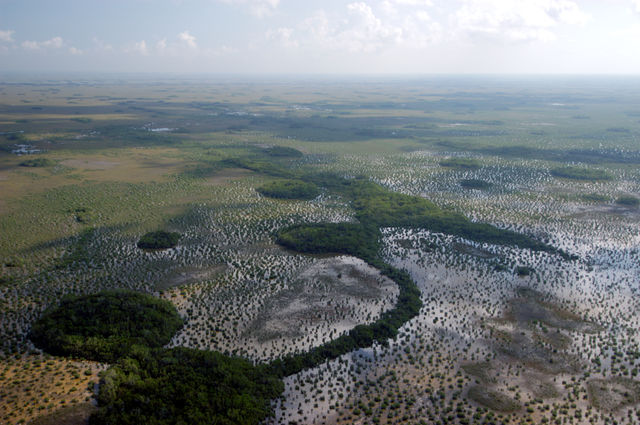
The Everglades is like nowhere else on Earth: a vast, slow-moving sheet of shallow water, often called the River of Grass, that creeps almost imperceptibly across the southern tip of Florida toward the sea. It is not a swamp but a unique subtropical wetland ecosystem, a mosaic of sawgrass marshes, mangrove forests, pine woodland and cypress domes, and it is the only place on the planet where alligators and crocodiles coexist.
A living river of grass
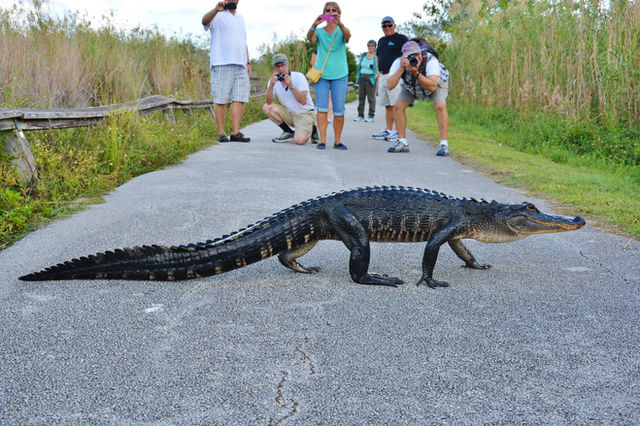
This is one of the great wildlife spectacles of North America. Alligators bask along the trails, wading birds stalk the shallows in their thousands, and elusive creatures such as manatees and the endangered Florida panther move through the wilderness. Recognised internationally for its ecological importance, the park is a refuge under pressure, its survival tied to the delicate flow of water through the region. For a UK family raised on nature documentaries, walking a boardwalk with wild alligators just below and roseate spoonbills overhead is the real thing, up close and utterly memorable.
Why go
The Everglades delivers wildlife encounters that feel almost impossibly rich. Within minutes of setting off along the Anhinga Trail you are likely to be looking at wild alligators lounging metres away, herons spearing fish, turtles sunning themselves and birds in every direction. For teenagers weaned on wildlife films, seeing it all unfold for real, without a fence in sight, is genuinely electrifying.
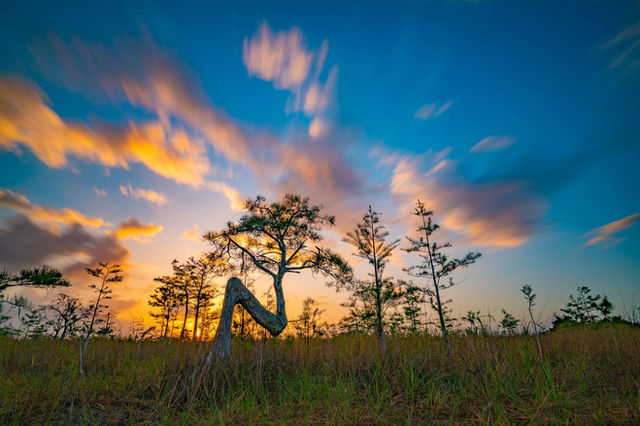
Beyond the headline reptiles, the park works a subtler magic: the enormous, flat, luminous landscape of sawgrass stretching to the horizon, the eerie beauty of the mangrove tunnels, the blaze of a subtropical sunset, and a birdlife so abundant it can stop you in your tracks. Whether you walk the boardwalks, paddle a kayak through the mangroves or take a boat into Florida Bay, the Everglades leaves you feeling you have seen wild Florida as it was meant to be.
Highlights
- Alligators
- Anhinga Trail
- River of Grass
- Mangrove kayaking
- Wading birds
- Shark Valley
- Manatees
- Subtropical wetland
- Sunset views
Everglades National Park in photos








Where you'll stay in Everglades National Park
Live map of hotels and villas around Everglades National Park — powered by Stay22. Pan, zoom and compare live prices to pick your base.
Hotels & rentals around Everglades National Park
Pan, zoom and compare live prices — every stay in one map.
Getting around Everglades National Park
Getting around the Everglades means driving, as the park is large and its main areas are far apart, linked by long park roads rather than any shuttle system. The principal route runs from the Homestead entrance down to Flamingo on Florida Bay, passing trailheads, boardwalks and viewpoints along the way; other entrances, such as Shark Valley and the Gulf Coast, are reached separately and can be an hour or more apart by road. You will need a hire car throughout. Within each area you explore on foot along boardwalks and short trails, by bicycle at Shark Valley, or by kayak and boat tour in the mangroves and bay. Distances add up, so pick one or two areas per day rather than trying to cover everything.
Public transport to and within the Everglades is very limited and not a realistic way for a family to visit. No regular buses serve the main entrances, and the park's scattered access points lie far apart across southern Florida. For a family of five, a hire car is essential, giving you the reach to get from your Miami, Fort Lauderdale or Naples base to the park and to move between its distant entrances and trailheads. It also lets you time your visits for dawn and dusk when wildlife is most active. Collect a car at the airport and plan to drive; there is no practical alternative here.
Insider tips
- Visit in the dry season, roughly late autumn to early spring, when wildlife concentrates around remaining water and mosquitoes are far fewer.
- The Anhinga Trail near the main entrance is the single best short walk for guaranteed close-up alligators and birds.
- Note that airboats operate outside the national park boundary, not within it; inside, choose kayaks, canoes or ranger boat tours.
- Bring serious insect repellent, especially outside the driest months, as mosquitoes can be relentless.
- The park has several distinct entrances far apart, so plan which area you want and don't expect to see them all in a day.
- Sunrise and dusk are the best times for wildlife activity and cooler temperatures.
- Carry water, sun protection and a hat, as shade is limited.
Frequently asked
How much does it cost?
A vehicle entrance fee applies and is valid for several days.
When is the best time to visit?
The dry season, roughly December to April, is best for wildlife viewing and comfort; the wet summer is hot, stormy and mosquito-heavy.
Can we camp or stay in the park?
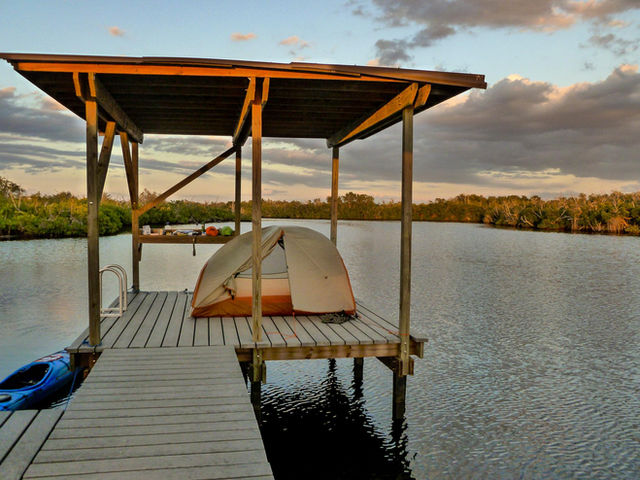
There are campgrounds within the park but no hotels; lodging is found in nearby Homestead, Miami and Everglades City.
Are pets allowed?
Pets are restricted, allowed only in limited areas such as car parks and roads, not on trails.
Is it accessible?
Several boardwalks and trails, including parts of the Anhinga Trail, are wheelchair-accessible.
Is it family-friendly?
Excellent for families; easy trails put dramatic wildlife within safe, close reach.
How do we get there?
Most visitors drive from Miami, Fort Lauderdale or Naples.
While you're there
-
 9 FEB Festivals & Celebrations See the event →
 -
 9 APR Music & Performing Arts See the event →
Explore the area
Local attractions & tours
Skip-the-line tickets and small-group tours in Everglades National Park — compare across our partners.
We're still curating hand-picked tickets and tours for Everglades National Park. In the meantime, the map above and the nearby cities are a great place to start.
When to visit Everglades National Park
The dry season from about December to April offers the best wildlife viewing, cooler comfort and far fewer mosquitoes.
The Everglades has two seasons rather than four. The dry season, roughly December to April, brings warm, pleasant days, lower humidity, fewer mosquitoes and the best wildlife viewing as animals gather around shrinking pools; this is the prime time to visit. The wet season, from about May to November, is hot, humid and stormy, with frequent afternoon downpours, swarms of mosquitoes and the regional hurricane risk. Pack light, breathable clothing, a hat, sunglasses, high-factor sun cream and strong insect repellent whatever the season, plus a rain layer. Sturdy, water-tolerant shoes are useful for damp boardwalks and trails.
Getting there
The Everglades is easily reached from several major Florida airports, all served from the UK by direct or one-stop flights. Miami International (MIA) is the most convenient for the main eastern entrances near Homestead, roughly an hour's drive; Fort Lauderdale (FLL) is a little further, and Naples (APF) or Fort Myers suit the park's western Gulf Coast side. From whichever airport you choose, hire a car for the drive to your chosen entrance. Because the park spreads across the bottom of Florida with widely separated access points, it pairs naturally with a broader Florida trip taking in Miami, the Keys or the Gulf Coast. A car is essential, both to reach the park and to move between its scattered entrances.
- Miami (MIA) — ~1 hr to the Homestead entrance
- Fort Lauderdale (FLL) — ~1.5 hrs to the Homestead entrance
- Naples (APF) — ~1 hr to the Gulf Coast entrance
Ready to book your trip?
Flights, airport transfers and car hire to MIA — search and compare without leaving the page.
More trip extras
Parking, holiday extras, and more — coming soon.
We're lining up parking, holiday extras and activities you'll be able to add to any trip from here.