Glacier Bay National Park & Preserve
An Alaskan seascape of calving tidewater glaciers, humpback whales and rainforest — a highlight of the Inside Passage.
- National park
- June to August, when weather is mildest, wildlife most active and boat tours are fully operating.
- GST
- 1-3 days (or a cruise-ship day)
About Glacier Bay National Park & Preserve
Glacier Bay is one of America's great wild frontiers: a vast, roadless expanse of tidewater glaciers, fjords, rainforest and open water in the panhandle of southeast Alaska. Just 250 years ago this whole bay was buried under a single immense glacier; that ice has retreated dramatically, revealing a landscape so young that plants are still colonising the newly bared rock. It is a living lesson in how land recovers after ice.
A park you meet from the water
There are no roads into the park's interior and almost no trails; Glacier Bay is experienced from the deck of a boat. Many visitors arrive by cruise ship, gliding past blue-white glacier faces that occasionally calve into the sea with a crack like thunder. Others base themselves at Bartlett Cove, the park's only developed corner, and take a day boat deeper into the bay. Humpback whales, orcas, sea otters, seals, sea lions and brown bears all thrive here. For a UK family, it is a genuine bucket-list encounter with Alaska at its wildest, best appreciated slowly, from the water, with binoculars in hand.
Why go
You come to Glacier Bay to watch a glacier calve into the sea and to feel the sheer, humbling scale of wild Alaska. This is not a park you hike; it is one you drift through, and that unhurried pace is exactly the point. Teenagers who have never seen a whale tend to fall silent when a humpback breaches beside the boat, or when a wall of ancient blue ice cracks and crashes into the water. The wildlife here is extraordinary, and the sense of remoteness is total; there are no crowds, no roads, no phone signal to distract from it. For a family flying the long way from London, it rewards the effort with a landscape that feels genuinely untouched, and memories that no theme park could ever manufacture.
Highlights
- Tidewater glaciers
- Glacier calving
- Humpback whales
- Orcas and sea otters
- Bartlett Cove
- Cruise-ship viewing
- Brown bears
- Inside Passage scenery
- Sea kayaking
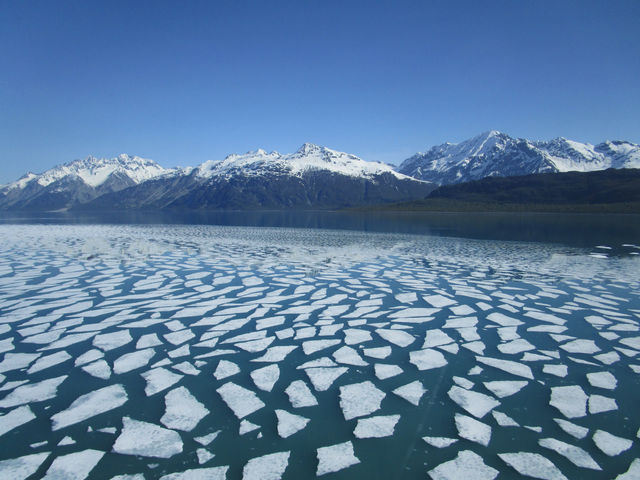
Glacier Bay National Park & Preserve in photos




Where you'll stay in Glacier Bay National Park & Preserve
Live map of hotels and villas around Glacier Bay National Park & Preserve — powered by Stay22. Pan, zoom and compare live prices to pick your base.
Hotels & rentals around Glacier Bay National Park & Preserve
Pan, zoom and compare live prices — every stay in one map.
Getting around Glacier Bay National Park & Preserve
Glacier Bay has virtually no roads and almost no trails, so getting around means getting on the water. The park's interior, its glaciers and fjords, can only be reached by boat: either a cruise ship passing through, or the day boat tour that departs from Bartlett Cove and heads deep into the bay to the tidewater glaciers. On land, activity is confined to the small developed area around Bartlett Cove, where a handful of gentle forest and shore trails connect the lodge, campground and visitor centre. There is a short road between Gustavus and Bartlett Cove, but no driving route into the park proper. Kayaking is popular for the adventurous, often with a drop-off from the day boat. In short, plan your visit around boat schedules rather than a car.
There is no meaningful road-based public transport at Glacier Bay, and no need for a hire car in the usual sense, because the park is water-based. Getting there relies on scheduled flights and ferries into Gustavus, or on a cruise-ship itinerary. Once at Bartlett Cove, everything centres on the lodge and the day boat, all within walking distance, so a car is largely unnecessary. A local shuttle or taxi may cover the short hop from Gustavus airport to Bartlett Cove. For a UK family, the practical model is fly-and-boat, not drive.
Insider tips
- Most people see Glacier Bay from a cruise ship; if that is your plan, choose an itinerary that actually enters the bay, as not all Alaska cruises do.
- To go independently, base at Bartlett Cove and take the day boat tour deep into the bay for the best glacier and wildlife viewing.
- Pack binoculars and a decent zoom lens; wildlife is often at a distance across the water.
- Dress in warm waterproof layers even in summer; boat decks are cold and often wet.
- Book the lodge or campground at Bartlett Cove well ahead, as options are extremely limited.
- Ranger-led boat programmes are excellent for families; the naturalists spot wildlife you would miss.
- The forest trails around Bartlett Cove are gentle and good for stretching legs between boat trips.
Frequently asked
Is there an entrance fee?
There is no entrance fee for Glacier Bay, though boat tours, lodging and cruise fares carry their own costs.
When is the best time to visit?
June to August, when the weather is mildest, wildlife most active and boat services fully running.
Is there camping or lodging?
Glacier Bay Lodge and a walk-in campground at Bartlett Cove are the only options inside the park; both need booking well ahead.
Are pets allowed?
Pets are restricted and not permitted on boat tours; check current rules before bringing one.
Is it accessible?
The lodge, visitor centre and day boats have some accessible facilities; the wild terrain beyond is limited.
Is it good for families?
Yes, especially for wildlife-loving teens, though it is boat-based and remote rather than active.
How do we get there?
Fly to Gustavus (GST) beside the park, or reach Juneau (JNU) then take a short flight or ferry across.
While you're there
-
 9 FEB Festivals & Celebrations See the event →
 -
 9 APR Music & Performing Arts See the event →
Explore the area
Local attractions & tours
Skip-the-line tickets and small-group tours in Glacier Bay National Park & Preserve — compare across our partners.
We're still curating hand-picked tickets and tours for Glacier Bay National Park & Preserve. In the meantime, the map above and the nearby cities are a great place to start.
When to visit Glacier Bay National Park & Preserve
June to August, when weather is mildest, wildlife most active and boat tours are fully operating.
Glacier Bay sits in a cool, wet coastal rainforest climate, so pack for rain whatever the season. Summers (June to August) are the mildest and driest window, though temperatures rarely climb much beyond the mid-teens Celsius, and rain is common; think warm waterproof layers, a fleece, a woolly hat and gloves for exposed boat decks. Spring and autumn are cooler and wetter still. Winters are dark, cold and largely inaccessible for visitors. Even on a bright summer day, the wind off the glaciers is bitter, so layer up, keep a waterproof to hand and bring binoculars protected from the spray.
Getting there
Glacier Bay is one of the harder US parks to reach independently, which keeps it wonderfully uncrowded. From the UK there are no direct options; most families connect through Seattle to Juneau (JNU), the regional hub of southeast Alaska. From Juneau you take a short scenic flight or a ferry across to the small community of Gustavus (GST), which sits right beside the park entrance at Bartlett Cove. The simplest route of all is to visit by cruise ship: many Inside Passage sailings enter Glacier Bay for a day of glacier viewing, requiring no separate logistics at all. If you are going independently, arrange your Gustavus flights, lodging and boat tour well in advance, as capacity is tiny. There are no roads connecting the park to the wider Alaskan road network.
- Gustavus (GST) — ~10 min to Bartlett Cove
- Juneau (JNU) — short flight or ferry to Gustavus
Ready to book your trip?
Flights, airport transfers and car hire to GST — search and compare without leaving the page.
More trip extras
Parking, holiday extras, and more — coming soon.
We're lining up parking, holiday extras and activities you'll be able to add to any trip from here.