Great Smoky Mountains National Park
America's most-visited park — mist-wreathed Appalachian ridges, wildflowers, black bears and synchronous fireflies on the Tennessee–Carolina line.
- National park
- Spring for wildflowers and autumn for foliage are the standout seasons; summer is lush but humid and crowded, winter quiet and atmospheric.
- TYS
- 2-4 days
About Great Smoky Mountains National Park
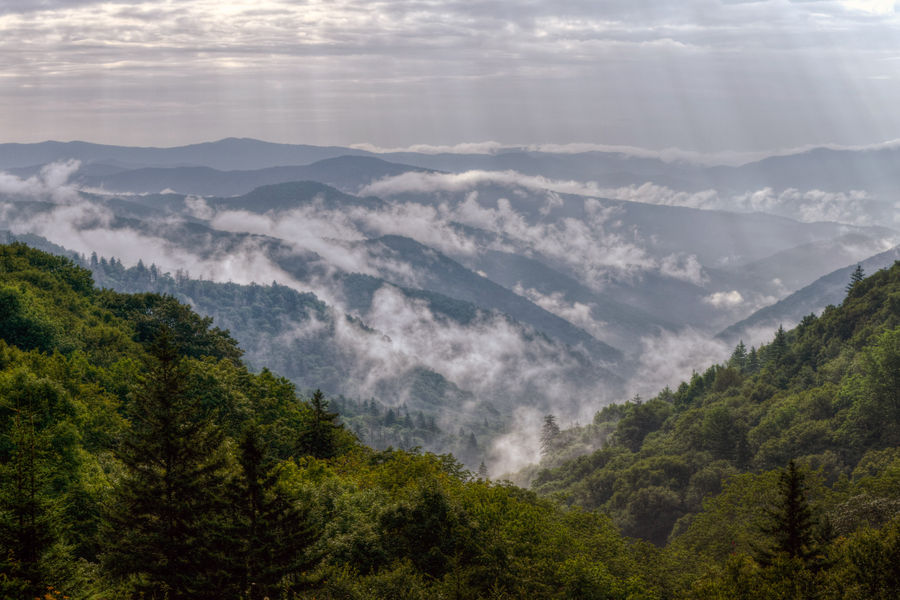
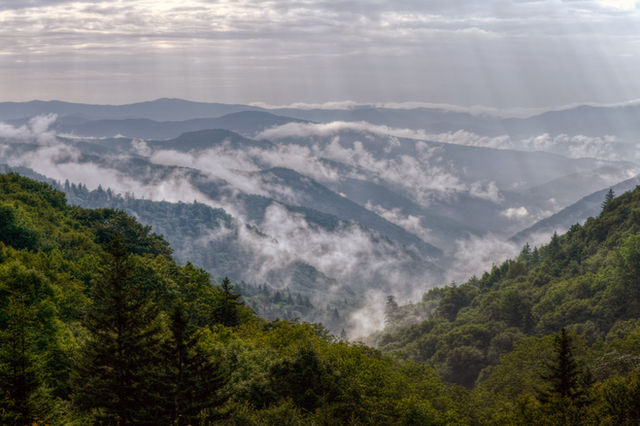
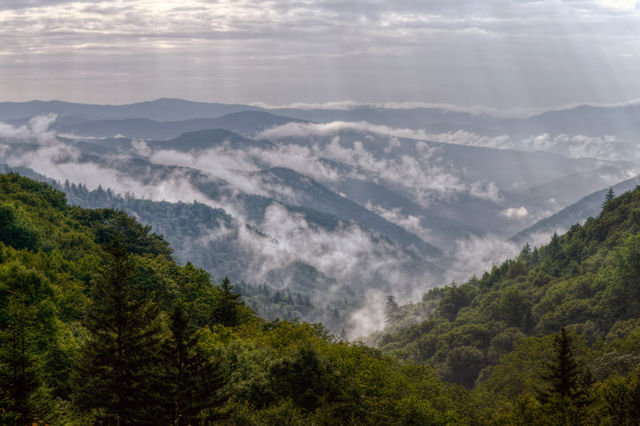
The Great Smoky Mountains are the most-visited national park in the United States, and it is easy to see why. Straddling the border of North Carolina and Tennessee, these ancient, forested ridges roll to the horizon in wave after wave, wrapped in the soft blue haze that gives them their name. This is old, gentle, deeply green country, a world away from the jagged drama of the West, and all the more soothing for it.
Life in extraordinary abundance
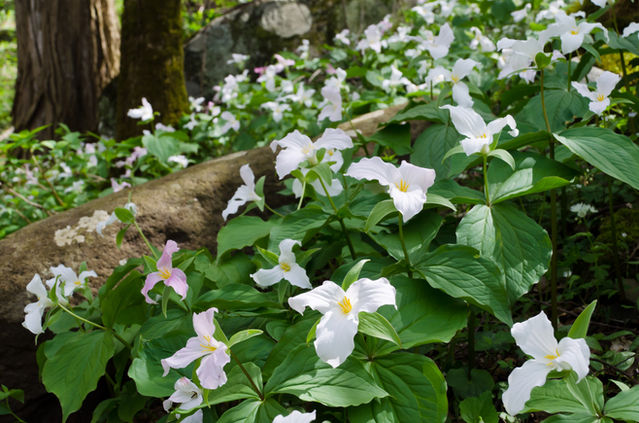
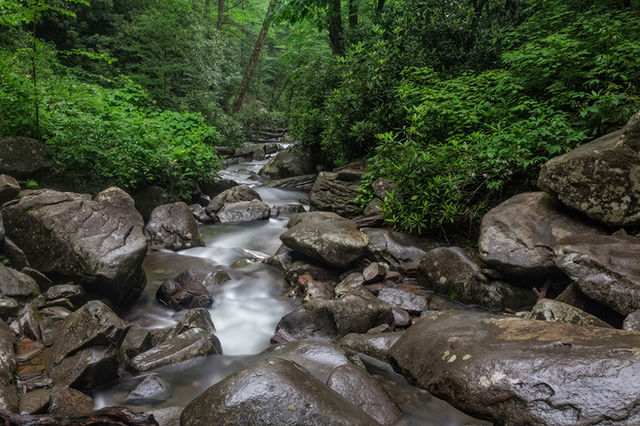
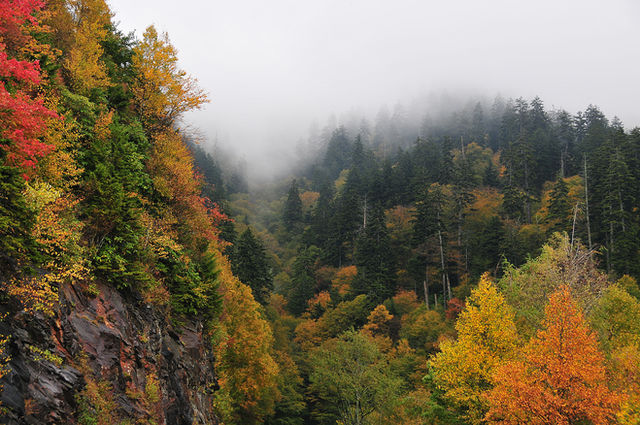
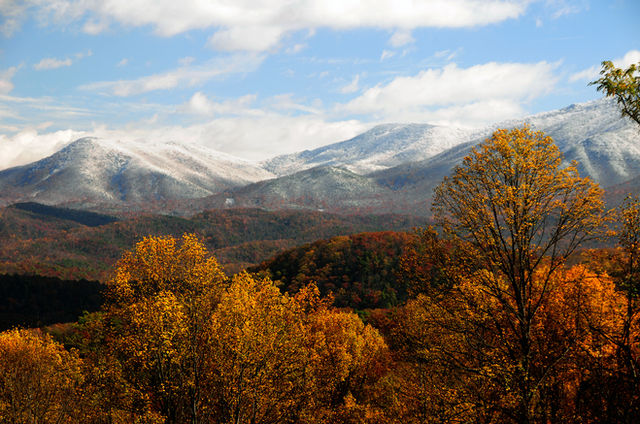
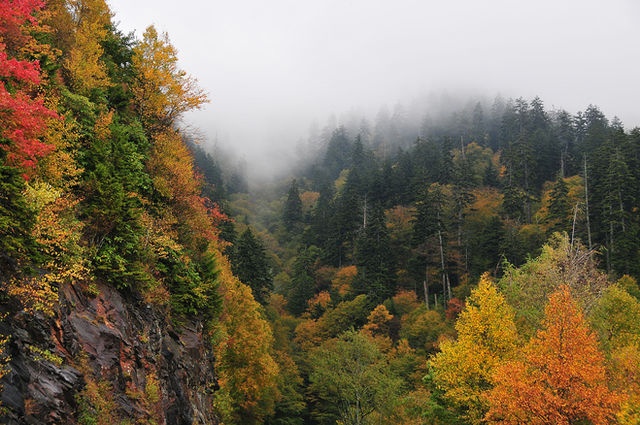
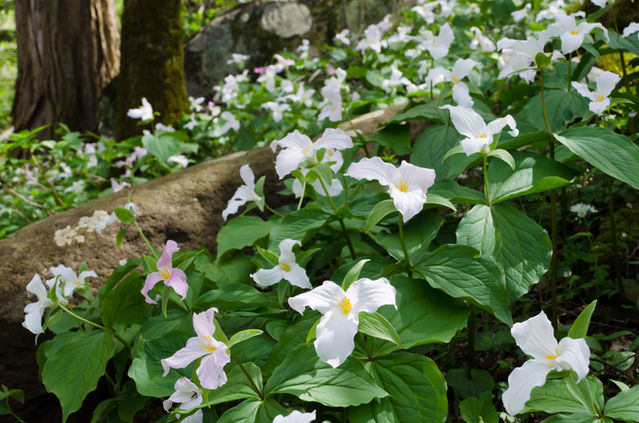
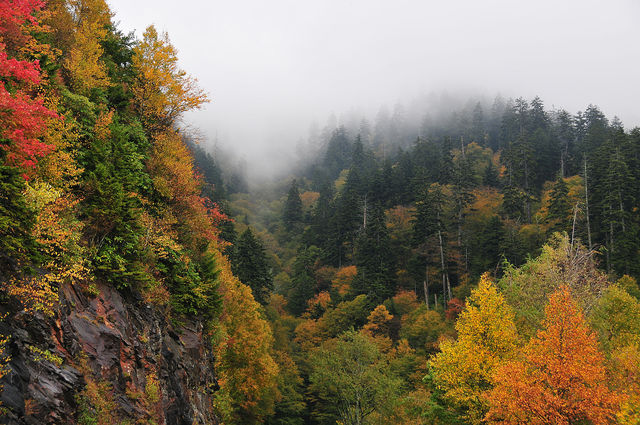
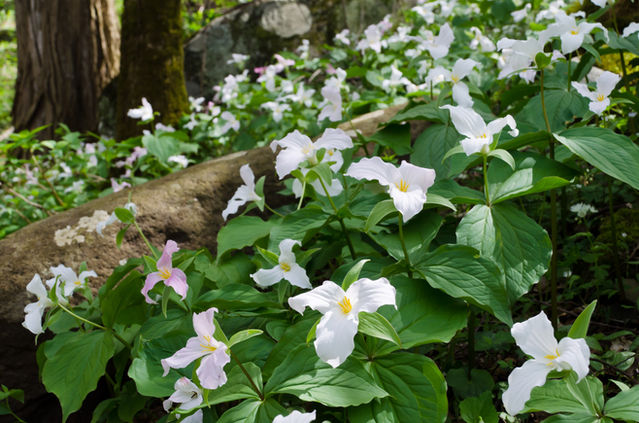
The Smokies are one of the most biodiverse places in North America, a temperate rainforest teeming with wildflowers, salamanders, and around 1,500 black bears. In spring the forest floor blooms; in June, synchronous fireflies flash in eerie unison; in autumn, the hardwoods turn the mountains to fire. Cades Cove, a broad green valley ringed by peaks and dotted with pioneer cabins, is the classic wildlife-watching drive, while Clingmans Dome offers the highest, mistiest views in the park. Remarkably, there is no entrance fee. For a UK family, the Smokies feel almost familiar in their greenery, yet on a scale and with a wildness Britain cannot match.
Why go
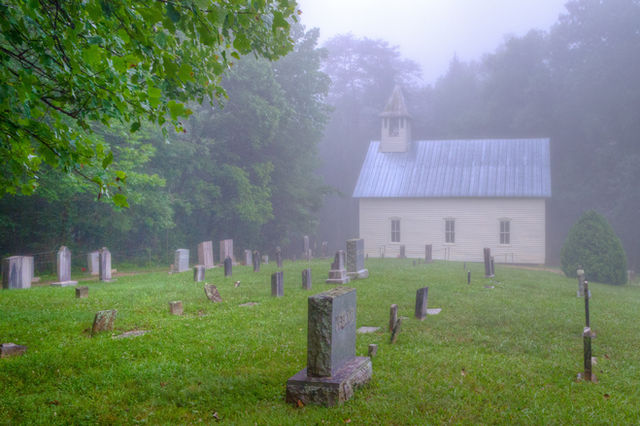
You come to the Great Smoky Mountains for misty ridgelines, roaming black bears and a gentler, greener kind of wild. This is a park that soothes rather than overwhelms, and it works beautifully for families: an unhurried loop drive around Cades Cove almost always turns up deer, turkeys and, if you are lucky, a bear ambling through the meadow, to the delight of teenagers. The forests here are ancient and astonishingly alive, carpeted with wildflowers in spring and ablaze with colour in autumn. You can drive to sweeping viewpoints, wander to waterfalls on easy trails, or explore preserved pioneer homesteads. And with no entrance fee, it is refreshingly accessible. For a UK family, the green, layered mountains feel both comfortingly familiar and thrillingly vast.
Highlights
- Misty blue ridgelines
- Cades Cove wildlife loop
- Black bears
- Clingmans Dome
- Spring wildflowers
- Autumn colour
- Synchronous fireflies
- Pioneer homesteads
- No entrance fee
- Waterfall walks
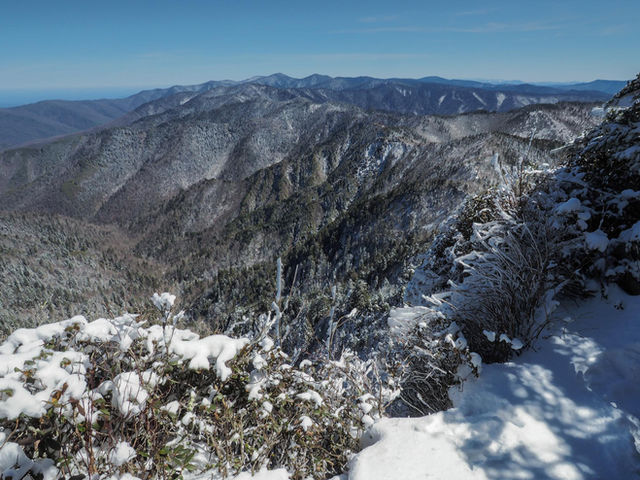
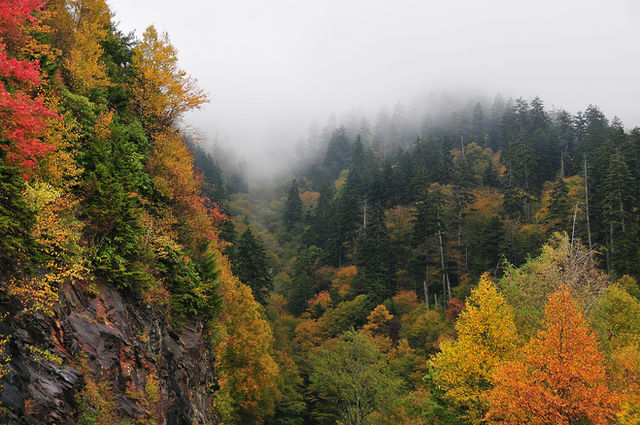
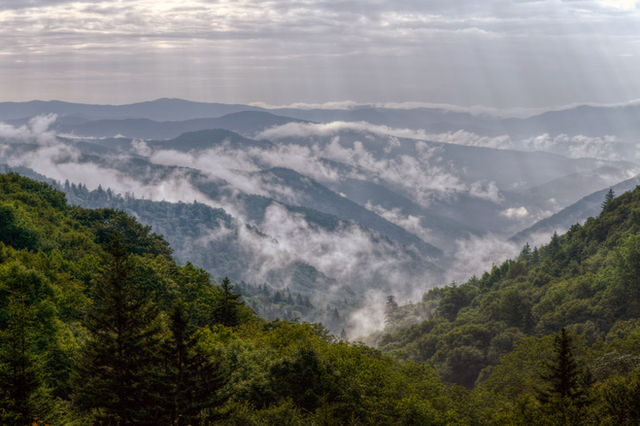
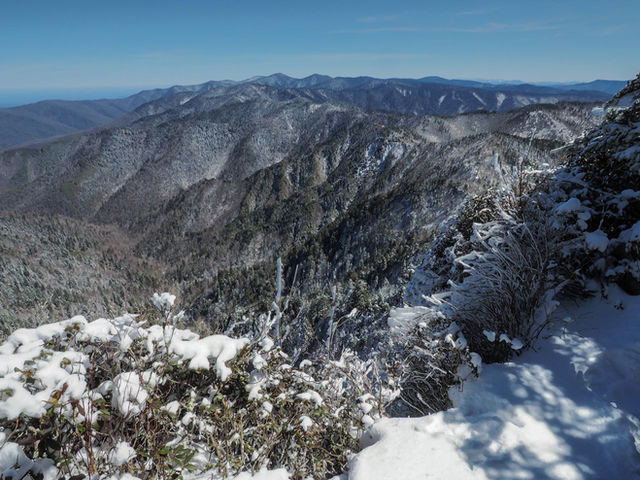
Great Smoky Mountains National Park in photos

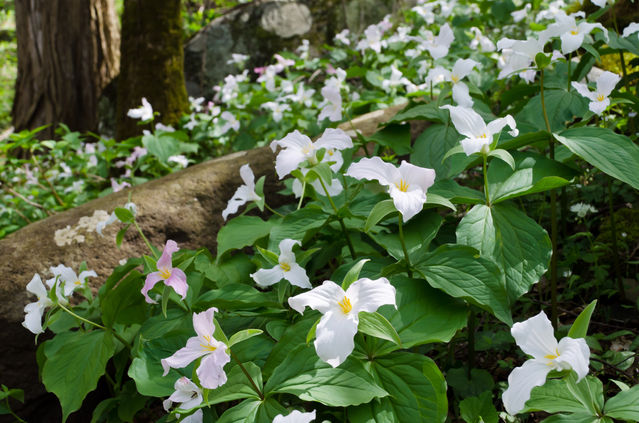
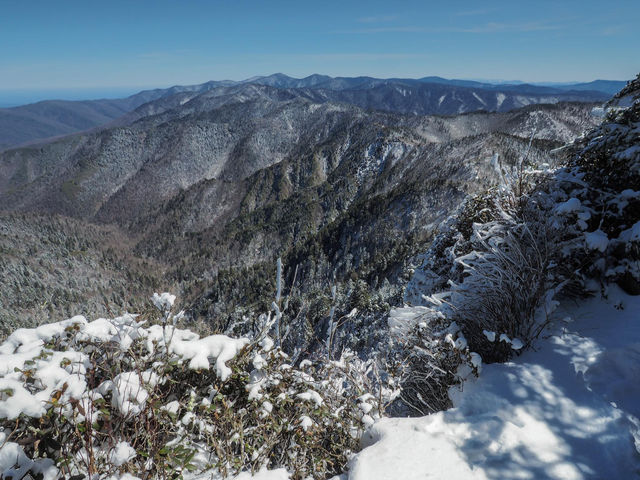
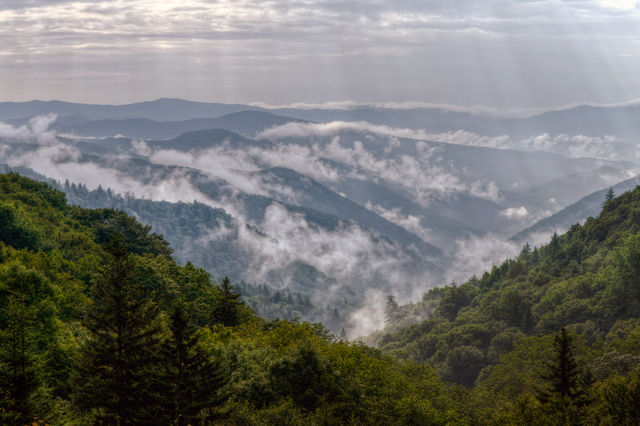
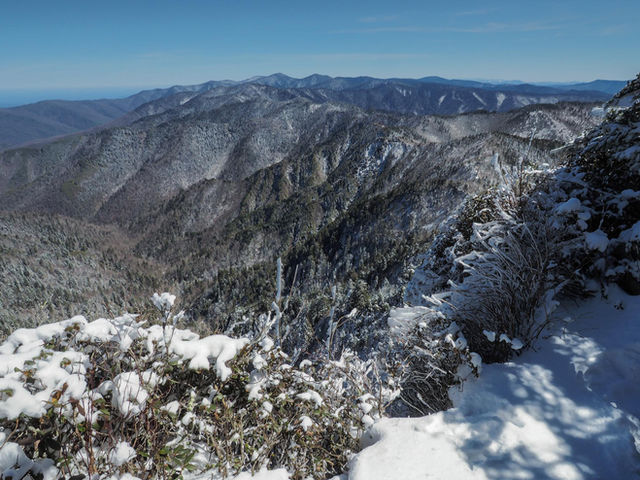
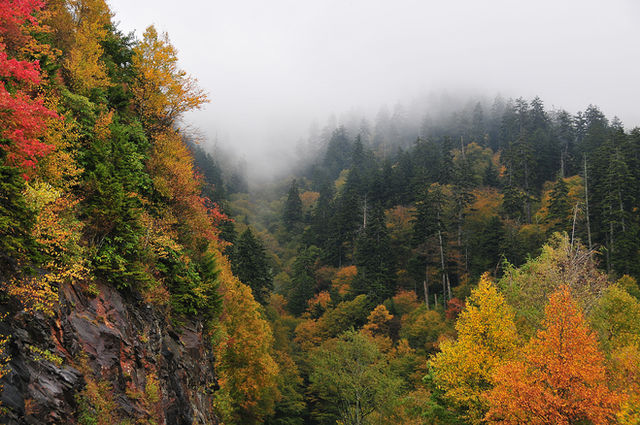
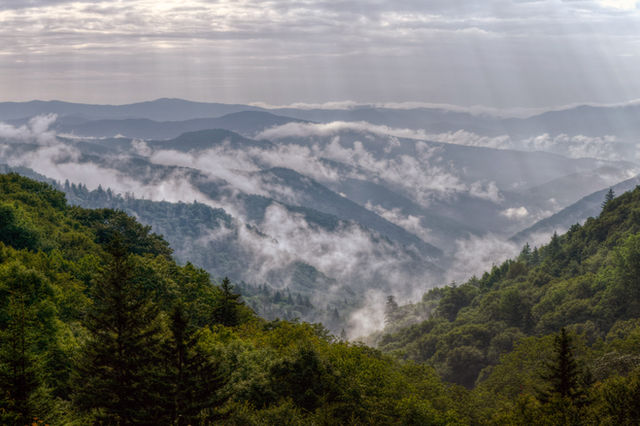
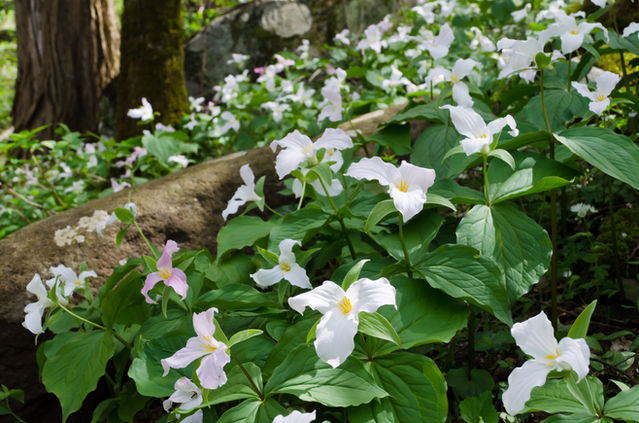
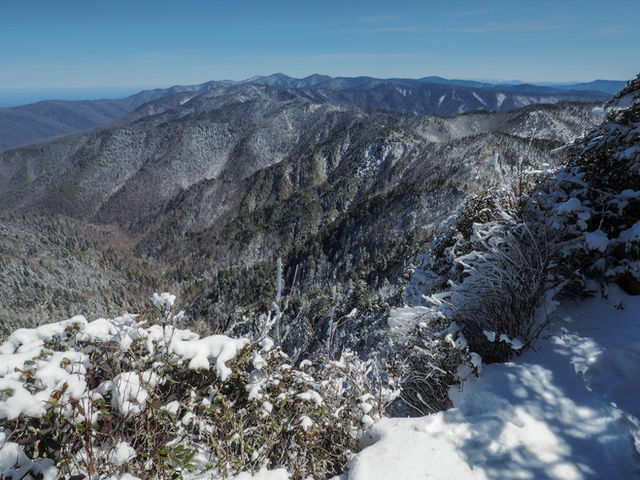
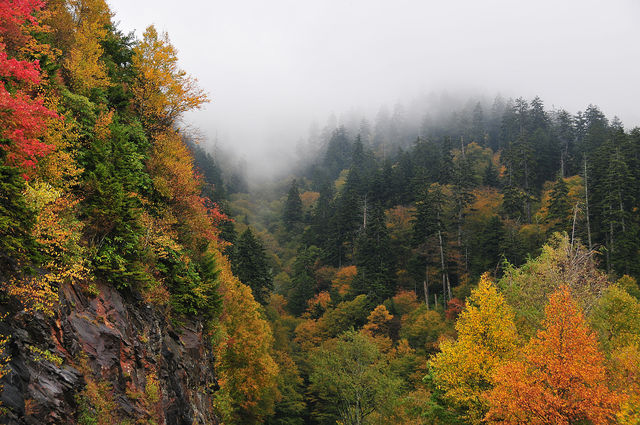
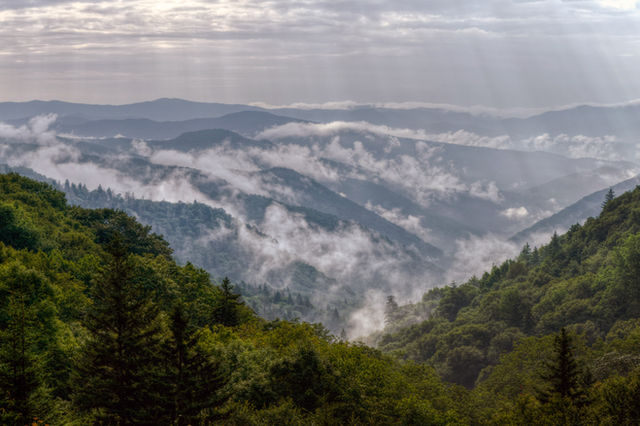
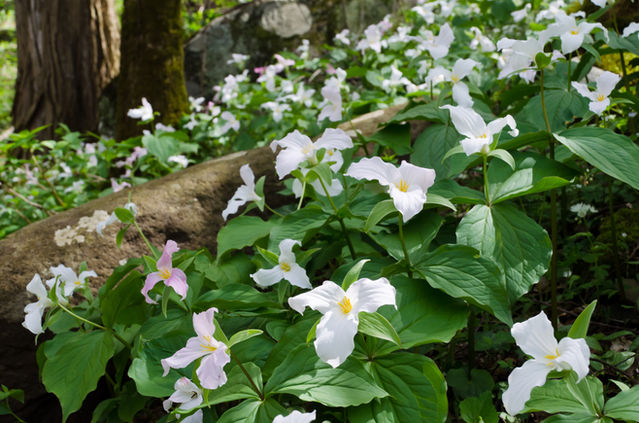

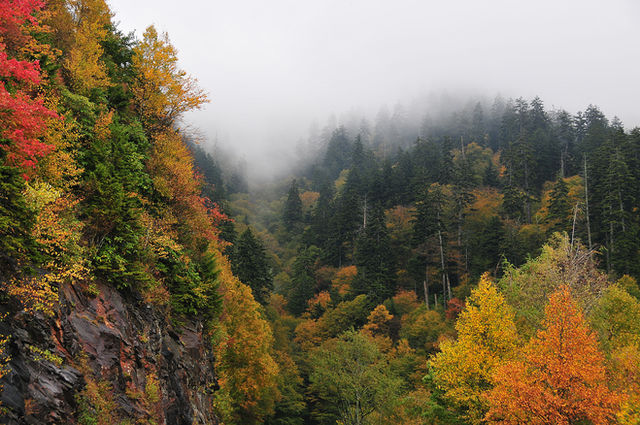
Where you'll stay in Great Smoky Mountains National Park
Live map of hotels and villas around Great Smoky Mountains National Park — powered by Stay22. Pan, zoom and compare live prices to pick your base.
Hotels & rentals around Great Smoky Mountains National Park
Pan, zoom and compare live prices — every stay in one map.
Getting around Great Smoky Mountains National Park
Getting around the Smokies means driving, on a network of scenic mountain roads with no park shuttle system to rely on. Newfound Gap Road is the main artery, crossing the mountains between the Tennessee and North Carolina sides and climbing to sweeping viewpoints; a spur leads up to Clingmans Dome, the highest point. The famous Cades Cove loop is an 11-mile one-way road that can crawl at peak times but rewards patience with wildlife; it closes to cars on certain mornings for cyclists and walkers. Higher roads, including the Clingmans Dome spur, close in winter due to ice and snow. Distances feel longer than the map suggests because the roads are winding and often busy, so allow plenty of time and start early to beat both traffic and cloud.
There is no public transport within the Great Smoky Mountains, so a hire car is essential for exploring. No park shuttles serve the main roads or trailheads. The gateway town of Gatlinburg runs a local trolley service that reaches the park's Sugarlands visitor centre, offering a limited car-free option from that side, but it does not cover the wider park. For a UK family, the practical plan is to fly into Knoxville or Asheville, hire a car and drive the scenic mountain roads at your own pace, arriving early at popular spots like Cades Cove to avoid the worst of the traffic.
Insider tips
- Drive the Cades Cove loop early in the morning for the best wildlife sightings and to beat the notorious traffic, which crawls by midday.
- Note that a parking tag is now required to park anywhere in the park, even though there is no entrance fee; buy one in advance.
- Clingmans Dome, the highest point, is often shrouded in cloud; check the forecast and go on a clear day for the view.
- Autumn colour is spectacular but draws huge crowds; visit midweek and start early.
- Look up the synchronous firefly event in early summer, a magical natural spectacle that runs on a limited-access lottery.
- Easy walks to Laurel Falls or Grotto Falls reward families without a hard hike.
- Gatlinburg on the Tennessee side is busy and touristy; Townsend offers a quieter base.
Frequently asked
Is there an entrance fee?
There is no entrance fee, but a paid parking tag is required to park anywhere in the park.
When is the best time to visit?
Spring for wildflowers and autumn for colour are the highlights; summer is green but busy and humid, winter quiet and often misty.
Is there camping or lodging?
Numerous campgrounds within the park; the only lodge is the remote, hike-in LeConte Lodge. Plenty of hotels sit in Gatlinburg and nearby towns.
Are pets allowed?
Leashed pets are allowed in campgrounds and on roads but not on most trails.
Is it accessible?
Several accessible trails, viewpoints and the Cades Cove loop road offer good access; Sugarlands and Oconaluftee visitor centres are accessible.
Is it good for families?
Excellent. Wildlife drives, easy waterfall walks and pioneer homesteads suit all ages.
How do we get there?
Knoxville (TYS) in Tennessee is about 1 hour from the Tennessee side; Asheville (AVL) in North Carolina is roughly 1 hour from the eastern side.
While you're there
-
 9 FEB Festivals & Celebrations See the event →
 -
 9 APR Music & Performing Arts See the event →
Explore the area
Local attractions & tours
Skip-the-line tickets and small-group tours in Great Smoky Mountains National Park — compare across our partners.
We're still curating hand-picked tickets and tours for Great Smoky Mountains National Park. In the meantime, the map above and the nearby cities are a great place to start.
When to visit Great Smoky Mountains National Park
Spring for wildflowers and autumn for foliage are the standout seasons; summer is lush but humid and crowded, winter quiet and atmospheric.
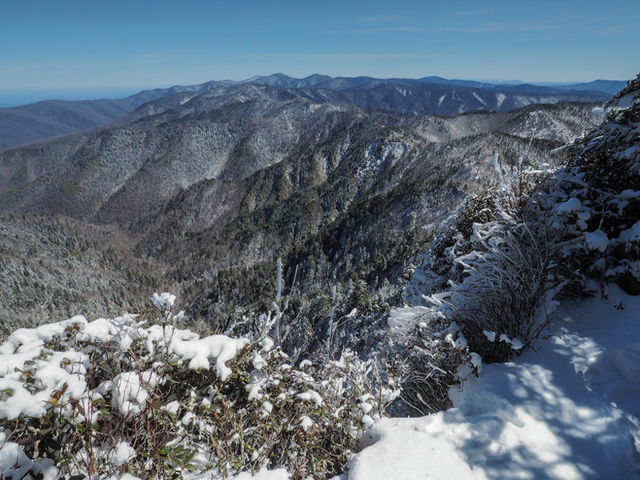
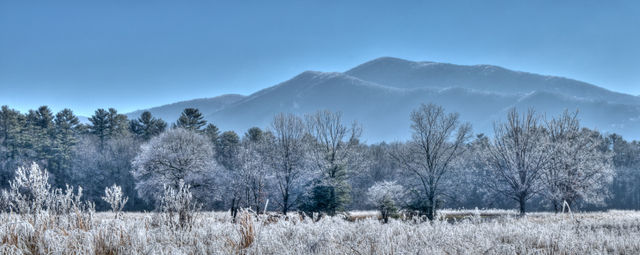
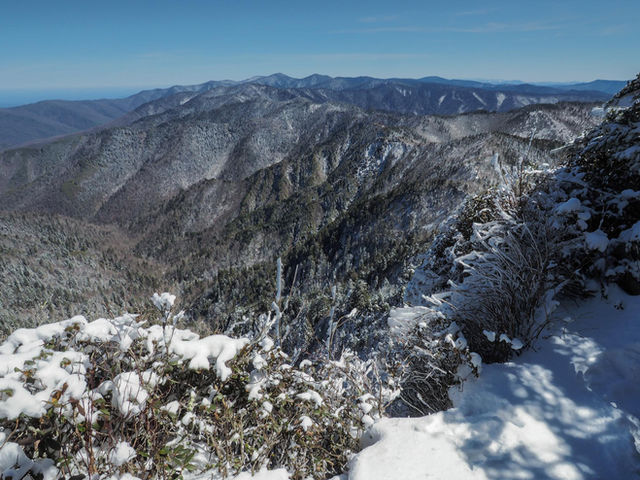
The Smokies are lush and green precisely because they are wet, so pack a waterproof whatever the season. Summers (June to August) are warm and very humid, with frequent afternoon showers and thunderstorms; the higher elevations stay noticeably cooler. Spring is mild and wildflower-rich but changeable, autumn crisp and glorious for colour, and winter cold with occasional snow and ice at height, when some high roads close. Elevations range widely, so the summit of Clingmans Dome can be 10C cooler and mistier than the valleys. Bring layers, a rain shell, sturdy footwear and insect repellent in the warmer months, plus warm kit for the higher ridges year-round.
Getting there
The Great Smoky Mountains are unusually accessible for a great national park, sitting within easy reach of two regional airports. From the UK there are no direct flights, so you will connect through a hub such as Atlanta, Charlotte or Chicago into either Knoxville (TYS) on the Tennessee side, about an hour from the park's western gateways of Gatlinburg and Townsend, or Asheville (AVL) on the North Carolina side, roughly an hour from the eastern Cherokee entrance. Both make excellent bases. A hire car is essential, as there is no public transport into or around the park and the surrounding area is spread out. The drive in is scenic, winding up into the forested foothills. Many UK families combine the Smokies with a wider tour of the American South, taking in Nashville, Atlanta or the Blue Ridge Parkway.
- Knoxville (TYS) — ~1 hr to the Gatlinburg (TN) entrance
- Asheville (AVL) — ~1 hr to the Cherokee (NC) entrance
Ready to book your trip?
Flights, airport transfers and car hire to TYS — search and compare without leaving the page.
More trip extras
Parking, holiday extras, and more — coming soon.
We're lining up parking, holiday extras and activities you'll be able to add to any trip from here.