On 6 June 1944 around 156,000 men landed on five beaches along 80 km of Norman coast. The sites are not a single attraction but a landscape: the American cemetery on the bluff above Omaha with its 9,388 graves; the cliff at Pointe du Hoc still cratered; the artificial Mulberry harbour whose caissons are still visible off Arromanches at low tide; the German battery at Longues-sur-Mer with its guns in place; the British and Commonwealth cemetery at Bayeux; and Sainte-Mère-Église, where the paratrooper on the church tower is commemorated every year.
© OpenFreeMap · OSM · terrain Mapterhorn · boundaries © EuroGeographics (Eurostat GISCO)
Headline places
What you come to The D-Day Landing Beaches for.
-
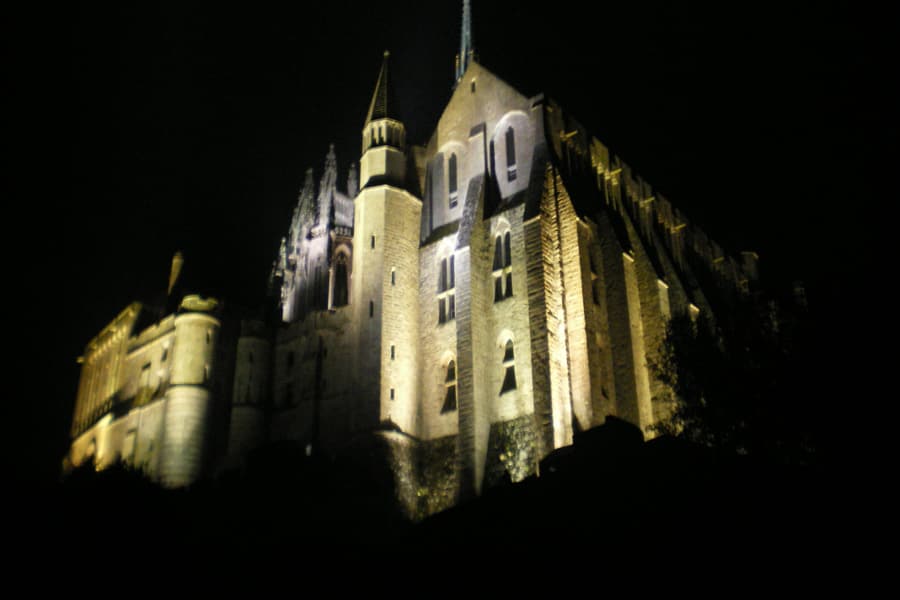 Mont-Saint-Michel Abbey A Gothic abbey balanced on a granite rock in a tidal bay
 -
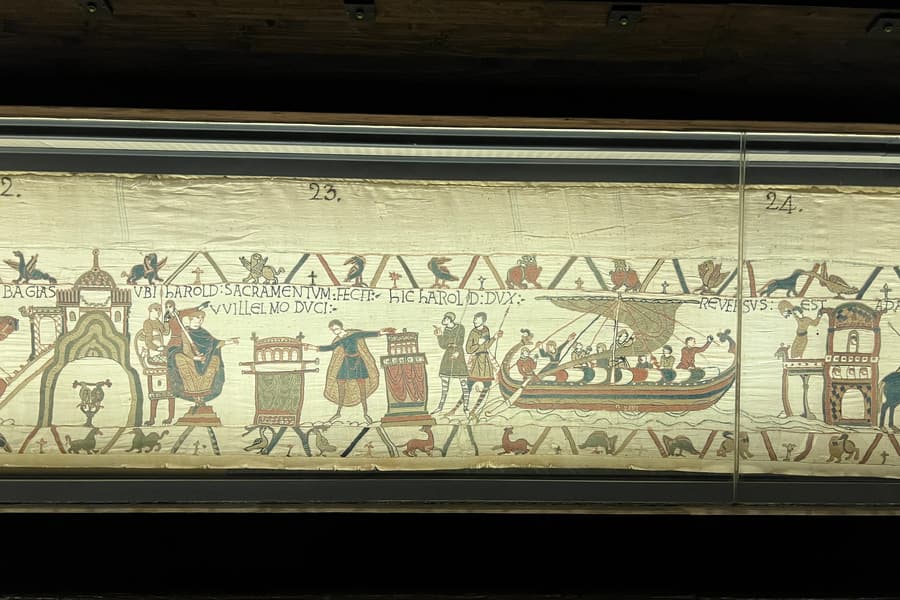 The Bayeux Tapestry Seventy metres of embroidery telling the 1066 invasion, made in the 1070s
 -
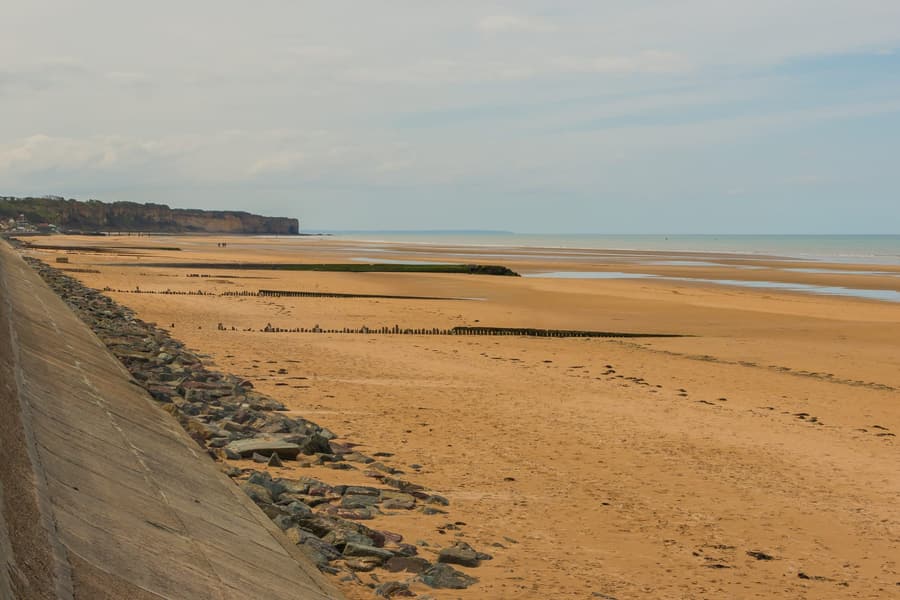 Omaha Beach The bloodiest of the five landing beaches, six kilometres long
 -
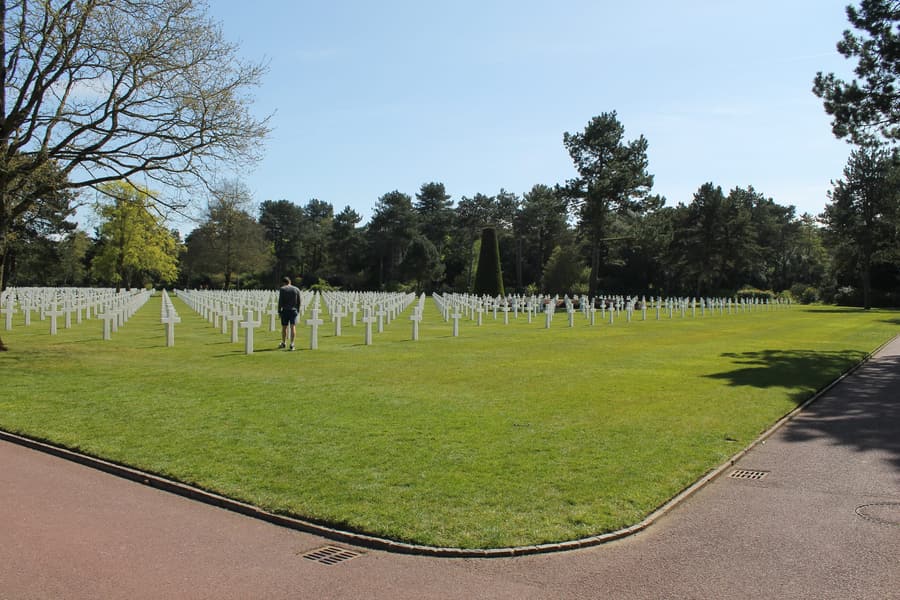 Normandy American Cemetery 9,388 graves on the bluff directly above Omaha
 -
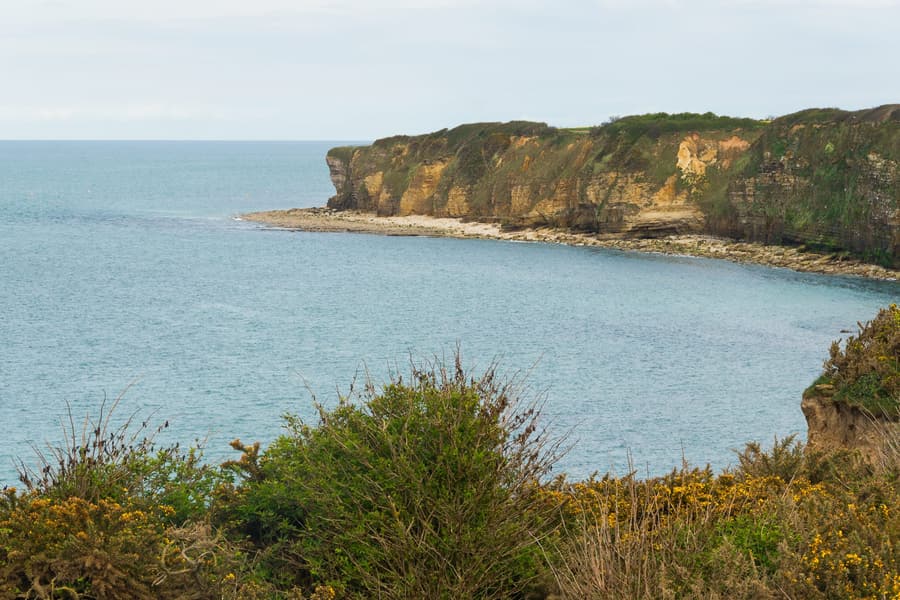 Pointe du Hoc A 30 m cliff scaled under fire, and a clifftop still full of craters
 -
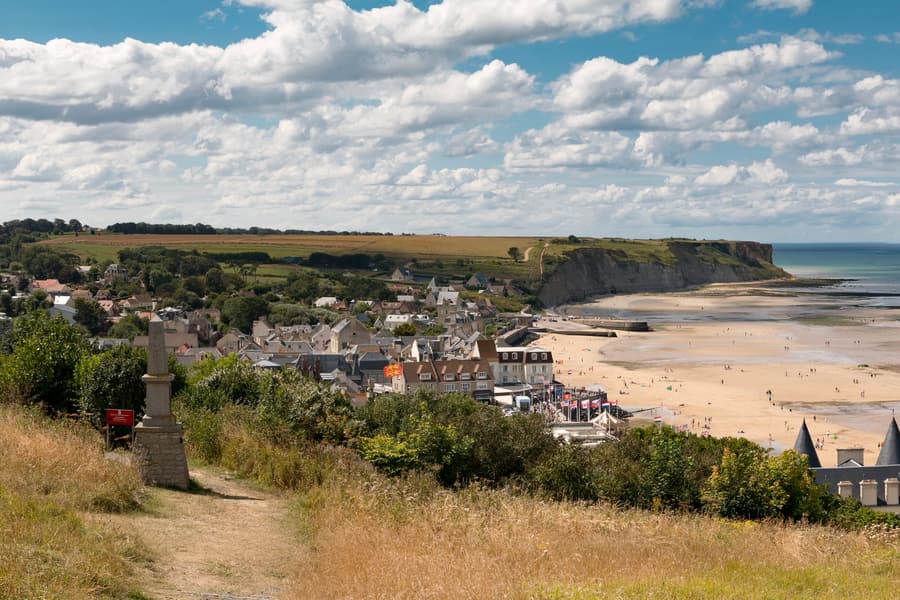 Arromanches & the Mulberry Harbour The concrete caissons of a portable harbour, still out in the bay
 -
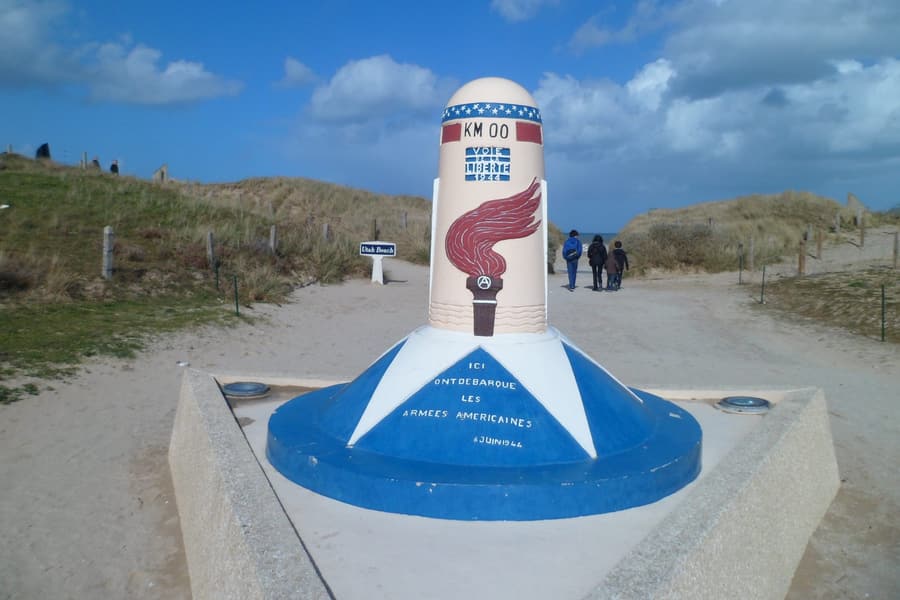 Utah Beach The westernmost landing beach, and its museum built on the dune
 -
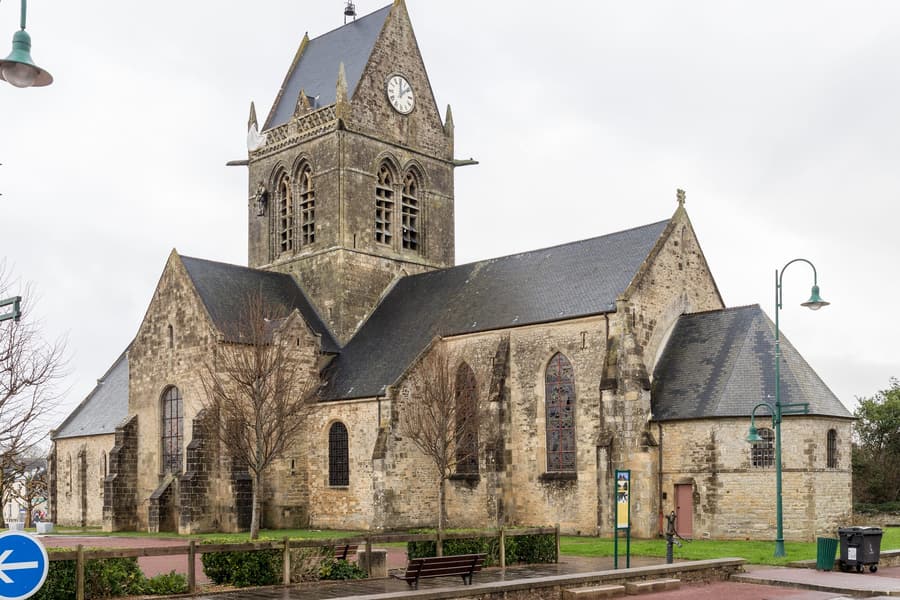 Sainte-Mère-Église The first town liberated — and the paratrooper still on the church tower
 -
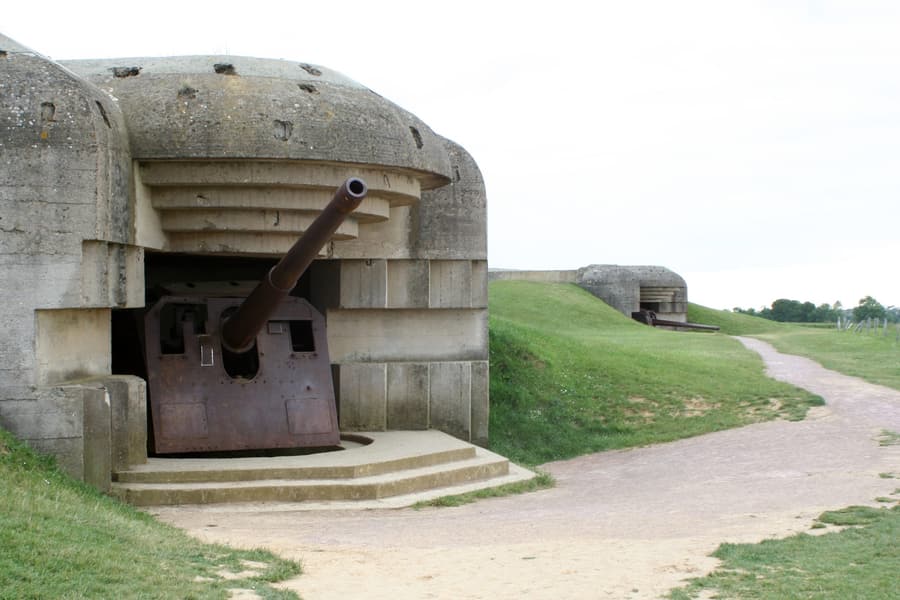 Longues-sur-Mer Battery The only Atlantic Wall battery with its original guns still in place
 -
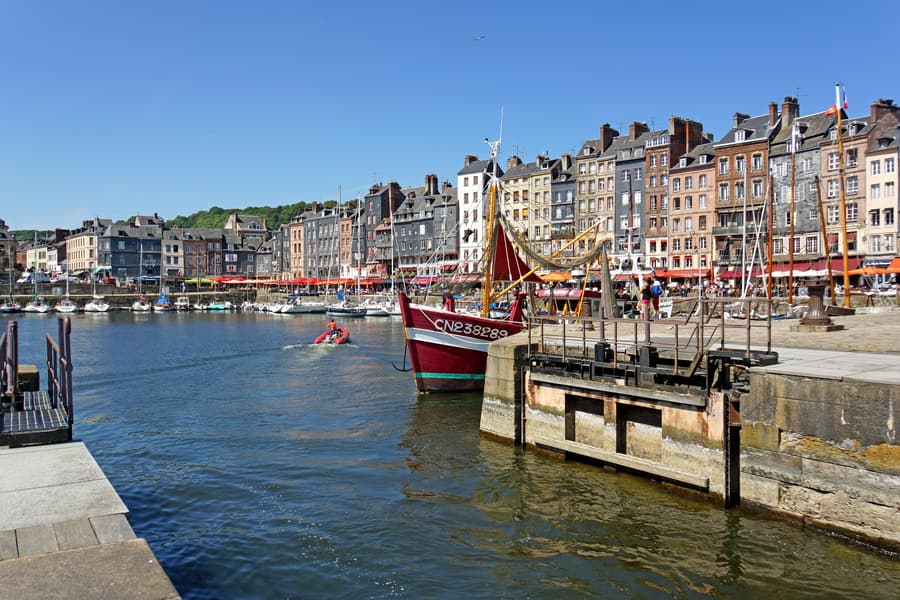 Honfleur's Vieux Bassin Tall slate-fronted houses round a harbour, and the wooden church behind
Cities & bases
Where to sleep inside the area.
-
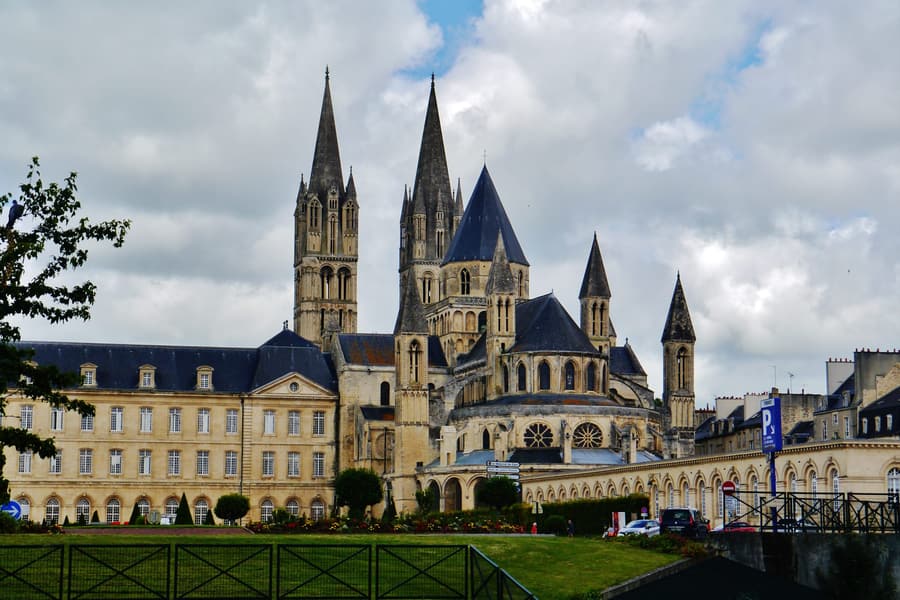 Caen William the Conqueror's abbeys and the Mémorial peace museum
 -
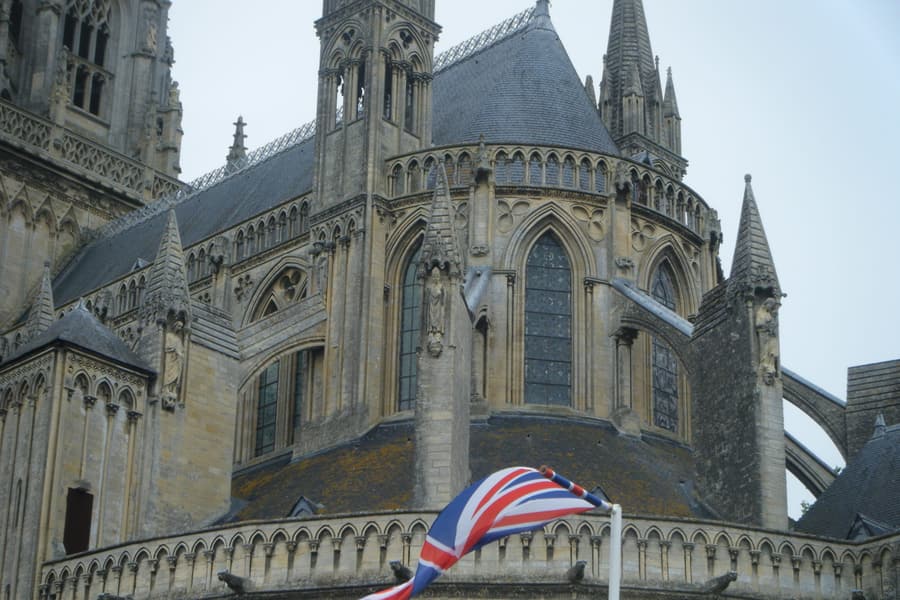 Bayeux The Tapestry, an untouched old town and the D-Day beaches next door
 -
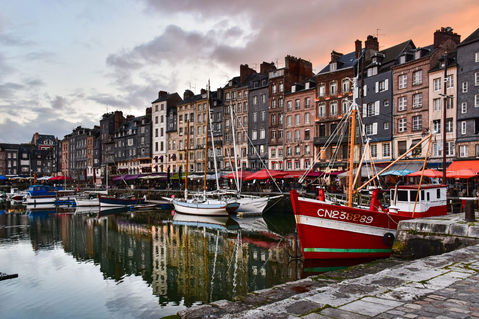 Honfleur The slate-fronted harbour that the Impressionists could not leave alone
 -
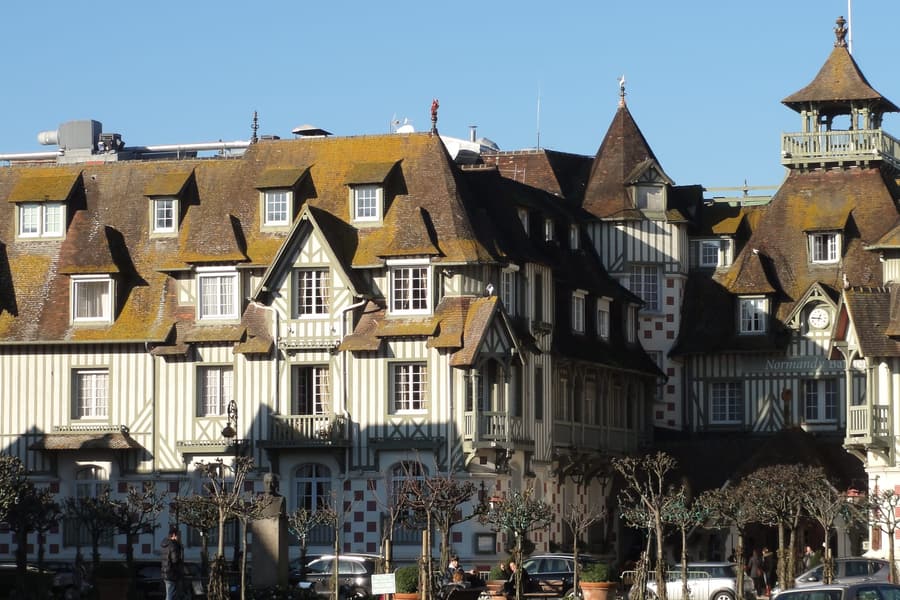 Deauville Parasols, racehorses and the boardwalk Paris goes to at weekends
 -
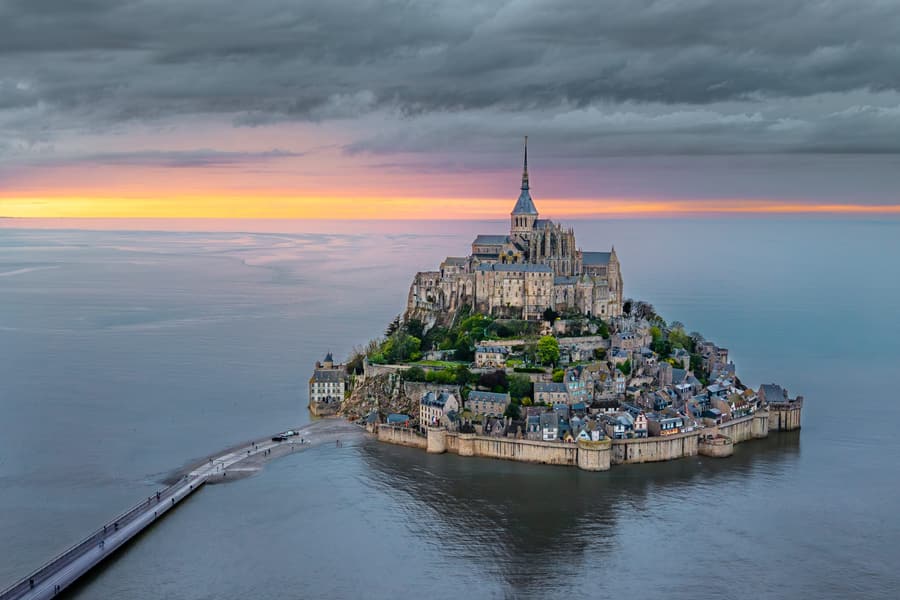 Mont-Saint-Michel An abbey on a rock in a bay that empties for kilometres
Islands
Practical
- Best time to go
- Year-round, and deliberately so — the sites are at their most affecting on a grey, windy day out of season, which is also what the weather was on 6 June 1944. Early June carries the commemorations and every hotel within forty kilometres books out a year ahead in anniversary years. May and September give long light and open museums without the coaches.
- Getting there
- Ferries from Portsmouth and Poole to Caen (Ouistreham) and Cherbourg land you inside the area. Paris–Caen is 2h and Paris–Bayeux 2h15 by train. Bayeux is the best base: it is central to all five beaches, has its own two reasons to visit, and was the first town liberated and so was never bombed.
- Getting around
- A car, or a guided tour. This is the honest answer — the sites run along 80 km of coast and public transport reaches almost none of them. Half-day and full-day tours leave from Bayeux and Caen and are worth it for the interpretation as much as the transport; several are run by British and Canadian guides.
- Eat & drink
- Norman: cream, cider, calvados and camembert, plus the seafood at Port-en-Bessin and Grandcamp. Bayeux and Arromanches both have good simple restaurants; the coastal villages close early out of season, so eat before 9pm.
- Know before you go
- This is a war grave and a place of pilgrimage as well as a visitor site — the cemeteries ask for quiet dress and quiet behaviour, and the American cemetery enforces it. Pointe du Hoc's craters are unfenced in places and the cliff edge is genuinely dangerous. Do not attempt all five beaches in one day; two sectors, done slowly, is the right pace.
The region it sits in
Tourism areas and administrative regions are different geographies — both are true, and both are browsable here.