Bolzano is the capital of South Tyrol, sits at 262 m where three valleys meet, and is officially trilingual — roughly a quarter of the city's residents speak German as a first language and the province as a whole is about 70% German-speaking. The result is a place that reads as Austrian: arcaded Laubengasse shopping streets, Gothic gables, Speck and Knödel on the menu next to espresso. It is ringed by vineyards on the valley slopes and by the Dolomites beyond them, and it holds Ötzi, the 5,300-year-old iceman found on a glacier in 1991 and kept here at −6°C.
For the single most compelling museum object in Italy — a complete Copper Age man with his clothes, his axe and the arrowhead that killed him. For an alpine wine region most people have never heard of. And because it is the doorstep of the Dolomites: the Alpe di Siusi cable car is 20 minutes away.
Things to do
- Ötzi at the South Tyrol Museum of Archaeology — The iceman himself in a refrigerated cell, with his bearskin cap, copper axe, longbow and the CT scans that found the arrowhead.
- The Renon cable car and railway — Twelve minutes to 1,200 m, then a 1907 narrow-gauge tram along the plateau to Collalbo and the earth pyramids.
- Piazza Walther and the Laubengasse — The Gothic cathedral with its filigree spire, and 800 m of arcaded shops laid out in the twelfth century.
- Messner Mountain Museum Firmian — Reinhold Messner's museum on man and mountain, spread through Sigmundskron castle above the city.
- The South Tyrolean wine road — Caldaro, Termeno and Appiano — cellar doors, and the Gewürztraminer that takes its name from Tramin.
- Christmas market — Piazza Walther from late November: Italy's oldest and largest, and unmistakably Alpine rather than Italian.
- Castel Roncolo — A thirteenth-century castle above the Talvera gorge with the largest cycle of secular medieval frescoes anywhere.
Where to base yourself
The Bolzano neighbourhoods worth knowing before you book.
- Coming soon Centro & the Laubengasse The arcaded medieval main street, Piazza Walther and the cathedral. Small, handsome, and where you should stay.
- Coming soon Gries West across the Talvera: a former spa village absorbed into the city, with the Abbey of Muri-Gries and its own Lagrein vineyards.
- Coming soon Renon / Ritten The plateau 1,000 m above, up the cable car — earth pyramids, meadows, and the classic Dolomite panorama.
- Coming soon Oltrisarco & the wine road The vineyard slopes south towards Termeno and Caldaro — the Südtiroler Weinstrasse, and its cellar doors.
- Coming soon Merano 40 minutes north-west: a Habsburg spa town with subtropical gardens, thermal baths and a promenade under 3,000 m peaks.
- Coming soon Val Gardena & Alpe di Siusi The Dolomite valleys 30–45 minutes east — Ladin-speaking, and the base for the high walking.
3 days in Bolzano
- Day 1 The city and the iceman
Ötzi at opening — two hours. Coffee under the Laubengasse arcades, then Piazza delle Erbe's market and the cathedral. Speck and Knödel for lunch. Afternoon up to Castel Roncolo, or the Messner museum at Firmian. Lagrein with dinner.
- Day 2 Up the mountain
Cable car to Renon, then the narrow-gauge tram to Collalbo and the earth pyramids, with the Dolomite panorama from Corno del Renon. Back down mid-afternoon; evening on the wine road at Caldaro.
- Day 3 The Dolomites
East to Alpe di Siusi — Europe's largest high alpine meadow — or north to Merano for the Trauttmansdorff gardens and the thermal baths.
Day trips
Worth the train or the drive from Bolzano.
-
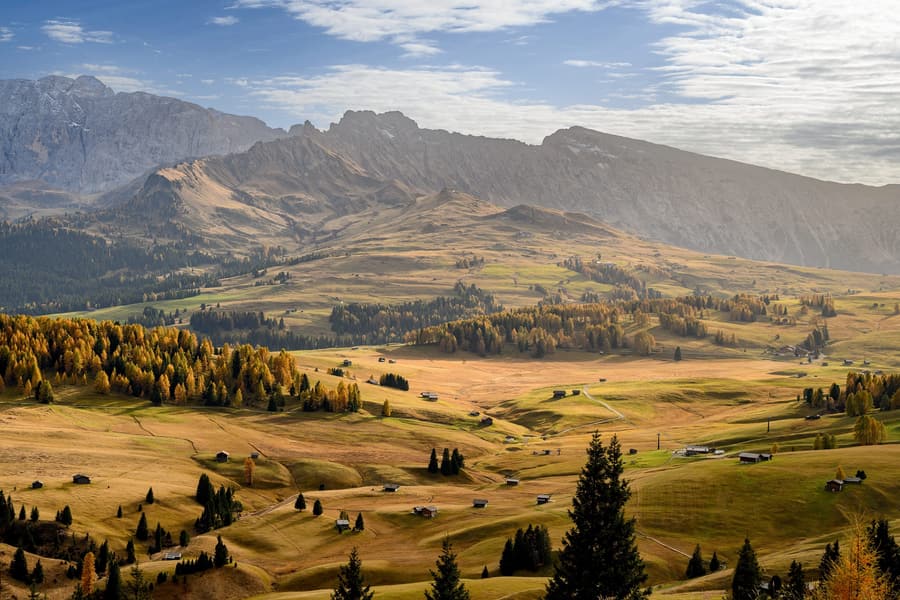 Alpe di Siusi Europe's largest high alpine meadow, 45 minutes east by bus and cable car.
 -
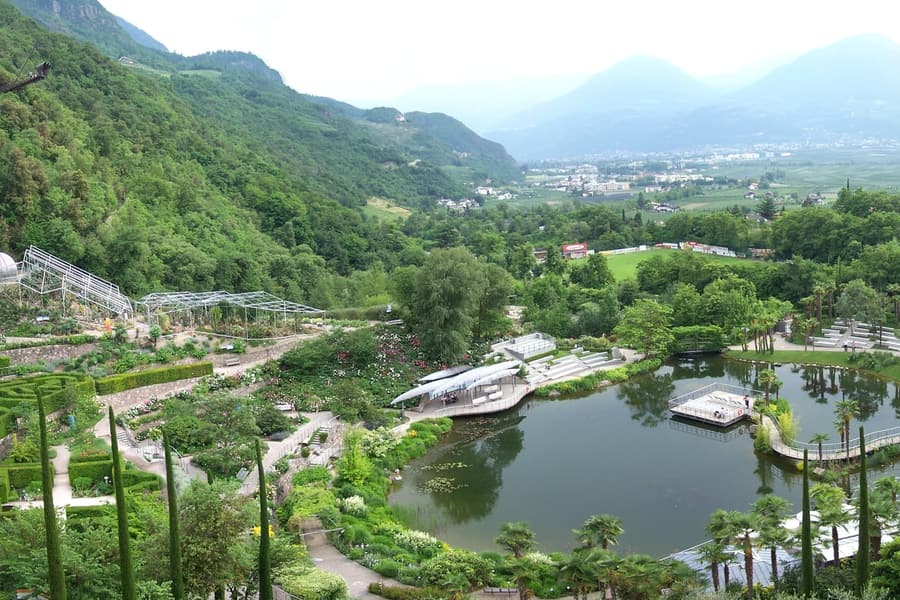 Trauttmansdorff Castle Gardens Eighty garden landscapes above Merano, 40 minutes north-west.
 -
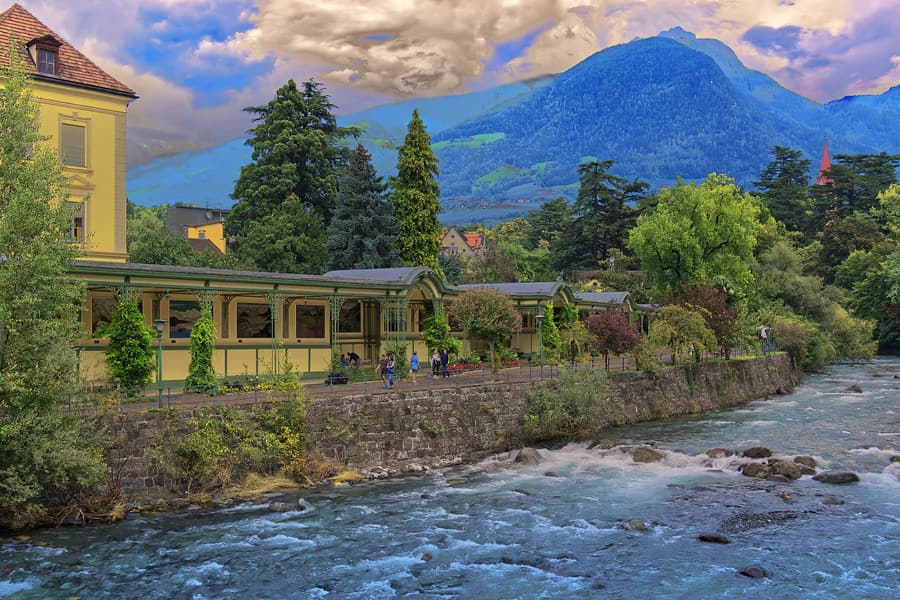 Merano A Habsburg spa town with subtropical planting under alpine peaks.
 -
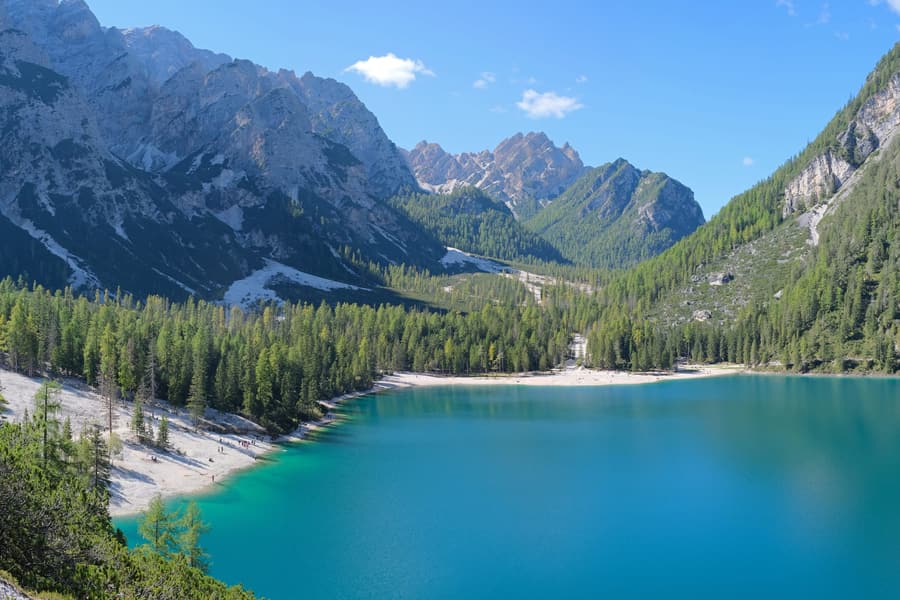 Lago di Braies The emerald lake under the Croda del Becco, about 1h45 north-east.
 -
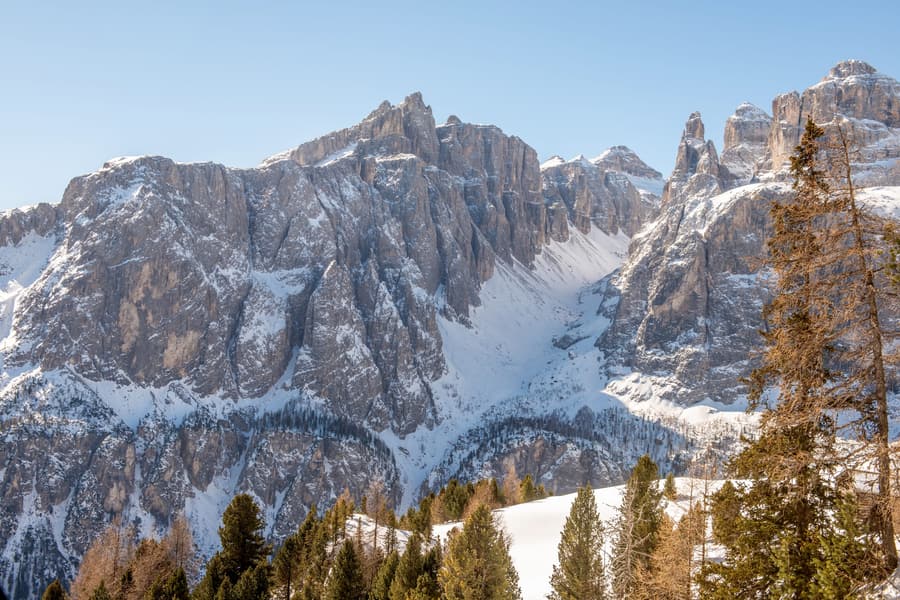 Alta Badia Ladin valleys and the Sellaronda circuit, about 1h30 east.
 -
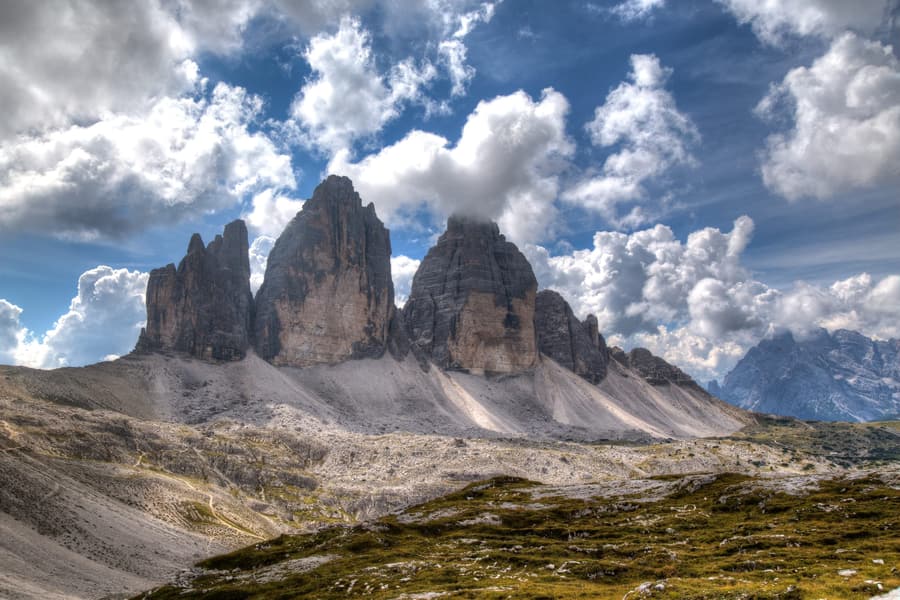 Tre Cime di Lavaredo The three towers, about 2h north-east — a long but classic day.
Practical
- Best time to go
- Late May–June and September–October are best for walking and the vineyards. December is the other season — the Christmas market on Piazza Walther is the largest and oldest in Italy and runs from late November. July and August are warm in the valley (Bolzano is one of the hottest places in northern Italy in a heatwave) but the cable cars take you 1,000 m up in minutes.
- Getting there
- Verona (VRN) is the nearest useful airport at 1h30, Innsbruck (INN) 1h45 over the Brenner, Venice 3h. The Brenner railway runs Munich–Verona through Bolzano; Verona is 1h30 by train, Munich about 4h. A car is useful for the side valleys but not for the town.
- Getting around
- The centre is small and flat and everything is walkable. Three cable cars leave from the town itself — Renon/Ritten, San Genesio and Colle — and climb 1,000 m in minutes to walking country. The Renon one connects to a narrow-gauge railway along the plateau. A Mobilcard covers regional buses and trains, which is how to reach the valleys without a car.
- Eat & drink
- South Tyrolean, which is to say Austrian with Italian technique: Speck (cold-smoked, air-cured ham) with rye bread, Knödel in broth or with butter, Schlutzkrapfen (spinach and ricotta half-moons), goulash, and Apfelstrudel or Kaiserschmarrn after. The wines are seriously good and under-known — Lagrein and Schiava reds from the slopes right above the city, Gewürztraminer from Termeno, Sauvignon and Pinot Bianco from higher up. Törggelen, the autumn ritual of new wine, chestnuts and cured meat at a hillside farm, runs from October.
- Know before you go
- The Ötzi museum is small and gets very busy — book, and go at opening. Much of the province closes for a break in April/May and again in November between seasons. German is the first language in most of the valleys; Italian works everywhere but the place names come in pairs (Bolzano/Bozen, Bressanone/Brixen) and road signs use both.