Genoa was one of the great maritime republics — for three centuries it ran a trading empire from the Black Sea to Gibraltar — and it is built like it: a working port at the bottom, and above it the densest medieval old town in Europe, a labyrinth of caruggi so narrow the sun reaches the ground for an hour a day. Behind those alleys sit the Palazzi dei Rolli, forty-two Renaissance palaces whose owners were legally obliged to lodge visiting heads of state, now a UNESCO site. It is a scruffy, vertical, unsentimental city and it rewards patience.
For pesto, focaccia and the best cheap eating on the Italian coast; for the palaces; for Europe's largest aquarium; and because it is the hinge of the whole Riviera — the Cinque Terre are an hour east and the French border two hours west.
Things to do
- The Palazzi dei Rolli — Palazzo Rosso, Palazzo Bianco and Palazzo Doria-Tursi on Via Garibaldi share one ticket, and the Rosso's roof terrace has the best view in the city.
- The caruggi — Get deliberately lost between Piazza Banchi and the cathedral. San Lorenzo's striped façade still has an unexploded 1941 naval shell inside it.
- Acquario di Genova — The largest aquarium in Europe by volume, on Piano's redeveloped waterfront. Allow three hours.
- Boccadasse at sunset — Walk the Corso Italia seafront from Foce and have an ice cream on the pebbles among the boats.
- Staglieno monumental cemetery — Nineteenth-century funerary sculpture at an operatic scale — one of the most extraordinary cemeteries in Europe.
- The lifts and funiculars — Zecca–Righi up to the fortress walls, the Castelletto lift for the classic rooftop view — both on a normal bus ticket.
- A focaccia crawl — Start at a bakery before 09:00, then Recco-style cheese focaccia at lunch. It is a legitimate way to spend a morning here.
Where to base yourself
The Genoa neighbourhoods worth knowing before you book.
- Coming soon Centro Storico The caruggi — Europe's densest medieval core, with the cathedral, the Rolli palaces and the best food. Atmospheric, and not for everyone after dark.
- Coming soon Porto Antico Renzo Piano's redeveloped waterfront: the aquarium, the Bigo lift and the Galata sea museum. Where families base themselves.
- Coming soon Via Garibaldi & Castelletto The Strada Nuova of palaces, and the terrace above it reached by a liberty-style lift. Elegant, quiet, central.
- Coming soon Boccadasse A fishing village of coloured houses swallowed by the city, 3 km east along the seafront promenade. The prettiest corner of Genoa.
- Coming soon Nervi Further east: clifftop parks, a two-kilometre seafront walk cut into the rock, and villas with art collections. A 15-minute train ride.
- Coming soon Albaro & Foce Residential, safe and green, with good restaurants and an easy walk or bus to the centre — where most repeat visitors end up.
3 days in Genoa
- Day 1 Palaces and alleys
Via Garibaldi and the three Rolli museums in the morning. Focaccia lunch in the old town. Afternoon wandering the caruggi to San Lorenzo and Piazza De Ferrari, up the Castelletto lift for sunset, dinner in the centro storico.
- Day 2 Port and coast
Aquarium and the Porto Antico in the morning; Galata sea museum if the weather turns. Afternoon east along the Corso Italia to Boccadasse, or the train to Nervi for the cliff walk. Pesto for dinner.
- Day 3 The Riviera
East to Camogli and San Fruttuoso by boat, or Portofino and Santa Margherita; or the train to the Cinque Terre for the day.
Day trips
Worth the train or the drive from Genoa.
-
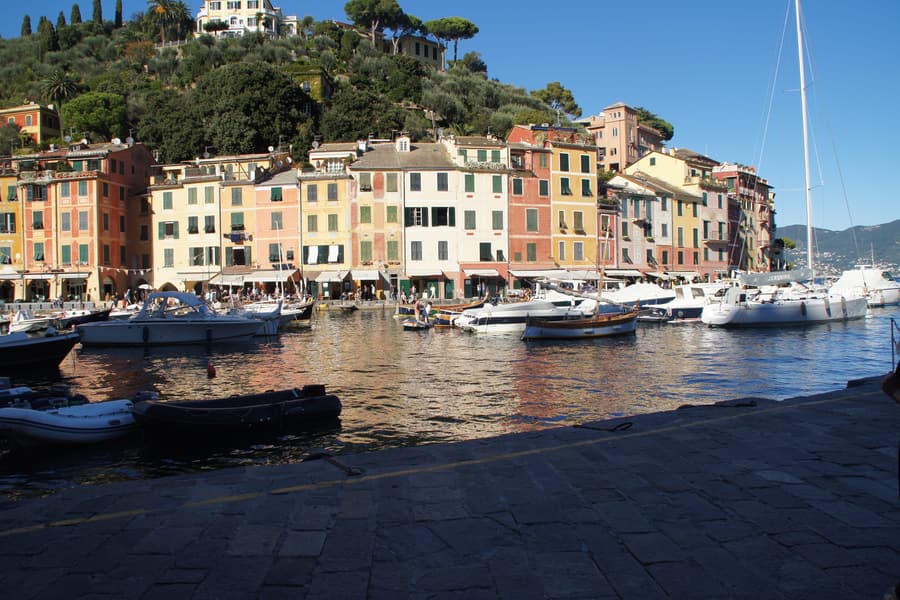 Portofino 40 minutes by train to Santa Margherita, then bus or boat.
 -
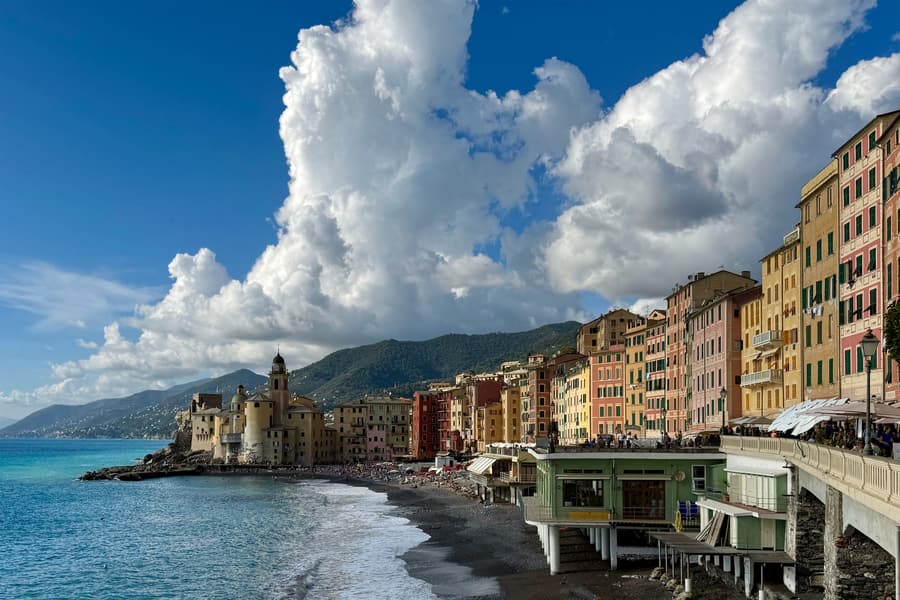 Camogli A working fishing town with tall painted houses, and the boat to San Fruttuoso.
 -
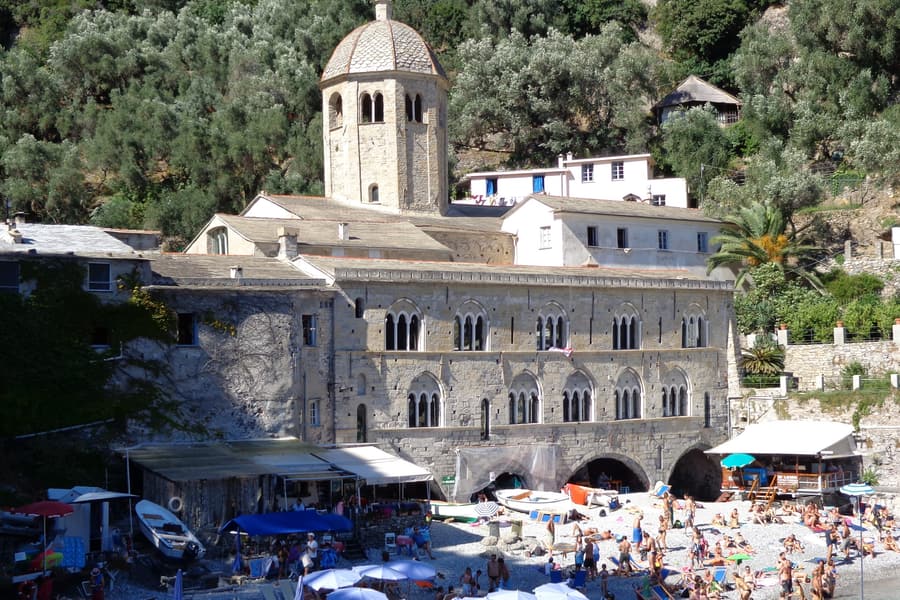 Abbazia di San Fruttuoso A tenth-century abbey in a cove reachable only on foot or by boat.
 -
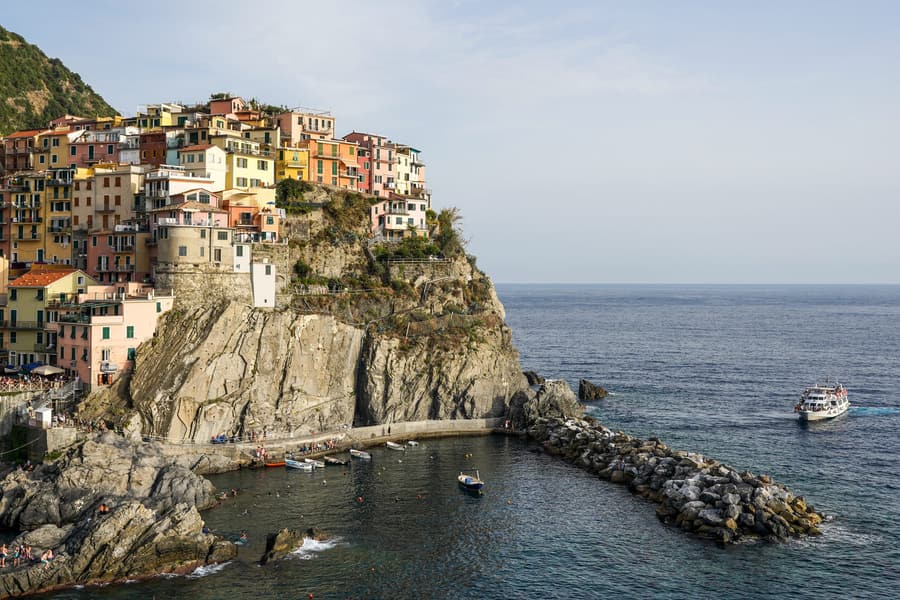 Cinque Terre An hour and a half east by train — change at Sestri Levante or Levanto.
 -
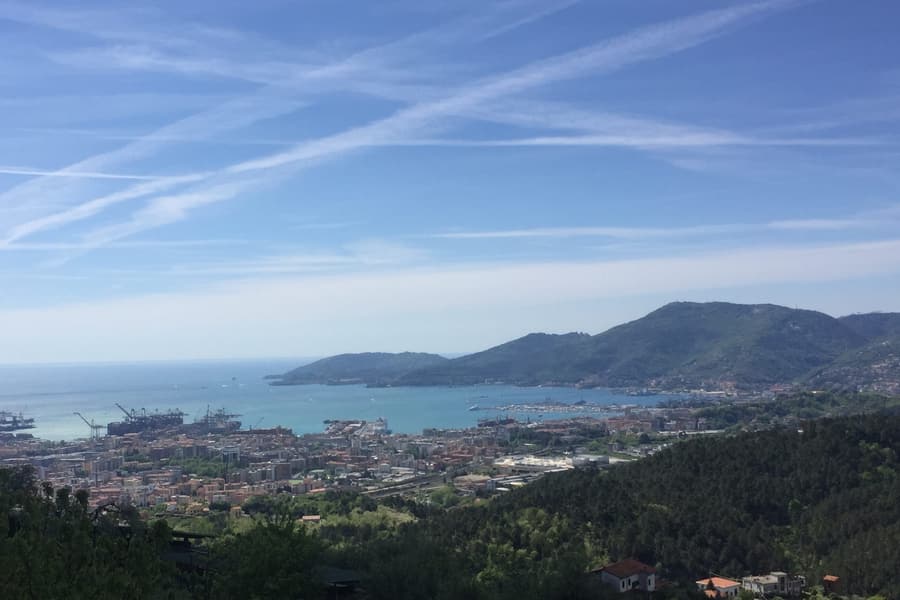 La Spezia The Cinque Terre's practical base, and the Gulf of Poets beyond it.
 -
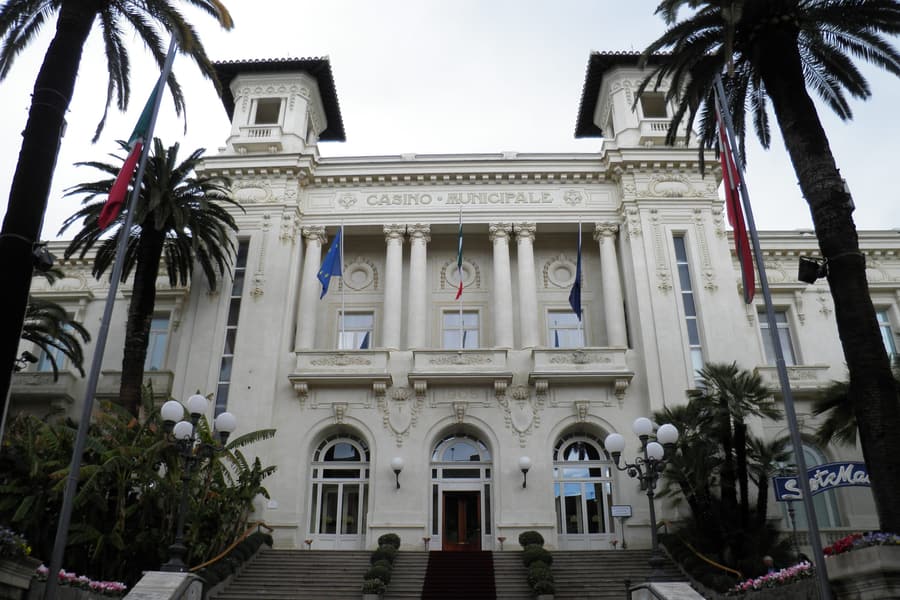 Sanremo The western Riviera's belle-époque resort, 90 minutes towards France.
Practical
- Best time to go
- April–June and September–October. Genoa is mild in winter and genuinely wet — it holds Italy's rainfall records — so bring a coat rather than avoid it. July and August are humid and the city empties for the coast. The Rolli Days, when private palaces open to the public, run a few times a year and are worth planning around.
- Getting there
- Genoa Cristoforo Colombo (GOA) is 10 minutes from the centre by the Volabus. Milan is 1h30 by train, Turin 1h45, Pisa 2h. The two main stations are Principe (west, near the port and the palaces) and Brignole (east, near the shopping streets) — check which one your hotel is nearer.
- Getting around
- The old town is walkable but confusing; the caruggi are not on a grid and phone GPS struggles between the tall buildings. Genoa is also vertical: ten public lifts and funiculars count as public transport and are covered by an ordinary ticket. One metro line runs along the waterfront. Do not attempt to drive into the centre.
- Eat & drink
- Pesto alla genovese, made with Ligurian basil, and properly served with trofie or trenette and potatoes and green beans. Focaccia — plain, oily, eaten at any hour — and focaccia di Recco, filled with soft cheese. Farinata, a chickpea pancake baked in a copper pan. Then the seafood, and the anchovies. A sciacchetrà or a Vermentino with it. Eat in the old town rather than on the waterfront.
- Know before you go
- Some caruggi in the Maddalena and around Via Prè are the city's red-light and drug-dealing streets — obvious when you are in one, best avoided after dark. The aquarium is very busy at weekends and school holidays; book. Focaccia bought at 08:00 is a completely different thing from focaccia bought at 16:00.