L'Aquila sits at 714 m in a bowl of the Abruzzo Apennines with the Gran Sasso — the highest massif in the range, at 2,912 m — filling the skyline to the north-east. It was founded in the thirteenth century by merging the populations of 99 surrounding villages, which is why the city has 99 fountains, 99 churches and a bell that still rings 99 times each evening. The 2009 earthquake killed 309 people and emptied the centre; reconstruction has taken more than a decade and is still visibly under way, but the main squares, the basilicas and the fortress are open again and the students are back.
For the mountains, first — this is the fastest route from Rome to genuinely wild high country, two hours door to door, and Campo Imperatore is unlike anywhere else in Italy. And for a regional capital that is in the middle of putting itself back together, which is interesting in a way polished cities are not.
Things to do
- Basilica di Santa Maria di Collemaggio — A pink-and-white geometric façade from 1287, restored after the earthquake and reopened in 2017, with Celestine V's tomb inside.
- Campo Imperatore — A twenty-kilometre high plain under the Gran Sasso — 'Italy's little Tibet', empty apart from horses and sheep.
- Rocca Calascio — The highest fortress in the Apennines at 1,460 m, ruined, free, and reached on foot from the village below.
- Fontana delle 99 Cannelle — Ninety-nine masks spouting water into a medieval trough — one, the story goes, for each of the villages that founded the city.
- Basilica di San Bernardino — A Renaissance façade by Cola dell'Amatrice on a fifteenth-century basilica, with a coffered gilt ceiling rebuilt after 1703 and again after 2009.
- The Abruzzo, Lazio and Molise National Park — Beech forest and open valleys around Pescasseroli, and the last population of Marsican brown bears — perhaps sixty animals.
- Arrosticini at a mountain grill — Ordered by the tens, off a brazier called a canala, eaten with bread and a glass of Montepulciano. The regional ritual.
Where to base yourself
The L'Aquila neighbourhoods worth knowing before you book.
- Coming soon Centro Storico Inside the walls: Piazza Duomo, the Basilica of San Bernardino, the Fontana delle 99 Cannelle and the Spanish fort. Still partly a building site, and the more interesting for it.
- Coming soon Collemaggio South-east, around the pink-and-white basilica where the Perdonanza is granted — the finest building in the region.
- Coming soon Fonte Cerreto & Assergi The Gran Sasso trailhead 20 minutes north, at the bottom of the cable car. Where you sleep if the mountain is the point.
- Coming soon Campo Imperatore The high plain itself at 1,800–2,100 m, with a 1930s hotel — Mussolini was imprisoned in it in 1943 — and nothing else.
- Coming soon Santo Stefano di Sessanio A Medici-era stone village 40 minutes east, restored as a scattered hotel. The best base in the mountains.
- Coming soon Sulmona An hour south: Ovid's birthplace, a Roman aqueduct across the main square and the confetti factories.
3 days in L'Aquila
- Day 1 The city
Collemaggio first, then walk in through the walls to San Bernardino and Piazza Duomo. Lunch of chitarra and lamb. Afternoon at the Forte Spagnolo and the MUNDA museum, then the 99 fountains at the bottom of the town. Arrosticini for dinner.
- Day 2 Gran Sasso
Drive or take the cable car up to Campo Imperatore. Walk on the plain — the Corno Grande trail if you are equipped, the easy circuits if not. Rocca Calascio and Santo Stefano di Sessanio in the afternoon, in that order, for the light.
- Day 3 Parks and villages
South to the Abruzzo national park at Pescasseroli, with Scanno and its lake on the way back. Or east to Sulmona for the confetti and the Majella.
Day trips
Worth the train or the drive from L'Aquila.
-
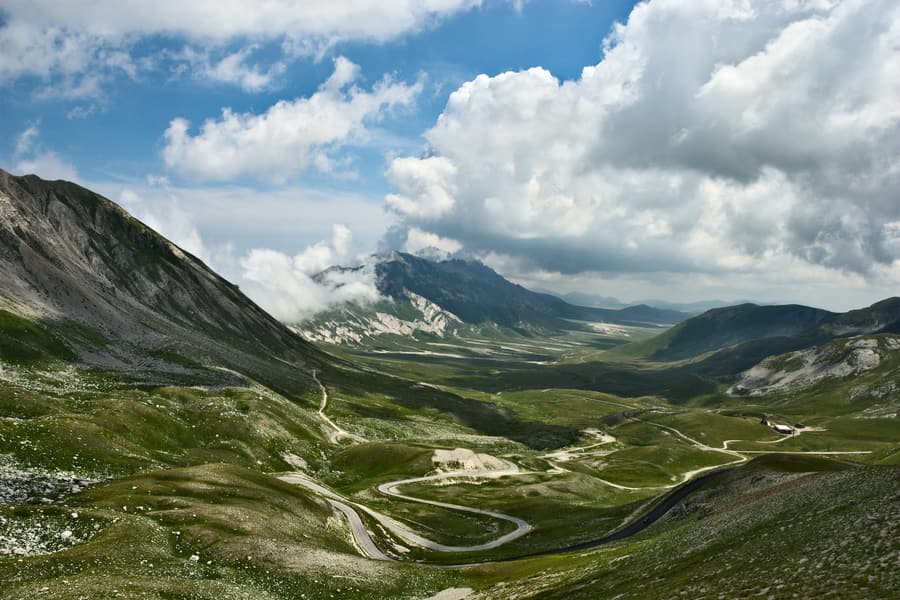 Gran Sasso & Campo Imperatore Forty minutes up to the high plain under the Apennines' highest peak.
 -
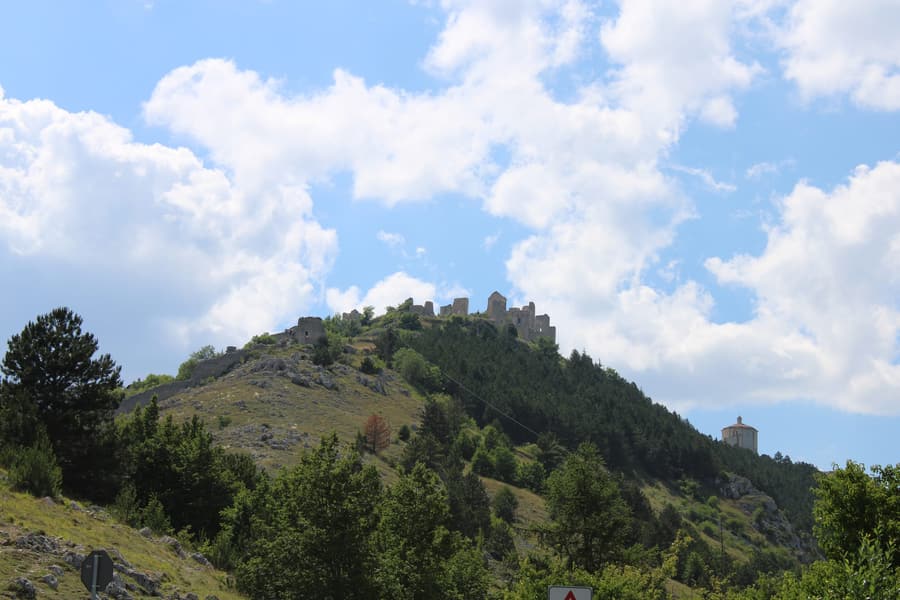 Rocca Calascio The highest fortress in the Apennines, an hour east.
 -
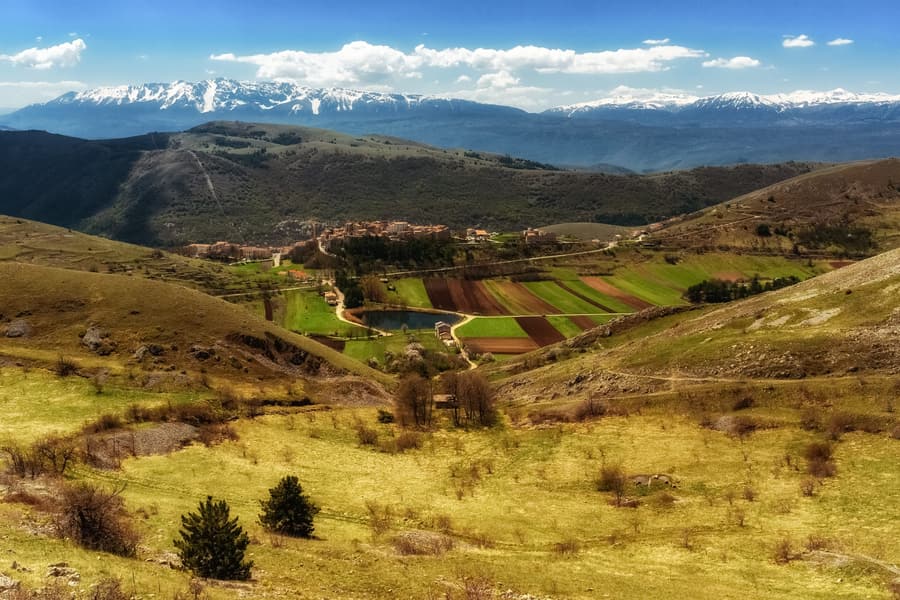 Santo Stefano di Sessanio A Medici stone village restored as a scattered hotel, next to Calascio.
 -
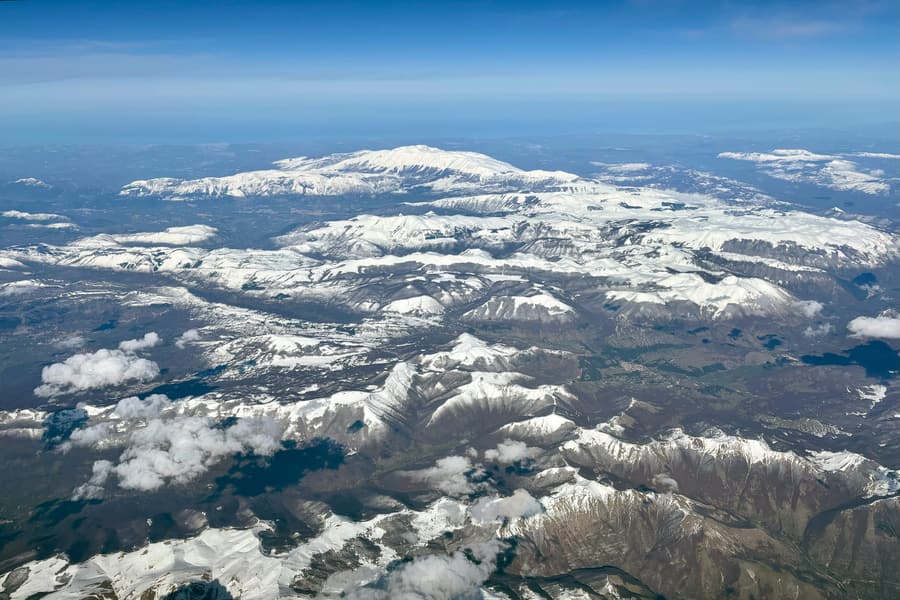 Abruzzo, Lazio & Molise National Park Bears, wolves and beech forest around Pescasseroli, about 1h30 south.
 -
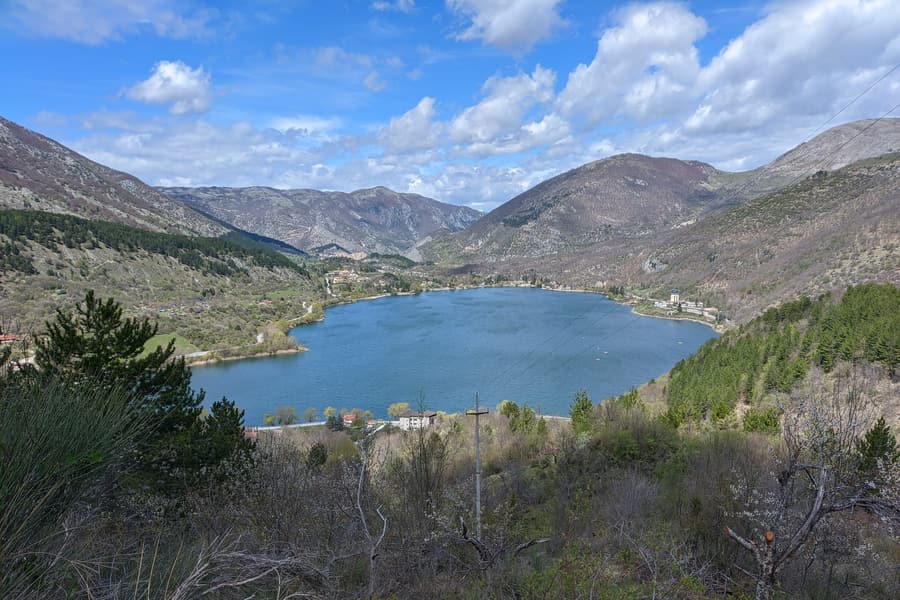 Lake Scanno A heart-shaped mountain lake below one of the region's best villages.
 -
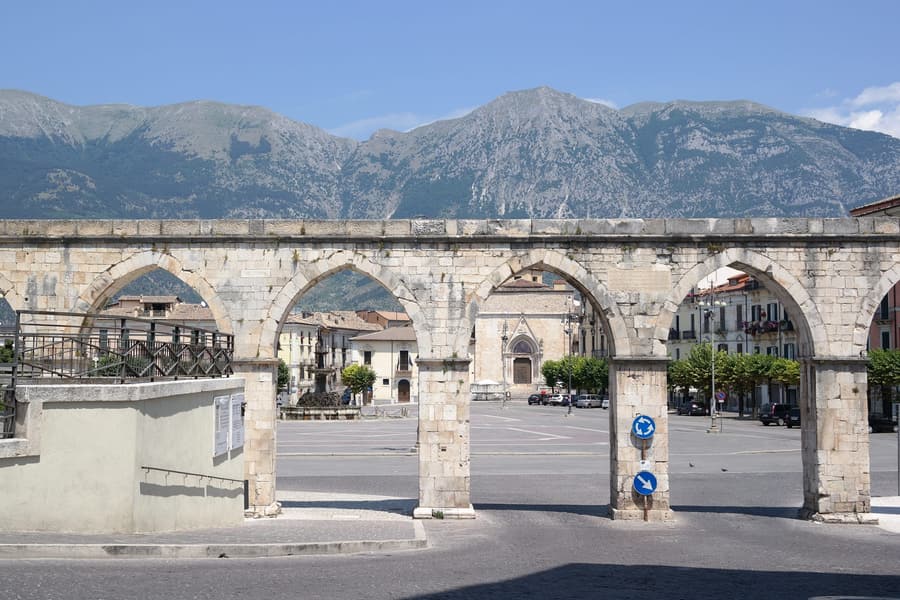 Sulmona Ovid's town, a Roman aqueduct across the square, and sugared almonds — an hour south.
Practical
- Best time to go
- June–September for the mountains and the high plains; December–March for skiing at Campo Felice and Ovindoli. The Perdonanza Celestiniana, a papal jubilee first granted in 1294, is held on 28–29 August. Winter here is a proper mountain winter — snow, and roads that close.
- Getting there
- Pescara (PSR) is the nearest airport at 1h30; Rome Fiumicino is 2h. The fast way in is the coach from Rome Tiburtina, roughly 1h40, running frequently. The railway is slow and indirect. A car is close to essential for the parks and the villages.
- Getting around
- The centre is compact and walkable, though building sites still reroute things. Everything else needs a car: Campo Imperatore is 40 minutes up a mountain road, Rocca Calascio an hour, the Abruzzo national park about 1h30. The Gran Sasso cable car from Fonte Cerreto saves the drive when it is running.
- Eat & drink
- Abruzzese food is mountain food: arrosticini (skewers of castrated mutton, grilled over a long narrow brazier and eaten by the dozen), maccheroni alla chitarra with lamb ragù, pecorino, and saffron from the Navelli plain — Italy's finest, grown at 700 m. Confetti from nearby Sulmona. Montepulciano d'Abruzzo and Trebbiano to drink, and a Centerbe or genziana afterwards.
- Know before you go
- Reconstruction means scaffolding, closed streets and changed opening hours — check before making a special trip to a specific church. Mountain weather turns fast and Campo Imperatore is exposed at 2,130 m; the road can close with no notice in winter. Bears and wolves are genuinely present in the national park, which is a reason for care with food, not fear.