Matera is a city cut into a ravine. The Sassi — two districts of caves, cisterns and rock-cut churches carved into the tufa over some 9,000 years of continuous habitation — were still home to 15,000 people, their animals and no running water when Carlo Levi described them in 1945. The government forcibly cleared them in the 1950s as 'the shame of Italy'. They were re-occupied from the 1980s, made a UNESCO site in 1993, and Matera was European Capital of Culture in 2019. It is now one of the most extraordinary places to sleep in Europe — many hotels are the caves.
Because there is nothing else like it: a whole city of rock architecture facing a canyon of rock churches, and a story of abandonment and return that is still visibly in progress. It has also been Jerusalem in a dozen films, from Pasolini to Gibson to No Time to Die.
Things to do
- The Sassi at first light — From the Piazzetta Pascoli or the Convento di Sant'Agostino, before the tour groups. The stone goes from grey to gold in about twenty minutes.
- Casa Grotta di Vico Solitario — A cave house restored to how it was in the 1950s — one room for a family, a mule, a loom and a cistern.
- The rupestrian churches — Santa Maria de Idris, San Pietro Barisano and Santa Lucia alle Malve, with Byzantine frescoes cut straight into the tufa.
- Crossing to the Murgia — Down into the ravine and up the other side to the Belvedere di Murgia Timone, where every film shot of the city is taken from.
- The Palombaro Lungo — A vast underground cistern beneath the main square, 15 m deep, only rediscovered in the 1990s.
- Matera Cathedral — Apulian Romanesque on the highest point of the Civita, reopened in 2016 after thirteen years of restoration.
- A cave restaurant — Eating in a hollowed-out tufa room is a specific pleasure, and the Lucanian food is good enough to justify it.
Where to base yourself
The Matera neighbourhoods worth knowing before you book.
- Coming soon Sasso Caveoso The southern, older and rawer district, facing the canyon — the rock churches, the cave museum house, and the classic views.
- Coming soon Sasso Barisano The northern district, more built-up with carved façades over the caves. Most of the boutique cave hotels and restaurants are here.
- Coming soon Civita The spur between the two Sassi, with the cathedral on top of it. The centre of the whole amphitheatre.
- Coming soon Piano The 'flat' upper town built from the eighteenth century onwards — Piazza Vittorio Veneto, the shops, the banks, the ordinary city.
- Coming soon Murgia Materana The park across the ravine: 150 rock churches, and the path down and up that gives the best view back at the Sassi.
- Coming soon Montescaglioso A Benedictine abbey town 15 minutes south, with a fine cloister and a view over the Bradano valley.
3 days in Matera
- Day 1 The Sassi
Sunrise from the belvedere. Guided walk through Sasso Caveoso — the rock churches and a cave house — then lunch in the Barisano. Afternoon: the Palombaro Lungo and the cathedral. Aperitivo facing the canyon as the lights come on.
- Day 2 Across the ravine
Early walk down into the Gravina and up to the Murgia Timone belvedere, with the rock churches on that side. Back for a late lunch. Afternoon in the Piano — MUSMA, the modern city, and the shops.
- Day 3 Basilicata and Puglia
Either north into the Lucanian Dolomites for Castelmezzano and Pietrapertosa, or east into Puglia for Alberobello and the Itria Valley.
Day trips
Worth the train or the drive from Matera.
-
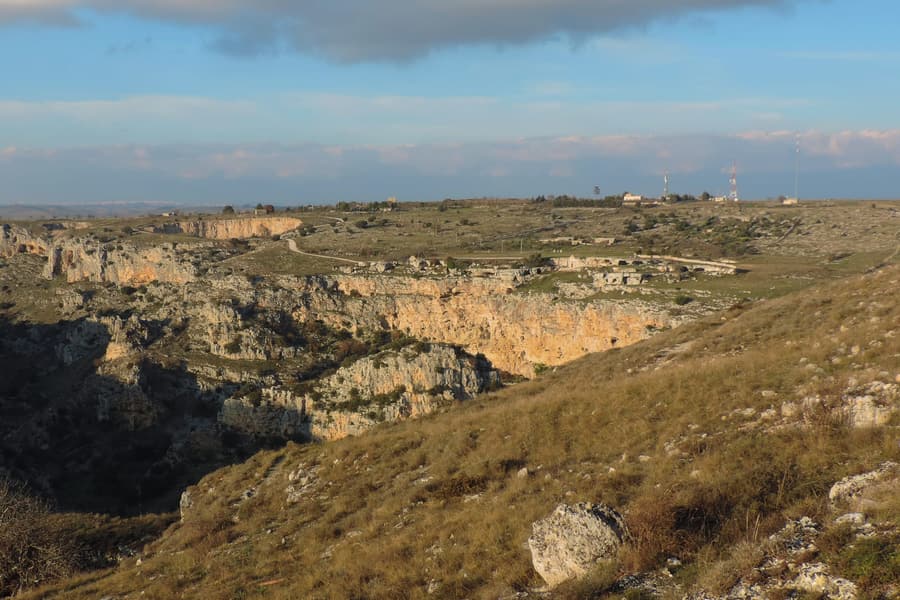 Murgia Materana Park The canyon opposite, with 150 rock churches — and the view back at the Sassi.
 -
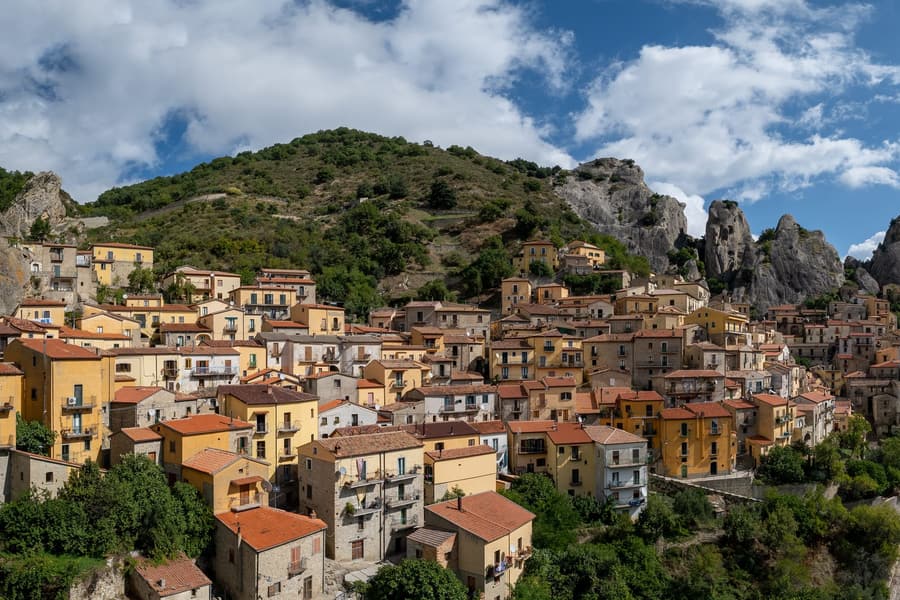 Castelmezzano & Pietrapertosa The Lucanian Dolomites and the zip line between two villages, about 1h30 west.
 -
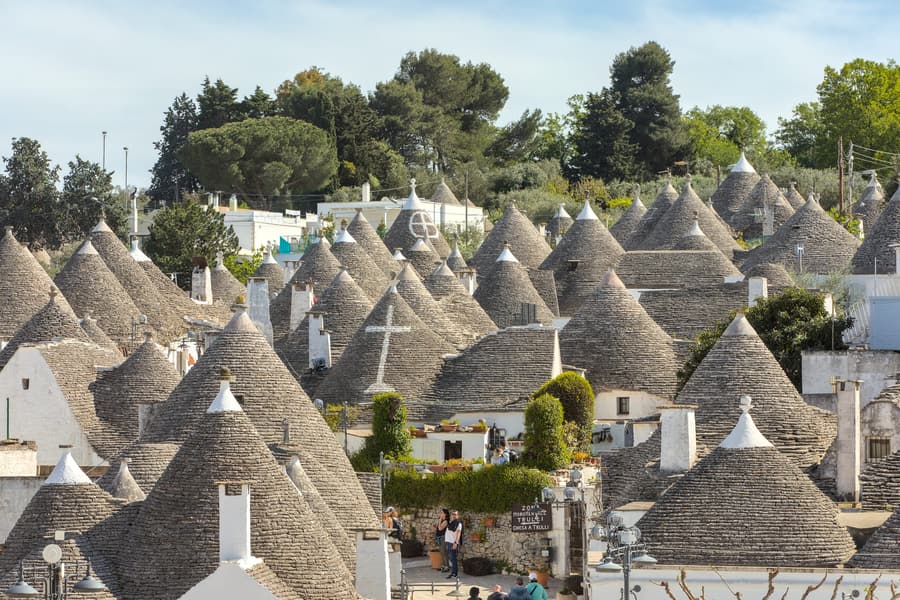 Alberobello The trulli, an hour east into Puglia.
 -
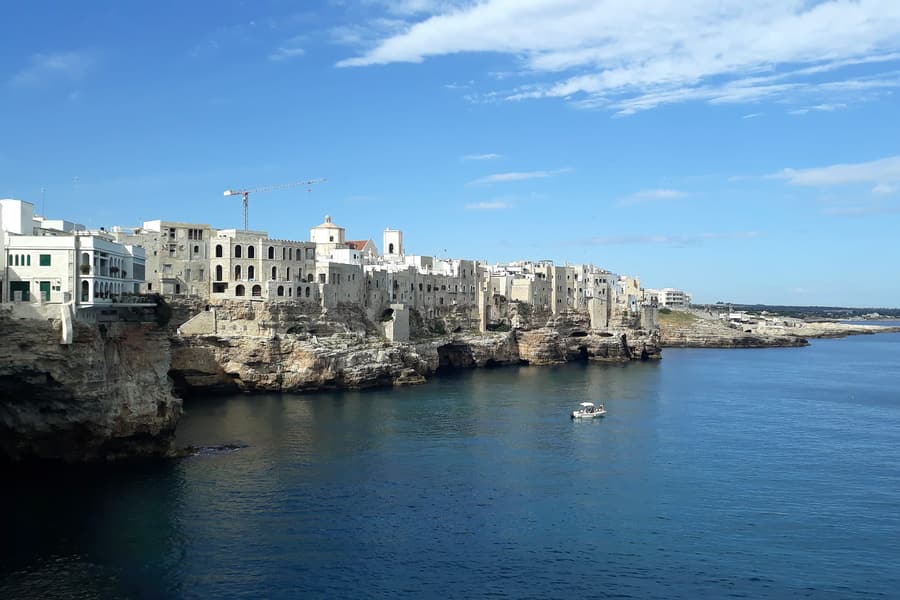 Polignano a Mare A cliff town and a beach in a ravine, an hour and a half north-east.
 -
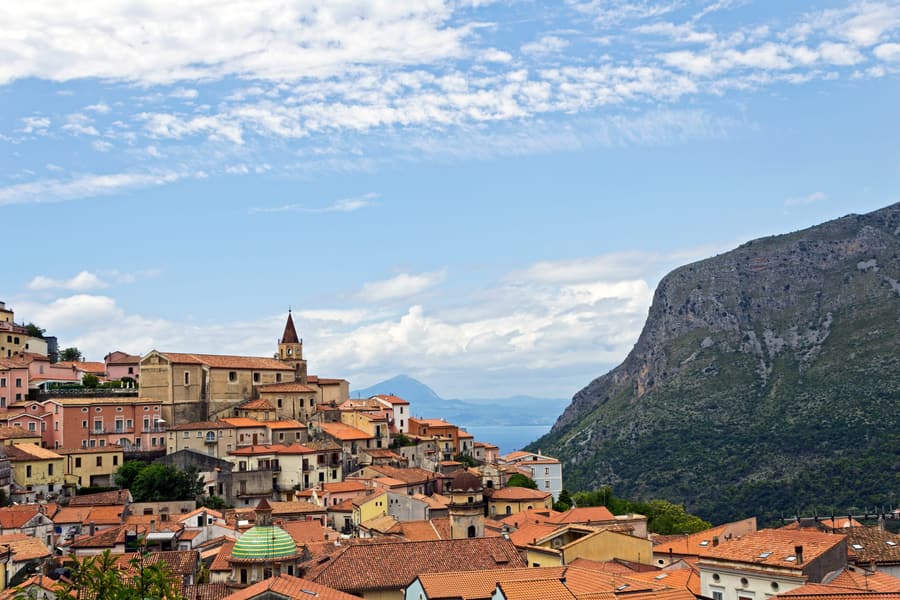 Maratea Basilicata's Tyrrhenian coast, about 2h30 west — better as an overnight.
Practical
- Best time to go
- April–June and September–October. Matera in August is punishing — the stone holds heat and there is little shade — and in deep winter it can be bitter and beautiful. Sunrise and sunset over the Sassi from the Piazzetta Pascoli belvedere are the two moments the city is built for.
- Getting there
- Bari (BRI) is the airport and the practical gateway, an hour by road. There is no state railway to Matera — the private Ferrovie Appulo Lucane line from Bari takes about 1h30 and does not run on Sundays, so most people take the coach or drive. From Naples it is about 3h30.
- Getting around
- On foot, and it is hard work: the Sassi are stairs, not streets, and the drops are real. Wear proper shoes. Luggage is a genuine problem — many cave hotels are a long flight of steps from any road, so check how they handle transfers. Tuk-tuks and small electric shuttles run the main routes for those who need them.
- Eat & drink
- Lucanian cooking is bread-based and poor by history: pane di Matera, a huge high-crusted loaf with DOP status that keeps for a week; cialledda, a bread salad; crapiata, a bean and grain soup; orecchiette with cime di rapa; peperoni cruschi — dried sweet peppers flash-fried until they shatter. Pecorino and caciocavallo, and Aglianico del Vulture, a serious volcanic red from the north of the region.
- Know before you go
- The rock churches are scattered and most need a ticket or a guide; several are locked and open only on a tour. Do not go into the Murgia canyon in high summer without water and a hat — there is no shade and no water. Guides matter here more than in most Italian cities; the Sassi are hard to read without one.