Trieste was the Habsburg Empire's only real seaport for five hundred years, and it still reads as a piece of Vienna dropped on the Adriatic — neoclassical ministries, Viennese cafés, a vast sea-facing square, and street signs that switch between Italian, Slovene and German. It only became Italian in 1954, after a decade as a disputed free territory. Behind the city the Carso limestone plateau rises to 400 m, riddled with caves and swept by the bora, a north-easterly that regularly passes 120 km/h and has ropes strung along some streets for pedestrians.
For the most un-Italian city in Italy, and one of the most interesting: Joyce wrote most of Ulysses here, Svevo and Saba were locals, and the coffee culture is a genuine institution — Trieste handles a large share of Italy's green coffee imports and Illy was founded here. It is also the base for Miramare, Aquileia's mosaics, the Collio wine hills and the Slovenian border 15 minutes away.
Things to do
- Piazza Unità d'Italia — The largest sea-facing square in Europe, closed on three sides by Habsburg palaces and open on the fourth to the Adriatic.
- Miramare Castle — Maximilian's white castle on its promontory, with the rooms as he left them in 1864 and a marine reserve offshore.
- The historic cafés — Caffè San Marco, Tommaseo, degli Specchi — Habsburg rooms where you can sit for two hours over one coffee, as intended.
- San Giusto castle and cathedral — A Romanesque cathedral made by fusing two earlier churches, with Byzantine mosaics, and a Venetian fort next door.
- Grotta Gigante — A single cave chamber on the Carso big enough to hold St Peter's — 500 steps down and back up.
- An osmiza — Farmhouse wine and ham on the Carso, sold at the kitchen table for a few weeks a year. The most local thing you can do here.
- Risiera di San Sabba — A rice mill turned Nazi camp, now a national memorial. Difficult, important, and honestly presented.
Where to base yourself
The Trieste neighbourhoods worth knowing before you book.
- Coming soon Borgo Teresiano The eighteenth-century grid around the Canal Grande, with the cafés, the shops and most of the hotels. The obvious base.
- Coming soon Cittavecchia The old town climbing towards San Giusto — Roman theatre, arch, and the tangle that predates the Habsburgs.
- Coming soon San Giusto The cathedral hill with the castle on top, the Roman forum beside it and the whole gulf below.
- Coming soon Barcola The seafront strip north towards Miramare, where the city swims off concrete terraces under the pines all summer.
- Coming soon Il Carso The limestone plateau above: Slovene-speaking villages, the Grotta Gigante, osmize and the sinkholes.
- Coming soon Muggia Across the bay, and the only Italian town of Istria — Venetian, small, and a 30-minute ferry.
3 days in Trieste
- Day 1 Habsburg Trieste
Piazza Unità and the Canal Grande in the morning, with a coffee at San Marco. Up to San Giusto for the cathedral, castle and Roman remains. Lunch from a buffet counter. Afternoon at the Museo Revoltella, then the seafront walk to Barcola at sunset.
- Day 2 Miramare and the Carso
Bus to Miramare for the castle and park. Back for lunch, then up onto the Carso — Grotta Gigante, the Napoleonica clifftop path, and an osmiza if one is open. Dinner of jota and goulash.
- Day 3 Roman and Friulian
West to Aquileia for the basilica's mosaic floor and Grado's lagoon, or north-east into the Collio wine hills and Cividale del Friuli.
Day trips
Worth the train or the drive from Trieste.
-
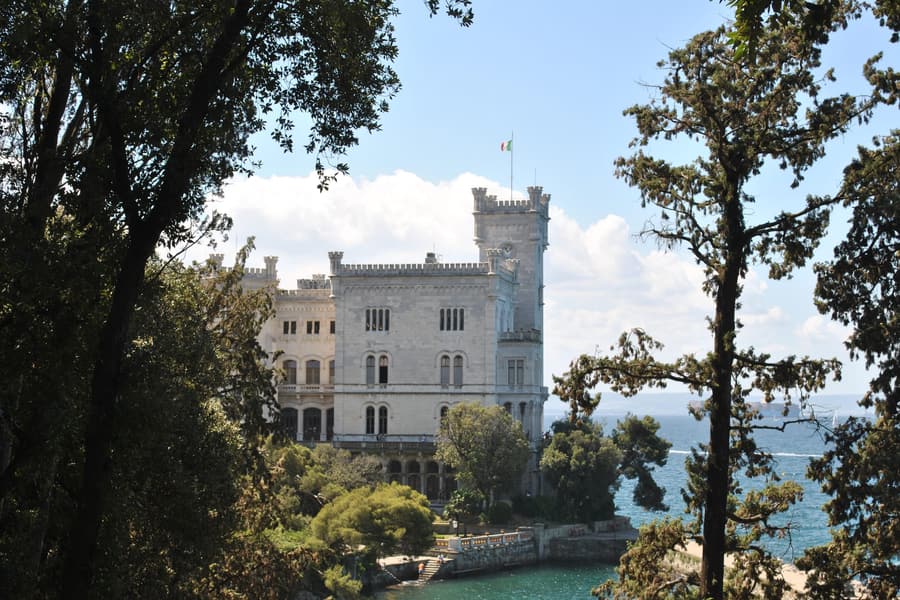 Miramare Castle 20 minutes up the coast — the Habsburg castle and its marine reserve.
 -
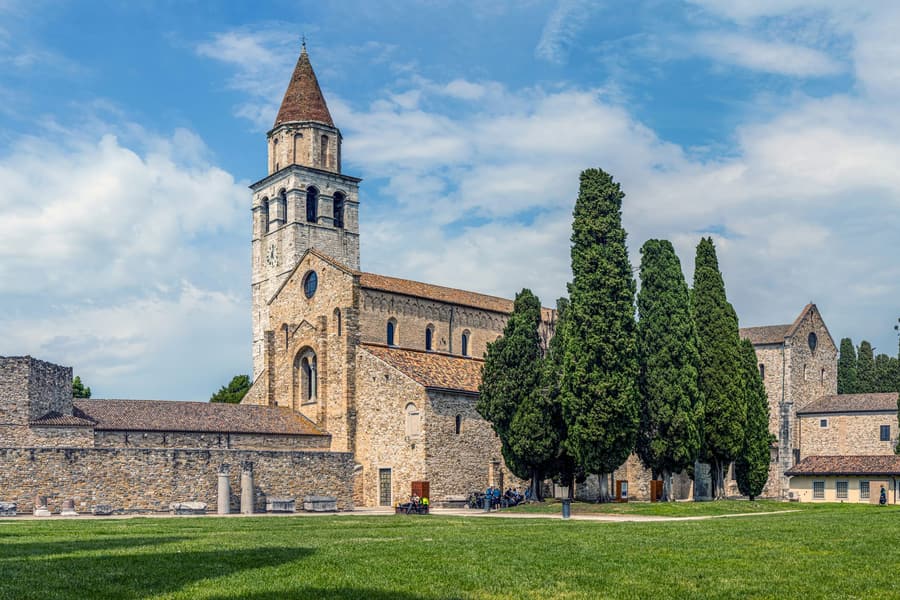 Aquileia Basilica The largest early-Christian mosaic floor in the West, 50 minutes west.
 -
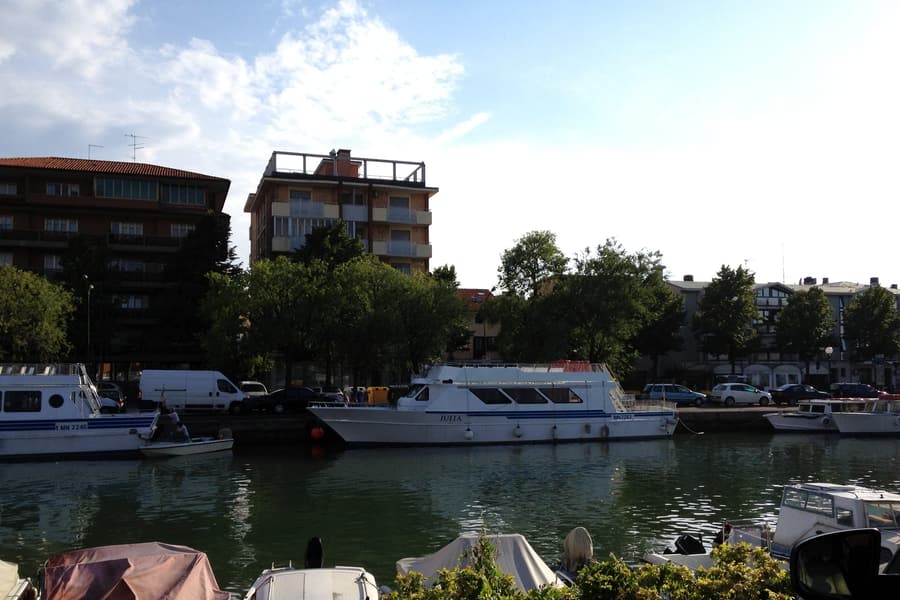 Grado & the lagoon A lagoon island resort with an early-Christian centre, an hour west.
 - Collio Wine Road Border-straddling hills making Italy's most admired whites, an hour north.
-
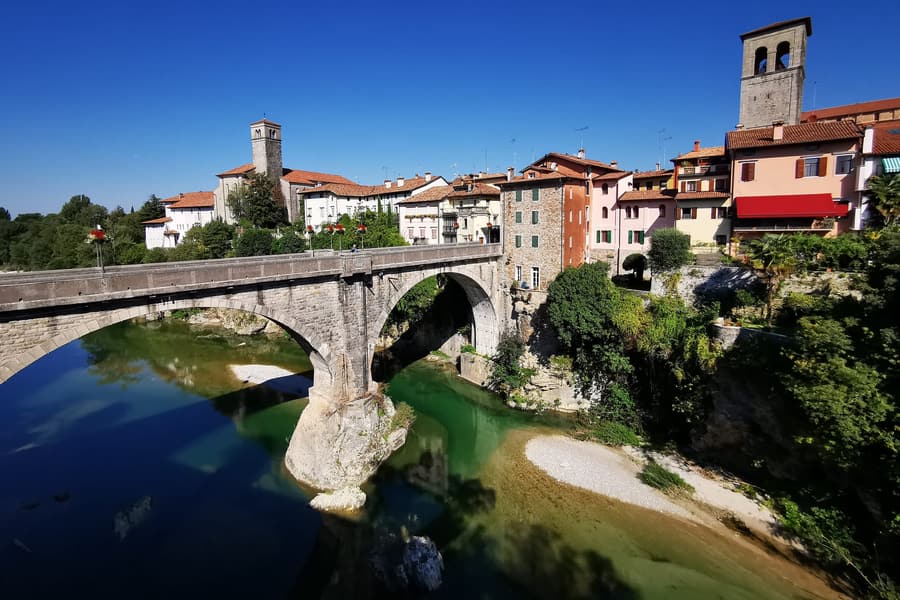 Cividale del Friuli The Lombards' first Italian capital, about 1h15 north.
 -
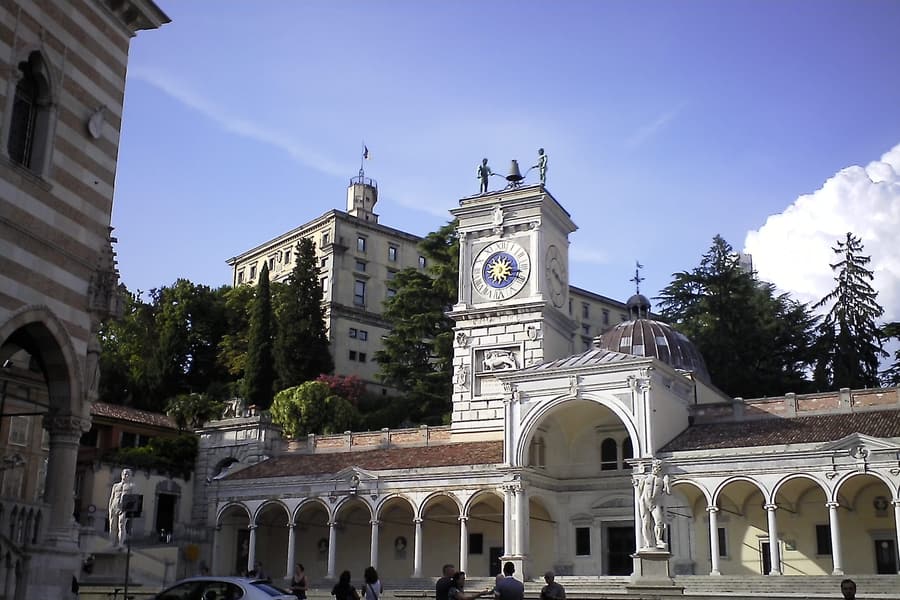 Udine Venetian squares and Tiepolo frescoes, an hour north-west.
Practical
- Best time to go
- May–June and September–October. The bora blows hardest between October and March and can be spectacular rather than pleasant. Summer is warm but not extreme, and the city does not empty in August the way inland Italy does. The Barcolana regatta in the second week of October fills the gulf with two thousand boats and every hotel in the region.
- Getting there
- Trieste Airport (TRS) at Ronchi dei Legionari is 35 minutes north, with its own railway station on the Venice–Trieste line. Venice is 2h by train, Ljubljana about 1h45 by bus, Vienna reachable by direct rail. The city is walkable from the central station.
- Getting around
- Walk the centre — it is flat and gridded along the waterfront. The Opicina tramway, a historic tram-and-funicular hybrid up onto the Carso, has been suspended for restoration for several years; check before planning around it. Buses reach Miramare in 20 minutes. A car helps for the Carso and the Collio.
- Eat & drink
- Triestine food is Austro-Hungarian with fish: jota (a sauerkraut, bean and potato soup), goulash, cevapcici, boiled pork with kren from the buffet counters, and strudel and Sachertorte in the cafés. Order coffee by the local vocabulary — a 'nero' is an espresso, a 'capo in b' is a macchiato in a glass. The osmize are the local eccentricity: Carso farmhouses licensed to sell their own wine and ham for a few weeks a year, signposted by a branch hung at the roadside.
- Know before you go
- The bora is not a joke — in a strong episode the seafront is genuinely dangerous and ferries stop. Many museums close Mondays. The Risiera di San Sabba, the only Nazi extermination camp on Italian soil, is a national monument and a sobering hour; it is not a general sightseeing stop. Osmize open on a rotating calendar published locally — you have to look it up.