Turin was the first capital of unified Italy and the seat of the House of Savoy for four centuries, and it looks it: 18 km of arcaded pavements, a grid of baroque boulevards, and a ring of royal palaces that UNESCO listed as a group. For most of the twentieth century it was a company town — Fiat's — and was written off as grey and industrial. That is now thoroughly out of date. It has Italy's best café culture, the largest Egyptian collection outside Cairo, the Alps on the skyline, and the Langhe wine hills an hour south.
For the Museo Egizio and the Mole Antonelliana, for a city that feels French rather than Italian, and for chocolate and vermouth, both of which were effectively invented here. It is also the most under-priced major city in northern Italy — hotel rates are a fraction of Milan's, 50 minutes away.
Things to do
- Museo Egizio — The oldest museum of Egyptian antiquities in the world and the largest collection outside Cairo — a temple, a full tomb assemblage and the Turin king list.
- Mole Antonelliana and the Cinema Museum — A glass lift up the middle of the 167 m spire, and the National Cinema Museum spiralling round the inside of it.
- The Royal Palace complex — Palazzo Reale, the Armeria Reale, the Galleria Sabauda and the Chapel of the Holy Shroud, all on one ticket.
- Reggia di Venaria Reale — A Savoy hunting palace the size of a small town, restored after decades as an army barracks. 30 minutes out.
- Basilica di Superga — A rack tramway up the hill to a domed basilica with the Savoy tombs and, on a clear day, the whole alpine arc.
- Caffè culture — Al Bicerin (1763), Baratti & Milano, Mulassano — historic cafés that still serve properly, at marble counters.
- Lingotto's rooftop test track — Fiat drove new cars round the roof of the factory. It is now a walkable garden with Piano's glass 'bubble' meeting room on it.
Where to base yourself
The Turin neighbourhoods worth knowing before you book.
- Coming soon Centro & Quadrilatero Romano The Roman street grid, the two big piazzas and the arcades. The Quadrilatero's narrow lanes hold the aperitivo bars and the best-value eating.
- Coming soon San Salvario Behind Porta Nuova: multi-ethnic, full of bars and small restaurants, and the liveliest evenings in the city. Backs onto the Valentino park.
- Coming soon Vanchiglia North-east of the Mole, along the Po — student bars, independent shops and low rents. The neighbourhood that has changed most.
- Coming soon Crocetta Residential, liberty-style, expensive and quiet, with a good weekday market. Where Turin's professionals live.
- Coming soon Borgo Po & the hill Across the river under the Monte dei Cappuccini and Superga — villas, views back over the city, and the Alps behind it.
- Coming soon Lingotto Fiat's old factory, converted by Renzo Piano, with the test track still on the roof and the Pinacoteca Agnelli in a box above it.
3 days in Turin
- Day 1 Egypt and the Mole
Museo Egizio at opening — three hours minimum. Lunch in the Quadrilatero. Afternoon up the Mole Antonelliana and round the Cinema Museum. Aperitivo in Piazza Vittorio Veneto, dinner in San Salvario.
- Day 2 The Savoy city
Palazzo Reale and the Galleria Sabauda in the morning; Piazza San Carlo and the arcades on foot afterwards. Afternoon out to Venaria Reale. Evening back for bicerin and a vermouth.
- Day 3 Hills and wine
Either the rack tram up to Superga and a walk on the hill, or the train south to Alba for the Langhe — truffles in autumn, Barolo cellars year-round.
Day trips
Worth the train or the drive from Turin.
-
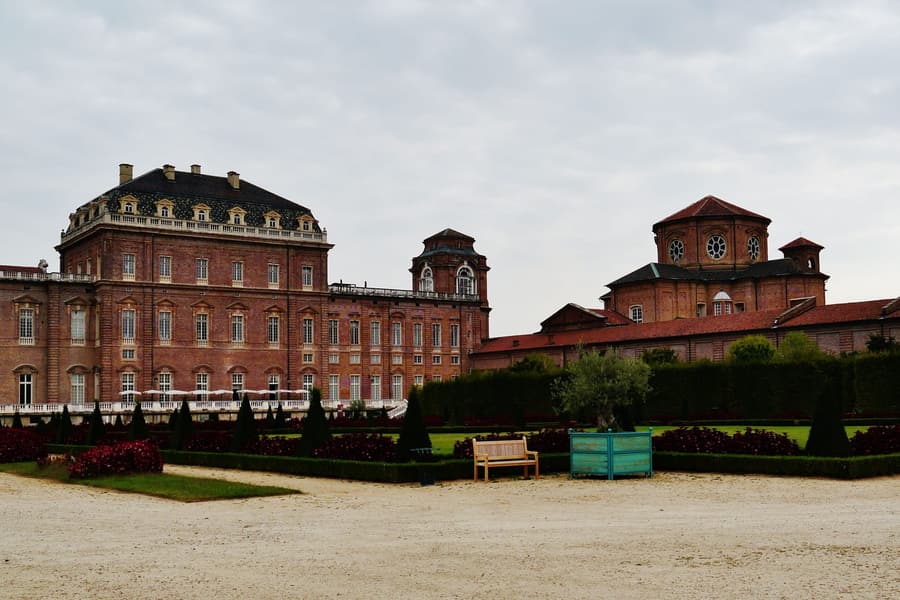 Reggia di Venaria Reale The Savoy hunting palace and its gardens, 30 minutes by bus.
 -
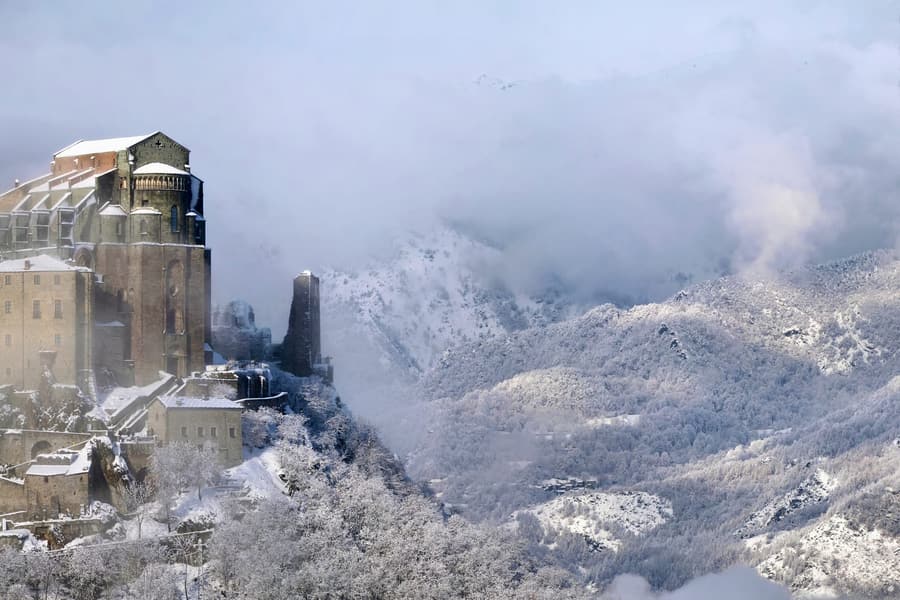 Sacra di San Michele An abbey welded to a rock spike above the Val di Susa — Piedmont's symbol.
 -
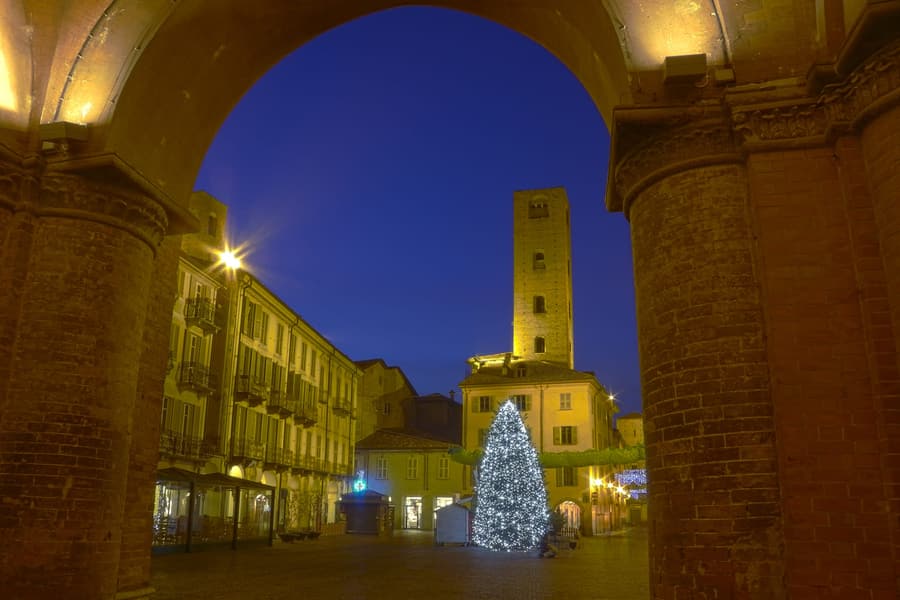 Alba An hour south: the white truffle capital and the gateway to Barolo.
 -
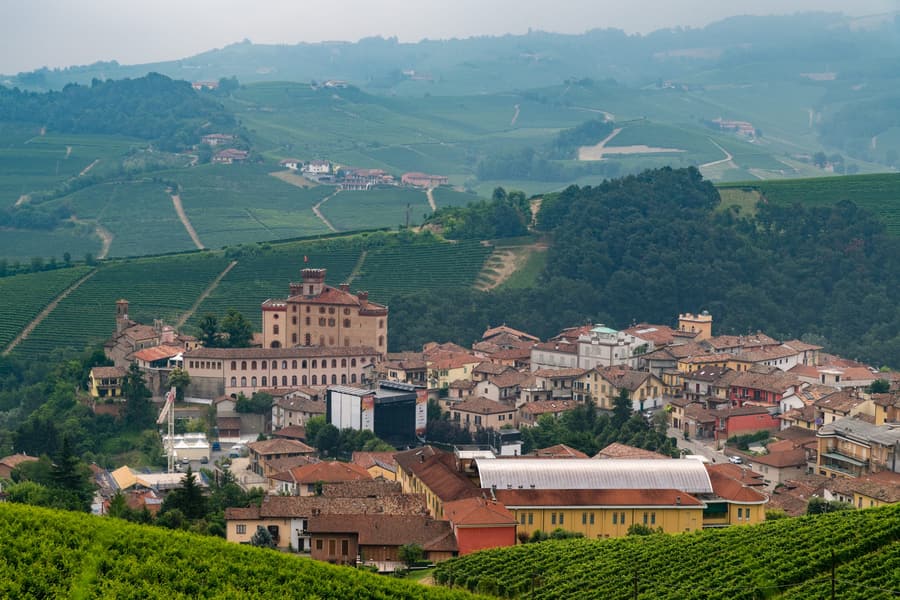 Langhe, Barolo & Barbaresco The UNESCO vineyard hills — Barolo, Barbaresco, La Morra.
 -
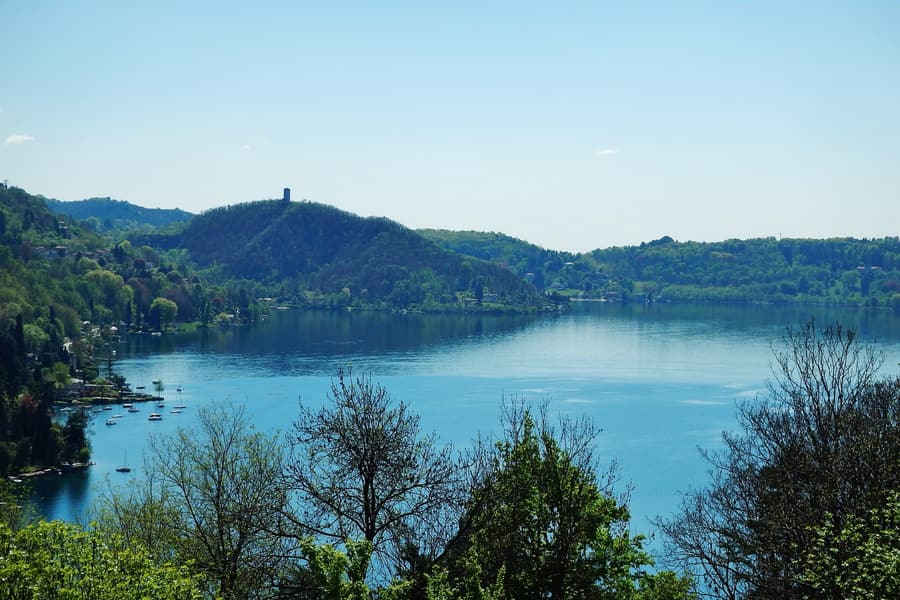 Lake Orta & Orta San Giulio The smallest and quietest of the great lakes, with a monastery island.
 -
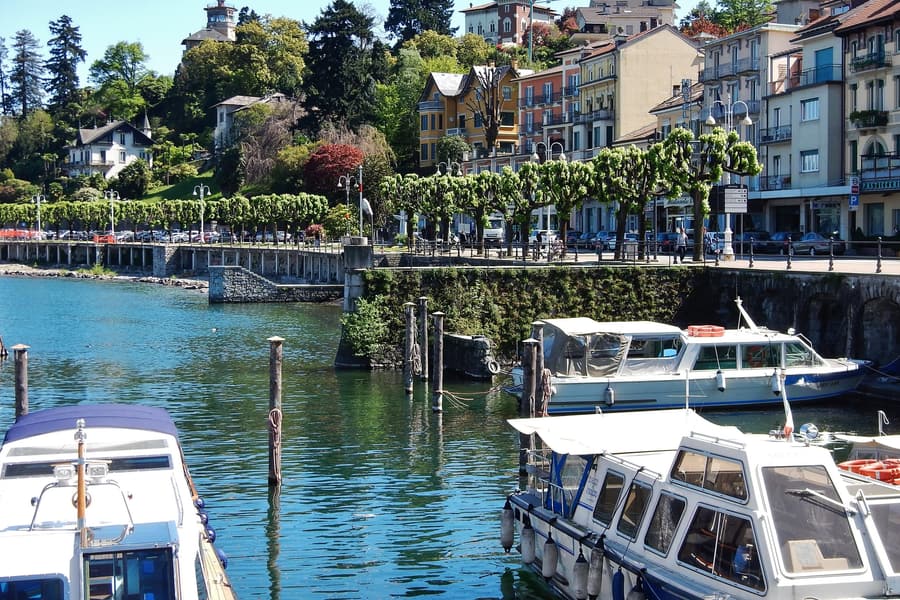 Stresa Lake Maggiore and the Borromean Islands, 1h30 by train.
Practical
- Best time to go
- April–June and September–October. Turin genuinely works in winter: the arcades were built so the royal family could cross the city in bad weather, and they still do the job. November has the Salone del Gusto/Terra Madre food fair in even years and the white truffle season an hour south. July–August is hot and much of the city closes in August.
- Getting there
- Turin Caselle (TRN) is 30 minutes by shuttle bus or the SFM A train. Milan Malpensa is often cheaper and 1h45 by coach. Porta Susa is the high-speed station — Milan 50 minutes, Bologna 1h50, Rome 4h, and direct TGV to Paris in 5h30.
- Getting around
- Walk the centre — it is a grid and it is arcaded. One driverless metro line runs from Porta Nuova out to the west; trams fill the rest, including the historic line 7 loop. The Torino+Piemonte Card covers the museums and the transport, and pays for itself in two days.
- Eat & drink
- Piedmontese cooking is the richest in Italy: vitello tonnato, agnolotti del plin, bagna càuda (a hot anchovy-garlic dip, autumn and winter), tajarin with butter and truffle. Turin invented gianduja chocolate — the hazelnut paste that became Nutella — and bicerin, a layered coffee, chocolate and cream drink served in a glass. Aperitivo here is a full buffet and the vermouth is local: Carpano, Cinzano and Martini all started within a few streets.
- Know before you go
- The Shroud is almost never on display — the cathedral holds a photographic reproduction and the real cloth is shown perhaps once a decade. The Museo Egizio is busy at weekends; book. Porta Nuova's immediate surroundings are scruffy after dark, though not dangerous. Many restaurants close Sunday evening and Monday.