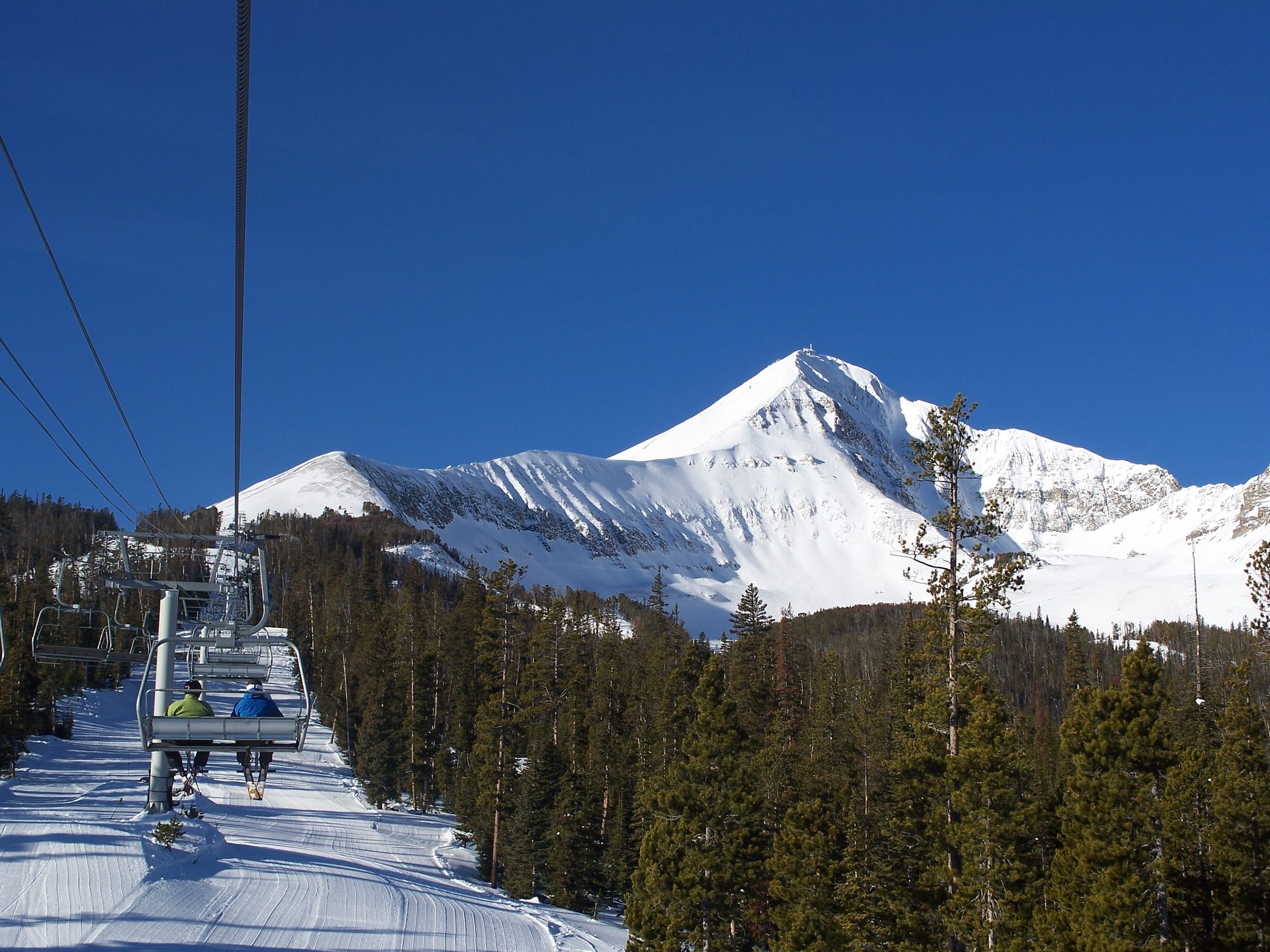
Big Sky is a vast, uncrowded Montana resort crowned by the pyramid of Lone Peak, offering enormous acreage, serious expert terrain and an unmistakable sense of Rocky Mountain space.
- 2,078 m Base
- 3,402 m Top lift
- 1,324 m Vertical
- 289 Pistes mapped
- 45 Lifts
Best known for
Après & vibe
Big Sky's après is low-key and mountain-town in flavour, centred on the Mountain Village base with relaxed bars, breweries and dining rather than a glitzy scene; the town of Big Sky and nearby Bozeman add further options.
The resort
Big Sky is defined by scale and solitude: a huge spread of terrain across several connected mountains, watched over by the distinctive rock pyramid of Lone Peak. Even on busy weeks the acreage swallows the crowds, so lift lines are famously short and the runs feel your own. The terrain ranges from mellow, sunny groomers on the lower flanks to genuinely serious steeps, chutes and couloirs off the summit. It has an authentic, unfussy Montana character, wild and expansive, with big skies and long sightlines in every direction.
Go if you want big-mountain terrain without the queues, and especially if you are an advanced or expert skier drawn to the summit's steeps. It rewards strong intermediates who like to roam, adventurous skiers chasing lift-served and hike-to lines, and anyone who values space and quiet over resort glamour. Families find plenty of gentle terrain lower down, well away from the extreme stuff up high.
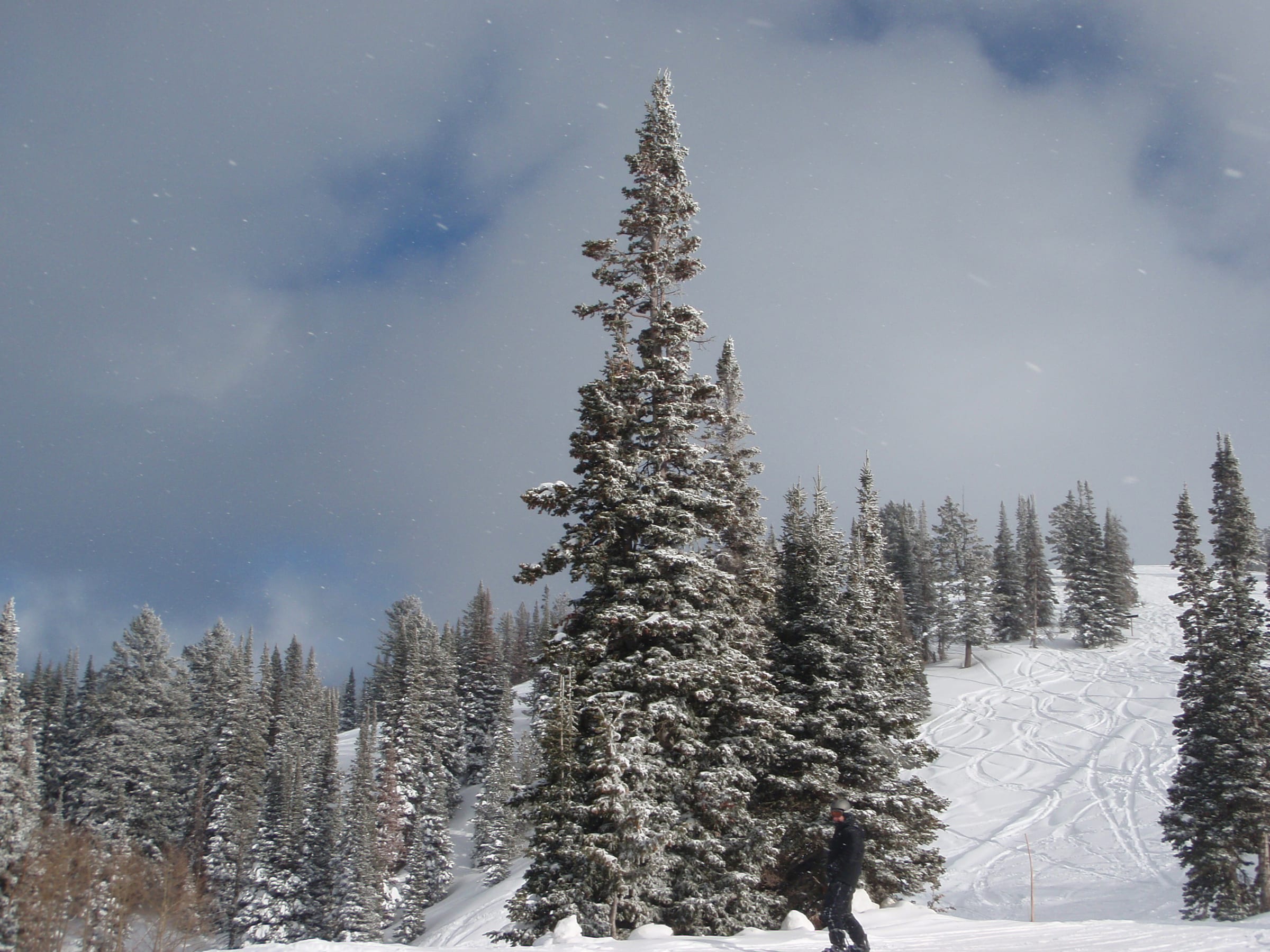
This is a high, cold continental mountain, so the snow tends to be dry and light through the depths of winter. Storms sweep in off the northern Rockies, and the elevation keeps the snowpack cold and consistent. The upper mountain, exposed and lofty, can be wind-affected, but on a bluebird day after a storm the combination of fresh light snow and empty terrain is hard to beat.
Snow & weather
Live conditions from the mountain, plus the average snow you can expect month by month.
- Feels like
- —
- Conditions
- —
- Wind
- —
- Fresh snow (3-day)
- —
Live data © Open-Meteo.com
Reliable cold, dry Rocky Mountain snow at high elevation; the summit's exposure can bring wind, but coverage and quality hold well through midwinter.
Average monthly snowfall
Snowfall climatology unavailable.
Terrain & aspect
- Novice
- Easy
- Intermediate
- Advanced
- Freeride
- Flat / ungraded
Slopes mostly face NE — 64% on snow-holding, poleward-facing slopes.
Aspect derived from run bearings · OpenSkiStats / © OpenStreetMap (ODbL).
Skiing & terrain
Beginners have gentle, sunny green runs and dedicated learning areas spread across the lower mountain, well separated from the steep terrain above.
Intermediates get a huge, quiet playground of rolling blue groomers and easy trees to roam across the connected peaks.
Advanced skiers find abundant steep pitches, bowls and tree runs, with far more challenging terrain than the crowds ever fill.
Experts come for Lone Peak's summit, its couloirs, the Big and Little Coulee, and a wealth of steep chutes and hike-to lines.
Lone Peak Tram
The tram hauls skiers to the summit of Lone Peak, delivering both jaw-dropping panoramas across three states and access to some of the most serious lift-served terrain in North America. Reaching the top is a bucket-list moment even for those who ride an easier line down.
Empty acreage
Big Sky's hallmark is space. Its enormous connected terrain and modest crowds mean short lift lines and runs you can lap without seeing another skier, a rare luxury among resorts of this size.
Lone Peak steeps
Off the summit, the couloirs and chutes falling from Lone Peak are a proving ground for expert skiers. Big Coulee, Little Coulee and the surrounding faces offer sustained, committing lines in a genuinely alpine setting.
On the map
Legend
Run difficulty
- Novice
- Easy
- Intermediate
- Advanced / Expert
- Freeride / Extreme
- Unknown
Run types
- Downhill — groomed
- Downhill — ungroomed
- Downhill — gladed
- Nordic (groomed)
- Ski tour
- ☾Lit (night)
- △Not patrolled
- →One-way
- ❄Snowmaking
Lifts
- Operating
- Operating (private)
- Non-operating
- Lift station
Slope-gradient grading
Downhill / ski tour
- Flat<3°
- Easy3–14°
- Intermediate14–22°
- Advanced / Expert22–45°
- Freeride / Extreme>45°
Nordic
- Easy<6°
- Intermediate6–9°
- Advanced>9°
Aspect (sun exposure)
- N — least sun
- E — morning
- S — most sun
- W — afternoon
Legend after OpenSkiMap
Stay in Big Sky Resort
Mountain Village at the base has ski-in, ski-out hotels and condos gathered around the lifts; the town of Big Sky down in the valley offers a wider spread of lodging and dining a short shuttle away.
Lifts and pistes from the door — the point of a high, purpose-built resort.
Self-catering residences, the bulk of the beds and the flexible-budget option.
Catered and self-catered chalets for groups wanting the whole place.
From simple to high-end, with pools and spas to thaw out in.
How to get there
The nearest airport is Bozeman (BZN), a well-connected gateway to south-west Montana, from which the resort is reached by heading up the Gallatin Canyon.
The transfer from Bozeman is a scenic drive up the Gallatin River canyon; shared shuttles and private transfers run the route, with no further connection needed to reach the base village.
Best time: January through March offers the coldest, driest snow and the fullest coverage on the upper mountain, with the tram terrain best mid to late season.
Nearby resorts & areas
Other resorts within reach.
Getting to Big Sky Resort
Book an airport transfer up to the resort, or pick up a car at Bozeman (BZN) — search and compare without leaving the page.
Ski data © OpenStreetMap contributors (ODbL), via OpenSkiMap & Skimap.org. Basemap © OpenFreeMap / OpenMapTiles. Editorial: mynext.holiday. Accommodation via Stay22; transfers via Kiwitaxi; car hire via Travelpayouts.