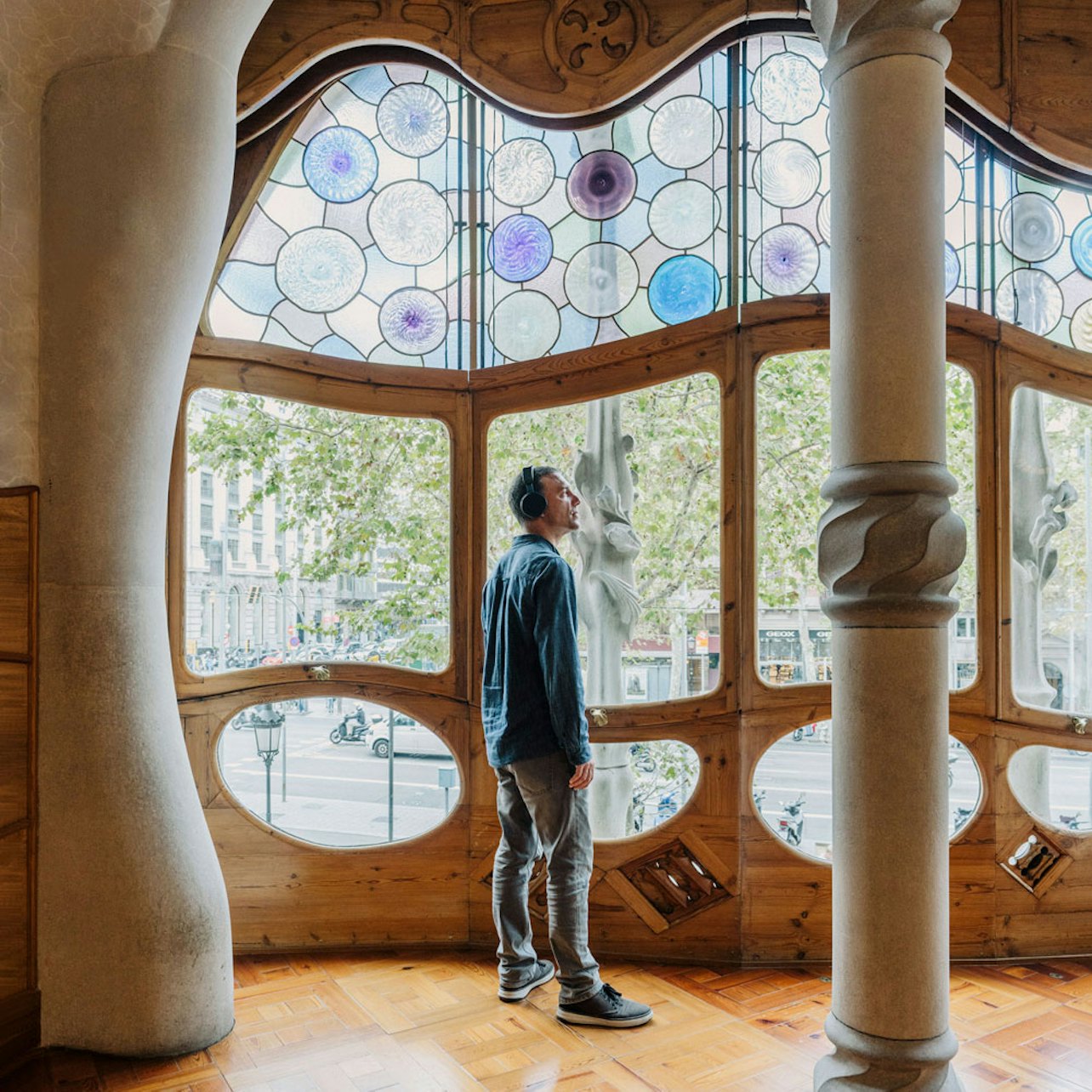
 © Casa Batllo Blue Main Room
 7 Days in Catalonia: The Perfect Barcelona, Montserrat, Girona & Costa Brava Itinerary (2026)
Two bases, no car and one region done properly — four nights in Barcelona for Gaudí and the Gothic Quarter, a mountain day at Montserrat, then a 38-minute train to medieval Girona with a Costa Brava cove day from there.
🚆Train🚌Bus✈Plane
- Trip dates 31 Jul – 6 Aug 2026
- Length7 days · 6 nights
- TransportTrain + Bus + Plane
- Countries1 · Spain
Added — opening your planner…
Overview
Catalonia is small enough that a week can cover its three landscapes — city, mountain and coast — without ever renting a car, and this itinerary is built to prove it. Barcelona holds the first four nights, which is the right number: two of them go on Gaudí, one on Montserrat, and the fourth exists so that the city gets an afternoon that is not a queue. The Gaudí days are front-loaded deliberately, because Sagrada Família and Park Güell are both hard-capped timed-entry sites in 2026 and neither forgives a casual arrival. Montserrat is a genuine day out rather than a half-day — an hour on the R5, then a cable car or a rack railway up a serrated mountain to a working Benedictine monastery. Then the trip changes register entirely: a fast train north to Girona, where the old town is compact, walled and largely medieval, and where two nights buy you the city plus a day on the Costa Brava. That coast day is the one honestly slow leg of the week — the buses from Girona to the coves involve a change and roughly an hour and a half each way — and we have written it that way rather than pretending otherwise. The reward is the Camí de Ronda, the coast path that threads the headlands between Calella de Palafrugell and Llafranc, and it is worth the buses.
Highlights
A few frames from the route.
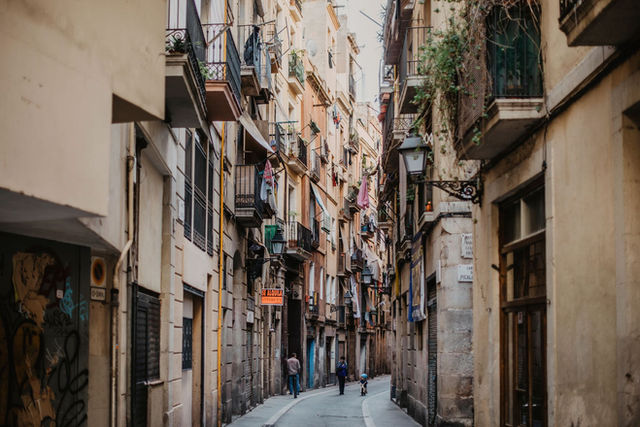
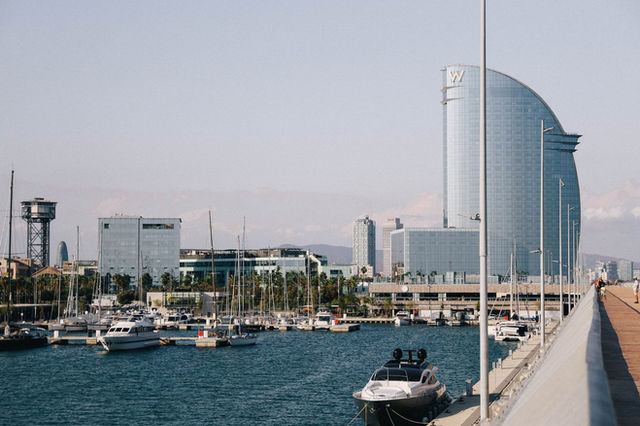
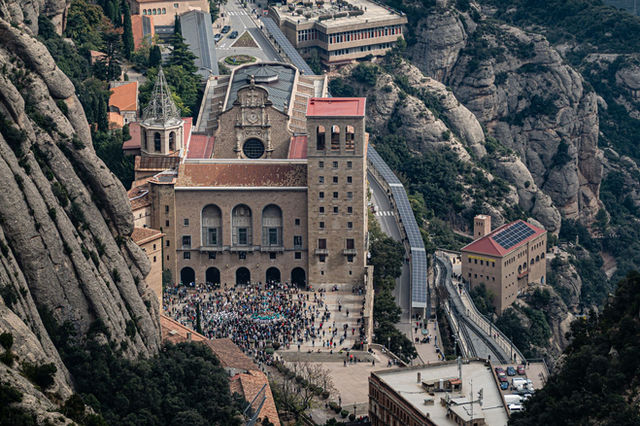
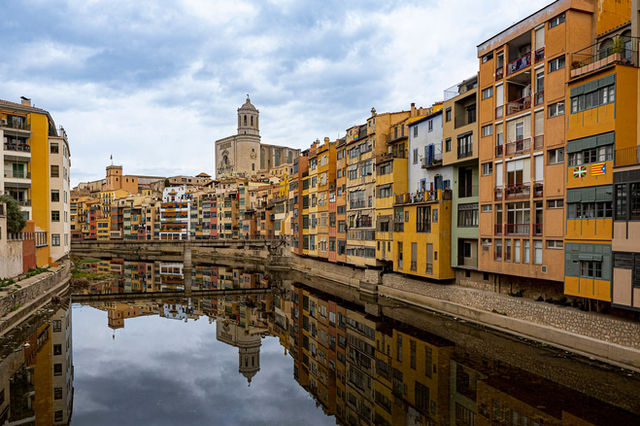
Showing 6 of 8
Photos provided by Pexels
The route
2 overnight bases, numbered in order. Tap a pin to jump to that day.
7 days, day by day. Open any day for the morning-to-evening plan, where to eat, and where you sleep that night.
-
Day 1 Fri 31 Jul Arrive Barcelona
Arrival and the Gothic Quarter
Morning. Land at El Prat and take the Rodalies R2 Nord or the Aerobús into the centre; drop bags and plan nothing that needs a ticket today.
Afternoon. Walk the Barri Gòtic without a route — Plaça del Rei, the Roman wall fragments behind the cathedral, the narrow cut of Carrer del Bisbe with its neo-Gothic bridge.
Evening. Come out at Plaça Reial under the arcades for the first drink, then eat late, as the city does.
Eat. Pa amb tomàquet — bread rubbed with tomato, oil and salt — with a plate of jamón, in a bar rather than a restaurant.
Where to stay. The Eixample around Passeig de Gràcia, or the upper Gothic Quarter near Plaça de Sant Jaume — both put you inside walking distance of everything on Days 1–3 and on the metro for Days 4 and 5.
Optional / swaps. If the group has energy, the Santa Caterina market roof and the Born district are ten minutes east and considerably less crowded than the Gothic core.
Practical. Barcelona eats late; kitchens in many places do not open for dinner much before 20:30. Pickpocketing on La Rambla and the metro is organised and real — a zipped bag worn in front is the whole defence.
🛏 Barcelona · 4 nights · 2 guests
-
Day 2 Sat 1 Aug Barcelona
Sagrada Família and Passeig de Gràcia
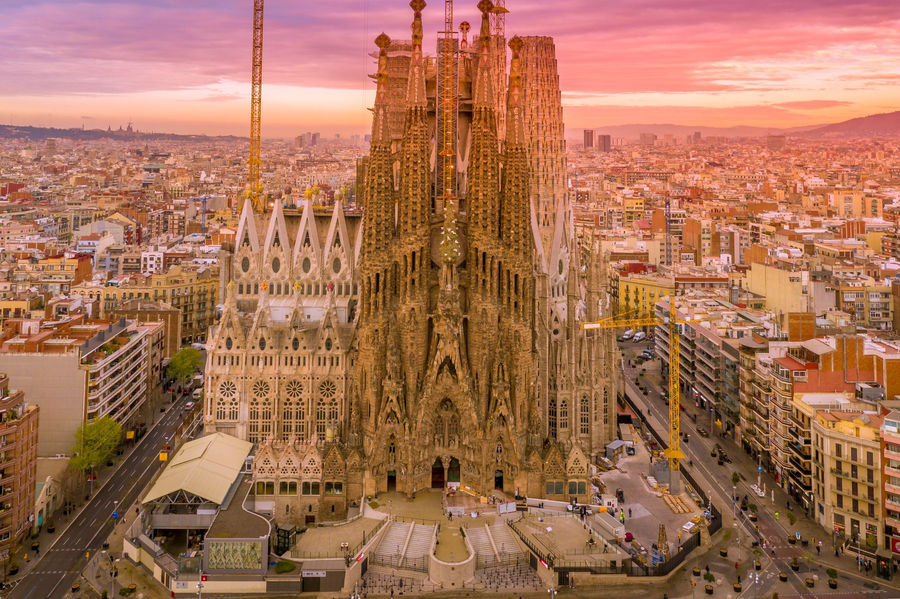
Morning. Sagrada Família on an early timed slot. Go in through the Nativity facade and sit down inside for ten minutes before photographing anything — the morning light comes through the blue and green east windows and moves across the columns as you watch.
Afternoon. Walk down to Passeig de Gràcia for Casa Batlló and Casa Milà. The facades are free from the pavement, and if you are only going inside one, Casa Batlló is the more theatrical.
Evening. Dinner in the Eixample grid, then a slow walk back through the chamfered corners that make the district's aerial pattern.
Eat. Escalivada — smoked aubergine, pepper and onion — and a rice dish; order the rice for two minimum, as the kitchens will insist.
Where to stay. Barcelona (as Day 1).
Optional / swaps. The Hospital de Sant Pau, ten minutes' walk from the basilica, is a modernista complex of pavilions that almost nobody visits and is a genuine relief after the crowds.
Practical. Buy Sagrada Família tickets only from sagradafamilia.org — official timed products run roughly €26 for basic admission up to €40 for the Top View tower ticket, and a temporary centenary surcharge of €2–5 applies from May to December 2026. The tower lifts have age and mobility restrictions and the descent is on foot down a spiral stair.
-
Day 3 Sun 2 Aug Barcelona
Park Güell, Gràcia and the water
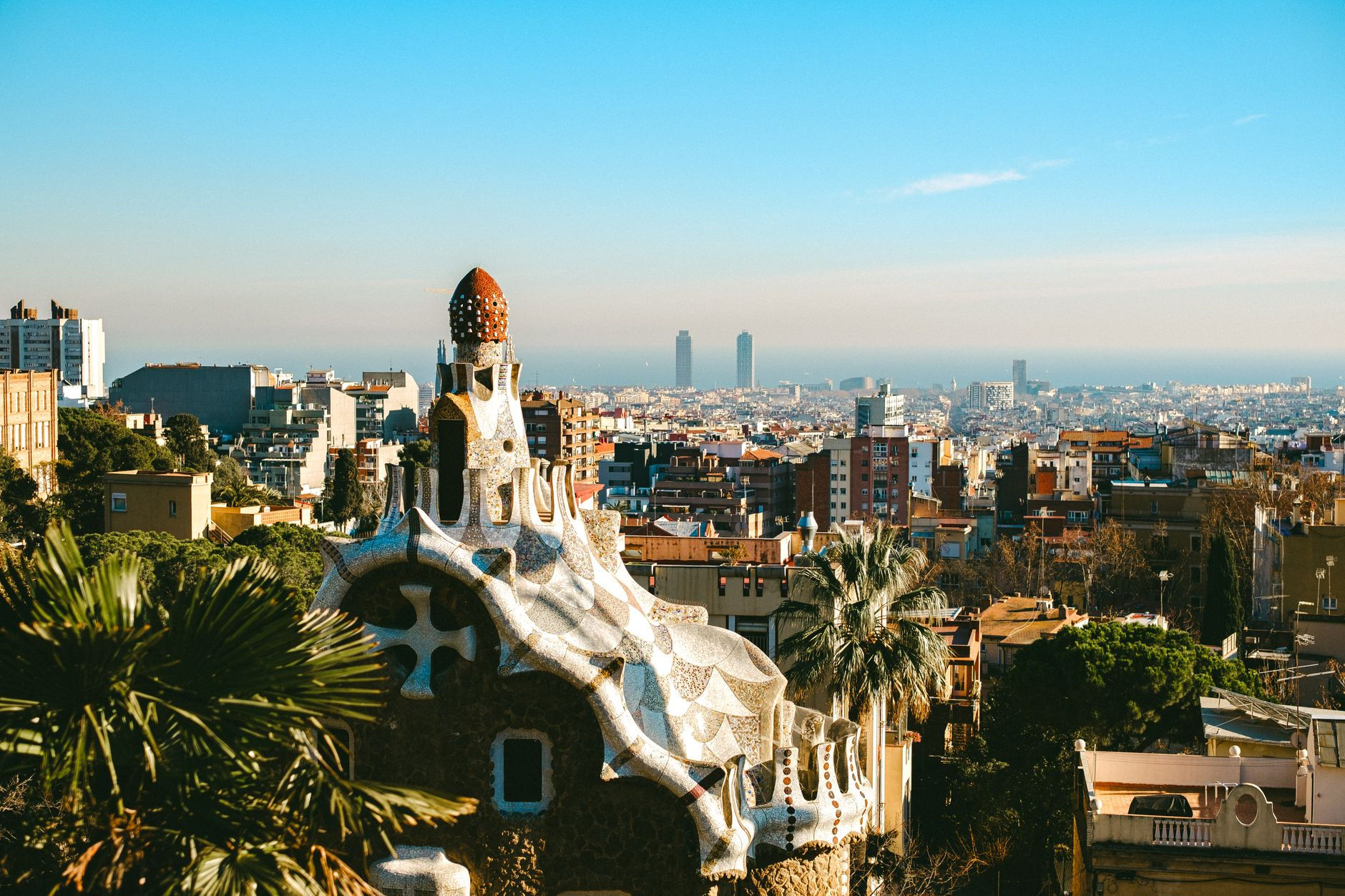
Morning. Park Güell's Monumental Zone on the first slot of the day — the mosaic bench, the hypostyle hall and the view back down over the city to the sea, all before the heat.
Afternoon. Walk down into Gràcia, which is a village grid of small squares that the city grew around, and have a long lunch on Plaça de la Vila. Then the metro to Barceloneta for the afternoon on the sand.
Evening. Seafood on the waterfront, or back up to Gràcia if the beachfront feels too much like a tourist strip.
Eat. Fideuà — the short-noodle cousin of paella — or grilled sardines at Barceloneta.
Where to stay. Barcelona (as Day 1).
Optional / swaps. Swap the beach for the MNAC on Montjuïc, whose Romanesque frescoes were cut from Pyrenean church apses and reassembled; the terrace view over the city is the best in Barcelona.
Practical. Park Güell is €18 adult and €13.50 for children 7–12, free under 7, in timed 30-minute entry windows capped at 1,400 visitors an hour. For 2026 the Monumental Zone is advance-booking only — walk-up tickets are no longer sold, and summer slots go weeks ahead. The park is a genuine uphill walk from the metro; the outer park around the Monumental Zone is free.
-
Day 4 Mon 3 Aug Barcelona
Montserrat
Morning. R5 from Plaça d'Espanya, about an hour to the mountain base. Take the Aeri cable car from the Aeri de Montserrat stop for a five-minute swing up the cliff face, or stay on one stop further to Monistrol de Montserrat for the fifteen-minute Cremallera rack railway.
Afternoon. The basilica and the Black Madonna, then one of the two funiculars — Sant Joan for the high ridge walks and the serrated rock formations that give the mountain its name.
Evening. Back on the R5 to Barcelona; eat near Plaça d'Espanya or head back into the centre.
Eat. Mel i mató — fresh curd cheese with honey — from the mountain-top market stalls, where the local farmers also sell dry sausage and goat cheese.
Where to stay. Barcelona (as Day 1).
Optional / swaps. The Escolania boys' choir sings in the basilica on most weekdays around midday during term; check the schedule before you fix the day, as it is the reason many people come.
Practical. Buy a combined TransMontserrat-style ticket at Plaça d'Espanya or online — it bundles the R5 return, the ascent and the funiculars. You must choose cable car or rack railway at the moment of purchase and cannot change afterwards. The cable car closes for maintenance periods and in high wind; the rack railway is the more reliable choice and better if anyone in the group dislikes heights.
-
Day 5 Tue 4 Aug Barcelona → Girona
Barcelona → Girona
Morning. Barcelona Sants to Girona in about 38 minutes; there are around 25 services a day across AVE, Avant and Media Distancia, so this is a turn-up-and-book-that-morning leg rather than a planned one.
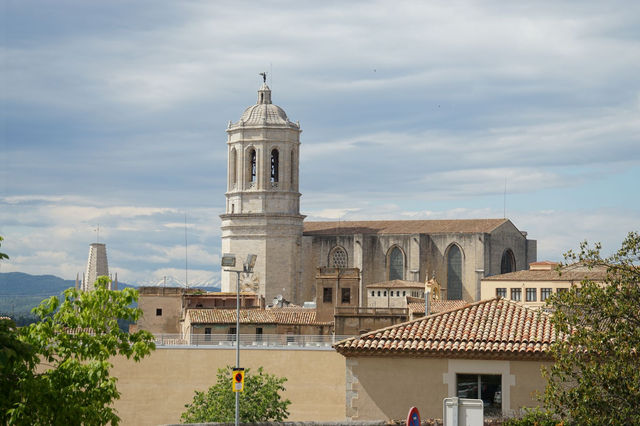
Afternoon. The Call — one of the best-preserved Jewish quarters in Europe, a warren of stepped stone lanes — and then the cathedral, whose 90-step baroque stair and single vast Gothic nave were used as the Great Sept in Game of Thrones.
Evening. Walk the Passeig de la Muralla, the surviving city walls, for the roofline at sunset, then down to the Onyar to see the painted houses reflected.
Eat. Catalan botifarra with white beans, or a suquet de peix, in the old town.
Where to stay. Inside the old town on the east bank of the Onyar, near Plaça de la Independència — Girona's centre is small enough that anything else is a compromise.
Optional / swaps. The Arab Baths are twelve minutes' walk and quiet; the Sant Pere de Galligants monastery beside them is Romanesque and usually empty.
Practical. Girona's old town is stairs, from the cathedral steps to the wall walk — worth knowing if anyone in the group has knees that object. The station is a ten-minute walk from the old town, downhill on arrival and uphill on departure.
🛏 Girona · 2 nights · 2 guests
-
Day 6 Wed 5 Aug Girona
Costa Brava coves
Morning. Bus from Girona to Palafrugell, then the local connection down to Calella de Palafrugell — allow about an hour and a half door to door and start early.
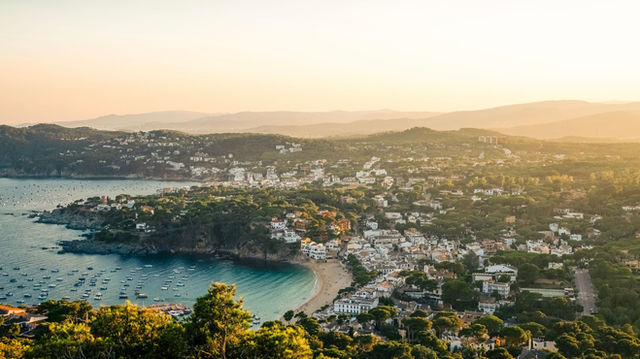
Afternoon. Walk the Camí de Ronda north from Calella around the headland to Llafranc, an hour of coast path on stone steps cut above the water, with coves to drop into on the way.
Evening. Back to Girona on the same route; eat late in the old town.
Eat. Grilled fresh fish at a beachfront chiringuito in Calella, or arròs negre — rice blackened with squid ink.
Where to stay. Girona (as Day 5).
Optional / swaps. If the bus timings look ugly on the day, Tossa de Mar has a walled medieval headland and a more direct coach service; if the group would rather not travel at all, Girona's own museums and the Devesa park fill a day comfortably.
Practical. This is the one genuinely slow leg of the week — there is no direct Girona–Calella bus and the connection through Palafrugell is what makes it long. Check the Moventis/Sarfa timetable the night before, note the last return, and treat the return time as fixed. Services thin out sharply outside July and August.
-
Day 7 Thu 6 Aug Girona
Back to Barcelona and home
Morning. Coffee on Plaça de la Independència and a last walk over the Onyar footbridges, then the uphill ten minutes to the station.
Afternoon. Girona to Barcelona Sants in about 38 minutes, then the R2 Nord or Aerobús out to El Prat — roughly another twenty minutes plus the wait.
Evening. Home.
Eat. A last pa amb tomàquet and coffee before the train, or a bikini — the local toasted ham and cheese — from a station bar.
Where to stay. —
Optional / swaps. Left luggage at Barcelona Sants buys you a couple of hours in the city if the flight is late.
Practical. Give yourself a clear hour between arriving at Sants and needing to be at the airport; the Rodalies connection is straightforward but the platform changes and the Aerobús queues at peak.
Every overnight base on the route. Check-in and check-out follow your travel dates above — open a stay for a live map of places to book.
Season
-
1 Barcelona Spain · book a stay ⌄
-
2 Girona Spain · book a stay ⌄
How far and how long between each base, leg by leg, with the mode of travel — so you can see where the big driving days fall. Modes: 🚗 Drive · ✈ Fly · ⛴ Boat/Ferry · 🚆 Train · 🚌 Bus.
| Day | Mode | Leg | Distance | Time | Flags |
|---|---|---|---|---|---|
| —31 Jul | ✈ Fly | Fly in — home → BCN | — | — | |
| 54 Aug | 🚆 Train | Barcelona → Girona | ~113 km | ~1.7h | |
| —6 Aug | ✈ Fly | Fly out — BCN → home | — | — | |
| Total driving | ≈ 113 km between bases · flights excluded | ||||
Flights
Fly into and home from BCN. Each search opens pre-filled with your travel dates and party.
Outbound home → BCN Fri 31 Jul · 2 travellers Search flights → Return BCN → home Thu 6 Aug · 2 travellers Search flights →
Powered by the Travelpayouts flight search on /flights.
Book your attractions & tickets
Skip-the-line tickets for the highlights on this route — live prices, book instantly .
© Casa Batllo Blue Main Room 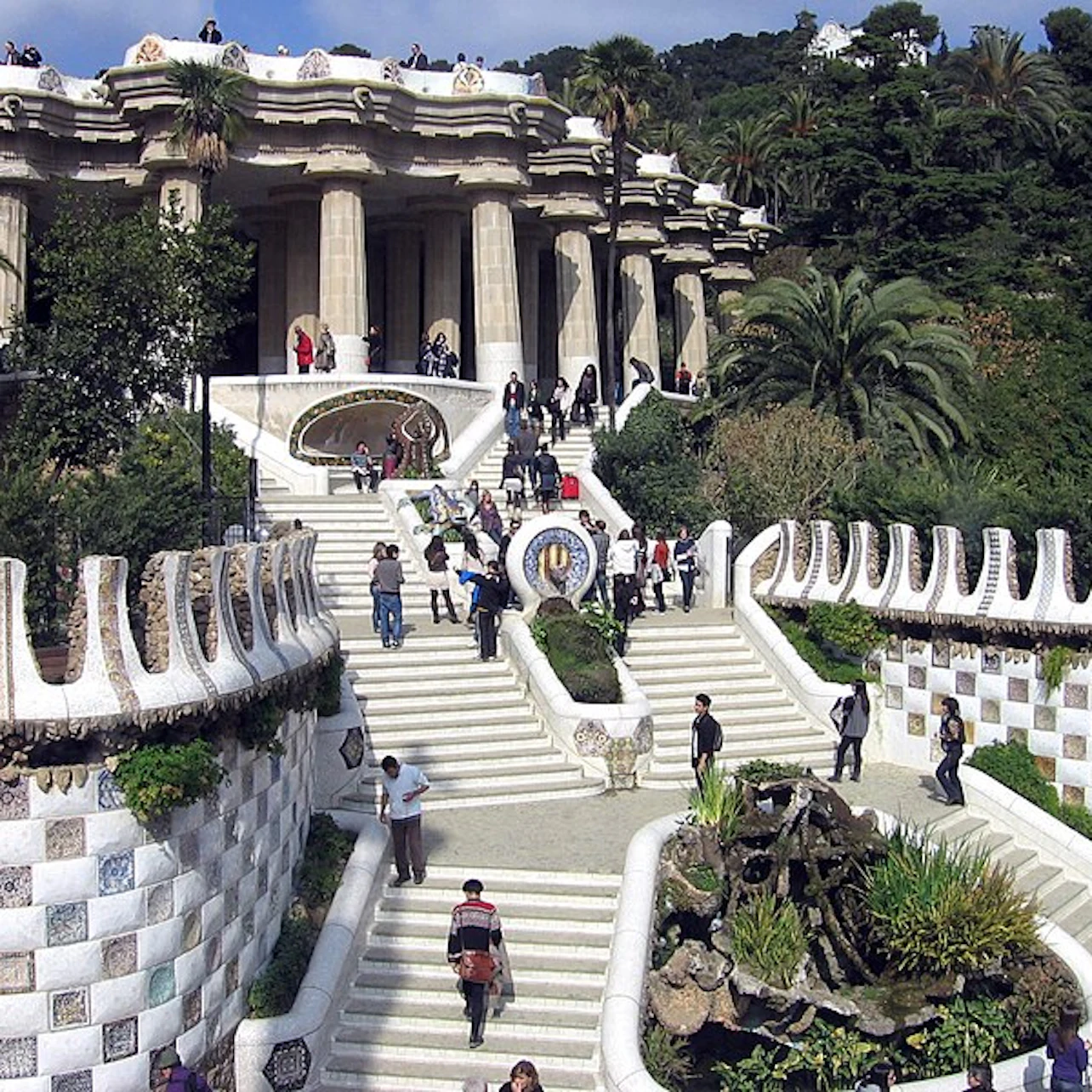
Budget
A realistic planning budget for the whole trip — beds, food, fuel, the hire car and the extras. Change your party size, dates or comfort level and it updates to match.
€2,329≈ £1,991
- Per person€1,165
- Per day€333
- SeasonPeak
- TierMid
Estimate settings editable
Party
| Category | How it’s estimated | Estimate |
|---|---|---|
| Accommodation | per-person/night (3–4★, min 2 sharing, £75 floor) × people × nights × season × tier | €864 |
| Meals & drinks | per-country food/person/day × party × days × tier | €480 |
| Activities & admissions | per-country activities/person/day × party × days | €408 |
| Local transport | per-country trains, buses & ferries/person/day × party × days | €300 |
| eSIM / ATM | fixed one-off | €65 |
| Subtotal | €2,117 | |
| Contingency (10%) | €212 | |
| Grand total ≈ £1,991 · €1,165 pp · €333/day | €2,329 | |
How we estimate
- Accommodation — per-person nightly by destination, minimum two sharing, × season × tier.
- Standard (Mid) = 3–4★+ — estimates assume our audience’s baseline: 3–4★ or better, never below a ~£75/night room floor. Premium higher; Budget lower.
- Meals — per person, per day, by country. Fuel — from the route distance. Season — from your dates.
These are planning estimates, not quotes. Premium properties and popular tourist hubs run above the country average, especially in peak season. Where live cost data isn’t available yet, some countries use representative figures.
Eat your way across
A taste of every country you travel through — the food culture worth going out of your way for, and the signature dishes to seek out.
Spain
A country that eats late, shares everything and turns lunch into the most important meeting of the day.
Dinner doesn’t start until the sun is long gone, and even then it comes in instalments. You stand three-deep at a Seville bar, a plate of olives and a wedge of tortilla appearing without being asked, the floor littered with napkins because that is how you know the place is any good. Eating in Spain is a contact sport, played standing up, in company, for hours.
The building blocks are few and fiercely good: olive oil poured like it’s free, a leg of jamón clamped to the counter and carved to order, ripe tomato rubbed onto grilled bread with a clove of garlic. Then the regions take over — a proper Valencian paella built on rabbit and beans over a wood fire, never the tourist seafood heap; the Basque country’s pintxos speared on bread and lined up like jewellery; Galician octopus dressed with nothing but paprika and oil. Come at ten at night, order more than you need, and let the small plates keep coming until someone finally calls for the bill.
- jamón ibérico
- paella valenciana (rabbit & bean rice)
- tortilla española (potato omelette)
- pintxos (Basque bar bites)
- gambas al ajillo (garlic prawns)
- churros con chocolate
A little history
To understand what you see today, it helps to know the past — the civilisations and empires that shaped the culture, food and architecture of the places on this route.
Spain
- Roman Hispania left aqueducts and roads still standing at Segovia and Mérida
- nearly eight centuries of Al-Andalus gave the south the Alhambra, mosque-cathedrals and a Moorish streak through its food
- the 1492 unification and fall of Granada launched a global empire that spread Spanish across the Americas
- a young democracy since Franco's death in 1975, with fierce regional identities from Catalonia to the Basque Country
Family activities
The stops, games and moments that land best with kids and teens on this trip.
The Aeri cable car up the Montserrat cliff face — five minutes hanging off a serrated mountain, and the single biggest reaction of the week from most teenagers.
Swimming off the Camí de Ronda coves between Calella and Llafranc, where the path drops to small beaches you can only reach on foot.
Standing on the Girona cathedral steps, which teenagers who know Game of Thrones will recognise instantly as the Great Sept, then walking the city walls above the rooftops.
Sagrada Família's tower lift and the spiral stair descent — vertiginous, memorable, and the reason to pay for the Top View ticket rather than the basic one.
Spot-it in the Eixample: count the chamfered street corners and the modernista facades between Passeig de Gràcia and the basilica.
Packing
What to bring for this trip — the easy-to-forget essentials.
clothing (for the full climate range + layers)
Light layers for May–June and September–October, with a warm layer for Montserrat, which sits well above the plain and is reliably cooler and windier than Barcelona. Shoulders and knees covered for the basilica and the monastery.
footwear (terrain)
Proper walking shoes with grip — the Camí de Ronda is uneven stone steps above water, Girona's old town is stairs throughout, and Park Güell is a climb.
activity gear
Swimwear and a quick-dry towel for the coves and Barceloneta, sun hat and high-SPF sunscreen, and a small rucksack for the coast walk.
luggage & transport strategy
One carry-on-sized case per person plus a daypack. You move bases once, on a 38-minute train, and both stations involve a walk with luggage at the Girona end.
documents / money / connectivity & adapters
Passport, tickets loaded on phones (Sagrada Família and Park Güell are scanned from the app), contactless cards, a little cash for the Costa Brava buses and market stalls, Type C/F adapters.
health / first-aid
Blister plasters for the coast path and the Girona stairs, personal prescriptions, and rehydration salts — the September heat is still substantial.
destination-specific extras
A refillable water bottle for the Montserrat ridge walks, and a dry bag if you plan to swim off the Camí de Ronda coves.
Drone rules (sub-250g)
Where you can and can’t fly a small drone along the way — the rules change sharply from one country to the next, so check before you launch.
- Spain Register with AESA (an EU ID is valid; non-EU visitors must register and pass the free A1/A3 online test) — mandatory for any camera drone. Countryside flying is fine, but a 2024 rule requires notifying the Interior Ministry before flying over any urban area, even sub-250g. ⚠ Cities (Barcelona, Madrid, Seville), national parks (Teide, Picos de Europa) and many beaches are restricted or no-fly — check the AESA/ENAIRE map, and stick your operator ID to the drone. Rules checked: Jul 2026
National parks, protected sites and religious/heritage venues often have their own rules and permits — always check the specific site before you fly.