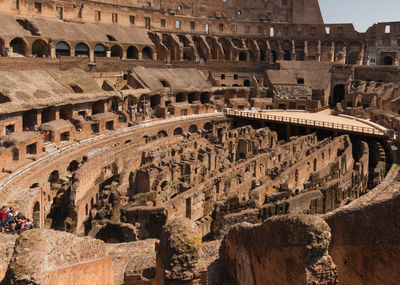
7 Days in Italy: Rome, Florence & Venice — The Perfect Itinerary (2026)
The classic first-timer's Italy, done by high-speed train and without a car — three nights in Rome, two in Florence and a last night in Venice, with the Colosseum, the Vatican, the Duomo dome and the Grand Canal all booked in advance.
🚆Train⛴Boat✈Plane
- Trip dates 31 Jul – 6 Aug 2026
- Length7 days · 6 nights
- TransportTrain + Boat + Plane
- Countries1 · Italy
Added — opening your planner…
Overview
This is the route almost every first trip to Italy should take, and the reason it works is the Frecciarossa: Rome to Florence is about an hour and a half, Florence to Venice a little over two, and both run from city centre to city centre with no airport in sight. Rome gets three nights because it is the only stop where you will genuinely run out of day before you run out of things worth seeing. Florence gets two, which is right for a city you can cross on foot in twenty minutes but whose two great museums both need booking. Venice gets the last night and the following morning — enough to see St Mark's and the Grand Canal properly, and enough to be there after the day-trippers have gone, which is when the city is worth the trip. The pace is brisk but not punishing, and the single most useful thing you can do for this itinerary is book the four timed-entry sites — Colosseum, Vatican, Uffizi, Accademia — before you book anything else.
Highlights
A few frames from the route.
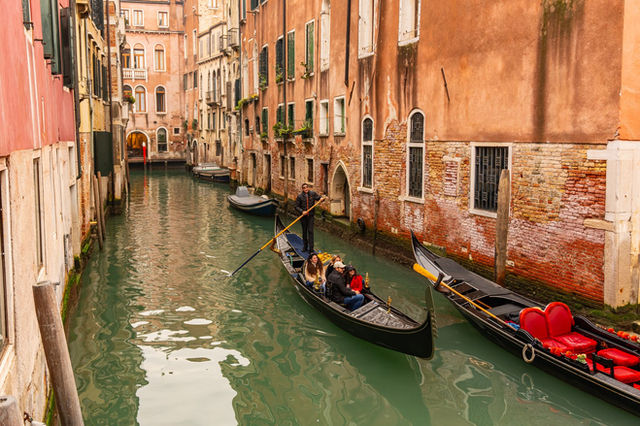
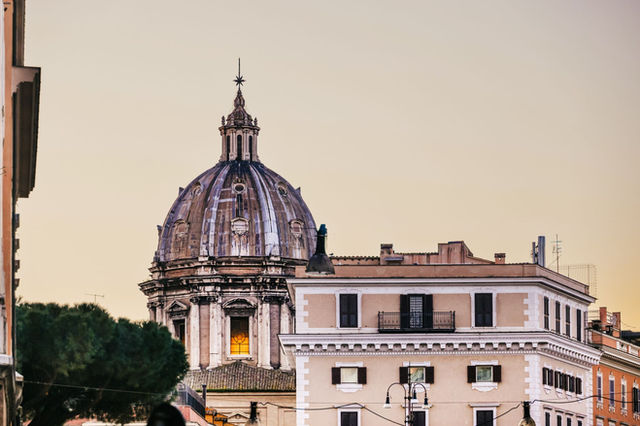
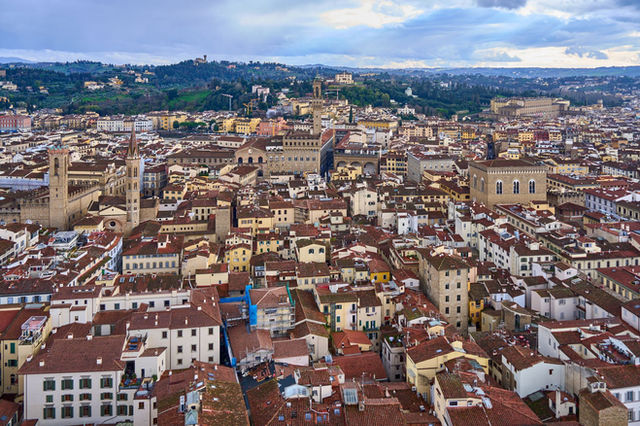
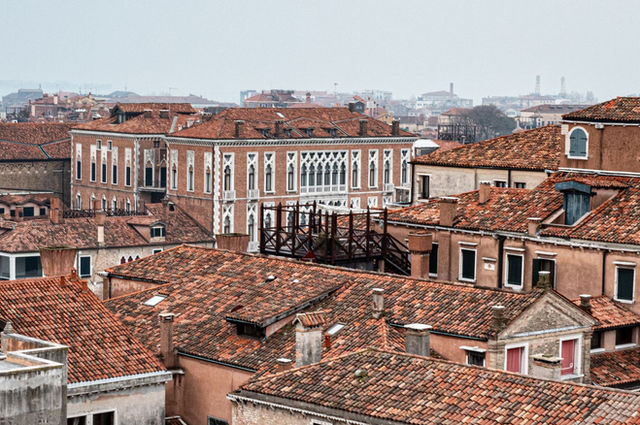
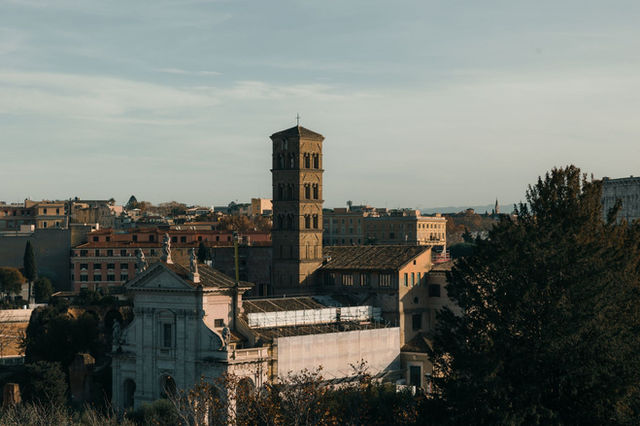
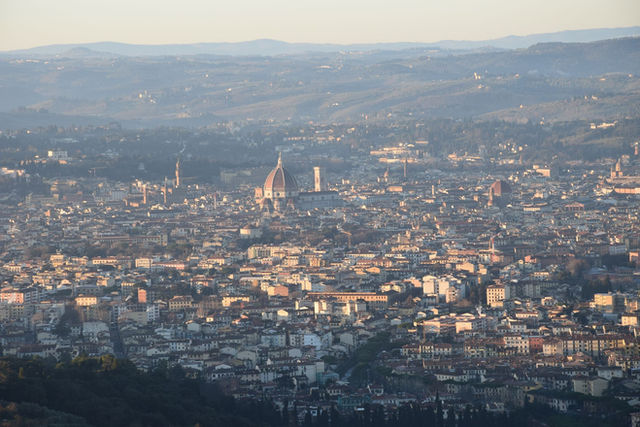
Showing 6 of 8
Photos provided by Pexels
The route
3 overnight bases, numbered in order. Tap a pin to jump to that day.
7 days, day by day. Open any day for the morning-to-evening plan, where to eat, and where you sleep that night.
-
Day 1 Fri 31 Jul Arrive Rome
Arrival and the Centro Storico
Morning. Land at Fiumicino and take the Leonardo Express into Termini, about half an hour; drop bags and buy nothing that involves a queue today.
Afternoon. Walk the Centro Storico loop — the Pantheon first, because the oculus and the coffered dome are best before the light goes, then Piazza Navona and the Trevi Fountain.
Evening. Aperitivo in Campo de' Fiori, then dinner in Trastevere across the river.
Eat. Cacio e pepe — pecorino, black pepper and pasta water, nothing else — in a Trastevere trattoria.
Where to stay. Monti or the streets around Campo de' Fiori — both are walkable to almost everything on Days 1–3 and have actual restaurants rather than tourist menus.
Optional / swaps. The Spanish Steps and the Villa Borghese gardens if the group still has legs; the gardens are the best place in central Rome to let children run.
Practical. The Pantheon now charges admission on most days and it is worth pre-booking a slot. Rome's cobbles are brutal on wheeled luggage — the walk from a taxi drop to the door can be the hardest part of the day.
🛏 Rome · 3 nights · 2 guests
-
Day 2 Sat 1 Aug Rome
Ancient Rome
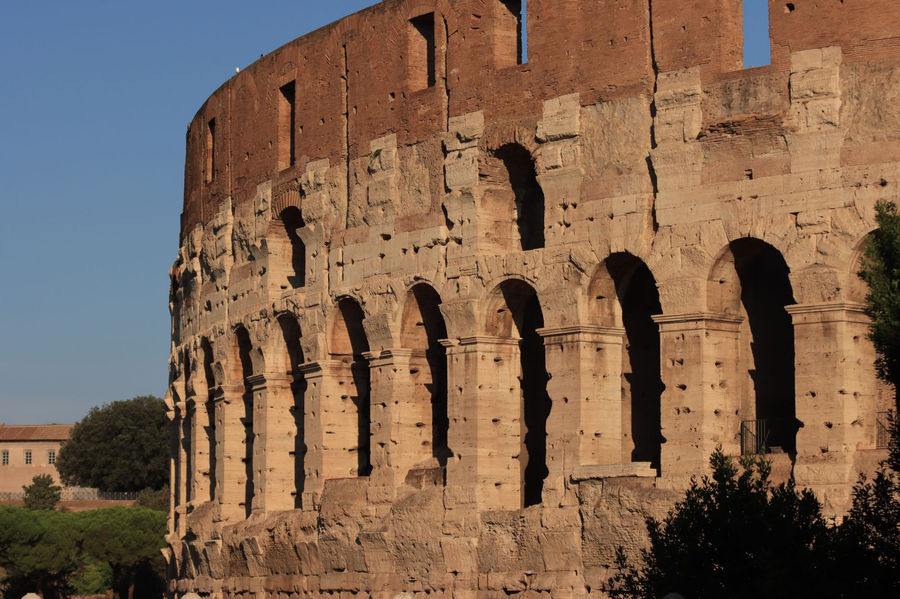
Morning. The Colosseum on the first slot of the day, entering through the Stern gate; the standard ticket also covers the Roman Forum and Palatine Hill, so use it in that order.
Afternoon. Down into the Forum and up onto the Palatine, where the Farnese Gardens give you the view back over the whole site and some shade.
Evening. Dinner in Monti, the neighbourhood immediately north of the Forum, which is where Romans actually eat near the ruins.
Eat. Saltimbocca alla romana, or carciofi alla giudia — deep-fried whole artichokes — if they are in season.
Where to stay. Rome (as Day 1).
Optional / swaps. The Capitoline Museums sit above the Forum and hold the she-wolf and the Marcus Aurelius bronze; a good rainy-day substitution.
Practical. The standard Colosseum ticket is €18 for adults, €2 reduced for EU citizens aged 18–24, and free for under-18s — but a free child ticket still has to be reserved. Tickets are released on the official site 30 days before the visit date and the good morning slots go within hours. There is almost no shade in the Forum; go early or go late.
-
Day 3 Sun 2 Aug Rome
The Vatican
Morning. The Vatican Museums on a pre-booked early entry, walking the long corridors briskly so you reach the Sistine Chapel while it is still possible to look up without being jostled.
Afternoon. Out into St Peter's Basilica — free to enter, with a separate charge and a long spiral climb for the dome, which is the best view in Rome if nobody is claustrophobic.
Evening. Cross back over the Tiber and eat in Prati, which is calmer and cheaper than anywhere inside the Vatican's orbit.
Eat. Roman-style pizza al taglio, sold by weight and cut with scissors, from a Prati bakery counter.
Where to stay. Rome (as Day 1).
Optional / swaps. Castel Sant'Angelo, on the walk back, has a spiral ramp built for an emperor's tomb and a terrace nobody queues for.
Practical. Shoulders and knees must be covered in both the Museums and the Basilica — this is enforced at the door and a scarf in the bag has saved many afternoons. Book directly with the Vatican Museums rather than a reseller.
-
Day 4 Mon 3 Aug Rome → Florence
Rome → Florence
Morning. Frecciarossa from Termini, about an hour and a half, arriving at Santa Maria Novella ten minutes' walk from the cathedral.
Afternoon. The Duomo complex — the cathedral itself is free but the dome climb, the baptistery and the campanile are on a combined ticket, and the dome must be booked to a time slot.
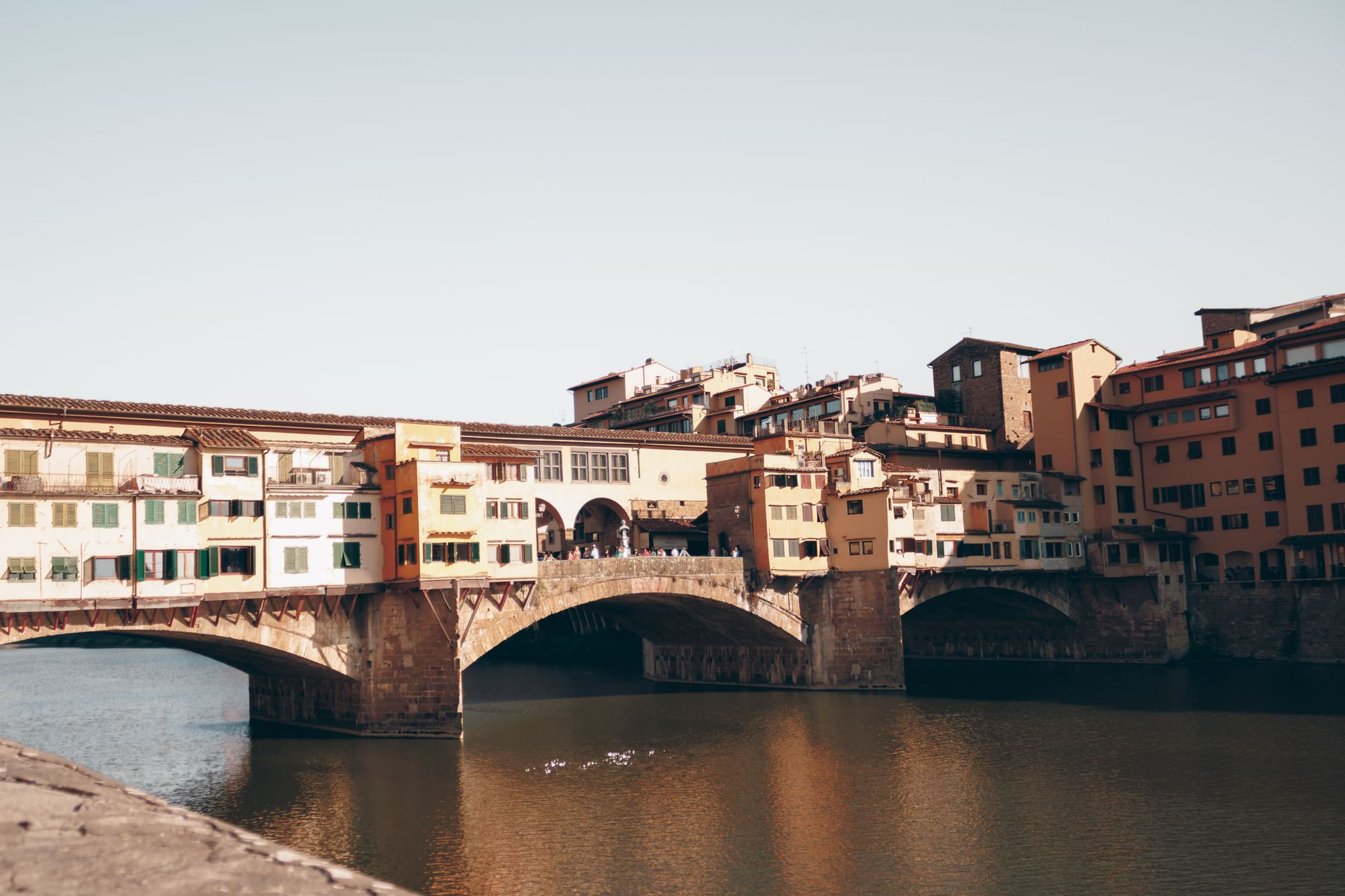
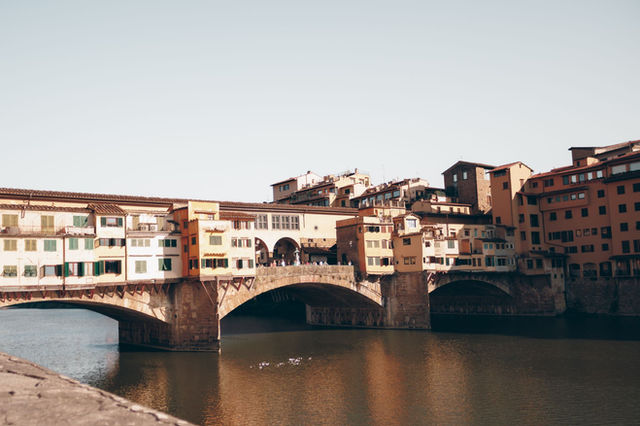
Evening. Cross the Ponte Vecchio at dusk and eat in the Oltrarno, the artisan quarter on the south bank.
Eat. Bistecca alla fiorentina, ordered for the table and served rare — it is sold by weight and a single steak comfortably feeds three.
Where to stay. Inside the historic centre between the Duomo and the Arno; Florence is small enough that anywhere else is a compromise you will feel twice a day.
Optional / swaps. The Mercato Centrale's upper food hall is a good, low-stress dinner with a group that cannot agree.
Practical. Brunelleschi's dome is 463 steps with no lift, narrow passages and no way back down once you commit; there is a minimum age and it is genuinely unsuitable for anyone claustrophobic. Book the dome slot well ahead — it is the first thing to sell out.
🛏 Florence · 2 nights · 2 guests
-
Day 5 Tue 4 Aug Florence
Uffizi, the David and the view
Morning. The Uffizi at opening — Botticelli's Birth of Venus and Primavera are in the same room and it is worth going straight there before working back.
Afternoon. The Accademia for Michelangelo's David, which is smaller-roomed and quicker than people expect; then the leather and paper workshops of the Oltrarno.
Evening. Walk or take the bus up to Piazzale Michelangelo for the sunset over the Arno and the whole city laid out under the dome.
Eat. A lampredotto roll from a street cart — Florence's tripe sandwich, and the local lunch rather than a dare.
Where to stay. Florence (as Day 4).
Optional / swaps. The Boboli Gardens behind the Pitti Palace if you would rather have space and shade than another gallery.
Practical. Both the Uffizi and the Accademia are timed-entry and both sell out in season; book direct. State museums are free on the first Sunday of the month, which sounds like a saving and is in practice the worst possible day to go.
-
Day 6 Wed 5 Aug Florence → Venice
Florence → Venice
Morning. Frecciarossa across the Veneto, a little over two hours, arriving at Santa Lucia where the station steps come out directly onto the Grand Canal.
Afternoon. The vaporetto down the Grand Canal to San Marco — the number 1 line, slow and stopping everywhere, is the best value boat trip in Europe — then St Mark's Basilica and the Doge's Palace.
Evening. Get lost deliberately once the day-trippers have gone; the city after eight is a different and much better place.
Eat. Cicchetti — small plates at a bàcaro counter, eaten standing with a glass of wine — then fritto misto.
Where to stay. Cannaregio or Dorsoduro rather than San Marco — quieter, cheaper, and still fifteen minutes' walk from the basilica.
Optional / swaps. The Rialto market in the morning if you would rather see Venice work than Venice perform.
Practical. Venice's day-tripper access fee applies on 60 peak days between 3 April and 26 July 2026, Fridays to Sundays, between 08:30 and 16:00 — €5 if booked at least four days ahead, €10 if booked later. **Overnight guests staying in the municipality are exempt**, which this itinerary is, but you may still need to register for an exemption code. Book the Doge's Palace and the basilica to time slots.
🛏 Venice · 1 night · 2 guests
-
Day 7 Thu 6 Aug Venice
Last morning and home
Morning. A last walk with a coffee, ideally out to the Zattere on the Giudecca canal where the light comes off the water and almost nobody goes.
Afternoon. The Alilaguna boat from San Marco or the bus from Piazzale Roma to Marco Polo — the boat takes about an hour and is the better experience, the bus takes twenty minutes and is the safer choice for a tight flight.
Evening. Home.
Eat. A last tramezzino and an espresso standing at a bar counter.
Where to stay. —
Optional / swaps. Left luggage at Santa Lucia if the flight is late and you want the morning free.
Practical. Give Venice departures more margin than feels sensible — you cannot hurry a vaporetto, and moving luggage over stepped bridges is slow.
Every overnight base on the route. Check-in and check-out follow your travel dates above — open a stay for a live map of places to book.
Season
-
1 Rome Italy · book a stay ⌄
-
2 Florence Italy · book a stay ⌄
-
3 Venice Italy · book a stay ⌄
How far and how long between each base, leg by leg, with the mode of travel — so you can see where the big driving days fall. Modes: 🚗 Drive · ✈ Fly · ⛴ Boat/Ferry · 🚆 Train · 🚌 Bus.
| Day | Mode | Leg | Distance | Time | Flags |
|---|---|---|---|---|---|
| —31 Jul | ✈ Fly | Fly in — home → FCO | — | — | |
| 43 Aug | 🚆 Train | Rome → Florence | ~304 km | ~4.5h | long day |
| 65 Aug | 🚆 Train | Florence → Venice | ~269 km | ~4h | watch |
| —6 Aug | ✈ Fly | Fly out — VCE → home | — | — | |
| Total driving | ≈ 573 km between bases · flights excluded | ||||
Flights
An open-jaw trip — fly into FCO, home from VCE. Each search opens pre-filled with your travel dates and party.
Outbound home → FCO Fri 31 Jul · 2 travellers Search flights → Return VCE → home Thu 6 Aug · 2 travellers Search flights →
Powered by the Travelpayouts flight search on /flights.
Book your attractions & tickets
Skip-the-line tickets for the highlights on this route — live prices, book instantly .
Budget
A realistic planning budget for the whole trip — beds, food, fuel, the hire car and the extras. Change your party size, dates or comfort level and it updates to match.
€2,844≈ £2,431
- Per person€1,422
- Per day€406
- SeasonPeak
- TierMid
Estimate settings editable
Party
| Category | How it’s estimated | Estimate |
|---|---|---|
| Accommodation | per-person/night (3–4★, min 2 sharing, £75 floor) × people × nights × season × tier | €1,032 |
| Meals & drinks | per-country food/person/day × party × days × tier | €612 |
| Activities & admissions | per-country activities/person/day × party × days | €516 |
| Local transport | per-country trains, buses & ferries/person/day × party × days | €360 |
| eSIM / ATM | fixed one-off | €65 |
| Subtotal | €2,585 | |
| Contingency (10%) | €259 | |
| Grand total ≈ £2,431 · €1,422 pp · €406/day | €2,844 | |
How we estimate
- Accommodation — per-person nightly by destination, minimum two sharing, × season × tier.
- Standard (Mid) = 3–4★+ — estimates assume our audience’s baseline: 3–4★ or better, never below a ~£75/night room floor. Premium higher; Budget lower.
- Meals — per person, per day, by country. Fuel — from the route distance. Season — from your dates.
These are planning estimates, not quotes. Premium properties and popular tourist hubs run above the country average, especially in peak season. Where live cost data isn’t available yet, some countries use representative figures.
Eat your way across
A taste of every country you travel through — the food culture worth going out of your way for, and the signature dishes to seek out.
Italy
Not one cuisine but twenty, each certain it’s the best — and each ready to argue the point over lunch.
There is no such thing as Italian food, and every Italian will tell you so. Cross a single valley and the butter turns to olive oil, the rice to durum wheat, the ragù to something the next town over would barely recognise. The whole country runs on its markets — the pre-dawn clatter of crates, tomatoes still warm from the vine, the fishmonger calling out the morning’s catch — and on the unshakeable conviction that Nonna’s version is the only correct one.
The magic is how little it takes. Rome spins gold from pecorino and black pepper in a bowl of cacio e pepe; a Florentine bistecca is charred, salted and left gloriously alone; Venetians drift bar to bar grazing cicchetti with a spritz in hand; Naples treats its pizza as something close to scripture; Sicily laces Arab-Norman sweetness through everything it touches. Sit down, order the thing the region is proud of, and let the arguing begin — you’ll be planning the next meal before this one’s finished.
- cacio e pepe
- bistecca alla fiorentina
- cicchetti (Venetian small bites)
- Neapolitan pizza
- sfogliatella (shell pastry)
- gelato
A little history
To understand what you see today, it helps to know the past — the civilisations and empires that shaped the culture, food and architecture of the places on this route.
Italy
- Rome left the grid, the aqueducts and the piazzas you still walk
- rival medieval city-states and the Renaissance are why every region cooks, paints and builds in its own way
- unified only in 1861, so twenty proud regional identities and cuisines survive intact
- a Norman-Arab south and a Venetian lagoon north pull the country between two worlds
Family activities
The stops, games and moments that land best with kids and teens on this trip.
Climbing Brunelleschi's dome in Florence and coming out on the lantern gallery above the whole city — the single most memorable thing on this route for anyone over about ten.
Riding the number 1 vaporetto the full length of the Grand Canal from Santa Lucia to San Marco, standing at the front.
Standing in the Colosseum arena with the hypogeum tunnels open below you, and finding the emperor's box.
Looking straight up through the open oculus of the Pantheon, which has been open to the sky for nineteen centuries and drains through holes in the floor.
Spot-it in Rome: count the nasoni drinking fountains and refill the bottle at every one.
Packing
What to bring for this trip — the easy-to-forget essentials.
clothing (for the full climate range + layers)
Light layers for spring and autumn, plus one warm layer for Venetian evenings on the water. Shoulders and knees covered for the Vatican, St Mark's and the Duomo — this is enforced.
footwear (terrain)
Cushioned, broken-in walking shoes with grip. Rome's sampietrini cobbles, Florence's stone and Venice's bridge steps are all unforgiving, and the dome climb is 463 steps.
activity gear
A refillable water bottle — Rome's nasoni street fountains run cold and free all over the city — sunglasses, sun hat, and a light scarf that doubles as church cover.
luggage & transport strategy
One carry-on-sized case per person. You change cities twice by train and finish in Venice, where every transfer involves stepped bridges and no wheels help.
documents / money / connectivity & adapters
Passport, tickets in the Trenitalia app, contactless cards plus euro cash for the tourist tax and small bars, Type C/F/L adapters — Italy still uses some three-pin L sockets.
health / first-aid
Blister plasters, personal prescriptions, and electrolyte sachets for Roman afternoons in June or September.
destination-specific extras
A foldable day bag for the markets, and a small torch is unexpectedly useful in Venice's unlit calli.
Drone rules (sub-250g)
Where you can and can’t fly a small drone along the way — the rules change sharply from one country to the next, so check before you launch.
- Italy Register on D-Flight / as an EU operator (an EU ID is valid) and carry third-party insurance (EU minimum ~€1M) — mandatory even sub-250g. Cities and heritage sites (Rome, Florence, Venice, Amalfi) show as no-fly on D-Flight and need prior authorisation; police do confiscate. ⚠ Check D-Flight for every launch — historic centres, Cinque Terre and other protected/heritage zones are marked no-fly and need a separate ENAC clearance. Rules checked: Jul 2026
National parks, protected sites and religious/heritage venues often have their own rules and permits — always check the specific site before you fly.