Iceland
Volcano-baked rye bread, wind-cured fish, and a fermented shark most locals dare each other to eat.
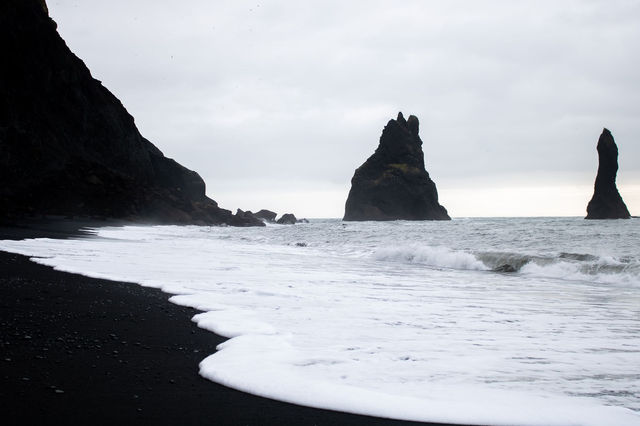
On a black-sand plain a cook kneels and lifts a pot of dark rye bread straight out of the ground, where the earth’s own heat has baked it slow and sweet overnight — this is a country that cooks with the volcano under its feet. Iceland’s larder was shaped by scarcity: an island of lamb and fish and long winters, where nothing edible could be wasted. So the lamb is smoked into hangikjöt, the fish wind-dried into harðfiskur and torn off in strips with butter, and the milk set thick and clean into skyr, eaten by the tubful.
The nerve of the place shows at midwinter, when the þorramatur trays appear — singed sheep’s head, cured ram, and hákarl, the fermented shark whose reek is chased down with a shot of caraway brennivín. Everyday nerve too: join the queue at a Reykjavík stand for a pylsa, a lamb hot dog buried in crisp and raw onion and sweet remoulade, washed down with the cleanest tap water on earth.
- skyr (thick strained yoghurt)
- hangikjöt (smoked lamb)
- harðfiskur (wind-dried fish)
- rúgbrauð (geothermal rye bread)
- pylsa (lamb hot dog)
- hákarl (fermented shark)
- brennivín (caraway spirit)