Road trip

7 Days in Egypt: Cairo, the Nile, Luxor & Aswan Itinerary (2026)

Two nights in Cairo for the Pyramids and the Grand Egyptian Museum, a flight to Luxor for Karnak and the Valley of the Kings, then a three-night Nile cruise downriver through Edfu and Kom Ombo to Aswan.

PlaneBoat🚌Bus
  • Trip dates 31 Jul – 6 Aug 2026
  • Length7 days · 6 nights
  • TransportPlane + Boat + Bus
  • Countries1 · Egypt

Overview

Egypt in a week only works if you fly internally and let a boat do the rest, and that is exactly what this itinerary does. Cairo opens it with the two things that justify the trip on their own: the Giza pyramids, which are inside the city's edge rather than out in empty desert, and the Grand Egyptian Museum, now fully open and showing the complete Tutankhamun collection together for the first time. Then a short flight south to Luxor, which has more standing ancient architecture than anywhere on earth, and the cruise — three nights sailing between Luxor and Aswan, stopping at temples that sit directly on the riverbank, with the sailing itself as the rest. It is an unusually low-effort way to see a great deal, because your hotel moves while you eat. The pace is gentle but the days start early, and they start early for a reason: by eleven in Upper Egypt the heat stops being a metaphor.

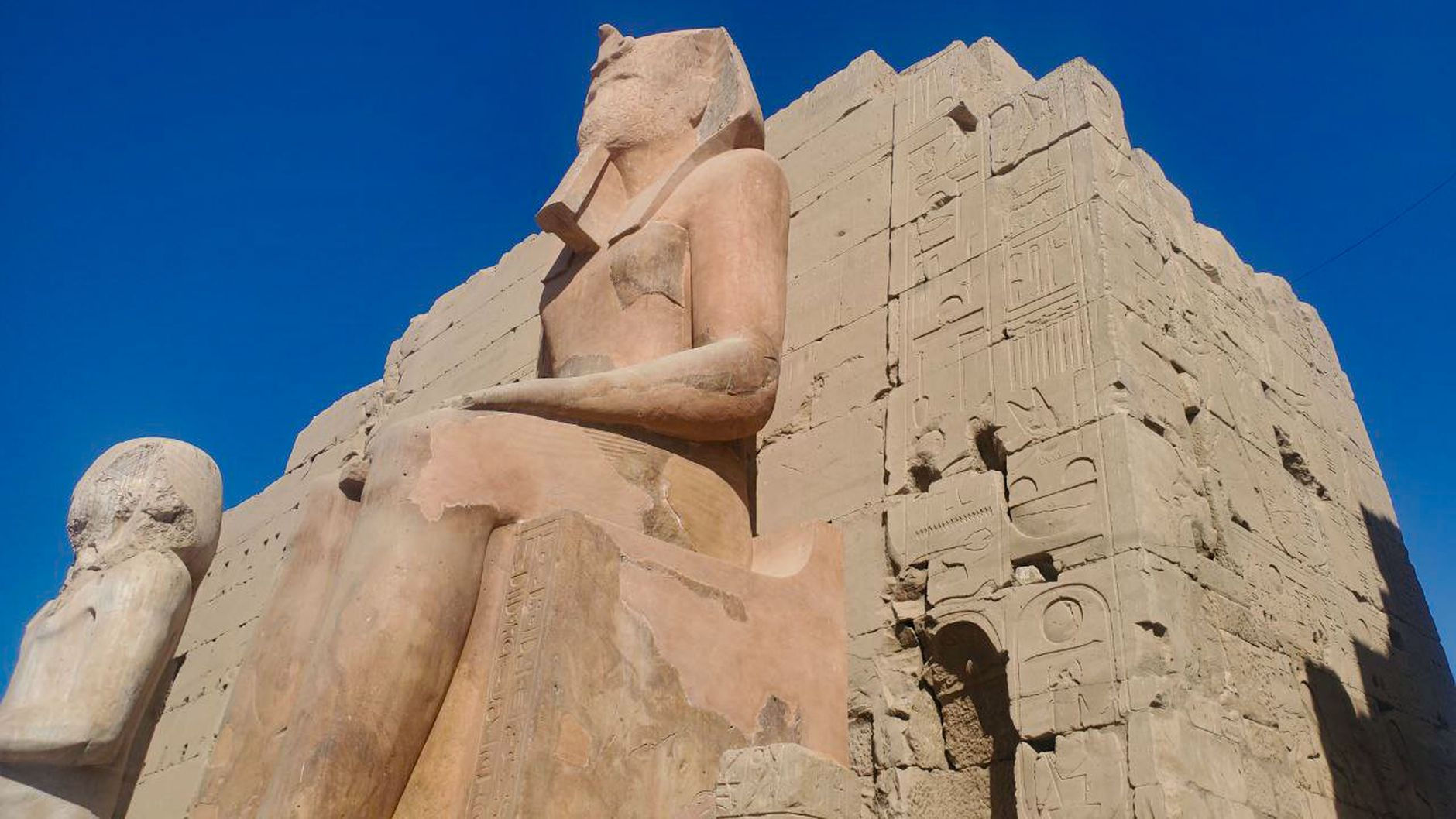
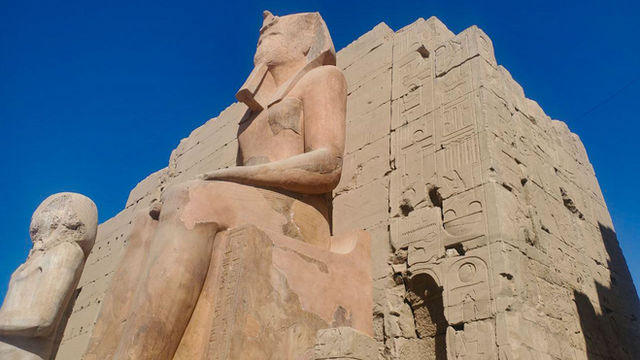
Luxor, Egypt
Photo by Natalya Cotenko on Pexels

Highlights

A few frames from the route.

Photos provided by Pexels

The route

5 overnight bases, numbered in order. Tap a pin to jump to that day.

© OpenFreeMap · OSM contributors · straight-line route (not turn-by-turn)

7 days, day by day. Open any day for the morning-to-evening plan, where to eat, and where you sleep that night.

  1. Day 1 Fri 31 Jul Arrive Cairo Base day

    Arrival and the Pyramids

    Morning. Land at Cairo and transfer in; the traffic is its own experience and the journey takes as long as it takes.

    Afternoon. Giza — the three pyramids and the Sphinx. Walk out to the panorama point for the classic line-up of all three, and go inside the Great Pyramid only if nobody minds a hot, steep, airless climb up a low corridor.

    Evening. Dinner with the floodlit pyramids in view, or in Zamalek.

    Eat. Koshari — lentils, rice, pasta, fried onions and tomato sauce — Egypt's national comfort food, from a dedicated koshari shop.

    Where to stay. Giza, with a pyramid view from the roof, or Zamalek on the island for a calmer, greener base with better restaurants.

    Optional / swaps. A camel or horse ride on the plateau; agree the price and duration in writing beforehand, and check the animals look well cared for — many are not.

    Practical. Giza is at the edge of suburban Cairo, not in remote desert; the photographs are framed to hide the city, and knowing that in advance avoids disappointment. Hawkers and unofficial "guides" at the plateau are relentless — a firm no and no eye contact. Carry small notes for tipping (baksheesh), which is genuinely expected everywhere.

    🛏 Cairo · 2 nights · 2 guests

  2. Day 2 Sat 1 Aug Cairo Base day

    The Grand Egyptian Museum

    Morning. The Grand Egyptian Museum, on the Giza plateau road — the largest archaeological museum in the world, with the grand staircase of colossal statues and, at last, the entire Tutankhamun collection displayed together.

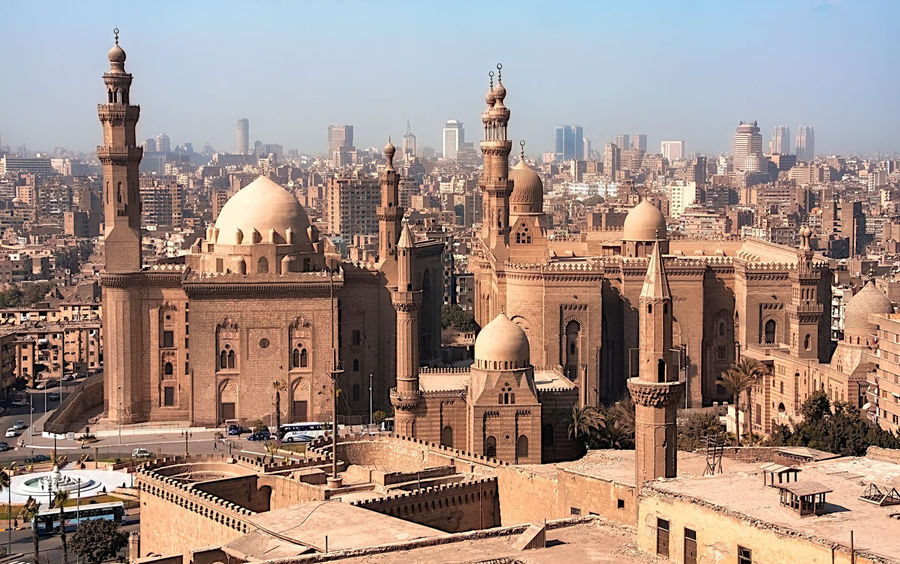
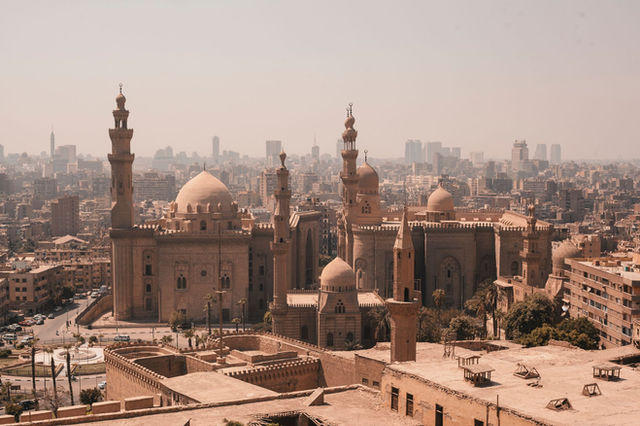
    Afternoon. Islamic Cairo — the Citadel and the alabaster Muhammad Ali Mosque, then Khan el-Khalili's bazaar lanes.

    Evening. Mint tea at El Fishawy in the bazaar, which has reputedly been open continuously for two centuries.

    Eat. Mixed grill and mezze, or fresh fiteer — a layered Egyptian pastry.

    Where to stay. Cairo (as Day 1).

    Optional / swaps. Coptic Cairo and the Hanging Church, a quieter and much older layer of the city.

    Practical. GEM tickets are timed entry and must be bought online in advance — the all-inclusive foreign adult ticket runs around EGP 1,450–1,590, with a reduced rate around EGP 730 for students and children aged 6–25 with ID, and under-6s free. Give it a minimum of three hours; four is better. Dress modestly for the mosques and expect to remove shoes.

  3. Day 3 Sun 2 Aug Cairo → Luxor ~665 km Fly

    Cairo → Luxor

    Morning. Short flight south, about seventy minutes, into a completely different Egypt — smaller, hotter, and green in a thin strip either side of the river.

    Afternoon. Karnak, which is not a temple but a complex built and rebuilt over two thousand years; the Hypostyle Hall's 134 columns are the single most impressive space in the country.

    Evening. Luxor Temple after dark, when it is floodlit and half-empty and the avenue of sphinxes runs away into the dark.

    Eat. Tagen — a clay-pot stew — and fresh flatbread on the corniche.

    Where to stay. The East Bank corniche, near Luxor Temple, so you can walk to the temple at night.

    Optional / swaps. A sunset felucca on the Nile from the East Bank corniche, an hour under sail for very little.

    Practical. The Sphinx Avenue between Karnak and Luxor Temple has been excavated and reopened along its full length — you can walk part of it. Luxor in summer regularly exceeds 40°C and sightseeing is genuinely dangerous at midday; October to April is the sane window.

    🛏 Luxor · 1 night · 2 guests

  4. Day 4 Mon 3 Aug Luxor → Edfu ~109 km Boat

    The Valley of the Kings, then sail

    Morning. Cross to the West Bank at dawn for the Valley of the Kings — painted tombs cut deep into the rock, the colours still vivid because they were sealed in the dark. The standard ticket admits you to three tombs; Tutankhamun's and Seti I's are separate.

    Afternoon. Hatshepsut's terraced mortuary temple against the cliff, and the Colossi of Memnon, then board the boat at Luxor and sail through Esna lock.

    Evening. Dinner on deck as the river goes past — palms, water buffalo, children waving from the bank.

    Eat. Whatever the boat serves, which is usually a large buffet; the fresh bread and the mezze are the good parts.

    Where to stay. On board. Nile cruise cabins are river-facing and the sun deck is where the trip actually happens.

    Optional / swaps. A dawn hot-air balloon over the West Bank before the Valley — memorable, and the same cancel-for-wind caveat applies as anywhere.

    Practical. Photography rules inside the tombs change; some require a separate photo ticket and some ban cameras outright, so ask at the gate rather than assume. The Valley is a natural oven — go at opening, take far more water than you think, and cover your head.

    🛏 Edfu · 1 night · 2 guests

  5. Day 5 Tue 4 Aug Edfu → Kom Ombo ~74 km Boat

    Edfu and Kom Ombo

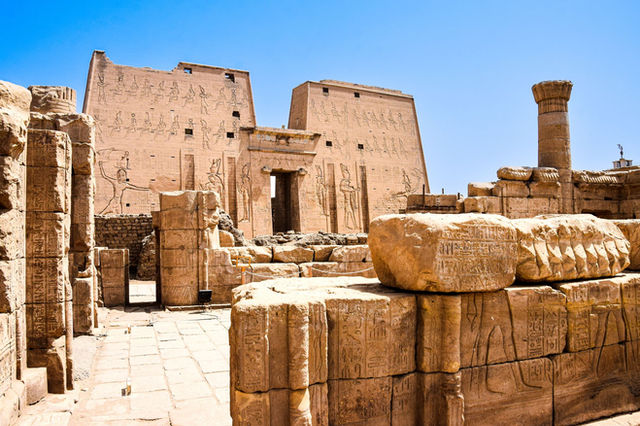
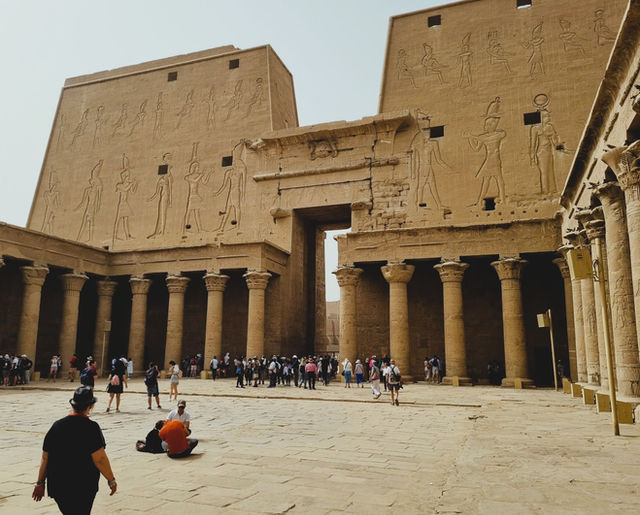
    Morning. Edfu's Temple of Horus, the best-preserved temple in Egypt — buried in sand for centuries, which is exactly why the roof and the reliefs survived. The traditional arrival is by horse-drawn caleche from the dock.

    Afternoon. Sailing. This is the day to sit on deck and do nothing, which is the underrated pleasure of a Nile cruise.

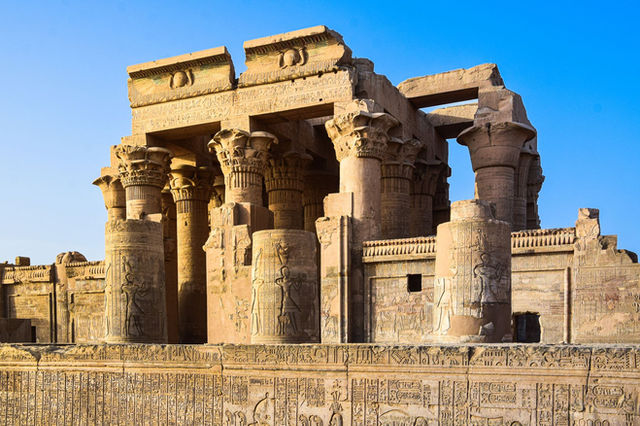
    Evening. Kom Ombo at dusk, a rare double temple shared between the falcon god Haroeris and the crocodile god Sobek, lit and standing right on the riverbank.

    Eat. Grilled pigeon if you are adventurous; it is a genuine Egyptian delicacy.

    Where to stay. On board.

    Optional / swaps. The small crocodile museum beside Kom Ombo holds mummified crocodiles and takes fifteen minutes.

    Practical. If you take a caleche at Edfu, agree the fare before getting in and look at the horse's condition — welfare varies enormously and you can simply decline. Boats moor side by side at these stops and you may walk through two other vessels to reach the shore; that is normal.

    🛏 Kom Ombo · 1 night · 2 guests

  6. Day 6 Wed 5 Aug Kom Ombo → Aswan ~56 km Boat

    Aswan

    Morning. Philae Temple, moved stone by stone to a new island when the High Dam flooded its original one — you arrive by motorboat, which is half the pleasure.

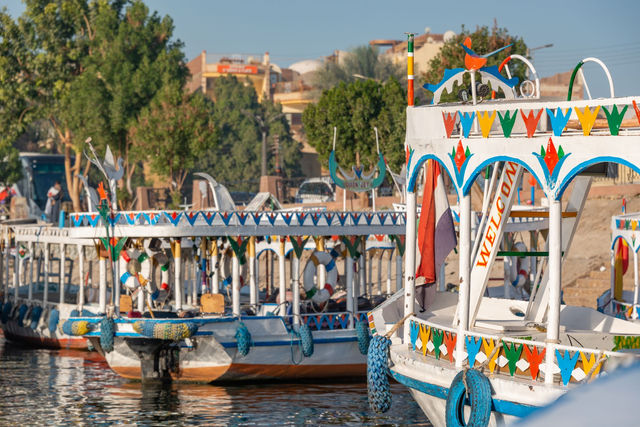
    Afternoon. A felucca under sail around Elephantine Island and the Nubian villages, whose houses are painted in blues and ochres unlike anything downriver.

    Evening. Dinner on deck with the desert on one bank and the town on the other; Aswan is the prettiest stretch of the river.

    Eat. Nubian food — spiced and slower-cooked than Cairo's — in a village house if the boat arranges it.

    Where to stay. On board, moored at Aswan.

    Optional / swaps. The Unfinished Obelisk in the granite quarry, still attached to the bedrock, which explains how the things were made.

    Practical. Feluccas have no engine and depend on wind; allow flexibility. Aswan is materially hotter than Cairo year-round.

    🛏 Aswan · 1 night · 2 guests

  7. Day 7 Thu 6 Aug Aswan Base day

    Abu Simbel option and home

    Morning. Abu Simbel, if you have the appetite — Ramses II's colossal rock temples, also relocated above the rising lake, about three hours south by road each way, or a short flight. It is a long morning and it is extraordinary.

    Afternoon. Aswan airport and the flight home via Cairo.

    Evening. Home.

    Eat. A last mint tea and some basbousa on the corniche.

    Where to stay.

    Optional / swaps. If Abu Simbel is too much, the Nubian Museum in Aswan is excellent and takes ninety minutes.

    Practical. Abu Simbel road convoys leave very early and the day is long; check whether it fits your flight before committing, and consider it as an add-on night rather than a squeeze. The homeward routing goes through Cairo — book the domestic and international legs on one ticket so a delay is the airline's problem.

Flights

An open-jaw trip — fly into CAI, home from ASW. Each search opens pre-filled with your travel dates and party.

Powered by the Travelpayouts flight search on /flights.

Budget

A realistic planning budget for the whole trip — beds, food, fuel, the hire car and the extras. Change your party size, dates or comfort level and it updates to match.

€1,405≈ £1,201
  • Per person€703
  • Per day€201
  • SeasonPeak
  • TierMid

Estimate settings editable

Party2 travellers
CategoryHow it’s estimatedEstimate
Accommodationper-person/night (3–4★, min 2 sharing, £75 floor) × people × nights × season × tier€684
Meals & drinksper-country food/person/day × party × days × tier€180
Activities & admissionsper-country activities/person/day × party × days€228
Local transportper-country trains, buses & ferries/person/day × party × days€120
eSIM / ATMfixed one-off€65
Subtotal€1,277
Contingency (10%)€128
Grand total ≈ £1,201 · €703 pp · €201/day€1,405

How we estimate

  • Accommodation — per-person nightly by destination, minimum two sharing, × season × tier.
  • Standard (Mid) = 3–4★+ — estimates assume our audience’s baseline: 3–4★ or better, never below a ~£75/night room floor. Premium higher; Budget lower.
  • Meals — per person, per day, by country. Fuel — from the route distance. Season — from your dates.

These are planning estimates, not quotes. Premium properties and popular tourist hubs run above the country average, especially in peak season. Where live cost data isn’t available yet, some countries use representative figures.

Eat your way across

A taste of every country you travel through — the food culture worth going out of your way for, and the signature dishes to seek out.

Egypt

As old as the pharaohs, served loud from the street — beans at dawn, a carb-on-carb bowl by noon.

Breakfast in Cairo is a bowl of ful medames — fava beans stewed overnight, mashed at the cart with oil, cumin and a squeeze of lemon, scooped up with warm flatbread the locals simply call aish, the word for life. By midday the koshari shops are roaring: a great carb-on-carb heap of rice, lentils, macaroni and chickpeas under a slick of spiced tomato sauce, crowned with crisp fried onions and as much chilli-vinegar as you dare.

This is some of the oldest cooking on earth, and still the most democratic — fed to everyone, cheaply, from a hatch in the wall. Around it turns the rest of the table: ta'ameya, the fava-bean falafel Egypt swears it invented; slippery green molokhia soup; pigeon stuffed with spiced rice; and sticky, honey-soaked pastries with a tiny cup of cardamom coffee. Eat where the queue is longest and you won't go wrong.

  • koshari (rice
  • lentils
  • pasta & fried onions)
  • ful medames (stewed fava beans)
  • ta'ameya (Egyptian falafel)
  • molokhia (jute-leaf soup)
  • hamam mahshi (stuffed pigeon)
  • om ali (bread pudding)

A little history

To understand what you see today, it helps to know the past — the civilisations and empires that shaped the culture, food and architecture of the places on this route.

Egypt
  • Seven thousand years on the Nile — the pyramids of Giza and the temples of Luxor still define the country
  • the river's annual flood made the farming, the bread and the whole civilisation possible
  • Alexandria was a great Greek and Roman city, its library the mind of the ancient world
  • the Arab conquest of 641 raised Islamic Cairo's minarets and gave the language and faith of today

Family activities

The stops, games and moments that land best with kids and teens on this trip.

Standing at the base of the Great Pyramid and realising it was already two thousand years old when Cleopatra was born.

The Grand Egyptian Museum's grand staircase of colossal statues, and Tutankhamun's complete collection in one place for the first time.

Painted tombs in the Valley of the Kings, where the ceiling colours look freshly applied because they were sealed in darkness for three thousand years.

Sailing on a felucca at Aswan with no engine, just a lateen sail and the current.

Spot-it along the river: count water buffalo, feluccas and minarets from the sun deck between Edfu and Kom Ombo.

Packing

What to bring for this trip — the easy-to-forget essentials.

clothing (for the full climate range + layers)

Loose, long, light and pale clothing — covering up is cooler than not, and modest dress avoids friction. A warm layer for the boat deck at night and for Cairo evenings in winter.

footwear (terrain)

Closed walking shoes for the tombs and temple rubble, plus sandals for the boat. Sand gets into everything.

activity gear

A wide-brimmed hat, high-SPF sunscreen, sunglasses, and a refillable bottle you fill from the boat's supply rather than the tap.

luggage & transport strategy

One case each; the cruise cabins have limited storage and you carry bags across other moored boats at some stops.

documents / money / connectivity & adapters

Passport plus e-visa, a large supply of small Egyptian notes for tipping, cards for hotels only, eSIM, Type C/F sockets.

health / first-aid

Rehydration salts and a stomach remedy — travellers' upset is common — plus insect repellent, prescriptions, and strict discipline about bottled water including for teeth.

destination-specific extras

A scarf for sun, dust and mosque cover; and a torch for the tomb interiors, which are dim.

Drone rules (sub-250g)

Where you can and can’t fly a small drone along the way — the rules change sharply from one country to the next, so check before you launch.

  • Egypt
    Do not bring a drone. Even a sub-250g DJI Mini is effectively banned: importing or possessing any camera drone needs Ministry of Defence authorisation that tourists cannot obtain, drones are routinely X-rayed and confiscated at airport customs, and unauthorised flying carries heavy fines and possible imprisonment. ⚠ Flying is specifically prohibited over all antiquities — the Giza pyramids, Luxor, Karnak, the Valley of the Kings and Abu Simbel — plus military zones, the Sinai Peninsula, the Suez Canal and within 9km of airports, all treated as national-security matters. Rules checked: Jul 2026

National parks, protected sites and religious/heritage venues often have their own rules and permits — always check the specific site before you fly.