The Bahamas' closest island to Florida — a low-slung sport-fishing and shark-diving outpost steeped in Hemingway lore, an easy weekend hop from Miami.
Island
December – April (dry season; hammerhead shark season)
BIM
2–4 days
LBM1948 / Wikimedia Commons (CC BY-SA 4.0)
▸ Discover
About Bimini
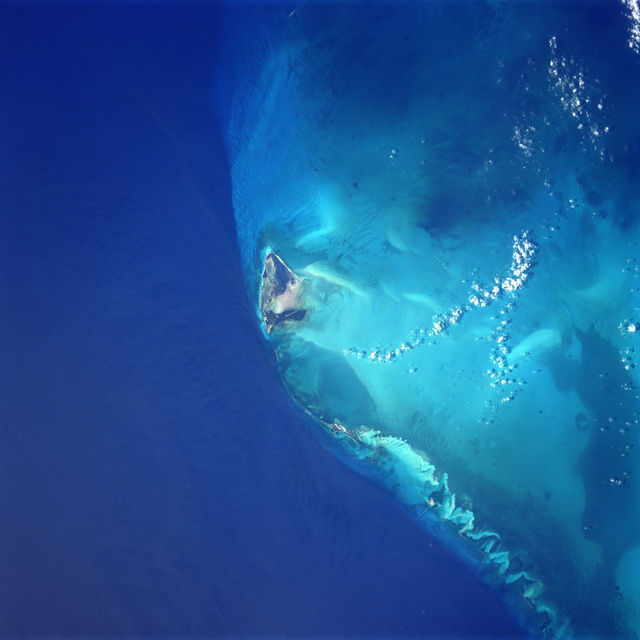
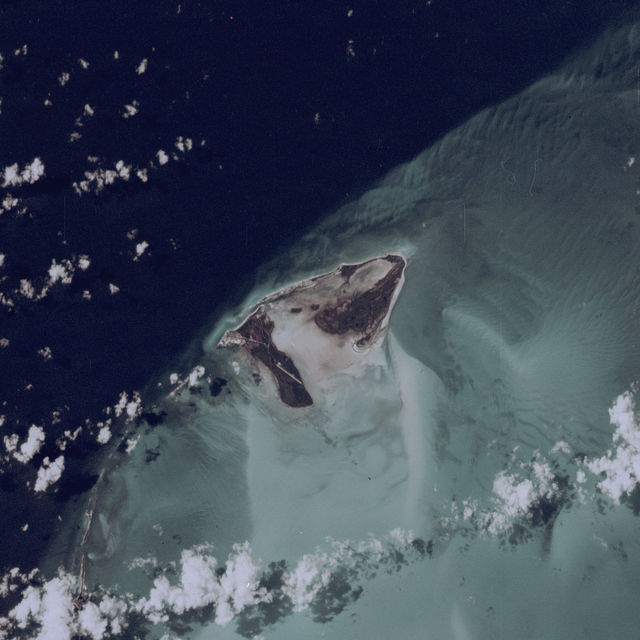
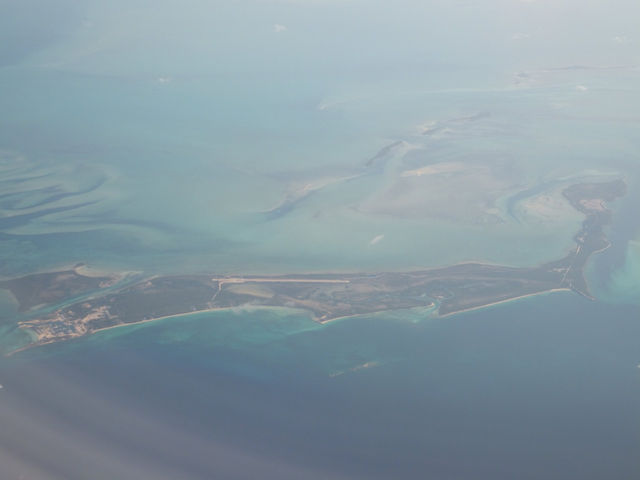
Bimini is the westernmost point of the Bahamas — a pair of narrow islands (North Bimini and South Bimini) plus a scatter of cays, lying roughly 50 miles due east of Miami across the Gulf Stream. It is tiny: North Bimini, where almost everyone stays, is barely seven miles long and in places only a few hundred metres wide, a single strip of sand with the Atlantic on one side and a shallow lagoon on the other. Alice Town and Bailey Town run along its southern end; the airport sits separately on South Bimini, reached by a short water-taxi across a narrow cut. The island's identity was forged on the water. The deep Gulf Stream channel a short run offshore made Bimini the self-styled 'Big Game Fishing Capital of the World' from the 1930s, when Ernest Hemingway came to fish for marlin and tuna and drink at the Compleat Angler; it remains a serious sport-fishing and diving base, and in winter one of the best places on earth to dive with great hammerhead sharks. It is also, frankly, a boating and party-weekend destination for South Florida, thoroughly American in currency, clientele and rhythm. Bimini suits anglers, divers and anyone who wants clear water and rum a short hop from Miami — not those after resort polish, cultural depth or a large island to explore.
Why go
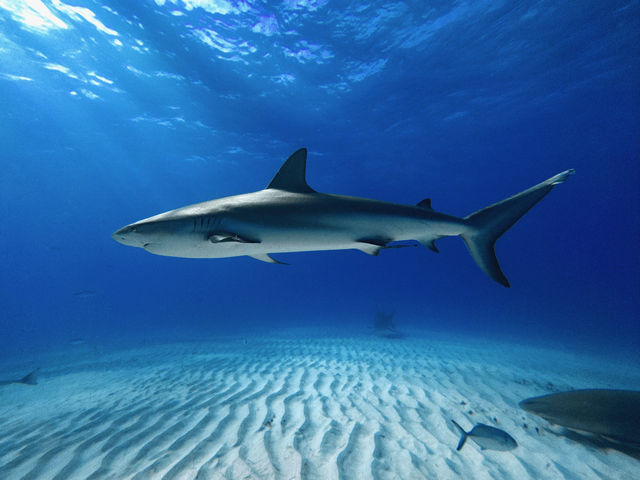
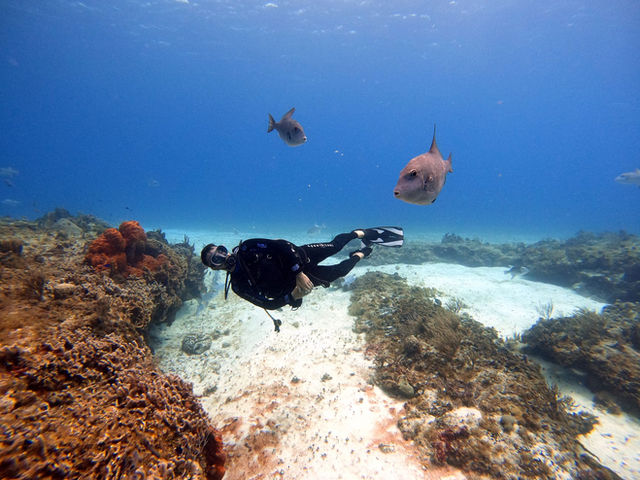
The case for Bimini is the water and its history. The Gulf Stream drops away to real depth within sight of the beach, which is why the island became a big-game fishing legend and why, from December to April, great hammerhead sharks — along with bull, nurse, lemon and reef sharks — gather off South Bimini for some of the most reliable shark diving anywhere. Beneath shallow, clear water lie two of the Caribbean's odder sights: the SS Sapona, a concrete-hulled Prohibition-era steamer grounded on a sandbar since a 1926 hurricane and now a superb snorkel and novice-dive site, and the Bimini Road, a half-mile line of rectangular limestone blocks that fuels the island's Atlantis myth (geologists are clear it is natural beachrock, but it is an atmospheric dive nonetheless). Ashore, there is genuine Hemingway heritage, Ashley Saunders' extraordinary hand-built Dolphin House, the soft sand of Radio Beach and a small, easygoing drinking-and-conch culture. Its greatest practical virtue is proximity: a two-hour fast ferry or a short flight from Florida makes Bimini one of the easiest Bahamian islands to reach. Pair it with a few days in Miami, or with a wider Bahamas trip via Nassau.
Highlights
Great hammerhead shark diving (winter, off South Bimini)
Big-game fishing for marlin, tuna and wahoo in the Gulf Stream
SS Sapona wreck — snorkel a grounded Prohibition-era concrete ship
Bimini Road — the underwater 'Atlantis' rock formation
Ashley Saunders' hand-built Dolphin House in Alice Town
Radio Beach sunset and the Hemingway heritage of Alice Town
Food & drink
Bimini's food is simple, seafood-led and best eaten casually. Conch is the island staple, served as cracked conch (battered and fried), conch fritters, conch salad (raw, diced and 'cooked' in lime and citrus with peppers and onion, chopped to order at waterfront stands) and conch chowder. Fresh fish comes straight off the boats — grouper, snapper, wahoo, tuna and the day's catch, grilled or fried with peas and rice. The island's signature is Bimini bread, a slightly sweet, soft white loaf that locals are rightly proud of and that turns up alongside almost everything. Wash it down with a Kalik or Sands (the Bahamian lagers) or a rum punch; the island has a genuine drinking culture, and the Gulf Stream bar-crawl of Alice Town is part of the experience. Eating is informal — beach shacks, marina grills and a handful of local kitchens rather than fine dining, with Resorts World holding the more polished restaurants. Prices skew high and American, since almost everything is imported.
Live map of hotels and villas around Bimini — powered by Stay22. Pan, zoom and compare live prices to pick your base.
Stay
Hotels & rentals around Bimini
Pan, zoom and compare live prices — every stay in one map.
▸ Getting around
Getting around Bimini
North Bimini is small enough to walk end to end, and most visitors do exactly that — Alice Town's sights, beaches and bars are within a few minutes of each other along the King's Highway. Golf carts are the characteristic local vehicle and can be hired by the day; they are the most practical way to explore the length of North Bimini, though the island is so narrow there is not far to go. Taxis (usually minibuses) meet the ferry and handle airport transfers. The key journey is the crossing between the airport on South Bimini and the towns on North Bimini: a frequent little water-taxi runs the narrow cut between the two islands, roughly a ten-minute hop, with taxis waiting on each side to complete the trip. Almost everything else worth doing — the shark dives, the SS Sapona, the Bimini Road, the fishing — happens by boat, arranged through the dive shops, the marinas or a charter captain. Many Florida visitors simply bring their own boat.
There is no bus network on Bimini — the island is far too small. Getting around is a matter of walking, hired golf carts, and taxis, plus the water-taxi that shuttles between South Bimini (the airport) and North Bimini (the towns). That ferry runs frequently through the day, from around 7am until late evening, for a nominal fare of a couple of US dollars each way; taxis on either side add a few dollars per person. Fares are informal and paid in cash. For anything beyond the two main islands — the offshore dive sites, the wreck, the sandbars — you are reliant on charter boats and dive-operator vessels rather than any scheduled service. Budget for boats, not buses.
▸ What you'll do
Insider tips
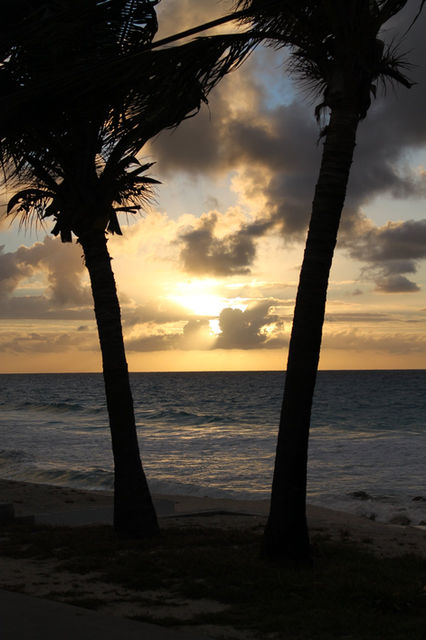
Time your visit to the shark season if diving is your aim — great hammerheads are most reliable from December to April, with January and February the peak, and booking dives well ahead is wise because operator capacity is limited. Bring a proper passport book, not a card, or the ferry will turn you away. The SS Sapona is best on a calm morning before the wind gets up; go with a snorkel operator who can also show you the nearby reefs, as the wreck alone is a short visit. Ashley Saunders' Dolphin House in Alice Town is worth an hour and a chat with its builder — it is one of the more genuinely unusual things in the Bahamas and easy to miss. For sunset, Radio Beach on North Bimini's western shore faces the right way and is a short walk from Alice Town. Eat conch salad chopped to order at a waterfront stand rather than from a menu, and don't leave without a loaf of Bimini bread. Finally, weekends bring the Florida boat crowd and higher prices — come midweek for a quieter, cheaper island.
A ten-night dive expedition through the three islands that make the Bahamas a bucket-list destination underwater — Bimini for winter great hammerheads and wrecks, Andros for the world's third-largest barrier reef and its blue holes, and Long Island for the legendary Dean's Blue Hole — linked by short inter-island flights via Nassau.
December – April (dry season; hammerhead shark season)
Bimini has a warm, humid subtropical-to-tropical climate moderated by the sea. Winter (December–April) is the pick: dry, sunny, with daytime temperatures around 24–27°C, cooler evenings, calmer seas and the lowest humidity — and it coincides with the great hammerhead shark season. This is peak season for divers and anglers. Summer (June–September) is hot and humid, with temperatures in the low 30s°C, warmer water and afternoon thunderstorms; it is also the Atlantic hurricane season, which runs from June through November, when tropical storms and hurricanes are possible and travel plans should carry insurance and flexibility. Statistically the greatest hurricane risk is August to October. Spring and late autumn shoulders can be excellent — warm, quieter and cheaper — but always with an eye on the tropical forecast. Sea conditions on the Gulf Stream crossing can turn rough in winter cold fronts, occasionally disrupting the ferry.
▸ Know before you go
Know before you go
Safety
Bimini is a small, low-crime community and violent crime against visitors is rare, but ordinary precautions apply — don't leave valuables unattended on the beach or in an unlocked golf cart. The real hazards here are on and in the water. The Gulf Stream crossing is deep, open ocean and can be rough; boating accidents and strong currents are the main dangers, and organised shark dives, while run by experienced operators, are advanced activities that demand you follow the briefing exactly. Snorkelling the SS Sapona and the Bimini Road is straightforward in calm conditions but exposed to current and boat traffic, so dive with a flag and a guide. The tropical sun is intense — reef-safe sunscreen, a hat and shade are essential. Golf carts have no seatbelts and share the road with vehicles; drive slowly. Standard Bahamas medical facilities on Bimini are basic (a small clinic), with anything serious requiring evacuation to Nassau or Florida — comprehensive travel and diving insurance is strongly advised. Hurricane season (June–November) is the other planning consideration.
Culture & etiquette
Bimini is a Bahamian community and, beneath the American weekend crowd, a Christian, church-going and generally conservative one. Manners matter: greet people before launching into a request, and expect an unhurried, island pace — 'soon come' is a real thing. Dress is casual, but beachwear belongs on the beach; cover up in shops, restaurants and especially around the settlements and churches, and on Sundays many locals dress smartly for worship. The island runs on US dollars and American habits, so tipping (around 15%) is expected as it would be in Florida. Bimini's fishing and diving heritage is a source of real local pride — the Hemingway story, the tournament history, the shark research at the Shark Lab — and locals are happy to share it. Respect the marine environment: don't touch or chase the sharks, rays and reef life that are the island's livelihood. Buying conch and lobster in season and from licensed sources helps keep it sustainable.
Daily budget
£140/day mid-range (budget £70, luxury £350+; shark-dive and fishing charters are the big cost, running to several hundred pounds a day)
Emergency numbers
911 or 919 (police, fire, ambulance); BASRA marine rescue on VHF Ch 16 / +1 242-322-3877
▸ Ready to book your trip?
Getting there
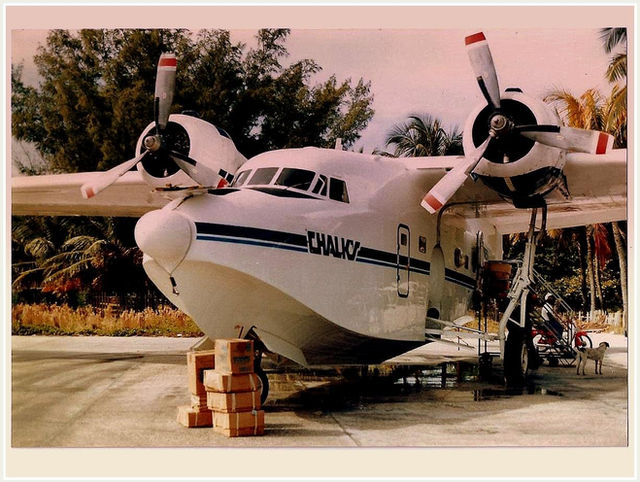
There are no direct flights from the UK; you route via Florida. From Fort Lauderdale (FLL) or Miami (MIA), the two options are a short flight or the fast ferry. South Bimini Airport (BIM) is served by regional carriers including Silver Airways, Tropic Ocean Airways (seaplanes, landing on the water near Alice Town), Western Air and Aztec Airways; American Airlines added a Miami–South Bimini route in February 2026, giving the island its first US major-carrier link. Flights from South Florida take roughly 25–35 minutes. The alternative is the Baleària Caribbean fast ferry from Fort Lauderdale: a wave-piercing catamaran (the Jaume II) that crosses the Gulf Stream to North Bimini in about two hours, operating year-round with sailings on roughly three days a week and extra services in summer and over US holidays — check the current timetable when booking, as it changes seasonally. A full passport book is required for every passenger (passport cards are not accepted). Bimini is a popular short-break and boating destination from Florida, so weekends are the busiest and priciest time to travel.
South Bimini Airport (BIM — the island's own airport, on South Bimini)
Miami International Airport (MIA — Florida gateway, then flight or ferry)
Fort Lauderdale-Hollywood International Airport (FLL — Florida gateway, Baleària ferry departs nearby)
Book
Ready to book your trip?
Flights, airport transfers and car hire to BIM — search and compare without leaving the page.
▸ Trip extras
Book
More trip extras
Parking, holiday extras, and more — coming soon.
Coming soon
We're lining up parking, holiday extras and activities you'll be able to add to any trip from here.
 © Viator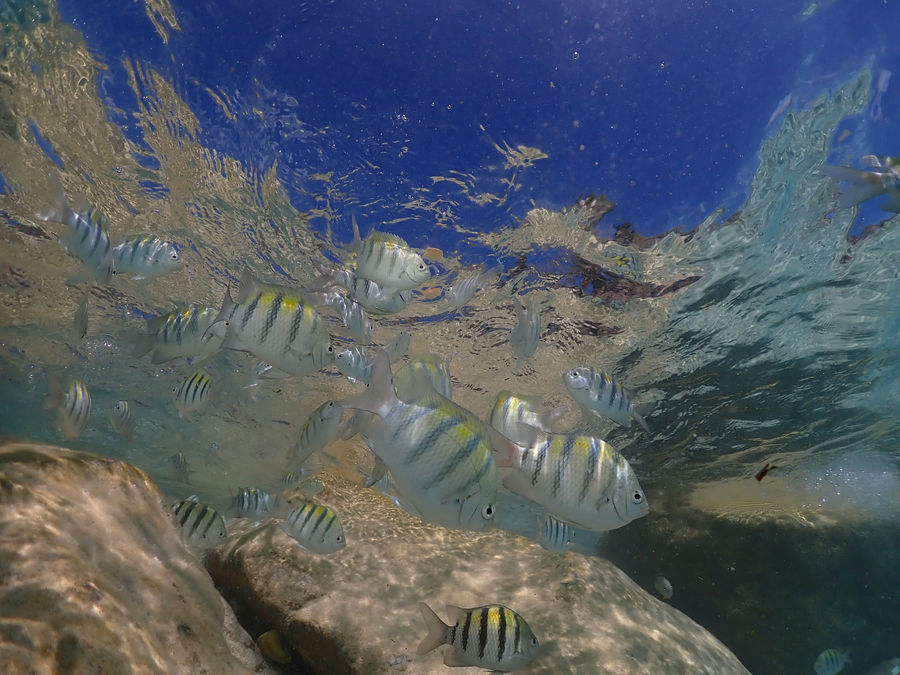
 10 Nights