The turquoise waters of the Mediterranean lap against smooth grey beach pebbles while the aroma of frying chickpea batter floats through shaded baroque alleys.
A sun-drenched maritime hub where Italian grit collides with French sophistication, Nice balances palatial seafront hotels against unpolished backstreet markets.
Type
city
Ideal length
~approx 3–4 days
Getting around
tram + walking
Neighbourhoods
4 areas
Best season / months
May, June, and September
Good for
Any traveller · Food · Sun · Art
▸ Discover
About Nice
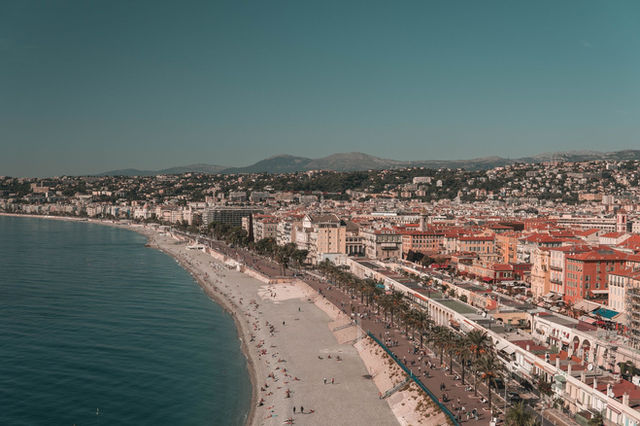
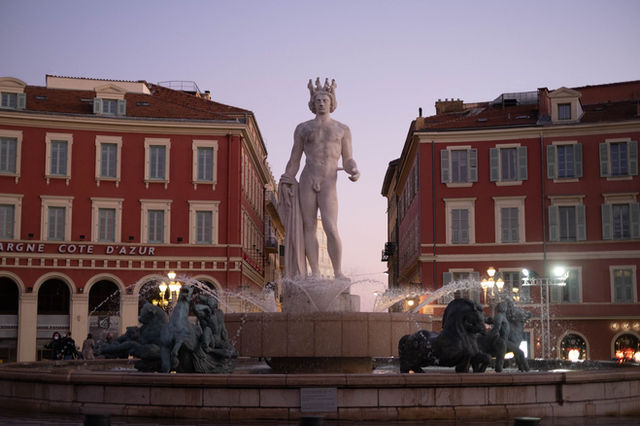
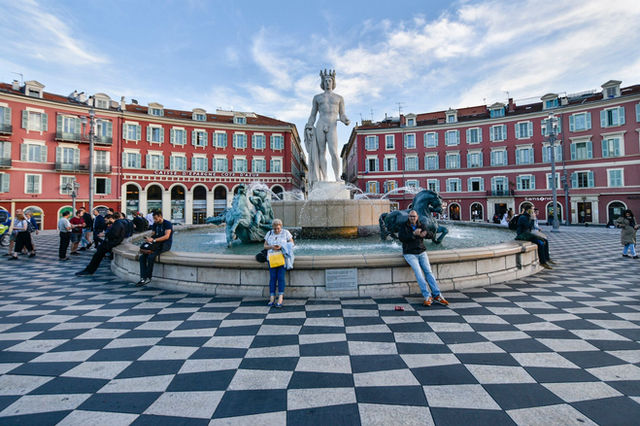
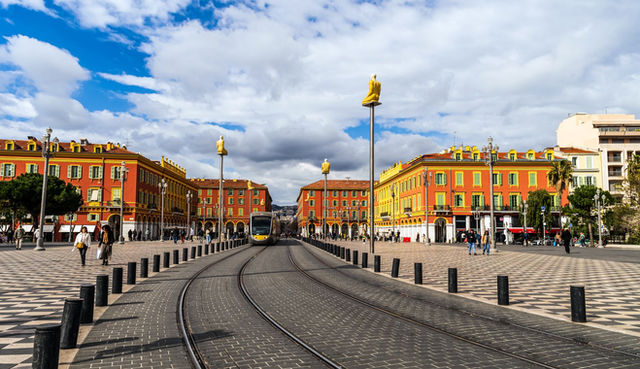
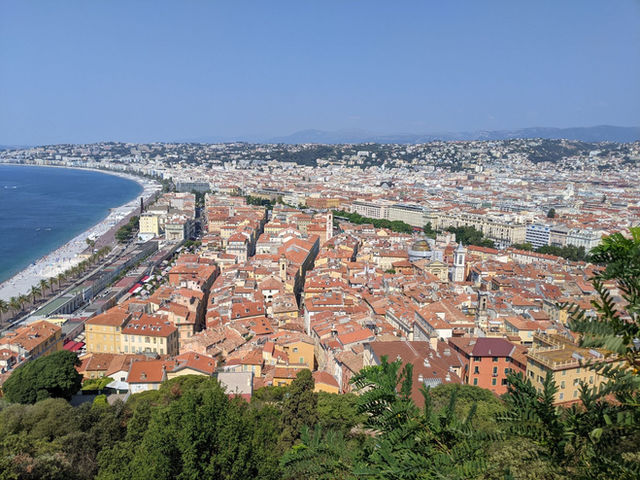
Nice curves around the wide amphitheater of the Baie des Anges, pinned between steep maritime Alps and the sea. The city centers on the wide red-brick expanse of Place Masséna, splitting cleanly into the dense, ochre-painted maze of Vieux Nice and the grand nineteenth-century boulevards of the modern quarters. To the east, the limestone cliffs of Colline du Château separate the old town from the active shipping slips of Le Port, while an efficient, battery-powered tram network cuts across the urban grid, linking the coastal flats to the hill tracks.
Why go
It delivers raw Mediterranean life and deep artistic pedigree without the sterile, hyper-manicured vanity of neighbouring Riviera resort towns.
Don't miss
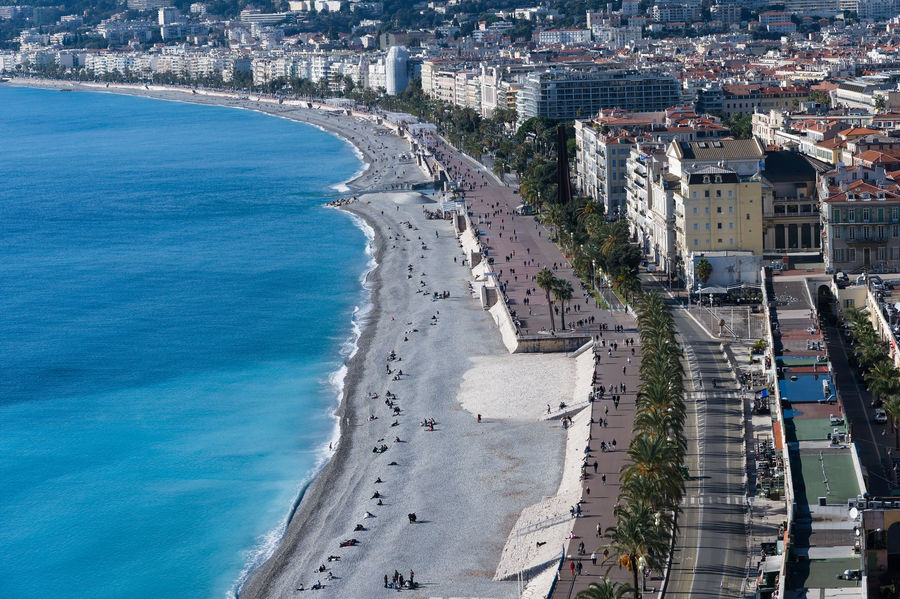
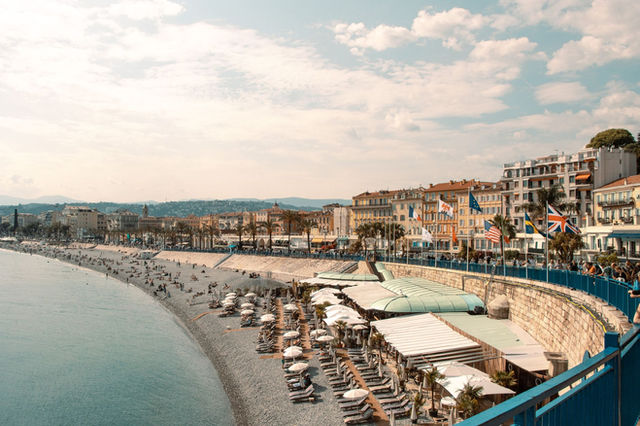
Promenade des Anglais — stroll the iconic palm-lined coastal boulevard
Colline du Château — climb the waterfall hill for bay vistas
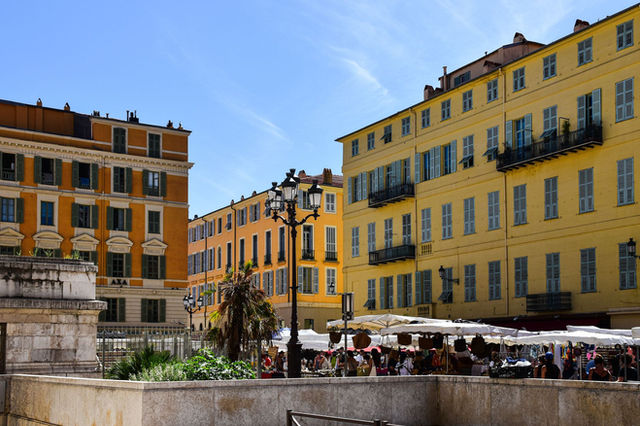
Cours Saleya — browse the daily morning flower market
Musée Matisse — inspect master artworks inside a red villa
Cathédrale Saint-Nicolas de Nice — marvel at the onion-domed orthodox architecture
Signature experiences
Morning market grazing along the quays — Walk down to the open-air stalls of Cours Saleya before the midday sun peaks. Skip the sit-down tourist cafes lining the outer path and join the residents queuing at the metal ovens for fresh socca. It is a sensory hit of peppery chickpea flatbread, local tapenades, and stacks of cut lavender that defines the city's food culture.
Hilltop pacing above the turquoise bay — Climb the steep stone steps of Colline du Château to escape the dense streets of Vieux Nice. The wooded summit houses a massive artificial waterfall, offering a sprawling panorama over the curved crescent of the Promenade des Anglais and the slate roofs below.
Art loops through historic olive groves — Catch the local transit uphill to the residential tracks of Cimiez to explore the Musée Matisse. The seventeenth-century red villa preserves a massive collection of Henri Matisse’s works, letting you view his cut-outs right next to the ancient Roman ruins of the Arènes de Cimiez.
Neighbourhoods
Nice neighbourhood by neighbourhood — the character of each and who it suits.
Vieux Nice
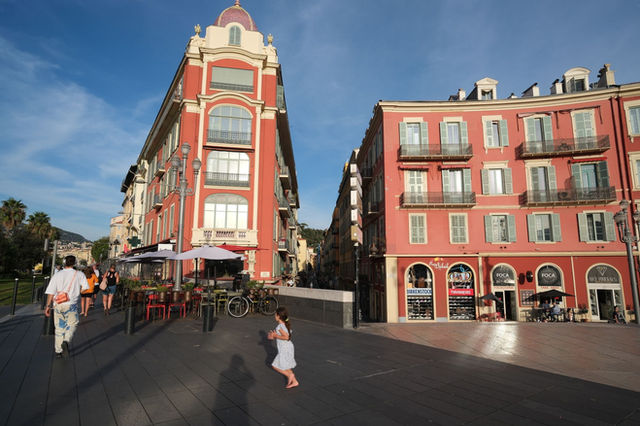
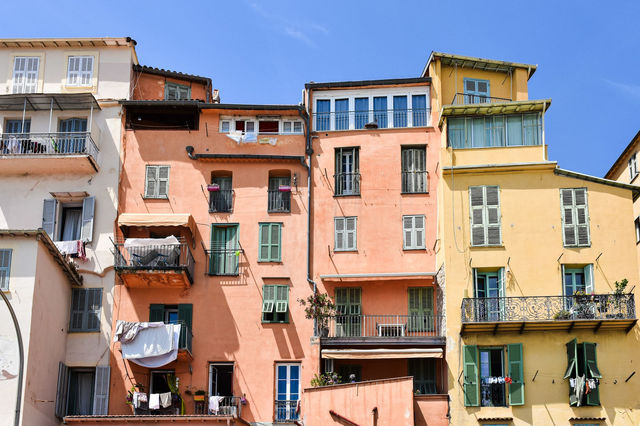
The historic heart is a tight canyon of tall, pastel houses, hanging laundry, and baroque churches. It feels densely Italian, running on a fast-paced coastal rhythm where heavy shutters filter the intense southern sun.
Why go
For exceptional street food stalls and navigating preserved medieval lanes.
Best for
history
Known for
Cours Saleya, Palais Lascaris, Opéra de Nice
Le Port
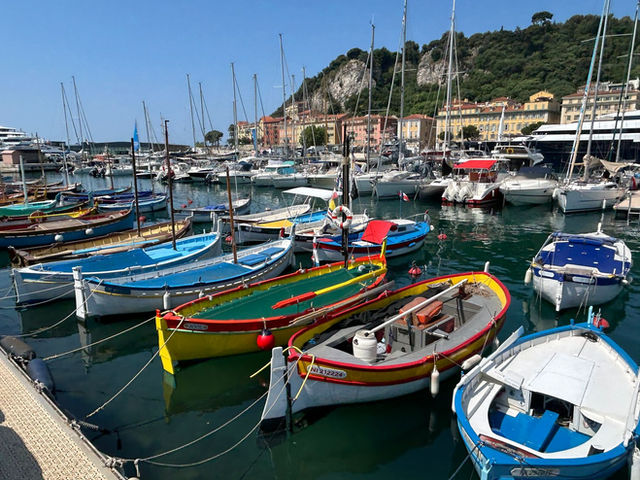
Circling a rectangular basin filled with superyachts and wooden fishing boats, this eastern district blends maritime grit with creative bars. Antique shops fill the blocks behind the quays, giving the waterfront an unpretentious local edge.
Why go
For alternative nightlife and watching ships navigate the harbour.
Best for
nightlife
Known for
Place Île-de-Beauté, Église Notre-Dame-du-Port, Quai des Deux-Emmanuels
Libération
Pushed north along the main tram line, this working-class hub is where real city life functions away from the beach. It centers on a massive open-air produce market where farmers shout across tables of olives.
Why go
For unpolished food shopping and affordable local lunch counters.
Best for
food
Known for
Place de la Libération, Gare du Sud, Tram Line 1
Cimiez
Crowning the northern hills, this leafy residential quarter holds Roman ruins and grand nineteenth-century palace facades. It drops the busy seafront energy for wide olive groves and a calm, quiet suburban pace.
Why go
For major art galleries and ancient olive gardens.
Best for
calm
Known for
Musée Matisse, Musée National Marc Chagall, Arènes de Cimiez
Views & hidden gems
Best views
Colline du Château — the classic overlook framing the crescent sweep of the Baie des Anges
Phare de Nice — the stone lighthouse pier offering a shot of yachts entering the port
Mont Boron — the eastern mountain peak framing the entire metropolitan grid against the sea
Hidden gems
Cascade du Château — the thundering artificial waterfall hidden on the side of castle hill
Crypt de Nice — an underground medieval fortification system hidden beneath Place Garibaldi
Sentier du Littoral — a rugged coastal footpath cut into the rocks heading toward Villefranche-sur-Mer
Rue Bonaparte back alleys — the quiet residential alleys hiding small craft microbreweries
Food & drink
The culinary identity here splits from standard French butter-cooking, relying completely on olive oil, garlic, tomatoes, and fresh Mediterranean fish. The street stalls of Vieux Nice and the open plazas of Libération serve as the best spots for casual eating, avoiding the overpriced menus of the tourist traps facing the beach. Drinking centers on pale Provence rosés and bitter pastis, alongside light Bellet wines grown right on the steep shale hills inside the city limits.
Socca — a wood-fired chickpea flatbread seasoned heavily with cracked black pepper
Pan Bagnat — a round wheat roll stuffed with tuna, raw vegetables, and olive oil
Pissaladière — a thick bread base topped with caramelized onions, anchovies, and black olives
Salade Niçoise — a fresh plate of raw vegetables, hard-boiled eggs, anchovies, and tuna
Pastis — the classic anise-flavored regional liqueur turned milky with water
Base yourself in Vieux Nice if you want historic character right outside your door, though you will tackle narrow, dark ground floors and listen to delivery trucks bouncing off the cobblestones. Look to Le Port or the alleys behind Rue Bonaparte for direct access to lively bars, independent shops, and seamless tram connections. Choose a spot up in Libération or near the residential blocks of Gambetta for better room rates and an escape from tourist-heavy menus. Avoid staying near Gare de Nice-Ville unless an early train ride is essential, as the transit hub blocks retain a gritty, uninspiring atmosphere.
Stay
Hotels & rentals around Nice
Pan, zoom and compare live prices — every stay in one map.
▸ Getting around
Getting around Nice
The city core is dense and highly walkable, though the Lignes d'Azur network runs three efficient tram lines (Lines 1, 2, and 3). A car is an absolute liability due to massive pedestrian zones, automated traffic bollards, and expensive underground garages.
Ride Tram Line 1 to cross from the markets of Libération down through Place Masséna to the port edge in ~approx 15 min.
▸ What you'll do
Insider tips
Nice's famous beaches are made of large, golf-ball-sized grey stones rather than soft sand; leave thin flip-flops at home and bring thick-soled water shoes to avoid a painful march to the surf.
The Lignes d'Azur tram network uses unique underground power sections in the center to keep overhead wires out of the historic squares, but heavy downpours can occasionally cause brief signaling delays.
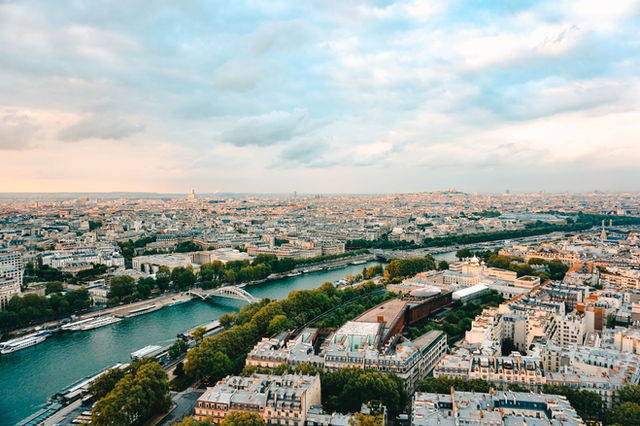
Three faces of France in a week without a car — three nights in Paris, two in Avignon for the Pont du Gard and the Luberon, then the TGV down to Nice for a Riviera finish with Villefranche, Èze and Monaco within reach.
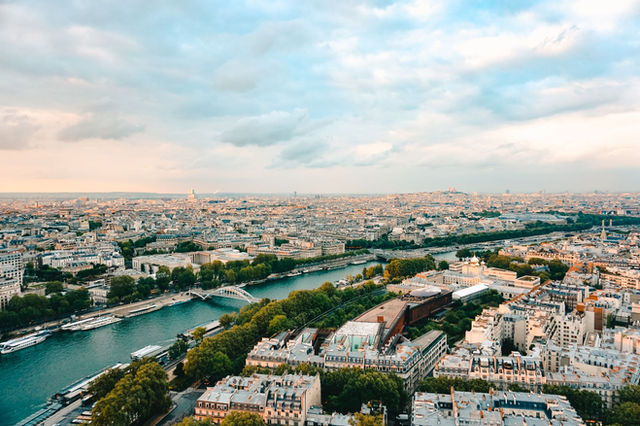
Experience a sweeping cultural journey through France entirely by rail, connecting the iconic avenues of Paris to the sun-drenched coast of the Riviera. This masterfully timed itinerary links world-class wine regions, historic river valleys, and Roman heritage without the need for a rental car.
What to expect — Flowers coat the market tables, park lawns turn green, and the coastal path stays uncrowded. Sea waters remain too cold for casual swimming, and spring squalls can whip off the water without warning.
What's best — Walking the Promenade des Anglais in crisp air before the intense summer glare turns the boulevard into an oven.
Summer
What to expect — Sun bakes the pebble beaches, and the old town turns into a dense human bottleneck of international cruise travelers. August brings heavy humidity and premium room rates; skip mid-summer if you hate packed paths and swap it for a quieter June trip.
What's best — Swimming in the warm turquoise water and drinking cold rosé on the pier walls late into the night.
Autumn
What to expect — The intense heat snaps into golden afternoons and cool nights, while autumn storms can roll in by late October. Tourism drops off significantly after August, meaning shorter lines at major art galleries.
What's best — Grazing through the food markets in relaxed, unhurried light when the town returns to the residents.
Winter
What to expect — A damp chill can settle into the narrow stone valleys, and several beachside shacks close up until spring. Rain turns the polished paving stones slick.
What's best — Witnessing the raw beauty of the Mediterranean coast under sharp blue skies, shared entirely with locals in heavy coats.
▸ Know before you go
Know before you go
Honest swaps
Skip the overpriced seafood terraces on the Promenade des Anglais → walk ten minutes inland to the back alleys of Vieux Nice to find an authentic bistro serving fresh catch to locals.
Skip the expensive private beach clubs → grab a thick towel, buy a pan bagnat from a corner stand, and find a spot on the public pebbles of Plage Publique des Ponchettes.
Crowds & timing
When large cruise ships drop anchor in the bay, Vieux Nice becomes gridlocked by mid-morning. Avoid the peak human bottleneck by visiting the historic core at dawn, then catch the tram north to the wide spaces of Libération or the hills of Cimiez during the afternoon crunch.
Local rules & etiquette
Walking through the central shopping streets or stepping into churches wearing only swimwear will result in a sharp lecture or a police fine; throw a shirt on when leaving the pebbles. The grey beach pebbles are public property; pocketing them as souvenirs is technically banned to protect the shoreline.
Money
Card payment is standard across almost all registers, but keep cash coins for the small vegetable sellers at Cours Saleya. Avoid using the independent, unbranded ATMs standing right near the main tourist beach arcades to escape high transaction fees.
After dark
Nightlife fragments neatly by style: the upscale lounges of the waterfront run on expensive cocktails, the port quarter favors lively wine bars and microbreweries, while the student lanes of the center stay active past midnight.
▸ Ready to book your trip?
Getting there
Fly into Nice Côte d'Azur Airport (NCE), then take the direct Tram Line 2 straight into the city center (~approx 30 min). Long-distance TGV trains arrive at Gare de Nice-Ville, which connects to the coast via Tram Line 1 in ~approx 10 min.
Book
Ready to book your trip?
Flights, airport transfers and car hire — search and compare without leaving the page.
▸ Trip extras
Book
More trip extras
Parking, holiday extras, and more — coming soon.
Coming soon
We're lining up parking, holiday extras and activities you'll be able to add to any trip from here.

 3 OCT Cultural & Traditions See the event →
 6 Nights
  13 Nights