← France
FRANCE · CITY

Paris

The city that invented the café, the department store, the boulevard and the modern idea of romance — still the benchmark for art, fashion, food and urban beauty.

  • City
  • April to June, and September to October
  • CDG
  • ~approx 4–5 days
  • Haussmann Boulevards
  • Café Terraces
  • World-Class Museums
  • The Seine

Warm bread from a corner boulangerie, the rattle of a Métro train on rubber tyres, and the Eiffel Tower catching the light at the end of a grey stone street.

Paris rewards walking and refuses to hurry. Sit with a coffee, cross a bridge on foot, and let the city hand you its landmarks one boulevard at a time.

Type
city
Ideal length
~approx 4–5 days
Getting around
Métro (plus a lot of walking)
Neighbourhoods
6 areas
Best season / months
April to June, and September to October
Language
French
Currency
euro (€)
Budget level
high — one of Europe's pricier cities
Good for
  • First-timers
  • Couples
  • Art
  • Food
  • History
▸ Discover

About Paris

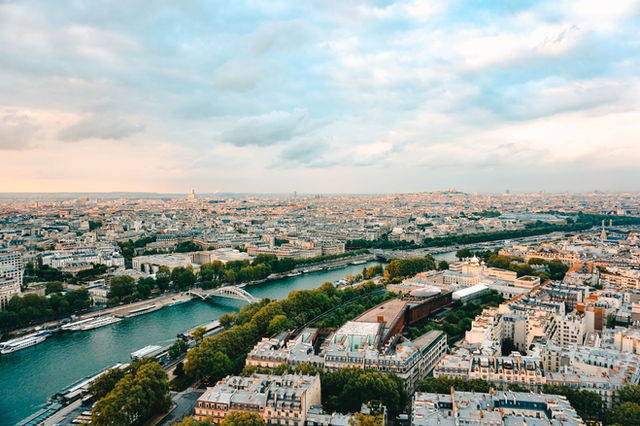
The Seine cuts Paris into a Right Bank (north) and a Left Bank (south), with the old core on two river islands — the Île de la Cité and the Île Saint-Louis — in the middle. Twenty numbered arrondissements spiral outward from there like a snail shell, low-rise and dense, stitched by wide Haussmann boulevards. It is a genuinely walkable city, and the Métro fills every gap.

Paris is home to a UNESCO World Heritage Site — Routes of Santiago de Compostela in France — inscribed in 1998.

Why go

Paris does everyday pleasure — a café, a market, a park bench — better than anywhere, and wraps it in a run of world-class museums and monuments you can reach on foot or one Métro line.

Don't miss

  • Eiffel Tower — the iron icon, best at dusk
  • Louvre — the world's largest art museum
  • Notre-Dame — Gothic cathedral on the river island
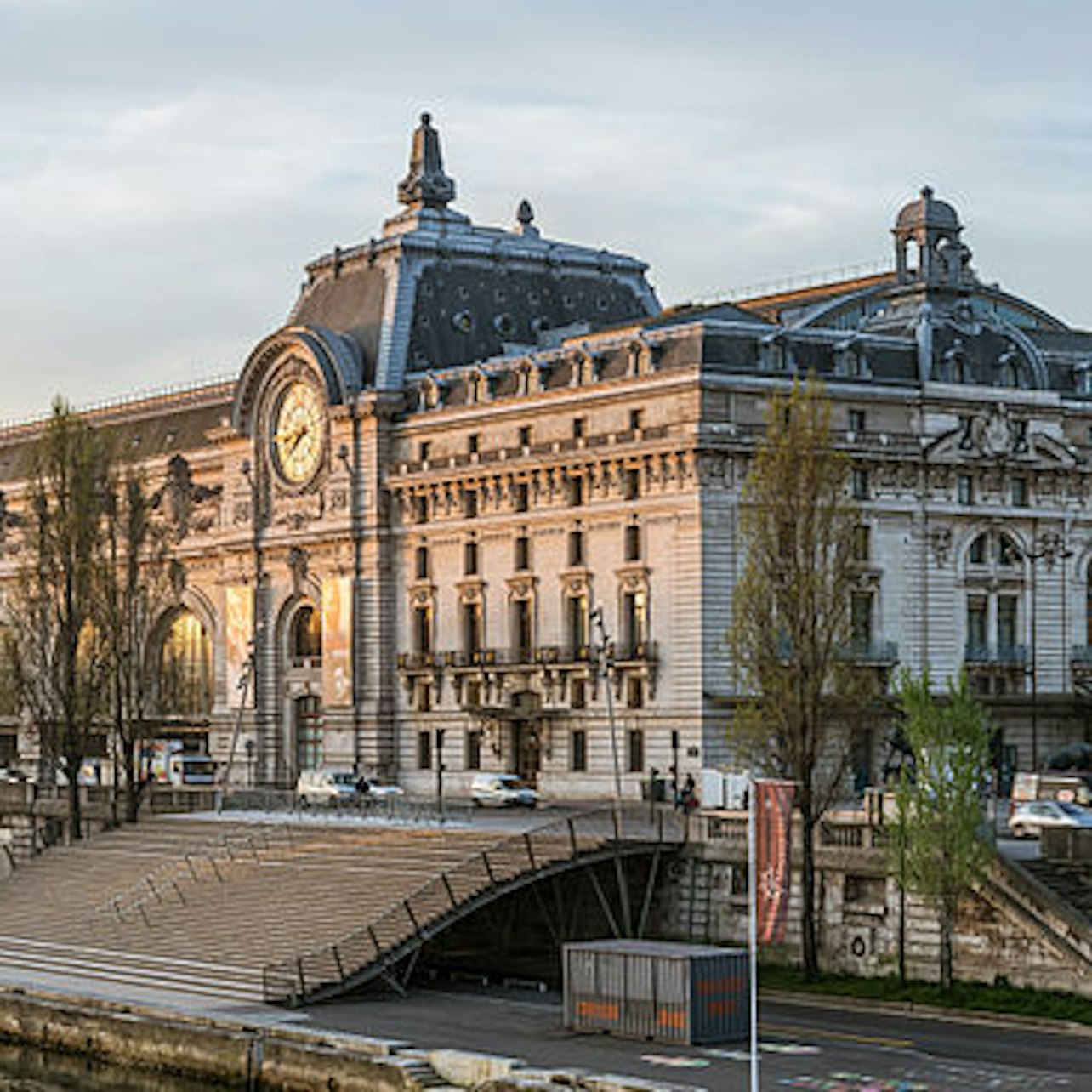
  • Musée d'Orsay — Impressionists in an old railway station
  • Sacré-Cœur — white basilica over Montmartre

Signature experiences

Museum days along the river — Skip the Louvre queues one morning for the Musée d'Orsay, where the Impressionists hang under an old station clock, then walk the Seine to the Tuileries. The riverbanks link the Louvre, the Orsay and the Orangerie within a short walk, so you can build a day of world-class art without ever getting on a train.

Café mornings and market streets — The real Paris habit is unglamorous: a coffee standing at the counter, a baguette bought warm, an hour at a street market. Work a morning around the covered Marché des Enfants Rouges in the Marais or the sloping stalls of Rue Mouffetard, then take the spoils to a park bench rather than a restaurant.

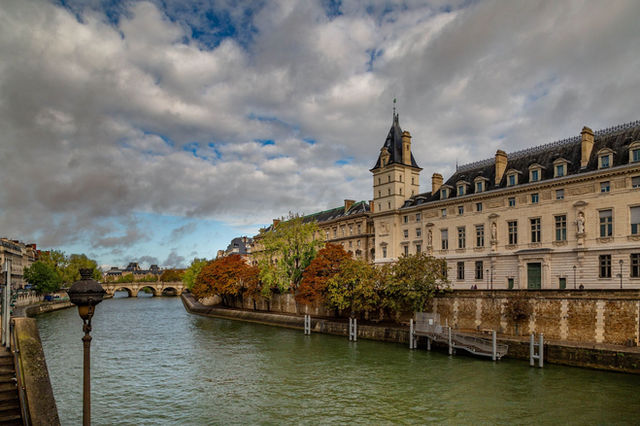
The Seine and its bridges on foot — Paris was built to be seen from the river. Walk the quays from Notre-Dame on the Île de la Cité, cross the Pont Neuf to the little garden at the tip of the island (the Square du Vert-Galant), and carry on toward the Eiffel Tower, crossing at the Pont de Bir-Hakeim for the framed shot.

Montmartre and the movie-set Paris — Montmartre is the city's most-filmed hill: the Café des Deux Moulins on Rue Lepic was the setting for *Amélie* (2001), and it draws fans to this day. Go early, climb past Place du Tertre to the quiet vineyard side, and you get the postcard Paris the films sell without the mid-day crush that the fame now brings.

Neighbourhoods

Paris neighbourhood by neighbourhood — the character of each and who it suits.

  • Le Marais

    A flat grid of medieval lanes and stone mansions on the Right Bank that never got Haussmannised, now the city's fashion, gallery and Jewish quarter rolled into one. It is one of the few areas that stays open and busy on Sundays.

    Why go
    To browse independent shops and galleries and eat well between historic streets.
    Best for
    ShoppingFoodNightlife
    Known for
    Place des Vosges, the falafel and delis of Rue des Rosiers, and the Musée Picasso.
  • Saint-Germain-des-Prés

    The Left Bank's polished literary quarter, where the old café-philosopher reputation now shares the pavement with luxury boutiques and antique dealers. Expensive, classic, and calmer than the Marais.

    Why go
    For café-sitting, galleries and a stroll into the Luxembourg gardens.
    Best for
    CalmCultureShopping
    Known for
    The old church of Saint-Germain-des-Prés, the historic cafés of Boulevard Saint-Germain, and the Jardin du Luxembourg on its edge.
  • Latin Quarter

    The student quarter around the old Sorbonne, a knot of narrow medieval streets running up from the river on the Left Bank. Bookshops, cheap eats and Roman remains sit side by side.

    Why go
    To dig into old Paris — Roman ruins, bookshops and steep market streets.
    Best for
    HistoryFoodCulture
    Known for
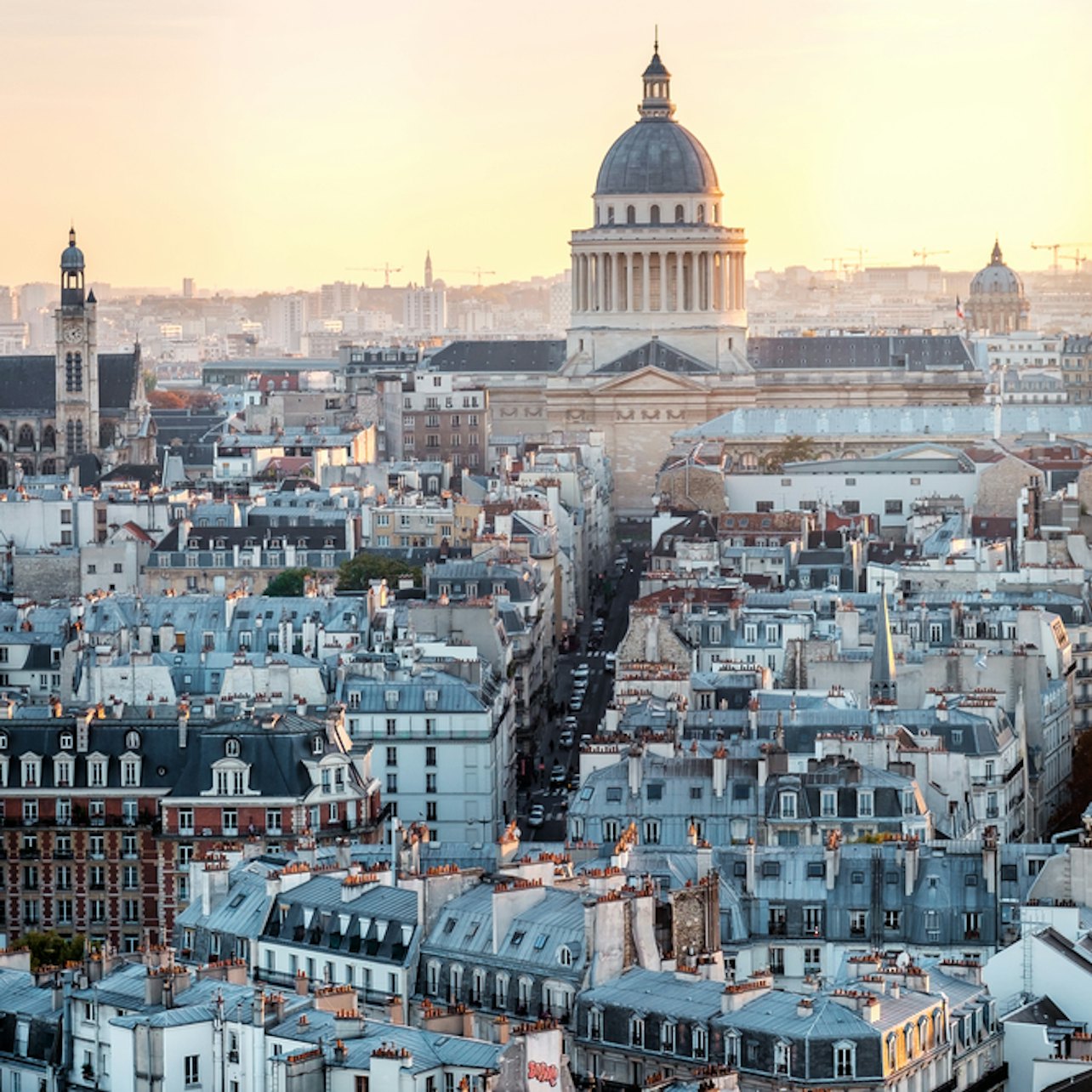
    The Panthéon, the Sorbonne, and the market street of Rue Mouffetard.
  • Montmartre

    A hill village in the north capped by the white Sacré-Cœur, with cobbled lanes, stairs and one surviving vineyard. The main square is a tourist scrum, but the back slopes stay quiet and residential.

    Why go
    For the view over the city and the film-set streets behind the crowds.
    Best for
    ViewsFoodCulture
    Known for
    Sacré-Cœur, the painters' Place du Tertre, and the vineyard and windmills on the quiet side of the hill.
  • Canal Saint-Martin

    A tree-lined canal in the northeast that young Parisians have made their own, with iron footbridges, locks and a run of cafés and independent shops along the water. Best on a warm evening.

    Why go
    To picnic canal-side and see where locals actually spend their downtime.
    Best for
    FoodNightlifeCalm
    Known for
    The lock gates and iron bridges, the shops of Rue de Marseille, and the wider Bassin de la Villette to the north.
  • Belleville

    A steep, mixed, working immigrant quarter in the northeast — Chinese, North African, artist — with street art on the walls and one of the city's best cheap-eats scenes. Rough-edged and real.

    Why go
    For street art, cheap and varied food, and a view that rivals Montmartre with none of the coaches.
    Best for
    FoodArtNightlife
    Known for
    Parc de Belleville and its skyline view, the street-art alleys off Rue Dénoyez, and the Chinese and Tunisian kitchens along Boulevard de Belleville.

Views & hidden gems

Best views

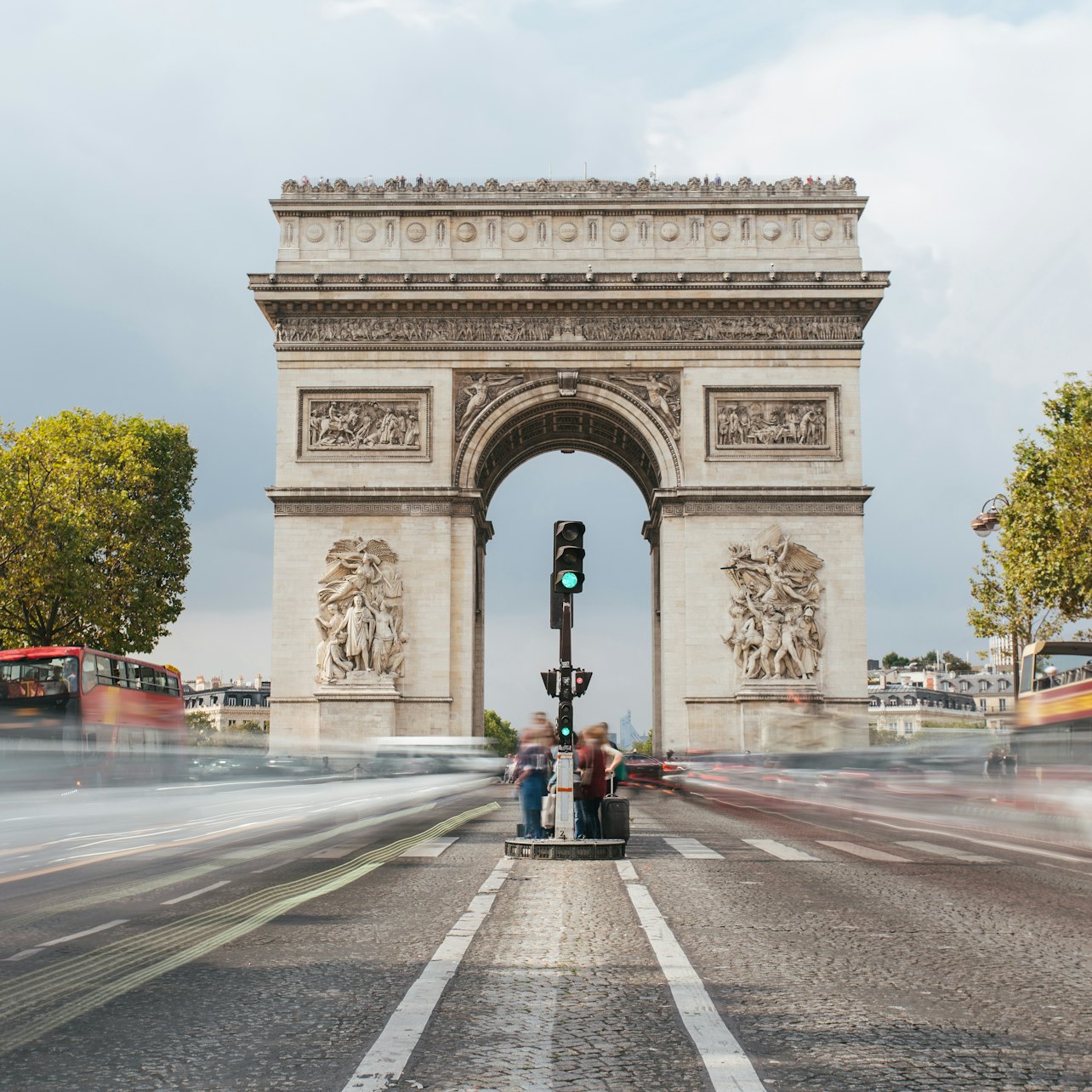
  • Arc de Triomphe rooftop — twelve avenues radiating out, the Eiffel Tower off to the side
  • Sacré-Cœur steps — the classic free panorama across the rooftops
  • Galeries Lafayette rooftop — free open-air terrace over the Right Bank
  • Pont de Bir-Hakeim — the iron-decked bridge that frames the Eiffel Tower

Hidden gems

  • Arènes de Lutèce — a Roman amphitheatre hidden behind apartment blocks, where locals play pétanque
  • Jardin du Palais-Royal — an arcaded courtyard garden cut off from the traffic
  • Promenade Plantée (Coulée verte) — a planted walkway on a disused railway viaduct east of Bastille
  • Covered passages — 19th-century glass-roofed arcades like the Passage des Panoramas and Galerie Vivienne

Food & drink

Paris eats in two registers: the traditional bistro and bouillon, and a newer wave of small modern kitchens and natural-wine bars. Skip the set-menu terraces ringing the big monuments and head for a market or a neighbourhood street — the covered Marché des Enfants Rouges, Rue Montorgueil, Rue Mouffetard — where the food is aimed at locals, not coaches. Bakeries are a religion; the wine bars lean toward natural labels and simple plates of charcuterie and cheese.

  • Croissant — the flaky butter test of any good boulangerie
  • Steak-frites — seared steak, a pile of thin fries, a peppery sauce
  • Soupe à l'oignon gratinée — onion soup under a cap of melted cheese
  • Jambon-beurre — the plain ham-and-butter baguette, the city's real fast food
  • Kir — white wine with a splash of blackcurrant crème de cassis
  • French 75 — gin, champagne and lemon, named after the punchy First World War 75mm field gun
Dietary notes

Vegetarian dining has improved sharply, with dedicated veg and vegan spots across the Marais and the northeast, though classic bistros still lean meat-heavy — scan the menu first. Halal is easy in Belleville, Barbès and the northeast; kosher concentrates around Rue des Rosiers in the Marais. Bakeries and crêpe stands make gluten-free harder, but larger restaurants increasingly mark it.

Paris in photos

▸ Where you'll stay

Where you'll stay in Paris

Base in Le Marais for walkable galleries, food and late bars right outside the door, with Métro Line 1 through the middle. Saint-Germain-des-Prés gives a classic Left Bank feel by the Luxembourg gardens, but you pay a premium for it. Skip a base right under the Eiffel Tower or on the Champs-Élysées — pricey, touristy, and quiet once the monument crowds clear at night. For a more local stay with good transit and lower prices, look at the Canal Saint-Martin or Belleville in the northeast.

  • Budget
    Canal Saint-Martin / 10th hostels and small hotels, canal-side cafés, local prices, well linked on Line 2 and 5.
  • Mid-range
    Le Marais / 3rd–4th walkable galleries and nightlife, central and characterful, Line 1 through the middle.
  • Luxury
    Saint-Germain-des-Prés / 6th classic Left Bank address by the Luxembourg gardens, boutiques and grand cafés.
Stay

Hotels & rentals around Paris

Pan, zoom and compare live prices — every stay in one map.

▸ Getting around

Getting around Paris

The Métro (16 lines) plus the RER express trains cover the whole city, and you are rarely far from a station — Line 1 runs straight through the historic core. Walking is the best way to actually see Paris, backed up by the Vélib' bike-share for short hops along the river. A car is a liability here: traffic, paid zones and no parking.

Le Marais to the Latin Quarter is a ~approx 15-min hop on Line 7 or a walk across the river islands. The Marais up to Montmartre is ~approx 25 min on Line 4 or 12; Canal Saint-Martin and Belleville sit a few stops apart on Line 2 and 11 in the northeast.

▸ Plan your days

Suggested itineraries

Ready-made day plans for Paris — from a single day to a long weekend.

One day

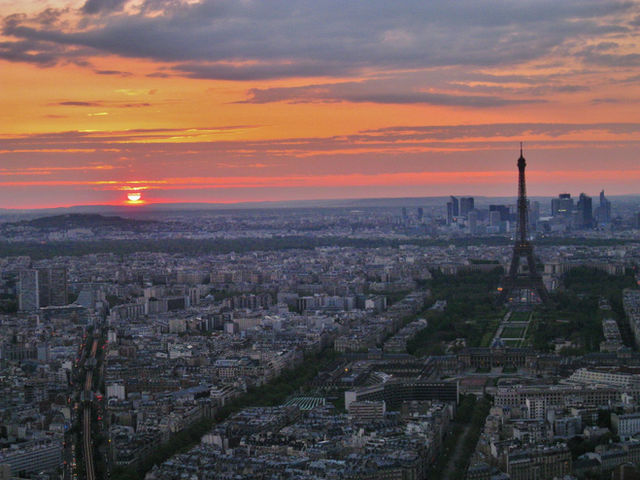
Start on the Île de la Cité for Notre-Dame and the flower market, walk the quays past the Louvre to the Tuileries, and cross to the Musée d'Orsay for a focused hit of Impressionists. Follow the river west in the afternoon and finish at the Eiffel Tower — from the Trocadéro side, or the Pont de Bir-Hakeim — as it lights up at dusk.

Two days

Give day two to the Right Bank and the villages. Morning in Le Marais for Place des Vosges, the Picasso museum and a market lunch, then climb to Montmartre in the afternoon for Sacré-Cœur, the quiet vineyard side and the rooftop view. End with a canal-side evening on the Canal Saint-Martin.

Three days

Slow down on day three. Wander the Latin Quarter's bookshops and Roman remains, sit out in the Jardin du Luxembourg, and dig into a covered passage or two on the Right Bank. Or take a half-day out to Versailles by RER for the palace and gardens, an easy return that still leaves an evening in the city.

▸ What you'll do

Insider tips

  • The Métro is fast but Line 13 is notoriously packed at rush hour — avoid it if you can, and expect stairs, as many stations have no lift.
  • Museums cluster their closing days midweek: the Louvre shuts Tuesdays, the Orsay Mondays — plan the week around it or you will find locked doors.

Frequently asked

How many days do I need in Paris?

Four to five days covers the Louvre, Musée d'Orsay, the Eiffel Tower, a half-day at Versailles, Montmartre and the Marais with time for unhurried meals. A week allows the Centre Pompidou, the covered passages of the 2nd arrondissement, a day trip to Giverny or Épernay and genuine neighbourhood exploration at a Parisian pace.

Is the Paris Museum Pass worth buying?

Yes, for most active visitors. The 2-day (€52), 4-day (€66) and 6-day (€78) passes include entry to 50+ museums including the Louvre, Musée d'Orsay and Versailles, plus queue-priority at ticket offices. Buy online before you travel to avoid the on-site queues.

Can I visit Versailles in a day from Paris?

Yes — RER C from central Paris to Versailles–Château–Rive Gauche takes 35–50 minutes depending on your starting station. Allow 4–6 hours minimum for the palace and gardens; Musical Fountain shows run April–October on select days and are worth timing your visit around.

Is the Eiffel Tower worth visiting?

Yes, though how you experience it matters. The view from the top is best at dusk or after dark; the view of the Tower itself is best from the Trocadéro. Book timed-entry tickets online weeks in advance — queuing on the day can exceed two hours and the tower is fully pre-booked in peak months.

What is the best neighbourhood to stay in?

The Marais (3rd/4th) and Saint-Germain-des-Prés (6th/7th) are both central, safe and full of character. The 11th arrondissement (République–Bastille) is excellent value with the city's best neighbourhood restaurants. Avoid the Gare du Nord area for a first visit; avoid Montmartre accommodation if you dislike very steep hills and tourist-market restaurants.

What's on

While you're there

03
OCT
Nuit Blanche Paris 2026
8 Place De L'hôtel De Ville, 75004 Paris, France · cultural
Build a trip around it →
Explore

Explore the area

© OpenFreeMap · OSM · terrain Mapterhorn
Do

Local attractions & tours

Skip-the-line tickets and small-group tours in Paris — compare across our partners.

Hôtel de la Marine: Permanent Tour

Paris

from £14.44

4.8 (836)
Book on Tiqets →

Musée d'Orsay: Dedicated Entrance

Paris

from £11.04

4.7 (17k)
Book on Tiqets →

Arc de Triomphe: Entry ticket + Rooftop Access

Paris

from £15.29

4.7 (7.9k)
Book on Tiqets →

Panthéon: Entry Ticket

Paris

from £11.04

4.7 (3.0k)
Book on Tiqets →

Musée Jacquemart-André: Skip The Line Ticket

Paris

from £16.14

4.7 (2.6k)
Book on Tiqets →

Musée Rodin: Skip The Line

Paris

from £12.74

4.7 (2.5k)
Book on Tiqets →

La Cinémathèque Française: Marilyn Monroe Exhibition

Paris

from £11.89

4.7 (2.2k)
Book on Tiqets →

Fondation Cartier pour l'Art Contemporain: Exposition Générale

Paris

from £12.74

4.7 (1.5k)
Book on Tiqets →
Plan

Trips in Paris

Day-by-day itineraries that take in Paris — routes, timings and what to book.

▸ Budget

What it costs in Paris

Backpacker
roughly €70–100 a day.
Mid-range
roughly €170–260 a day.
Luxury
€450 a day and up.
Cash vs card
Card and contactless work almost everywhere, including the Métro barriers; carry a little cash only for small market stalls and boulangeries.
Tipping
Service is included by law, so tipping is optional — round up or leave a euro or two for good service, nothing more expected.
▸ When you'll go

When to visit Paris

April to June, and September to October

Spring

What to expect — Variable weather that swings from downpour to bright sun, chestnut trees in blossom along the boulevards, and crowds building around Easter. Café terraces come back into use.

What's best — The parks and terraces reopening, mild days for walking, and the city looking its most photogenic before the summer peak.

Summer

What to expect — The peak-crowd, peak-heat stretch, and the Métro gets stifling. Many independent shops and bistros shut for much of August while their owners leave — check ahead, and lean on the neighbourhoods that stay open, like the Marais.

What's best — Long evenings for late Seine picnics, the riverside "Paris Plages" set-up, and a city that empties of locals and eases off the traffic.

Autumn

What to expect — Crisp, clear light, the cultural season restarting, and museums that need booking weeks ahead once term is back. October turns damp.

What's best — Golden parks, new exhibitions opening, and thinner crowds than summer — many Parisians rate it the best season.

Winter

What to expect — Short grey days and frequent rain, though hard frost is rare. Queues drop to their lowest of the year, and you trade weather for elbow room.

What's best — The Louvre and Orsay without the summer crush, warm bistros and bouillons, and holiday lights along the main streets.

▸ Know before you go

Know before you go

Honest swaps

Skip the sit-down restaurants ringing the Louvre and Notre-Dame; buy a jambon-beurre and eat it in the Tuileries or the Square du Vert-Galant instead.

Skip the queue-and-pay climb up the Eiffel Tower if time is tight; the free rooftop terrace at Galeries Lafayette or the steps of Sacré-Cœur give you the skyline with the Tower in it.

Skip the Champs-Élysées for shopping; the Marais and the covered passages have better, smaller, more Parisian shops.

Crowds & timing

The Louvre, the Eiffel Tower and (since reopening) Notre-Dame are the pinch points. Book timed entry online, aim for the first slot of the day or late afternoon, and never turn up to the Louvre ticketless in summer.

Local rules & etiquette

Say "Bonjour" before you ask anything in a shop or café — skipping it reads as rude and gets you worse service. Keep bags zipped and to the front on Line 1 and RER B to and from the airport; these are the known pickpocket routes.

Money

Card and contactless work almost everywhere, including the Métro barriers; carry a little cash only for small market stalls and boulangeries. Paper Métro tickets are being phased out — load a Navigo Easy pass or use your phone instead.

After dark

The Marais and Canal Saint-Martin run late with bars and small restaurants; Belleville and Ménilmontant are the grittier, cheaper night quarters; Saint-Germain and the 7th go quiet early. The Seine quays and the canal are the warm-evening drinking spots, not a specific bar.

Safety

Overall safety

Paris is a safe city overall; violent crime against tourists is uncommon. The primary hazard is pickpocketing concentrated around high-footfall tourist sites and the Métro.

Common scams

The 'Gold Ring' scam (someone presents a gold ring 'found' on the pavement and requests compensation) and the 'Petition' scam (clipboard-carrying groups that distract while an accomplice pickpockets) are active year-round at major sites. The correct response is to walk away without engaging.

Areas to avoid

Pickpocketing is highest risk around the Eiffel Tower, Sacré-Cœur, and on RER B from the airport. The blocks east of Gare du Nord and Gare de l'Est can feel rough after dark. Avoid placing a phone or wallet in a back pocket on the Métro at any time.

Solo & family notes

Paris is very safe for solo travellers and families. Keep valuables in front-of-body bags and maintain standard urban awareness. Beyond petty crime, the city is well-policed and thoroughly tourist-safe throughout.

Culture & etiquette

Greetings

Always say 'Bonjour Monsieur' or 'Bonjour Madame' when entering a shop, café or restaurant — failure to do so is considered genuinely rude rather than merely an oversight. Even a few words of French ('Pardon', 'S'il vous plaît', 'Merci beaucoup') transform how locals respond to visitors.

Tipping

Tipping is not obligatory in France — service is included by law in the bill. A tip (le pourboire) of 5–10% at a restaurant or rounding up at a café is appreciated as a genuine gesture, not an expectation.

Dress code

Paris is stylish but not formally prescriptive. The Opéra Garnier has no enforced dress code; the Palace of Versailles state rooms and major cathedrals require covered shoulders — beachwear is not appropriate at any heritage site or fine restaurant.

Photography

Photography is freely permitted at most Paris monuments and museums; flash photography is prohibited inside galleries. The Eiffel Tower's night-time light display is technically under copyright — commercial use of night images requires a licence, though personal use is fine.

Daily budget

£160/day mid-range (budget £75, luxury £400+)

Emergency numbers

112 (European emergency), 17 (police), 15 (SAMU medical), 18 (fire/Pompiers)

▸ Ready to book your trip?

Getting there

Most long-haul flights land at Charles de Gaulle (CDG), northeast of the city, linked to the centre by the RER B train in ~approx 40 min. Orly (ORY) to the south connects via the Orlyval shuttle onto the RER, and budget carriers often use distant Beauvais (BVA), a coach ride out. International trains arrive centrally at stations like Gare du Nord and Gare de Lyon, dropping you straight onto the Métro.

  • Paris Orly Airport (ORY)
  • Beauvais–Tillé Airport (BVA — Ryanair hub, 80km north)
Book

Ready to book your trip?

Flights, airport transfers and car hire to CDG — search and compare without leaving the page.

▸ Trip extras
Book

More trip extras

Parking, holiday extras, and more — coming soon.

Coming soon

We're lining up parking, holiday extras and activities you'll be able to add to any trip from here.