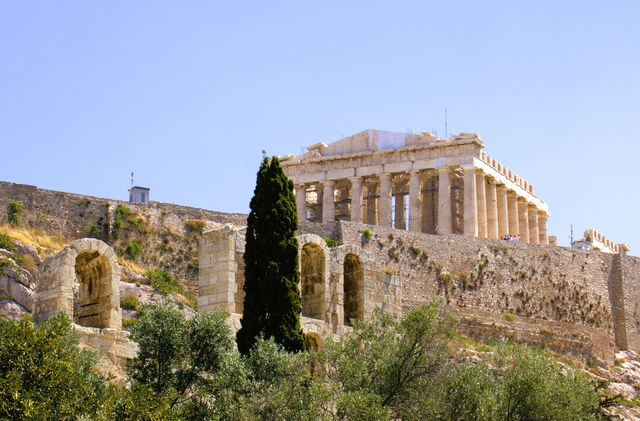
Athens
The cradle of Western civilisation: the Acropolis, ancient Agora, world-class museums and a vibrant modern city with outstanding food.
- City
- April – June, September – October
- ATH
- 3–5 days (city); 7–10 days combining island hopping from Piraeus
About Athens
Why go
Athens offers the densest concentration of Western civilisation's foundational history within a manageable, walkable city area. For families with teenagers studying history or classics, Athens is one of the most educationally and emotionally resonant cities in Europe — standing in the ancient Agora where Socrates taught, or walking through the Parthenon complex at dawn, is an experience of genuine transformation. Beyond the archaeological dimension, Athens has a remarkable food scene, a lively outdoor culture, and immediate access to some of the most beautiful Greek islands by ferry or hydrofoil — making it an outstanding anchor for a Greece trip that combines city and island.
Highlights
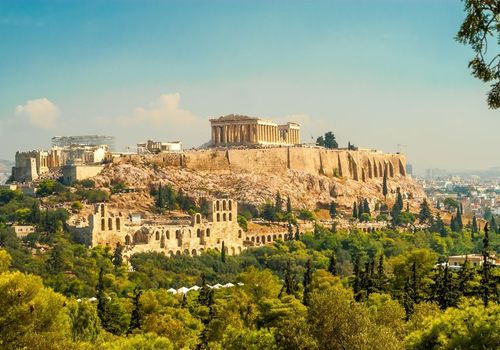
- Acropolis and Parthenon at sunrise
- Acropolis Museum — Elgin Marble frieze
- Monastiraki flea market Sunday morning
- Plaka neighbourhood taverna dinner
- Cape Sounion Poseidon temple sunset
- National Archaeological Museum
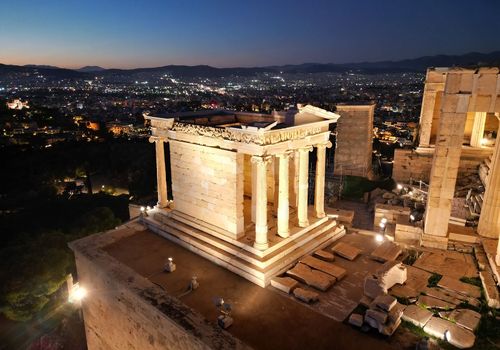
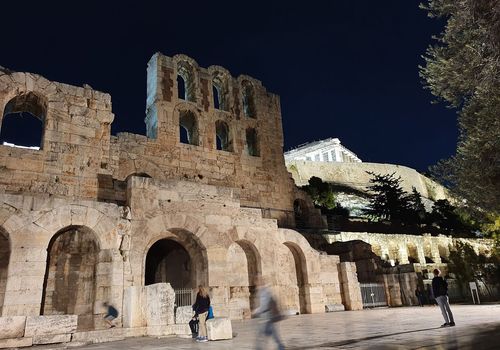
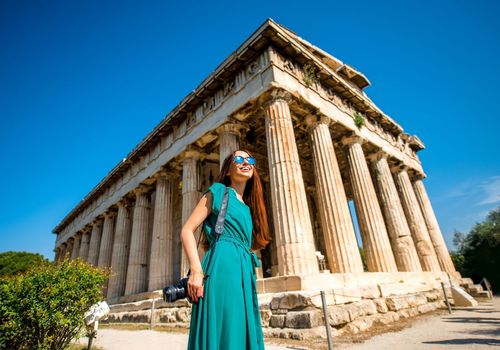
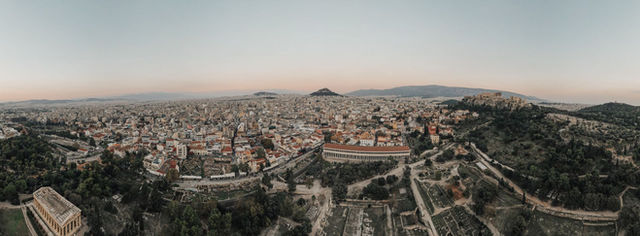
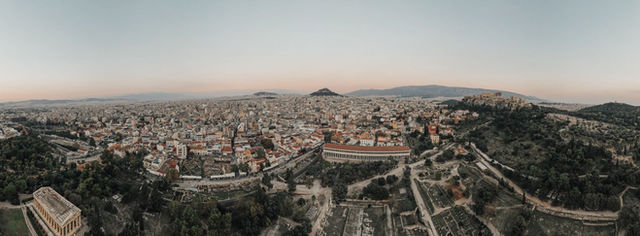
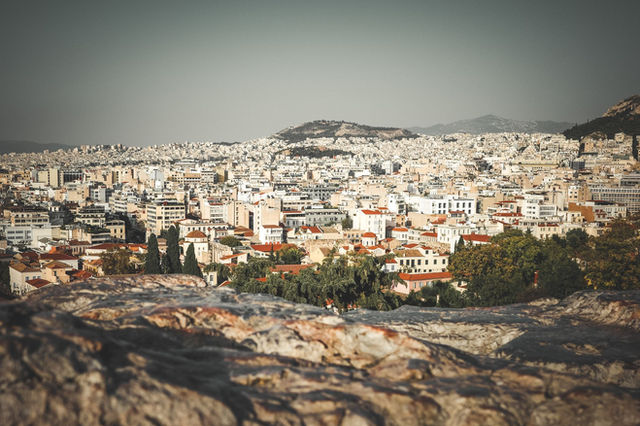
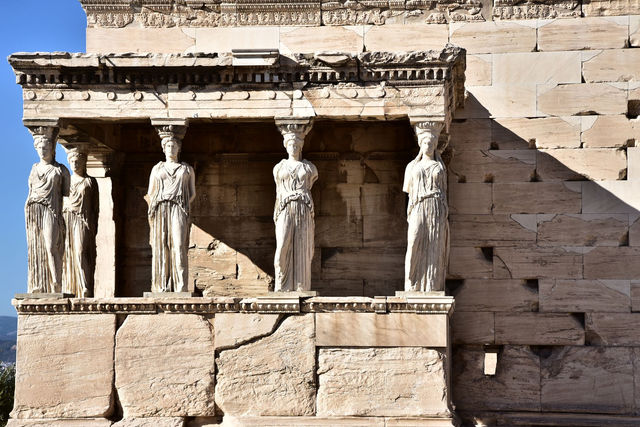
Athens in photos
Neighbourhoods
Neighbourhood-by-neighbourhood guides to Athens are on the way.
Where you'll stay in Athens
Live map of hotels and villas around Athens — powered by Stay22. Pan, zoom and compare live prices to pick your base.
Hotels & rentals around Athens
Pan, zoom and compare live prices — every stay in one map.
Getting around Athens
Athens has a compact historic centre that is very walkable — the Acropolis, Monastiraki, the Ancient Agora, and Syntagma Square are all within a 30-minute walk of each other. The Metro (Lines 1, 2, 3) is efficient, clean, and air-conditioned, covering the central areas, the airport, and the port of Piraeus (Line 1). The Trolleybus and bus network covers areas the metro doesn't. A 24-hour or 5-day tourist pass covers all public transport and is good value. Taxis are abundant and metered. The city has challenging traffic and is not recommended for cycling as a tourist transport mode.
The Athens Metro (three lines) is the backbone of tourist transport, connecting Piraeus (Line 1), the airport (Line 3), and all major central areas including Monastiraki, Syntagma, and Omonia. Metro trains run approximately 05:30 to midnight, with extended hours on weekends. Trolleybuses and city buses supplement the metro for areas not covered. A rechargeable Ath.ena card or single-trip tickets are available at metro station vending machines. The 24-hour tourist ticket (covering metro, trolleybus, and bus) is good value for a busy day of sightseeing. The X95 express bus runs from Syntagma Square to the airport as a cheaper alternative to the Metro for luggage-free trips.
Insider tips
• Buy the combined ticket at the Acropolis that covers seven major ancient sites (Acropolis, Ancient Agora, Roman Agora, Kerameikos, Temple of Zeus, Hadrian's Library, Lykeion) — it saves significant money over individual tickets for a thorough Athens archaeological visit. • Visit the Acropolis in the first hour after opening (8am in summer) for manageable crowds and tolerable heat — by 10am in July the combination of crowds and sun on exposed limestone makes it significantly less enjoyable. • The Acropolis Museum (at the foot of the hill) is one of the finest museum buildings in the world and contains the full Parthenon frieze sculpture in context — the top floor glass gallery with the actual Parthenon visible through the windows is extraordinary. Budget 90 minutes. • Monastiraki flea market is best on Sunday morning when it expands into the surrounding streets — antiques, vintage clothing, ceramics, and the social spectacle of the city at leisure. Arrive by 10am. • For an outstanding lunch away from tourists, walk 10 minutes from Monastiraki to Thissio or Petralona neighbourhood — local family tavernas serve the same food at significantly lower prices than the tourist circuit.
Frequently asked
While you're there
Explore the area
Local attractions & tours
Skip-the-line tickets and small-group tours in Athens — compare across our partners.
Best time to visit Athens
April – June, September – October
Athens has a hot-summer Mediterranean climate. Summer (June–August) is very hot and dry — temperatures regularly reach 35–40°C in July and August, making midday sightseeing genuinely uncomfortable; plan for early morning and late afternoon/evening activity, with a siesta. The Acropolis in direct July sun is physically demanding and has very limited shade — bring water, hats, and factor in heat exhaustion risk for children. Spring (April–May) and autumn (September–October) are the optimal visiting windows: 20–28°C, clear skies, comfortable for outdoor sites. Winter (November–February) is mild (12–15°C) with some rain, mostly pleasant for city exploration but some island ferries run reduced schedules.
Getting there
Athens International Airport Eleftherios Venizelos (ATH) is served by direct flights from London Heathrow, Gatwick, Stansted, and Luton — journey time approximately 3h30–4h. British Airways, Aegean Airlines, easyJet, and Ryanair all operate the route, with fares competitive particularly outside July–August peak. From the airport, the Metro Line 3 connects directly to central Athens in approximately 40 minutes; tickets are purchased at the station. Airport taxis to central Athens cost approximately €38–40 (fixed rate to central zone); Uber also operates from the airport.
- Athens International Airport Eleftherios Venizelos (ATH)
Ready to book your trip?
Flights, airport transfers and car hire to ATH — search and compare without leaving the page.
More trip extras
Parking, holiday extras, and more — coming soon.
We're lining up parking, holiday extras and activities you'll be able to add to any trip from here.